Monankim is a word from the language of the Bakor people, a group of minority tribes from Cross River State, Nigeria. It refers to the process by which a girl is circumcised and celebrated as she enters womanhood. A Monankim must be a virgin between the ages of 14 and 18. After circumcision she is held in a fattening room, where she heals and recovers before she is presented to the community as an idolized symbol of purity and a desirable wife.
The rite of passage is not without its dangers: Some suffer severe bleeding, and others don’t survive. The ritual is now highly controversial.
“Monankim” was realized after extensive interviews with young women, some of whom were frightened at the prospect while others looked forward to their own time. It also depicts the artist’s conflicting values, being from one of the minority tribes of the Bakor herself.
Jenevieve Aken is a Nigerian photographer and storyteller who focuses on social documentary photography. She has participated in the past three editions of LagosPhoto Festival and exhibited work in New York, Berlin, Venice, South Africa, and elsewhere.
t’s been a while since I wrote apost on interior design, it’s something I’m looking to include more on my blog as with our current reno, it’s become a major passion of mine. Travel has become rarer for me since the having a toddler and living through a pandemic so I’ll be including a lot more interiors stuff on here from now on. In this post I thought I’d talk a bit about why I decided to work with an interior designer and if you’re potentially on the fence about using one, maybe giving you the inspiration to do it too.
I spent months (years) collecting images and creating mood boards for the various rooms in our flat I even had mood boards for every detail like bedroom wardrobes, dining chairs, bar stools… so you may be wondering if I knew so clearly what I wanted, why did I feel the need to employ an interior designer. Well here’s why…
1. Finding the Perfect Room Layout
An interior designer can use programmes such as CAD (computer-aided design) to create your perfect room layout. With this programme they can create a mockup of exactly how the room will look using the exact size of the furniture to ensure everything is in proportion and in the right place. Of course you can find simple versions of these programmes yourself but a designer has a trained eye to make sure everything is in the perfect place. Some of these layouts will also be mocked up in photoshop or even as highly realistic CGI images.
2. They Remove the Stress
Our renovation included multiple contractors and suppliers but it was all project managed by our builder and our interior designer. With someone else project managing and talking to all the other suppliers involved so you don’t have to … it really removes a lot of the stress. Things have gone wrong – for example having to bring our table up by crane – but I could sit back while someone else sorted it out. Actually the whole project has been quite seamless and stress-free as we have such a great team working on it. Of course many of the small problems I’m blissfully unaware of!
3. They Will Save you Time
Pouring through fabric books, managing your contractors, constant phone calls… it all adds up and is incredibly time consuming. It’s an interior designer’s job to save this time for you so you can get on with your life but still be a part of designing your beautiful home!
4. A Little Black Book
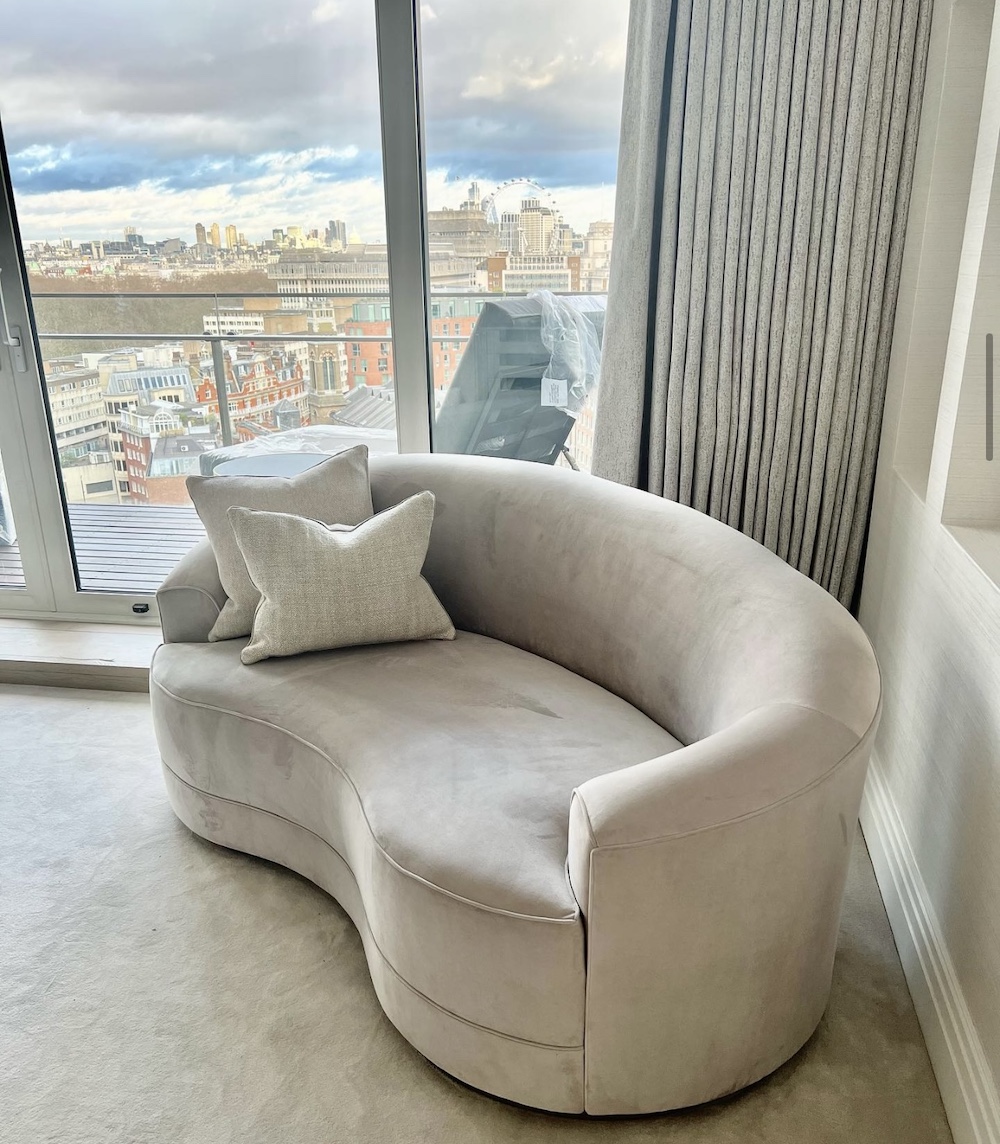
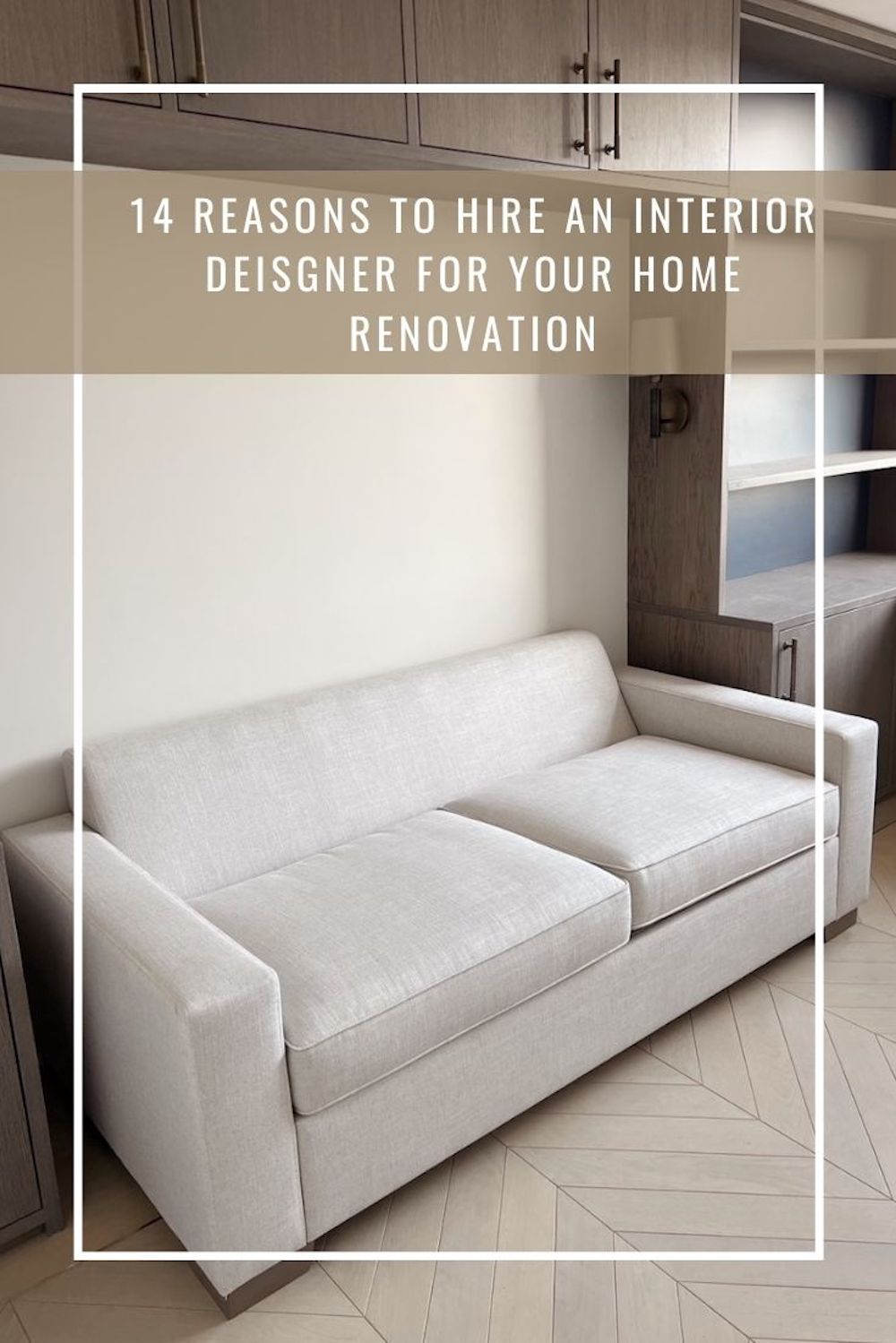
Every designer worth their salt will have a little black book of suppliers. Many of these will be unknown to or won’t even supply to the general public so working with the designer will give insider access to these secret suppliers. For example our sofa and ottoman are made by this random company that don’t even have a proper website but when we visited their factory we found out they made sofas for all the top interior designers in the country.
5. Wow-Factor
An interior designer knows how to layer all the elements in your home to create the perfect wow-factor but without going over the top. I think we’ve created a beautifully subtle base but with some wow pieces such as our chandelier and large floor to ceiling mirrors!
6. Lighting Plan
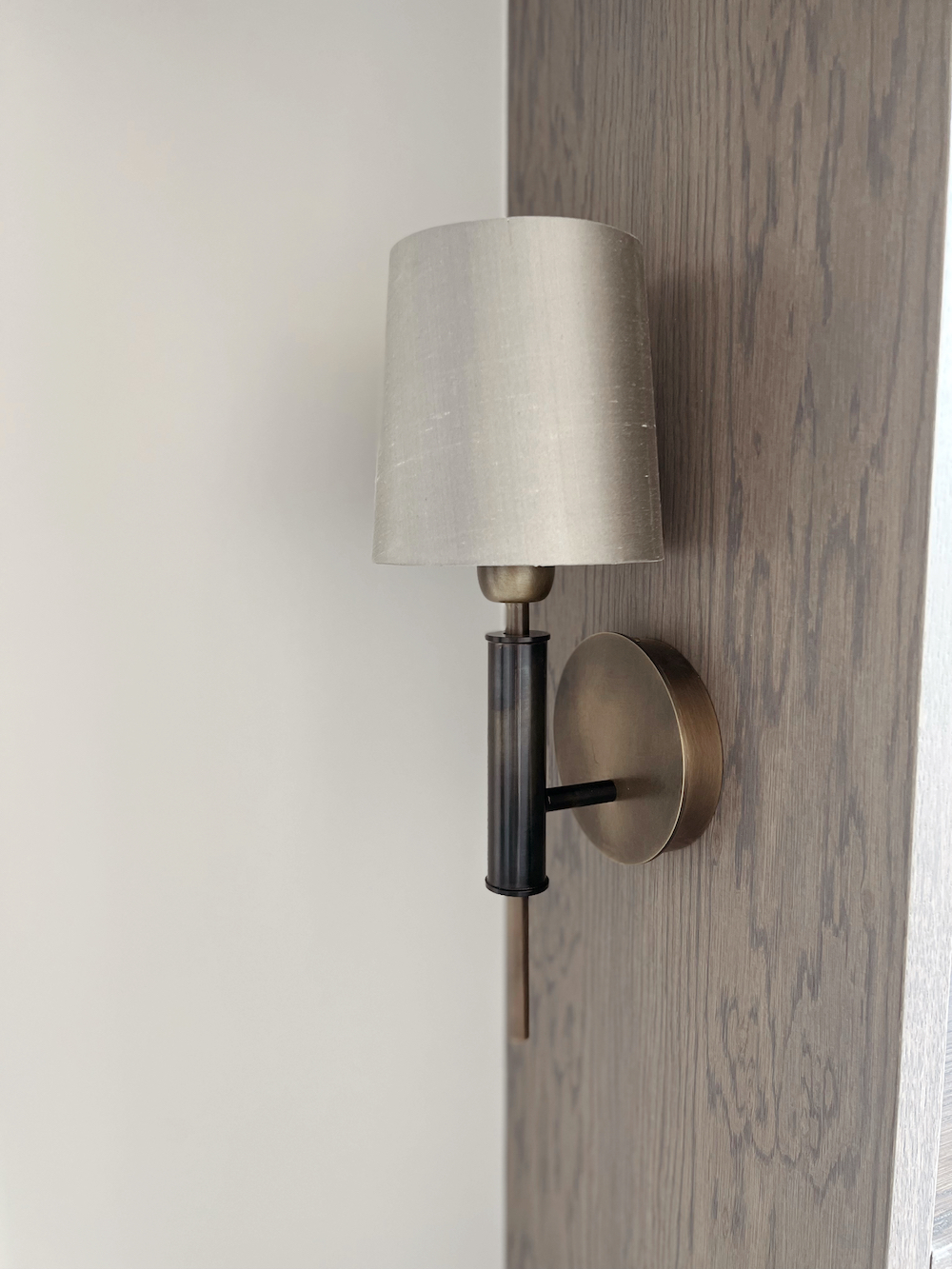
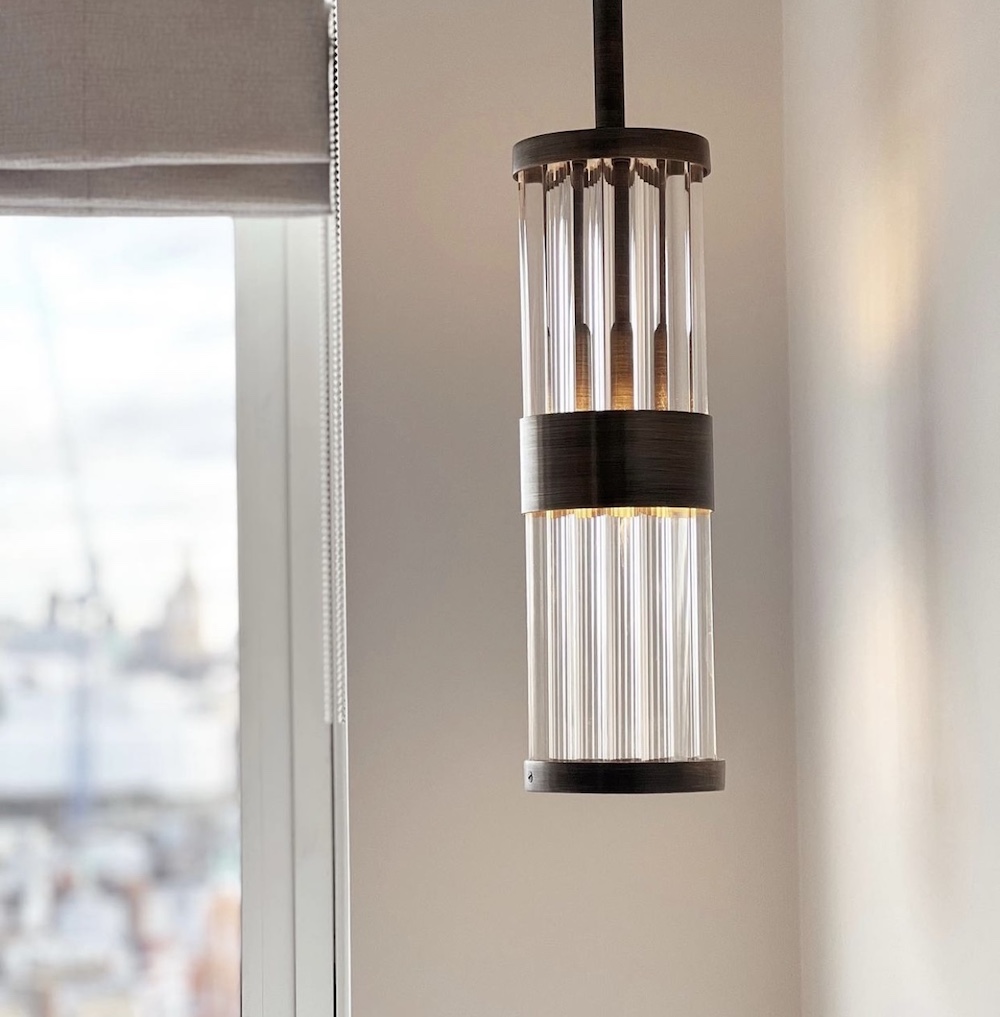
In a similar vein your designer can create the perfect lighting plan for you. We have all sorts of lighting in our flat including a coffered ceiling, wall lamps, joinery lighting, table lamps and halogens. The interior designer can create an exact lighting plan so that the parts of your room that you want highlighted are done so in the right way that will make all the difference to your final look. With pre-planning the lighting layout you can put sockets in the floor for your lamps, on the right places on the walls and make sure your lighting is both decorative and functional.
7. Bespoke Joinery
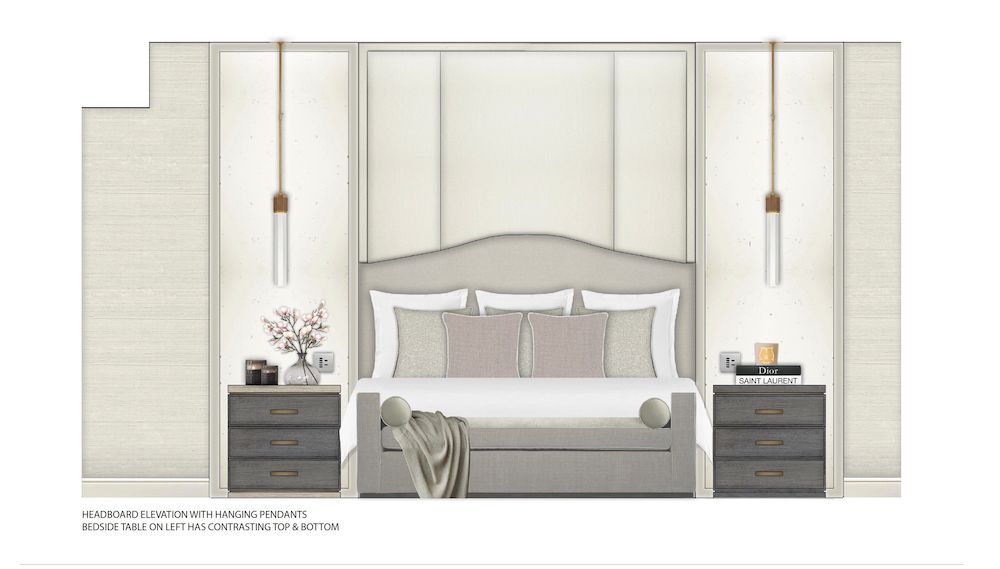
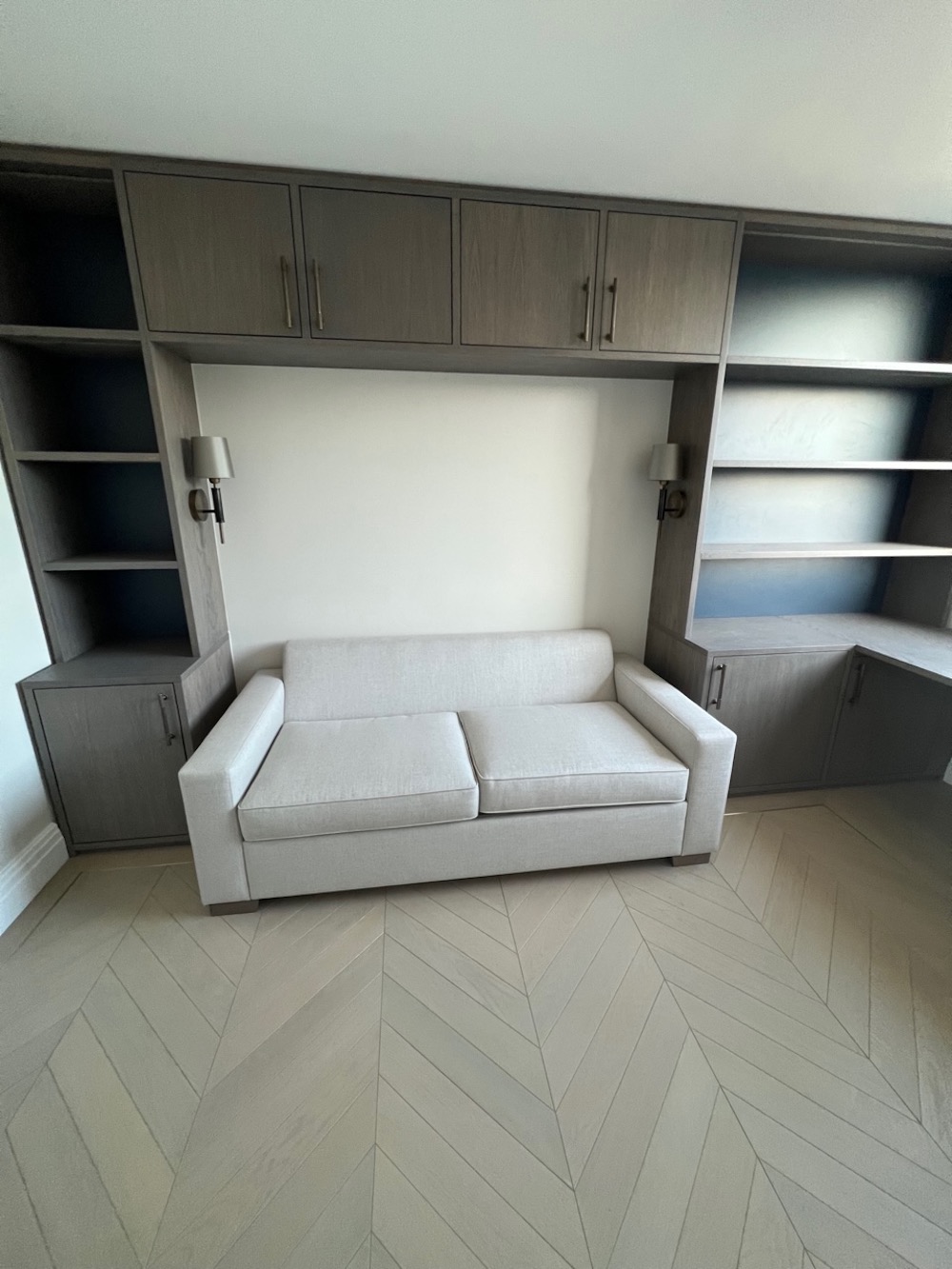
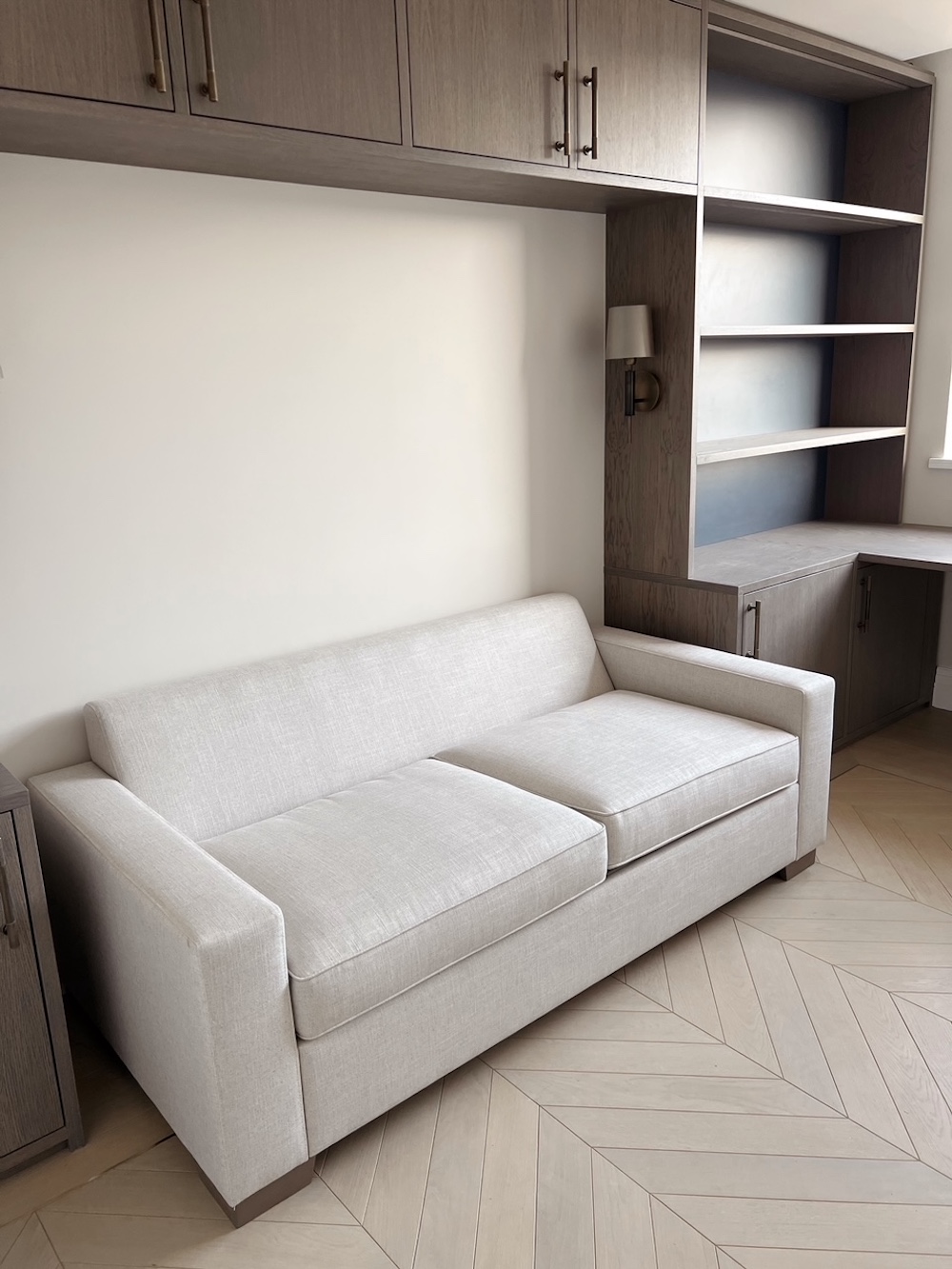
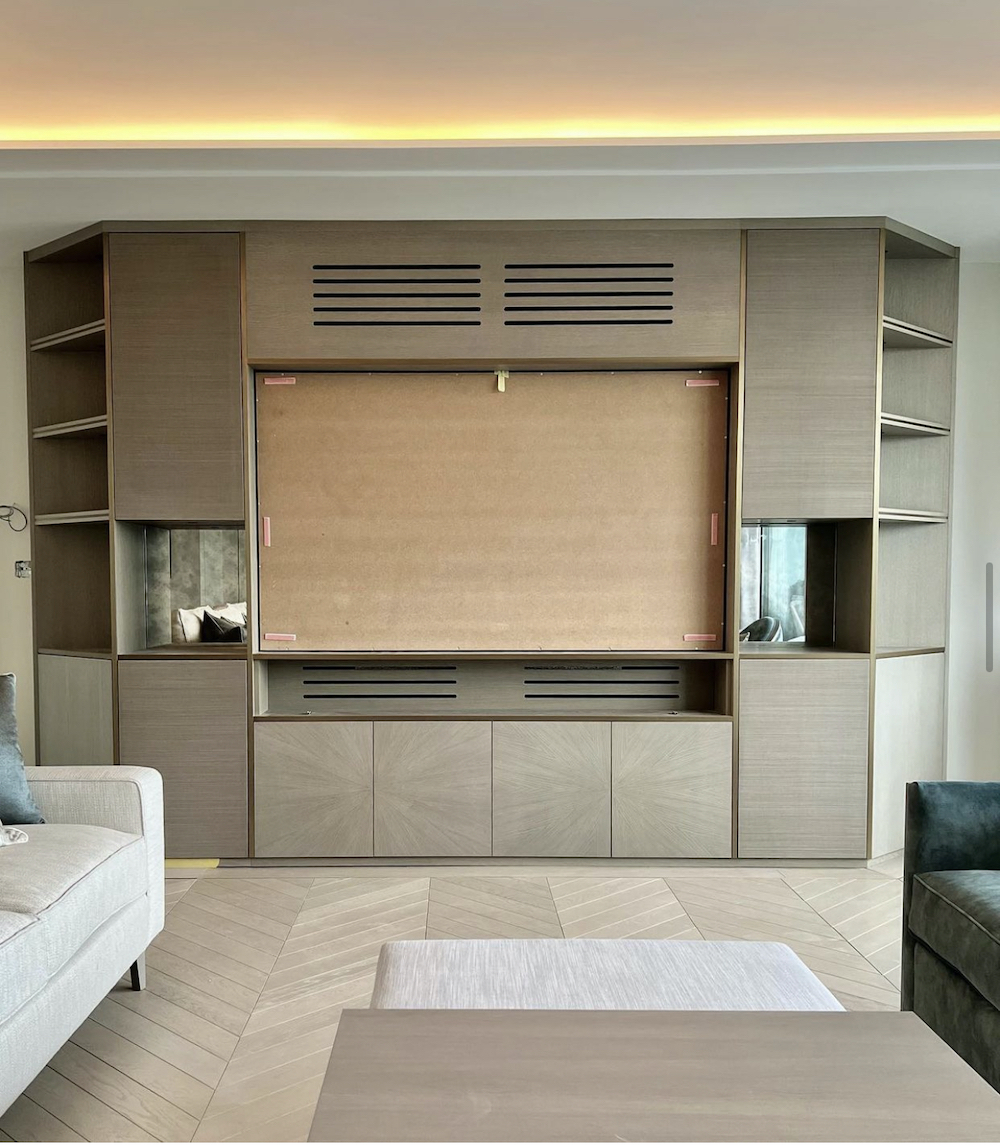
We have quite a bit of bespoke joinery in the flat – the TV unit, the study, the wardrobes, the headboard and more… though I had lots of ideas of how I wanted this joinery to look I wouldn’t have known where to start in creating the right proportions, finishes and making sure everything functioned correctly. Our interior designers designed all of our bespoke joinery and then ‘tendered’ the design to contractors in order to get reasonable quotes.
8. Colour Scheme
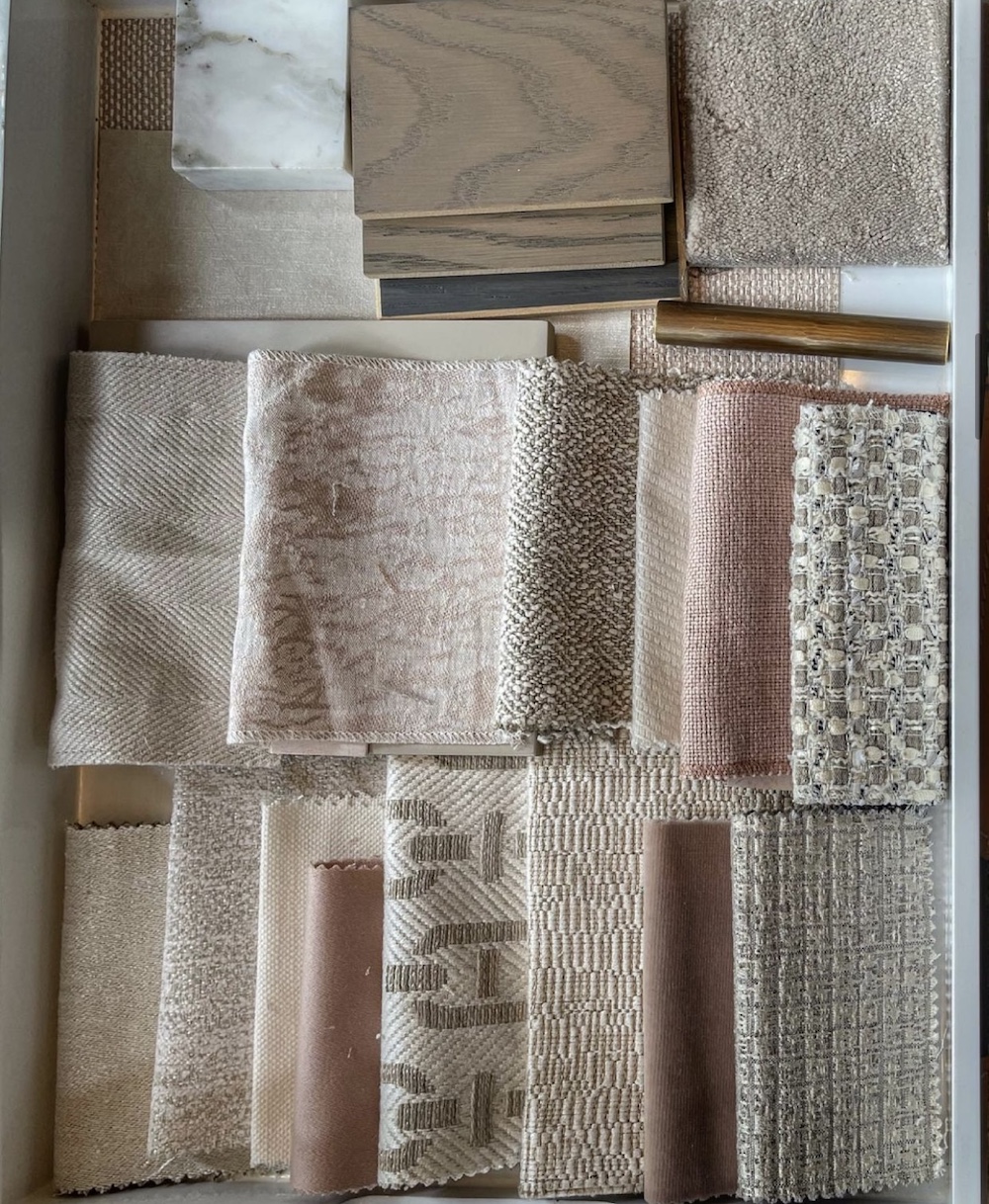
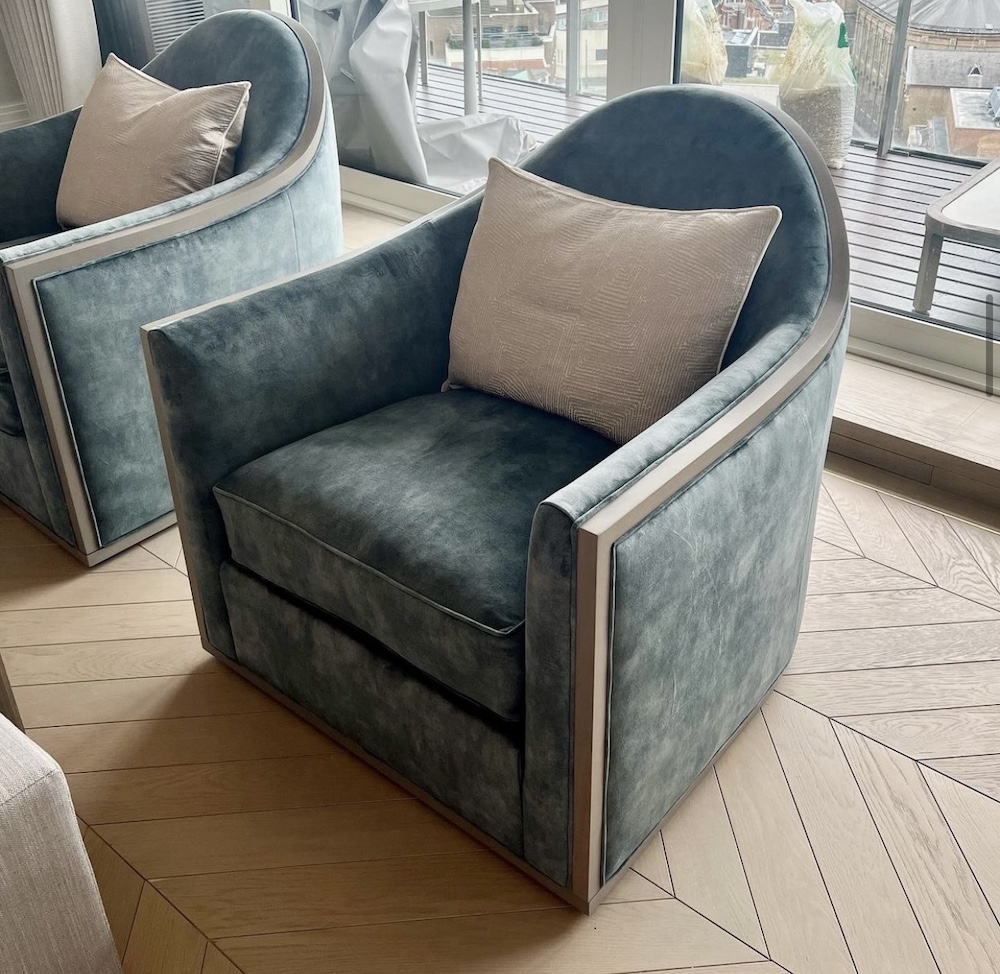
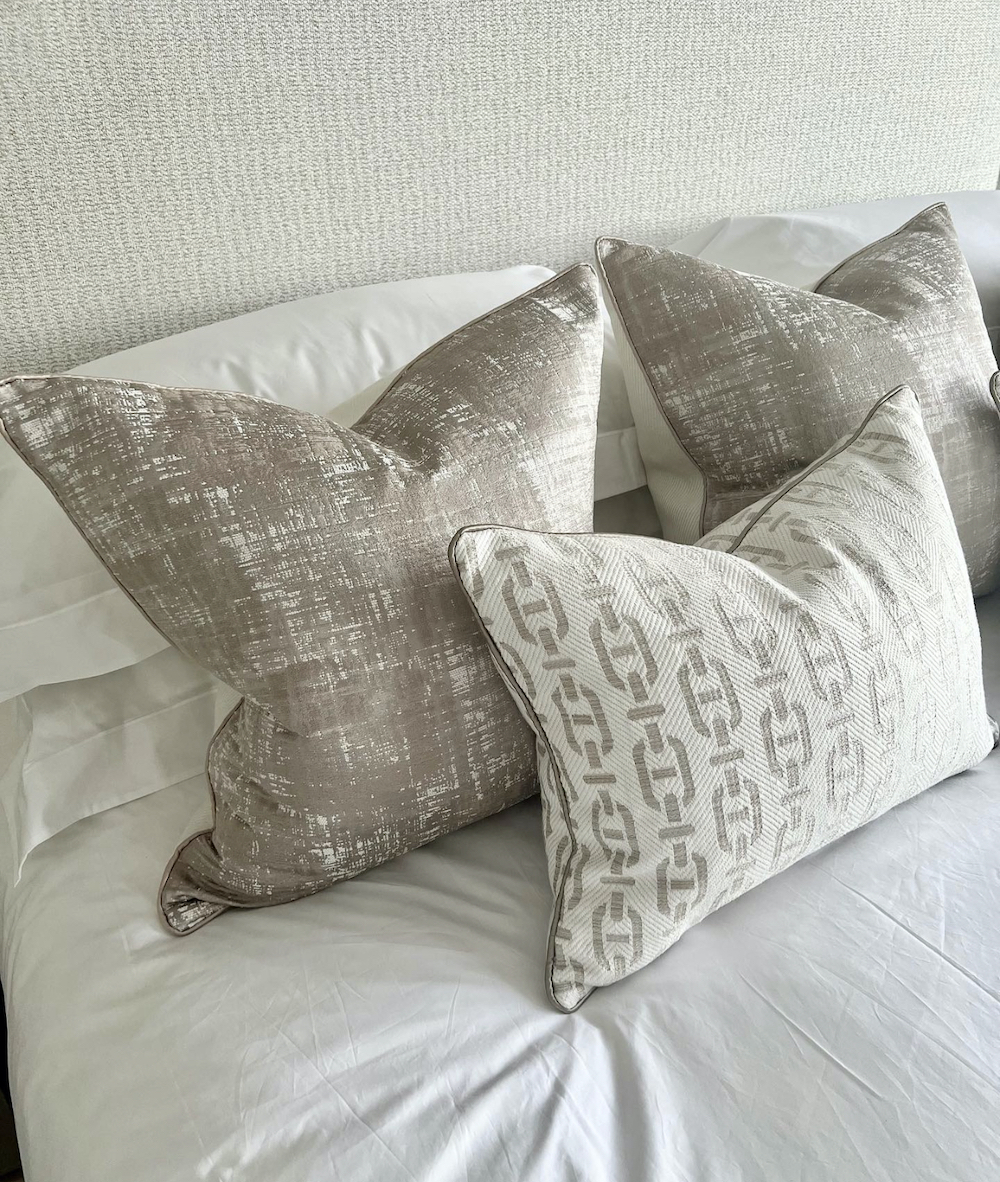
I don’t know about you but I’m quite rubbish at putting colours together. I actually had in my mind that my bedroom would be bright pink and navy blue… but the interior designer put together the most beautiful neutral scheme for us with pops of colour from cushions and accessories. Not only did she find the most beautiful fabrics that were perfectly matched, she included metals and stones and layered different textures to create a warm and cosy feel.
9. Bespoke Furniture
Say you have your exact bedside table / bathroom vanity / sideboard pictured in your mind but it doesn’t exist on any website… well you interior designer can design and get it made for you bespoke. It will then fit perfectly into your space and colour scheme without having to compromise. Sounds expensive right? Well the interior designer will find a supplier to fit with your budget or even copy your perfect bedside table for a cheaper price!
10. Taking the boring bits out
Going to look at fabrics or tiles for your home sounds really exciting but it reality it’s boring and overwhelming. You’ll go into a shop and there will be millions (no exaggeration) of fabric books etc and you won’t know where to start. Your designer will narrow the choices down for you and only present you with what’s right for you. In our case our designer put together a fabric box for each room and presented them to us in her studio. If there was anything we didn’t like (and there wasn’t much) she would find a substitute or a choice of two substitutes (honestly I know from experience, the less choice the better!) that will fit perfectly with the scheme.
11. They Think of things you might not
There were so many details I hadn’t considered when embarking on this reno… the architraves, the internal doors, the skirting… our interior designer found all of these for us and they all fit perfectly with the style of our property. She also came up with unique ideas such as our panelling feature wall that I never would have thought about! Though I had lots of ideas, an interior designer bought fresh eyes to the project and introduced me to concepts that I hadn’t seen before.
12. They make sure everything works functionally
When we first hired our interior designer and she came to visit we spoke about different spaces that we wanted to use for storage, she made us think about what we wanted to keep in each storage space and how everything would work functionally. In other words she also worked on the ‘why’ of every decision. It wasn’t just about making the place look pretty!
13. You could actually save money!
I think a lot of people consider an interior designer to be a luxury and an expensive option but actually there are lots of affordable ways to employ an interior designer. For example some designers offer an e-design service which is a less full service package but could still help with furniture selection, fabric, colour and room layout for a much smaller fee. Also some interior designers don’t charge a fee at all and instead make a commission on the furniture and fittings that they order for you. With their vast network of suppliers they will have vast discounts too, designers will pass some or all of this discount to the customer depending on their fee structure.
An interior designer will work to your budget and find suppliers (often secret ones!) that are within your price range. If there’s a piece of furniture you love, they can get it copied for cheaper, they can source materials and products that are great quality but are cheaper because they are lesser known brands. Also as everything is so carefully planned, little is left to chance so you won’t buy something that’s the wrong size or colour and make an expensive mistake.
Not only this but a beautifully designed home with stunning features will add value to your home and maybe even make you money in the long run.
14. You will get a home that you love
You may worry that by relinquishing total control, you won’t end up with a place you love… but that couldn’t be further from the truth. I passed on all my mood boards and inspiration images to our interior designer and she came up with a scheme based on everything that I loved. You might have your heart set on something but your designer will be honest with you if it just won’t work. For example I really bought into the current trend for panelling but our designer told me it just wouldn’t work in our space but she came up with the beautiful feature wall that I love.
We’re coming to the end of our reno and I couldn’t be happier! Follow our progress on my home account SilverFamilyHome.
Little Forest Restaurant Blackrock – The Review – By Alex Casablancas
By now, most Dublin pizza connoisseurs will know of Little Forest for it’s heavenly pies – mastered by Reggie White (former pizza chef at Pi) who teamed up with Shane Windrim (also from the kitchen at Pi) to open up in Blackrock under the auspices of John and Sandy Wyer.
The whole business started during the pandemic, and thus operated on a click and collect basis offering few but seriously good Neapolitan-style pizzas from which to choose from (think of the OG Fior di latte and tomato but also wild yet superb creations like their creamed corn and Nduja). All pizza bases are made with a sourdough starter which originated in Scéal Bakery.
Restrictions loosening, the venue opened up for sit in dining so – excited to be able to experience our go-to dough straight out of the oven – we immediately booked ourselves in for a mid week meal.
Due to the 8pm curfew at the time, we were notified that they would only be serving a 7 course menu in order to properly accommodate all tables during the dinner service.
Forest Avenue quality standards topped off by pizza of gods, yes please.
The evening started off at 6pm – when all tables were seated at the same time and drink orders were very efficiently taken. We were also asked to choose the pizza we would be having at the end of the menu. Initially torn between all 6 available options, we opted for the Nduja, Ricotta and Honey.
To start – Carlingford oysters with tomato vinegar and olive oil. The eye-catching pop of red and green were just an announcement of the flavour that was to come out of it. The acidity of the vinegar paired perfectly with the fragrant oyster and the phenomenal olive oil that wrapped it all up.
A perfect little start to get the palate going!
We continued with bite size portion Arancini. Reminisce to Southern Italy, these deep-fried spheres of rice surrounding a heart of butter and Caciocavallo cheese. Crunchy, oozy, salty amazeballs – it had it all.
Next – Focaccia. Undoubtedly a first taster of all things dough that were yet to come to the table. The best part of this bubbly bread is that one can be as basic or creative as you like. For Little Forest however, simplicity is paramount for this dish and the two slices we got needed no additional toppings – perfectly baked, the dough was airy in the center and had a nice crunch on the outside. These slices were best friends with the side house ricotta dip and additional pesto alla trapanese. We could have had a full meal portion worth of this dunkable delight.
As a fresh in-betweener, we were served crab, whipped bottarga, warm potato and radish. The mild sweetness of crab, salty and smoky fish roe paired with the gentle bitterness of radish and the substance of the spuds, was a combination that we inhaled in a couple of spoonfuls.
Moving on – wood fired thin garlic bread and served, to my surprise, with a very Barcelona inspired sider of a salty and a pickled anchovy (or boquerón) and since my childhood also known to me as “matrimonio”. A bite of fish followed by a mouthful of warm garlicky sourdough goodness – all we needed here was some sunshine and a glass of sparkling Catalan wine.
A umami bomb was next on the list – charred leek, brown butter, hazelnuts, speck trentino and baby girolle mushrooms.
The glory of charred leeks for me is always the contrast between their deeply charred exteriors and jammy, sweet interiors. This was done perfectly and was just elevated with the richness of the browned butter, ham and the additional texture of the nuts.
It all led up to pizza though. We could feel it coming somehow.
We had devoured them to go on other occasions – either directly from its take away box while driving back home or sitting by the seafront in Blackrock. There was something very special though about finally being able to enjoy it at their table.
Without wanting to sound cliché and repetitive, this really is a pizza that has nothing to hide, it is all about the quality of the 48-hour fermented, leavened dough – that Reggie has perfected over the years – the cooking, and the few ingredients on top.
The nduja and ricotta were still sizzling when it got to us and the familiar “leoparding” on the crust from the scorching heat of the oven made it all a thing of beauty.
The first bite really did remind us how good this dough is and one would go out of their way to drop by Little Forest for it. Pillowy and chewy yet not too thick and with a slight crunch on the side, altogether managing to support the heavier toppings.
The spicy hit from the nduja was well balanced with the smoothness and thick texture of the ricotta, which I personally found to be a good mozzarella alternative for once. The light hint of honey, which is usually quite overpowering at other pizza venues where the ingredient has become increasingly popular over the last few years, was in perfect measure and brought the whole mouthful together very nicely.
A decadent sweet finale of bread pudding, zabaglione and sherry prunes was served just before 8 pm. Reminiscent of a boozy Christmas dessert, it was also surprisingly light and a perfect spoonful portion for those of us who just need a soupçon of sugar after dinner.
Little Forest Restaurant Blackrock
We really enjoyed the texture and balance of the few ingredients – perfectly moist and warm with just the right amount of prunes in the center that burst through when digging in.
We are excited to get back to dining out and experiencing the very best of what Ireland has to offer. Little Forest encapsulates the very essence of what food is about – locally sourced produce cooked to put a smile on your face. There are no guarantees that this ideal tasting menu will remain as restrictions are lifted but do make sure you get over to Blackrock to try their pizza – it will most likely be the highlight of your day.
Many of my friends already traveled to Morocco. I remember colorful villages in my Instagram feed, lush courtyards, buzzing soukhs, fluffy Boucherouite rugs. And yes, Morocco still remains on my travel wish list. So it comes as no big surprise that Yonder Living caught my attention with their recent Moroccan imagery styled and photographed at the Berber Lodge in Marrakech. Yonder Living is an online destination for global homewares sourced and created by two sisters from London.
Yonder Living merges a passion for travels and interior decoration and puts a focus on handmade craftsmanship and well designed products. Whether you are looking for a new rug, cushions, decor items – or even Christmas decoration with a oriental twist – have a look at Yonder Living. I truly felt inspired to decorate an oriental Christmas tree!
Left your Valentine’s shopping a little late? Don’t worry, we’ll keep your secret… your amour doesn’t need to know where you got these perfect, last-minute Valentine’s Day gifts.
It’s never too late for a grand, romantic gesture, especially now with the help of same-day delivery!
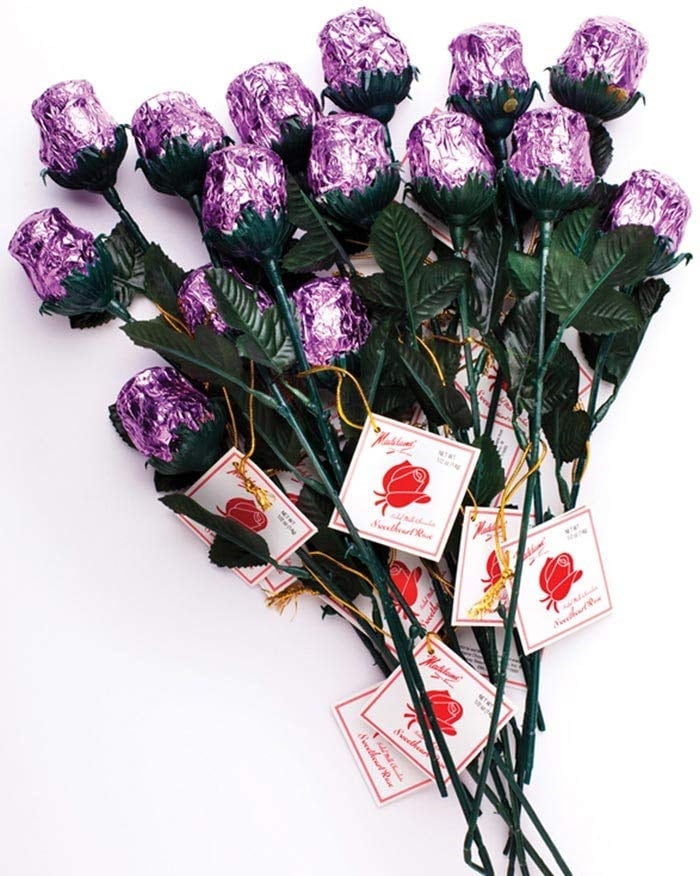
1. Madeline Chocolate: One Dozen Roses
There’s no longer a need to choose between chocolates and flowers. Plus these aren’t your typical flowers, so they won’t be wilting anytime soon!
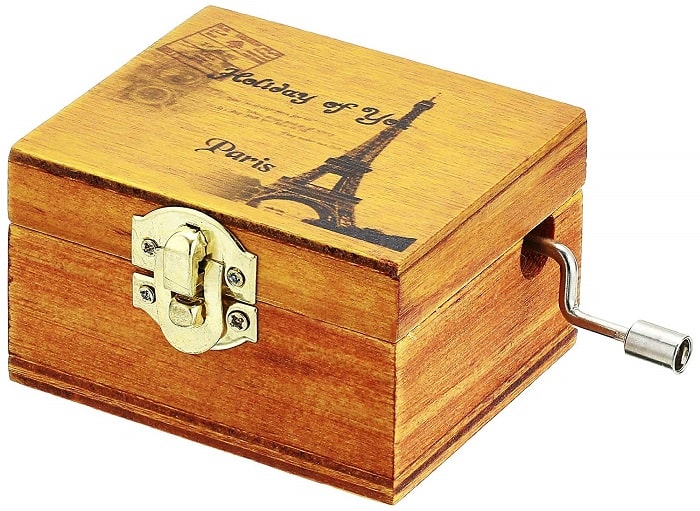
2. Diffemely Music Box with an Eiffel Tower Engraving
Gift something different this year. The hand-operated music box is made entirely of native wood. Boasting a retro design style, it can be used as a beautiful tabletop decoration. Turn the joystick to play a beautiful melody.
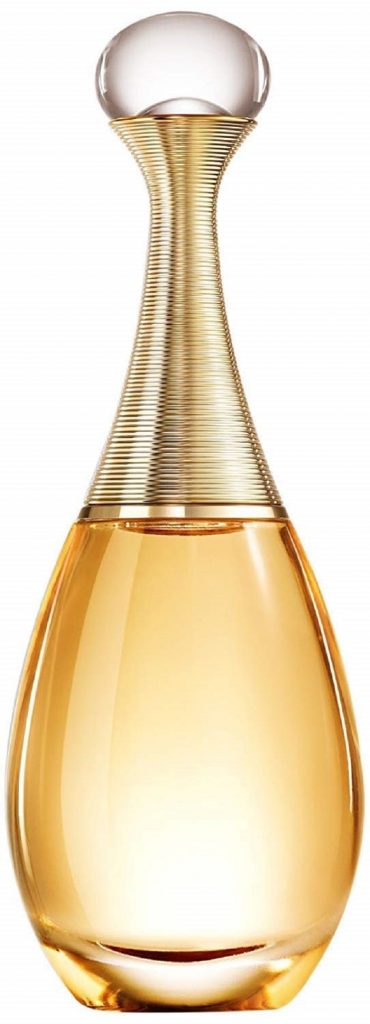
Discover J’adore, the iconic fragrance that embodies the ultimate expression of femininity. It blends a rare duo of Jasmine Grandiflorum from Grasse and Indian Sambac Jasmine with fruit and voluptuous sensuality.
Why not gift your loved one with these sought-after gemstones? A pair of earrings that can be worn with any outfit. The closures have been beautifully designed using French wire…
5. Maxim’s de Paris –Assorted French Fine Biscuits
Spoil your partner with this assortment of decadent French biscuits (36 delicious pieces). Filled with cinnamon, thin almond biscuits and more! Since 1893, Maxim’s de Paris has developed a line of fine gourmet products in order to seduce the most refined palates.
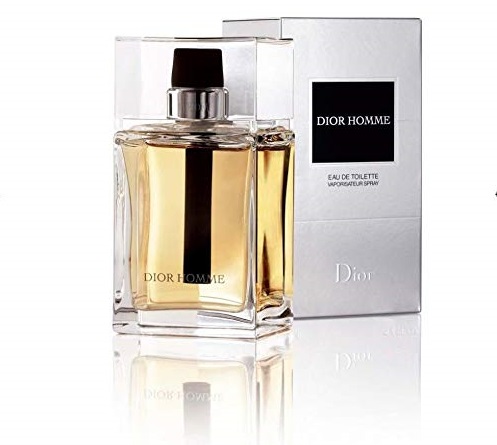
7. Christian Dior Homme Men’s 3.4-ounce Eau de Toilette Spray
“Wear Dior Homme the way you wear an elegantly sharp, modern suit.” – Dior. A smooth and intense fragrance made with noble ingredients, this is a quintessential Dior classic for men.
8. Kayla’s Cake – Premium Valentine’s French Macarons
An excellent gift idea for anyone searching for a delicious treat with a dozen, or more, dreamy flavours. Order with Kayla’s cake for a free personalised message to be included with your purchase.
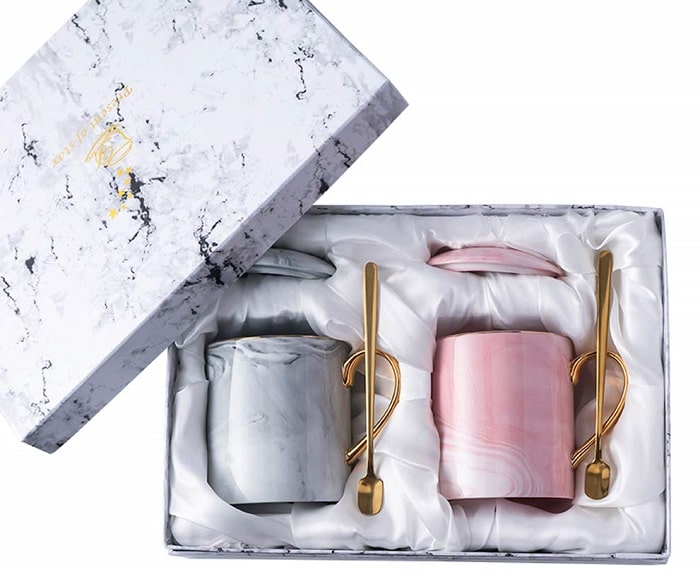
Packaged in a stylish silk-interior box, we love that you can gift it as it is… no wrapping needed. The ceramic texture is matched with an elegant marble finish plus it’s easy to clean. Nothing says “we’re a couple” more than this set.
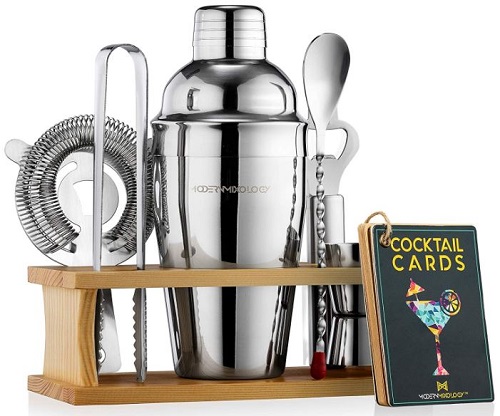
Become the ultimate cocktail master and serve up a tasty concoction with Mixology’s bartender kit. Whip up some classics or get inventive; it’s all in your hands.
Janneke Kuysters explains how you can sell your yacht for full price after crossing the Pacific
Photo: Tor Johnson
Buying a boat, sailing across the Atlantic and then exploring the Pacific, before selling it for the purchase price in New Zealand or Australia sounds like a dream come true. But is it really possible to sail halfway around the world effectively for free, by recouping the costs?
“Yes, it worked out very well for us,” says Lindsay Crutch. The Australian yachtsman had just finished sailing from France to Australia with his family on their Fountaine Pajot Lucia 40 Sandy Cheeks.
“We bought the boat brand new in France and cruised along the French coast to Spain to get used to sailing her. Then we crossed the Atlantic, and enjoyed a spell in the Caribbean before we sailed through the Panama Canal into the Pacific.
On entering Australian waters yachts need a thorough biosecurity check, which costs roughly $300 AUD, depending on the time needed to process the boat. Photo: RPAYC
“A year and a half after leaving France we tied up to our dock in Newcastle, New South Wales. A month later the boat was sold at the same price we bought it for, so basically the cost of the trip was the running cost of the boat and the insurance. I’d do it again in a heartbeat,” he adds.
“It can work out well,” agrees Robert Vrind. Vrind is a yacht broker with Yoti on the Gold Coast in Queensland, and regularly deals with cruisers wanting to sell their boats in Australia.
“Cruisers are either done with their sailing or are on limited budgets. The prospect of a long Indian Ocean passage and trip around South Africa home to Europe is not very appealing. It will easily add another year to the cruise and take another big bite out of the remaining savings. The vessels will be another year older, with considerably more hours on machinery, more wear and tear, and quite likely fetch less back home than in Australia.” Article continues below…
“No pizza today.” When this announcement is made at Port Cygnet Sailing Club, all conversations among members in the clubhouse…
He adds: “However, when you want to sell the boat here, you need to be aware of the intricacies of the Australian market: not every boat sells well here. Australians like catamarans more and more, but also production monohulls like Bavaria, Jeanneau, Beneteau and Hanse are popular. Berthing is expensive, so a good size is between 35ft and 45ft ideally.
“Little known, big, steel bluewater cruising boats will be harder to sell. Second-hand boats keep their value here, because the yacht building industry in Australia is geared only at fairly expensive custom-built boats.”
“The watersports industry is relatively young in Australia: only in the past decades has the larger public taken to sailing,” comments Lee Randall of Ensign Yacht brokers. “This creates a strong demand for second-hand boats, but the buyers are well-informed. Only certain brands sell very quickly; Bavaria, Lagoon, Leopard and Fountaine Pajot are the favourite brands for catamarans. A steel or aluminium boat could take up to a year to sell.”
Lee Randall at Ensign Yachtbrokers
An international market
At just four million, the population of New Zealand is much smaller than Australia (25 million), so logically you’d think the market for second-hand boats would be smaller. Bill Garlick, who owns a well-known brokerage in Opua (Bay of Islands), explains why that’s not necessarily the case:
“New Zealand is the southernmost major land mass in the South Pacific and is a nation obsessed with recreational and competitive sailing. It’s also high on the ‘bucket list’ of countries to visit so, not surprisingly, increasing numbers of cruisers who don’t want to cross the Indian Ocean or back track across the Pacific are saying au revoir to their yachts here, often exploring New Zealand by road before flying home.”
He adds: “Prices in New Zealand for well maintained and equipped offshore capable yachts are favourable for several reasons. New yachts arriving in New Zealand on transporters are priced to include freight, duty at 5% and GST (VAT) at 15%. A new yacht with an ex-factory price of NZ$450,000 could attract close to NZ$150,000 of additional costs. Owners who sail into New Zealand can expect to bank some of the delivery costs.”
Bill Garlick of Vinings NZ
Garlick says that good yachts can often attract buyers from outside New Zealand too. “It is our experience that the market for bluewater-equipped and capable yachts is international, and buyers’ preferences are much the same as they are anywhere in the world. Buyers are generally happy to travel to New Zealand to view a yacht.
“Well-known brands such as Amel, Beneteau, Catana, Hallberg-Rassy, Jeanneau, Leopard, Lagoon, Privilege, to name a few, are popular among ‘first-time liveaboards’.
“Modified or customised yachts are discounted relative to an ex-factory model. Glassfibre is the preferred construction material, with less interest in aluminium, steel and wood, even though Kiwis love wooden boats.
“Very few buyers are looking for a low priced ‘project’, and neglected or poorly maintained boats are heavily discounted. Unusual features such as freedom, gaff and junk rigs along with bilge and canting/retractable keels have limited appeal.
“Time on the market is directly related to price. Typically we suggest three prices to sellers: ‘top dollar’, which means waiting for the one buyer and a lengthy sales process; a ‘mid-range’ price, with an expectation that a sale will be concluded within 12 months, and the ‘gone in 90 days price’.”
Cliff Smith, an American cruiser, went for the last category and sold his Young Sun 35 Carola almost at the quarantine dock after arriving in New Zealand. It went to a British buyer who was keen to start cruising immediately.
“In 2014 we left the United States to cruise the Pacific,” explains Smith. “Although we loved Carola, after a few years cruising we wanted something larger, faster and more comfortable. A beautiful Najad 440 was for sale in New Zealand, but they had just left Opua for the Tropics. We ended up buying the Najad there and selling Carola very quickly after that in New Zealand.
Boats for sale on Australia’s Gold Coast
“The help of a broker is very important when buying and selling your yacht overseas; they bring serious buyers and sellers together and they have knowledge of the legal and fiscal issues involved.”
Increasing your chances
It pays to come well prepared if you plan to sell your boat in New Zealand or Australia. This starts with the selection of the right boat with the right specifications to increase the chances of a quick sale.
Contacting a broker in advance can also be a smart idea. We also saw many Australian brokers ‘work the docks’ in, for instance, Pape’ete, Tahiti, to source popular boats for their markets. This may be a good starting point for the process of selling it.
The Fountaine Pajot Lucia 40 Sandy Cheeks was sailed halfway round the world and sold in Australia for what she cost new
Tax and costs
New Zealand
New Zealand Customs offer two main options for yachts arriving in New Zealand. The most popular for transient cruisers is a two-year Temporary Import Entry (TIE) evidenced by NZ Customs ‘yellow’ C4G form, which entitles the holder to VAT (GST15%) exemption on goods purchased for the yacht and the rental cost of berths. If the owner holds a C4G form, the yacht cannot be advertised for sale in New Zealand.
The second option arises if you advise NZ Customs on or before arrival that the yacht will be sold in New Zealand. The TIE will be issued for one year without a C4G, a refundable bond equal to duty and GST will be payable, and there’ll be no GST exemption on purchases.
The payable duty (5%) and GST (15%) will be calculated on the cost of the yacht less depreciation at 10% per annum. The result can be surprisingly low duty and GST. If for any reason NZ Customs decides to calculate duty and GST on current market value, rather than depreciated cost, a valuation from a recognised brokerage will be required.
Duty and GST is immediately payable if the purchaser is a New Zealand resident. Neither duty nor GST is payable if the purchaser is foreign. Following sale, the yacht can usually stay in New Zealand until the TIE expires.
Bill Garlick adds: “NZ Customs has wide discretion and tend to treat each yacht on a case-by-case basis. Some recent decisions indicate more empathy and understanding of cruisers, for example, permission has been granted for some yachts holding a C4G to be advertised in New Zealand when a change in personal circumstances precipitates a sale.”
For more information visit customs.govt.nz and search ‘yacht and small craft’ and ‘Form C4G’ for relevant pdfs.
Australia
In Australia you have to pay the tax upfront at the moment the boat is put on the market: 5% on the value of the boat and 10% GST on the value of the vessel with the duty added. The valuation is done by an accredited yacht surveyor (a typical valuation charge is AU$20/ft) and is usually based on the sales value of similar boats.
Repairs, parts and maintenance work are exempt from VAT (GST in Australia, 10%).
For more information, visit: abf.gov.au First published in the November 2019 edition of Yachting World.