Показаны сообщения с ярлыком Practical cruising. Показать все сообщения

воскресенье, 29 января 2023 г.

Selling your boat in the Pacific: How to get full price after an oceanadventure

Janneke Kuysters explains how you can sell your yacht for full price after crossing the Pacific

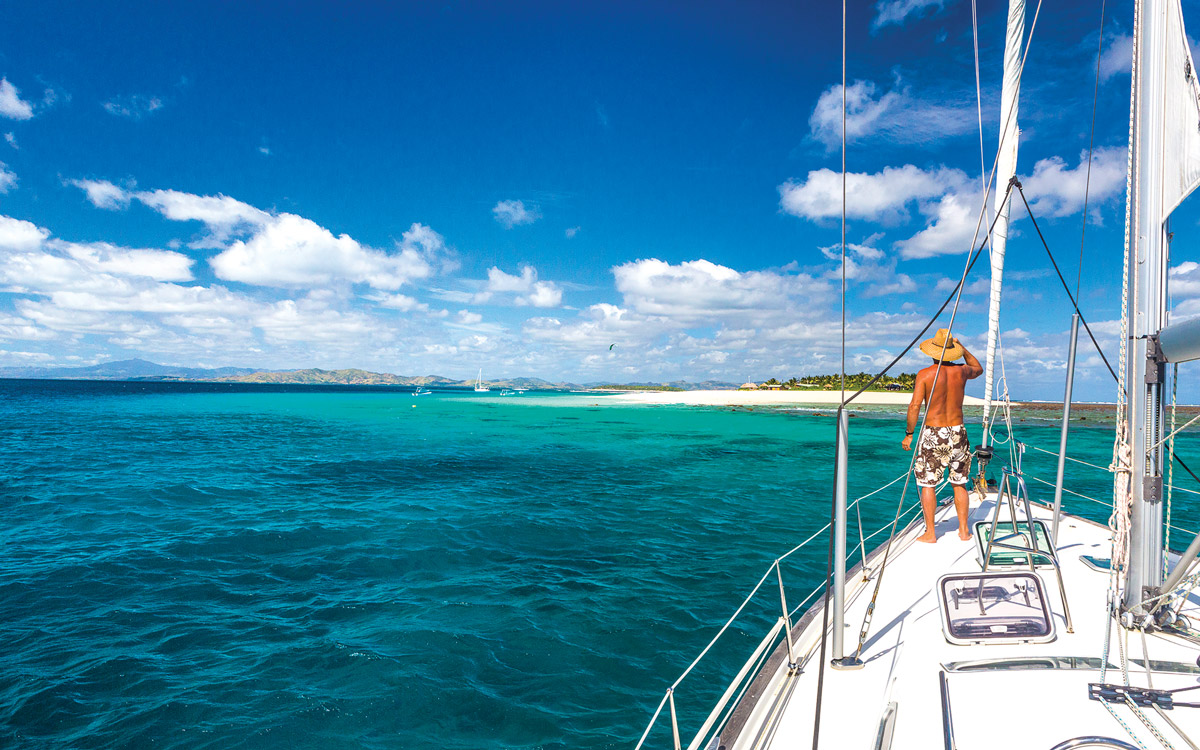
selling-a-boat-in-the-pacific-south-pacific-marina-credit-tor-johnson
Photo: Tor Johnson

Buying a boat, sailing across the Atlantic and then exploring the Pacific, before selling it for the purchase price in New Zealand or Australia sounds like a dream come true. But is it really possible to sail halfway around the world effectively for free, by recouping the costs?
“Yes, it worked out very well for us,” says Lindsay Crutch. The Australian yachtsman had just finished sailing from France to Australia with his family on their Fountaine Pajot Lucia 40 Sandy Cheeks.
“We bought the boat brand new in France and cruised along the French coast to Spain to get used to sailing her. Then we crossed the Atlantic, and enjoyed a spell in the Caribbean before we sailed through the Panama Canal into the Pacific.
selling-a-boat-in-the-pacific-north-sydney-marina-credit-rpayc
On entering Australian waters yachts need a thorough biosecurity check, which costs roughly $300 AUD, depending on the time needed to process the boat. Photo: RPAYC
“A year and a half after leaving France we tied up to our dock in Newcastle, New South Wales. A month later the boat was sold at the same price we bought it for, so basically the cost of the trip was the running cost of the boat and the insurance. I’d do it again in a heartbeat,” he adds.
“It can work out well,” agrees Robert Vrind. Vrind is a yacht broker with Yoti on the Gold Coast in Queensland, and regularly deals with cruisers wanting to sell their boats in Australia.
“Cruisers are either done with their sailing or are on limited budgets. The prospect of a long Indian Ocean passage and trip around South Africa home to Europe is not very appealing. It will easily add another year to the cruise and take another big bite out of the remaining savings. The vessels will be another year older, with considerably more hours on machinery, more wear and tear, and quite likely fetch less back home than in Australia.”
Article continues below…


He adds: “However, when you want to sell the boat here, you need to be aware of the intricacies of the Australian market: not every boat sells well here. Australians like catamarans more and more, but also production monohulls like Bavaria, Jeanneau, Beneteau and Hanse are popular. Berthing is expensive, so a good size is between 35ft and 45ft ideally.
“Little known, big, steel bluewater cruising boats will be harder to sell. Second-hand boats keep their value here, because the yacht building industry in Australia is geared only at fairly expensive custom-built boats.”
“The watersports industry is relatively young in Australia: only in the past decades has the larger public taken to sailing,” comments Lee Randall of Ensign Yacht brokers. “This creates a strong demand for second-hand boats, but the buyers are well-informed. Only certain brands sell very quickly; Bavaria, Lagoon, Leopard and Fountaine Pajot are the favourite brands for catamarans. A steel or aluminium boat could take up to a year to sell.”
selling-a-boat-in-the-pacific-lee-randall-ensign-yacht-brokers
Lee Randall at Ensign Yachtbrokers

An international market

At just four million, the population of New Zealand is much smaller than Australia (25 million), so logically you’d think the market for second-hand boats would be smaller. Bill Garlick, who owns a well-known brokerage in Opua (Bay of Islands), explains why that’s not necessarily the case:
“New Zealand is the southernmost major land mass in the South Pacific and is a nation obsessed with recreational and competitive sailing. It’s also high on the ‘bucket list’ of countries to visit so, not surprisingly, increasing numbers of cruisers who don’t want to cross the Indian Ocean or back track across the Pacific are saying au revoir to their yachts here, often exploring New Zealand by road before flying home.”
He adds: “Prices in New Zealand for well maintained and equipped offshore capable yachts are favourable for several reasons. New yachts arriving in New Zealand on transporters are priced to include freight, duty at 5% and GST (VAT) at 15%. A new yacht with an ex-factory price of NZ$450,000 could attract close to NZ$150,000 of additional costs. Owners who sail into New Zealand can expect to bank some of the delivery costs.”
selling-a-boat-in-the-pacific-Bill-Garlick-Vinings-NZ
Bill Garlick of Vinings NZ
Garlick says that good yachts can often attract buyers from outside New Zealand too. “It is our experience that the market for bluewater-equipped and capable yachts is international, and buyers’ preferences are much the same as they are anywhere in the world. Buyers are generally happy to travel to New Zealand to view a yacht.
“Well-known brands such as Amel, Beneteau, Catana, Hallberg-Rassy, Jeanneau, Leopard, Lagoon, Privilege, to name a few, are popular among ‘first-time liveaboards’.
“Modified or customised yachts are discounted relative to an ex-factory model. Glassfibre is the preferred construction material, with less interest in aluminium, steel and wood, even though Kiwis love wooden boats.
“Very few buyers are looking for a low priced ‘project’, and neglected or poorly maintained boats are heavily discounted. Unusual features such as freedom, gaff and junk rigs along with bilge and canting/retractable keels have limited appeal.
“Time on the market is directly related to price. Typically we suggest three prices to sellers: ‘top dollar’, which means waiting for the one buyer and a lengthy sales process; a ‘mid-range’ price, with an expectation that a sale will be concluded within 12 months, and the ‘gone in 90 days price’.”
Cliff Smith, an American cruiser, went for the last category and sold his Young Sun 35 Carola almost at the quarantine dock after arriving in New Zealand. It went to a British buyer who was keen to start cruising immediately.
“In 2014 we left the United States to cruise the Pacific,” explains Smith. “Although we loved Carola, after a few years cruising we wanted something larger, faster and more comfortable. A beautiful Najad 440 was for sale in New Zealand, but they had just left Opua for the Tropics. We ended up buying the Najad there and selling Carola very quickly after that in New Zealand.
selling-a-boat-in-the-pacific-australia-gold-coast
Boats for sale on Australia’s Gold Coast
“The help of a broker is very important when buying and selling your yacht overseas; they bring serious buyers and sellers together and they have knowledge of the legal and fiscal issues involved.”

Increasing your chances

It pays to come well prepared if you plan to sell your boat in New Zealand or Australia. This starts with the selection of the right boat with the right specifications to increase the chances of a quick sale.
Contacting a broker in advance can also be a smart idea. We also saw many Australian brokers ‘work the docks’ in, for instance, Pape’ete, Tahiti, to source popular boats for their markets. This may be a good starting point for the process of selling it.
selling-a-boat-in-the-pacific-Fountaine-Pajot-Lucia-40-Sandy-Cheeks
The Fountaine Pajot Lucia 40 Sandy Cheeks was sailed halfway round the world and sold in Australia for what she cost new

Tax and costs

New Zealand

New Zealand Customs offer two main options for yachts arriving in New Zealand. The most popular for transient cruisers is a two-year Temporary Import Entry (TIE) evidenced by NZ Customs ‘yellow’ C4G form, which entitles the holder to VAT (GST15%) exemption on goods purchased for the yacht and the rental cost of berths. If the owner holds a C4G form, the yacht cannot be advertised for sale in New Zealand.
The second option arises if you advise NZ Customs on or before arrival that the yacht will be sold in New Zealand. The TIE will be issued for one year without a C4G, a refundable bond equal to duty and GST will be payable, and there’ll be no GST exemption on purchases.
The payable duty (5%) and GST (15%) will be calculated on the cost of the yacht less depreciation at 10% per annum. The result can be surprisingly low duty and GST. If for any reason NZ Customs decides to calculate duty and GST on current market value, rather than depreciated cost, a valuation from a recognised brokerage will be required.
Duty and GST is immediately payable if the purchaser is a New Zealand resident. Neither duty nor GST is payable if the purchaser is foreign. Following sale, the yacht can usually stay in New Zealand until the TIE expires.
Bill Garlick adds: “NZ Customs has wide discretion and tend to treat each yacht on a case-by-case basis. Some recent decisions indicate more empathy and understanding of cruisers, for example, permission has been granted for some yachts holding a C4G to be advertised in New Zealand when a change in personal circumstances precipitates a sale.”
For more information visit customs.govt.nz and search ‘yacht and small craft’ and ‘Form C4G’ for relevant pdfs.

Australia

In Australia you have to pay the tax upfront at the moment the boat is put on the market: 5% on the value of the boat and 10% GST on the value of the vessel with the duty added. The valuation is done by an accredited yacht surveyor (a typical valuation charge is AU$20/ft) and is usually based on the sales value of similar boats.
Repairs, parts and maintenance work are exempt from VAT (GST in Australia, 10%).
For more information, visit: abf.gov.au
First published in the November 2019 edition of Yachting World.
 

среда, 29 января 2020 г.

Solo Atlantic sailing: Lessons learned en-route to Madeira

Could you take on the Atlantic Ocean alone? Ed Gorman headed off on a single-handed cruise to Madeira to find out just that

solo-atlantic-sailing-credit-ed-gorman
All photos: Ed Gorman

It was just before midnight in the eastern fringes of the Atlantic Ocean, about 130 miles south-west of Cape Finisterre. To my right I could see an ominous wall of dense black cloud, switching off the stars as it advanced at sea level towards me.


The waiting game was filling me with dread. “What’s in that thing?” I thought as I furled the genoa, set the Solent staysail and put two reefs in the main. I was on the wind in 20 knots of true wind, but expecting the breeze to veer as a front came through. First, the breeze clocked up to 23, then 25 knots and the sea state turned surprisingly violent. A few minutes later the cockpit display was showing 27 knots and Albertine was charging ahead as I wrestled the third reef into place.


Then the shift came through as if God himself had flicked a switch and the wind increased again. At this point I completely lost my bearings – my windward from my leeward, my port from my starboard – as Albertine’s bow ploughed towards the Portuguese coast. Cue a Chinese gybe, headsail flogging, sheets thrashing.


solo-atlantic-sailing-hydraulic-autopilot-credit-ed-gorman

The hydraulic autopilot was used for long periods of self-steering, which meant heavy reliance on batteries and recharging


I shouted aloud at my incompetence and took a couple of deep breaths before finally setting her up on a starboard-hand reach. “I am exhausted, bewildered and very unimpressed with my response. What would I do in 37 knots?” I noted in my journal as we powered south towards Madeira.


The idea of going solo on the ocean had always been a dream for me. As a boy growing up in the 1960s in landlocked Warwickshire I devoured stories about Francis Chichester, Robin Knox-Johnston and Chay Blyth. Then as a journalist with The Times, I covered Ellen MacArthur’s spectacular sailing career and the equally extensive exploits of men like Mike Golding and Francis Joyon.


Looking back, I used to think I understood the challenges and difficulties those people faced. But I was wrong. Only by doing it, even on relatively small scale (and not even racing) can you understand the psychological pressures that solo ocean sailing can bring.


Article continues below…


At heart it is a romantic notion: the idea of one person on a sailing boat, completely free on the vast expanse of the ocean, looking after oneself and the boat 24 hours a day, travelling alone for hundreds or thousands of miles and dealing with whatever the weather throws at you. There’s a purity to it, not unlike solo mountaineering. To me, it always felt like the ultimate test.


For years I sailed mainly solo around the coasts of Britain, Ireland, north-west Spain and Greece in a succession of cruising boats, always dropping anchor at night or finding a harbour to settle down in. Long passages were completed with at least one other crew on board. The notion of going offshore day after day, and doing it alone, remained a distant prospect.


Then I happened upon the website of an east coast cruiser named James Tomlinson. An experienced coastal sailor in his early 60s, like me, he had always wondered what it would be like to go solo properly. So last year he did it. At the helm of his Westerly Typhoon, Talisker 1, he sailed from Suffolk to Madeira and back via the Azores.


solo-atlantic-sailing-falmouth-azores-madeira-map

Gorman’s route tracker shows how he temporarily looped back to the Azores for repairs to problem batteries


I read his blogs and watched his videos of an ambitious 4,000-mile round trip. He seemed to love every minute of it and what’s more he looked completely calm and in control at all times. I found myself thinking: “If he can do it…”


Having made up my mind in an instant I ran into the kitchen to inform my bewildered wife: I was finally going to sail solo on the Atlantic.


To make it a reality, the first thing I did was book her a flight to Madeira on a date in early June. From that moment on the flight became the anchor point of the whole adventure.


I had to be in Madeira by 10 June, when we would have a week’s holiday together on the boat come what may. It sounds simple. Just sail alone to the latitude of southern Morocco and back, but I was to learn that this would be a demanding proposition from the moment I started planning it.


Two years earlier I’d bought a new Jeanneau Sun Odyssey 389. Albertine was quick, nimble and fun to sail. With a deep keel, single deep fin rudder and a chine in the after sections of the hull, she goes to windward beautifully and surfs fast downwind. She came with a fully battened main and 135% genoa and a Code Zero. To that I added an A3 asymmetric reaching spinnaker in a cruising chute.


Reality bites


As I began my planning, I quickly realised how much I needed to add to make Albertine fit for offshore long-distance solo sailing. My longest trip alone in the yacht so far had been from Falmouth to Cork – about 30 hours – now I was planning for anything up to 11 days non-stop.


Starting to think though safety issues, what could go wrong, and what spares you need, you very quickly have a huge to-do list. The extra gear I bought for Atlantic sailing was a storm jib, a third reef in the main, an inner forestay and Solent sail on hanks for big breeze upwind, a radar unit, an EPIRB and handheld GPS, spare fuel cans and the hardware for the satellite communications system IridiumGo! on which I could access the PredictWind weather service.


solo-atlantic-sailing-Porto-Santo-credit-ed-gorman

Gorman makes his mark on the harbour wall at Porto Santo


Unlike the hardcore long-distance sailors I would go on to meet in the Azores, I planned to rely on my hydraulic integrated autopilot for self-steering, as opposed to a wind pilot. This meant that the engine would be used for charging and the state of my batteries would become an obsession.


To go offshore for a long time (in my case it was a two-month trip altogether) you have to be ruthless. You have to cut the ties that secure you to the land and focus on one thing only: getting ready and being in place at your departure port on time.


For me this was Falmouth, where I learnt to sail as a boy and have loved ever since. I have sailed to Cornwall from my homeport of Chichester many times but this felt different. I was taking the first steps on the most ambitious voyage I had ever attempted by a long chalk.


solo-atlantic-sailing-ed-gorman-helm

Ed Gorman is a former Times journalist


From the moment I started beating up towards the Solent I was thinking about trying to sail the boat within itself – not pushing as I usually do – and thinking through every manoeuvre before I executed it to ensure I did not risk damaging the rig in any way. This was going to be a marathon not a sprint.


Making the leap


On the day I left the Cornish coast, the weather was foul. I had up to 25 knots across my deck as I beat out past the Lizard lost in the murk off my starboard bow. In the back of my mind I was wondering if I was about to make a complete fool of myself. But the thrill of going long-distance, single-handed was electric.


Not since I crossed the border illegally from Pakistan into Soviet-occupied Afghanistan as a young journalist in the mid-1980s had I experienced a similarly delicious combination of excitement, fear and adrenalin. I decided from the beginning of my planning phase to try and sail the 1,200 miles from Falmouth to Porto Santo, just east of Madeira, non-stop.


I had a far from ideal weather window with a slow upwind slog ahead of me and in the later stages of my eight-day voyage, a vast weather system called Storm Miguel would make its way across the North Atlantic encouraging me to get south as fast as possible. How I would cope with loneliness or manage fatigue were among the big unknowns.


‘I can’t believe I have been at sea for just over a day,’ I wrote in my journal off Ushant. ‘It feels like a lifetime. I have suffered the classic “first 48 hours” baptism with sudden mood swings – moments of joy, loneliness, frustration, resignation and then… determination.’


On the first night I caused the only damage to the sails in the entire 3,800-mile trip when a flogging jib sheet punched a small hole in the sail when I forgot to furl it inside the inner forestay while tacking to avoid a freighter. When I discovered the damage in the morning I was furious with myself for making such a basic error.


Finding a rhythm


But then I gradually settled down. I remembered, as I had planned, to check my position against landmarks on shore. It was not long before I had passed the latitude of Paris – I was sailing down the Champs Élysées! It was a simple trick to measure progress on a long journey.


For the first time in my long sailing career I managed to properly sleep. I could ‘see’ cargo ships on AIS and the alarm was working perfectly: it gave me the confidence to drift off in the saloon and I got into a pattern of sleeping for about an hour at a time, almost all of it at night. Overall I probably managed about four to five hours out of every 24 and never came to close to hallucinating through exhaustion.


Cracked off on a nice east-south-easterly breeze blowing up from Biarritz, I cruised south and came within touching distance of the Spanish coast west of La Coruña. After agonising about whether to pop into one of the Galician Rias, I decided to stick to my non-stop plan and tack back out to sea.


solo-atlantic-sailing-approaching-Porto-Santo-credit-ed-gorman

After nine days at sea, the island of Porto Santo was a spectacular sight off Albertine’s starboard bow


Arriving in Porto Santo was a wonderful moment; a feeling of achievement and contentment that I have rarely experienced. Like James Tomlinson and many others before me, I painted my name on the harbour wall in the traditional way. I had sailed there non-stop and discovered that precious skill in a traveller: enjoying the journey and not obsessing about arriving at my destination.


After our week’s holiday on Madeira, the trip to Santa Maria should have been straightforward but a 36-hour bout of food poisoning that took hold eight hours into the four-day voyage turned it into the journey from hell. Food poisoning and going upwind solo in a monohull in the breeze is a very bad combination.


The third leg proved the hardest psychologically. Unlike the voyage south there are no places to stop on the way back from the Azores to Falmouth and this caught me out a little. It is a 1,500-mile marathon and you are hundreds of miles off the coast. Charging problems with damaged batteries forced me to restart this leg three times and when I finally went for it, sailing to the Lizard in just under 11 days, I was permanently on edge about whether the pilot would have sufficient power.


solo-atlantic-sailing-Porto-Santo-harbour-credit-ed-gorman

Albertine lies to anchor in Porto Santo harbour. “Not the prettiest of spots, but that was the least of my worries. I’d got there in one piece” he recalls.


Although there were some huge downers (not least having to turn back to the Azores for the second time, sailing 350 miles in the process) there were exceptional moments and long periods when I tasted the joy of the soloist often accompanied by music and sea birds, as well as the dolphins, porpoises, plus the odd shark and fin whale that swam alongside.


On reflection


‘Sitting in the cockpit, it’s a beautiful evening with the ever-present shearwaters gliding and wheeling around the boat on a deep blue ocean in a light northerly breeze,’ I wrote as I finally cleared the Azores on the way north. Watching the stunning island of São Miguel gradually dissolve behind me; the rich greens of the pastures and reds of the dramatic rock faces on the cliffs steadily draining of colour as Albertine heads north-west at 40° apparent.’


I understood that solitude is the joy of being alone and loneliness is the pain of isolation, and that the former reigns when things are going well, and the latter grabs you when the going is harder: a nasty head sea, an awful tacking angle, an engine that doesn’t start, a battery that won’t hold power or a body afflicted by sickness.


solo-atlantic-sailing-Quinta-do-Lorde-marina-Madeira-credit-ed-gorman

The author on the pontoon next to Albertine at the well-run and quiet marina at Quinta do Lorde in Madeira


When I got back the first question from many was “What next?” My answer was unequivocal. I had loved – and occasionally hated – my experience alone on the Atlantic but, having done it, I have well and truly scratched that itch and will not go back alone.


What I learned from solo Atlantic sailing


Mood swings: The trick is not to get too carried away by the highs and not sink too low in the troughs. That way you can navigate a psychological middle way that is more balanced.


Sleep: The most important ingredient for energy, optimism and enjoyment. Whenever you can get it as a soloist, take it.


Radar: Don’t bother with it. Offshore almost everything is on AIS. Within 30 miles of the coast you are on watch in any case.


Food: You can provision the boat with all sorts of dry stores but in the end all you want is fresh food and your appetite is limited anyway so don’t take too much, it’s just dead weight. I returned with 24 cans of baked beans and ten tins of creamed rice.


Light v heavy? Albertine is quite a light boat; for big seas in the Atlantic a heavier boat might suit some people more.


Batteries: Find out as much as you can about what you have and how they work. Go for the most powerful ones you can find that fit your designated spaces.


Pilot: I got away with using the hydraulic autopilot but really you need something like the Hydrovane or Monitor (which I had on my previous boat and was a black art to master but superb once sorted out).


PredictWind: Absolutely brilliant. With this service you rarely navigate. It’s all about the optimum wind angle for the next 12 hours and the routing programme helps you work that out.


The Atlantic: Don’t forget it’s huge!


ed-gorman-headshot-bw-600-squareAbout the author


A former war correspondent, deputy foreign editor and deputy head of news at The Times, Ed Gorman now divides his time between writing and his responsibilities as editorial director of a sports management company.


First published in the January 2020 edition of Yachting World.


The post Solo Atlantic sailing: Lessons learned en-route to Madeira appeared first on Yachting World.

Solo Atlantic sailing: Lessons learned en-route to Madeira

Could you take on the Atlantic Ocean alone? Ed Gorman headed off on a single-handed cruise to Madeira to find out just that

solo-atlantic-sailing-credit-ed-gorman
All photos: Ed Gorman

It was just before midnight in the eastern fringes of the Atlantic Ocean, about 130 miles south-west of Cape Finisterre. To my right I could see an ominous wall of dense black cloud, switching off the stars as it advanced at sea level towards me.

The waiting game was filling me with dread. “What’s in that thing?” I thought as I furled the genoa, set the Solent staysail and put two reefs in the main. I was on the wind in 20 knots of true wind, but expecting the breeze to veer as a front came through. First, the breeze clocked up to 23, then 25 knots and the sea state turned surprisingly violent. A few minutes later the cockpit display was showing 27 knots and Albertine was charging ahead as I wrestled the third reef into place.

Then the shift came through as if God himself had flicked a switch and the wind increased again. At this point I completely lost my bearings – my windward from my leeward, my port from my starboard – as Albertine’s bow ploughed towards the Portuguese coast. Cue a Chinese gybe, headsail flogging, sheets thrashing.

solo-atlantic-sailing-hydraulic-autopilot-credit-ed-gorman

The hydraulic autopilot was used for long periods of self-steering, which meant heavy reliance on batteries and recharging

I shouted aloud at my incompetence and took a couple of deep breaths before finally setting her up on a starboard-hand reach. “I am exhausted, bewildered and very unimpressed with my response. What would I do in 37 knots?” I noted in my journal as we powered south towards Madeira.

The idea of going solo on the ocean had always been a dream for me. As a boy growing up in the 1960s in landlocked Warwickshire I devoured stories about Francis Chichester, Robin Knox-Johnston and Chay Blyth. Then as a journalist with The Times, I covered Ellen MacArthur’s spectacular sailing career and the equally extensive exploits of men like Mike Golding and Francis Joyon.

Looking back, I used to think I understood the challenges and difficulties those people faced. But I was wrong. Only by doing it, even on relatively small scale (and not even racing) can you understand the psychological pressures that solo ocean sailing can bring.

Article continues below…


At heart it is a romantic notion: the idea of one person on a sailing boat, completely free on the vast expanse of the ocean, looking after oneself and the boat 24 hours a day, travelling alone for hundreds or thousands of miles and dealing with whatever the weather throws at you. There’s a purity to it, not unlike solo mountaineering. To me, it always felt like the ultimate test.

For years I sailed mainly solo around the coasts of Britain, Ireland, north-west Spain and Greece in a succession of cruising boats, always dropping anchor at night or finding a harbour to settle down in. Long passages were completed with at least one other crew on board. The notion of going offshore day after day, and doing it alone, remained a distant prospect.

Then I happened upon the website of an east coast cruiser named James Tomlinson. An experienced coastal sailor in his early 60s, like me, he had always wondered what it would be like to go solo properly. So last year he did it. At the helm of his Westerly Typhoon, Talisker 1, he sailed from Suffolk to Madeira and back via the Azores.

solo-atlantic-sailing-falmouth-azores-madeira-map

Gorman’s route tracker shows how he temporarily looped back to the Azores for repairs to problem batteries

I read his blogs and watched his videos of an ambitious 4,000-mile round trip. He seemed to love every minute of it and what’s more he looked completely calm and in control at all times. I found myself thinking: “If he can do it…”

Having made up my mind in an instant I ran into the kitchen to inform my bewildered wife: I was finally going to sail solo on the Atlantic.

To make it a reality, the first thing I did was book her a flight to Madeira on a date in early June. From that moment on the flight became the anchor point of the whole adventure.

I had to be in Madeira by 10 June, when we would have a week’s holiday together on the boat come what may. It sounds simple. Just sail alone to the latitude of southern Morocco and back, but I was to learn that this would be a demanding proposition from the moment I started planning it.

Two years earlier I’d bought a new Jeanneau Sun Odyssey 389. Albertine was quick, nimble and fun to sail. With a deep keel, single deep fin rudder and a chine in the after sections of the hull, she goes to windward beautifully and surfs fast downwind. She came with a fully battened main and 135% genoa and a Code Zero. To that I added an A3 asymmetric reaching spinnaker in a cruising chute.

Reality bites

As I began my planning, I quickly realised how much I needed to add to make Albertine fit for offshore long-distance solo sailing. My longest trip alone in the yacht so far had been from Falmouth to Cork – about 30 hours – now I was planning for anything up to 11 days non-stop.

Starting to think though safety issues, what could go wrong, and what spares you need, you very quickly have a huge to-do list. The extra gear I bought for Atlantic sailing was a storm jib, a third reef in the main, an inner forestay and Solent sail on hanks for big breeze upwind, a radar unit, an EPIRB and handheld GPS, spare fuel cans and the hardware for the satellite communications system IridiumGo! on which I could access the PredictWind weather service.

solo-atlantic-sailing-Porto-Santo-credit-ed-gorman

Gorman makes his mark on the harbour wall at Porto Santo

Unlike the hardcore long-distance sailors I would go on to meet in the Azores, I planned to rely on my hydraulic integrated autopilot for self-steering, as opposed to a wind pilot. This meant that the engine would be used for charging and the state of my batteries would become an obsession.

To go offshore for a long time (in my case it was a two-month trip altogether) you have to be ruthless. You have to cut the ties that secure you to the land and focus on one thing only: getting ready and being in place at your departure port on time.

For me this was Falmouth, where I learnt to sail as a boy and have loved ever since. I have sailed to Cornwall from my homeport of Chichester many times but this felt different. I was taking the first steps on the most ambitious voyage I had ever attempted by a long chalk.

solo-atlantic-sailing-ed-gorman-helm

Ed Gorman is a former Times journalist

From the moment I started beating up towards the Solent I was thinking about trying to sail the boat within itself – not pushing as I usually do – and thinking through every manoeuvre before I executed it to ensure I did not risk damaging the rig in any way. This was going to be a marathon not a sprint.

Making the leap

On the day I left the Cornish coast, the weather was foul. I had up to 25 knots across my deck as I beat out past the Lizard lost in the murk off my starboard bow. In the back of my mind I was wondering if I was about to make a complete fool of myself. But the thrill of going long-distance, single-handed was electric.

Not since I crossed the border illegally from Pakistan into Soviet-occupied Afghanistan as a young journalist in the mid-1980s had I experienced a similarly delicious combination of excitement, fear and adrenalin. I decided from the beginning of my planning phase to try and sail the 1,200 miles from Falmouth to Porto Santo, just east of Madeira, non-stop.

I had a far from ideal weather window with a slow upwind slog ahead of me and in the later stages of my eight-day voyage, a vast weather system called Storm Miguel would make its way across the North Atlantic encouraging me to get south as fast as possible. How I would cope with loneliness or manage fatigue were among the big unknowns.

‘I can’t believe I have been at sea for just over a day,’ I wrote in my journal off Ushant. ‘It feels like a lifetime. I have suffered the classic “first 48 hours” baptism with sudden mood swings – moments of joy, loneliness, frustration, resignation and then… determination.’

On the first night I caused the only damage to the sails in the entire 3,800-mile trip when a flogging jib sheet punched a small hole in the sail when I forgot to furl it inside the inner forestay while tacking to avoid a freighter. When I discovered the damage in the morning I was furious with myself for making such a basic error.

Finding a rhythm

But then I gradually settled down. I remembered, as I had planned, to check my position against landmarks on shore. It was not long before I had passed the latitude of Paris – I was sailing down the Champs Élysées! It was a simple trick to measure progress on a long journey.

For the first time in my long sailing career I managed to properly sleep. I could ‘see’ cargo ships on AIS and the alarm was working perfectly: it gave me the confidence to drift off in the saloon and I got into a pattern of sleeping for about an hour at a time, almost all of it at night. Overall I probably managed about four to five hours out of every 24 and never came to close to hallucinating through exhaustion.

Cracked off on a nice east-south-easterly breeze blowing up from Biarritz, I cruised south and came within touching distance of the Spanish coast west of La Coruña. After agonising about whether to pop into one of the Galician Rias, I decided to stick to my non-stop plan and tack back out to sea.

solo-atlantic-sailing-approaching-Porto-Santo-credit-ed-gorman

After nine days at sea, the island of Porto Santo was a spectacular sight off Albertine’s starboard bow

Arriving in Porto Santo was a wonderful moment; a feeling of achievement and contentment that I have rarely experienced. Like James Tomlinson and many others before me, I painted my name on the harbour wall in the traditional way. I had sailed there non-stop and discovered that precious skill in a traveller: enjoying the journey and not obsessing about arriving at my destination.

After our week’s holiday on Madeira, the trip to Santa Maria should have been straightforward but a 36-hour bout of food poisoning that took hold eight hours into the four-day voyage turned it into the journey from hell. Food poisoning and going upwind solo in a monohull in the breeze is a very bad combination.

The third leg proved the hardest psychologically. Unlike the voyage south there are no places to stop on the way back from the Azores to Falmouth and this caught me out a little. It is a 1,500-mile marathon and you are hundreds of miles off the coast. Charging problems with damaged batteries forced me to restart this leg three times and when I finally went for it, sailing to the Lizard in just under 11 days, I was permanently on edge about whether the pilot would have sufficient power.

solo-atlantic-sailing-Porto-Santo-harbour-credit-ed-gorman

Albertine lies to anchor in Porto Santo harbour. “Not the prettiest of spots, but that was the least of my worries. I’d got there in one piece” he recalls.

Although there were some huge downers (not least having to turn back to the Azores for the second time, sailing 350 miles in the process) there were exceptional moments and long periods when I tasted the joy of the soloist often accompanied by music and sea birds, as well as the dolphins, porpoises, plus the odd shark and fin whale that swam alongside.

On reflection

‘Sitting in the cockpit, it’s a beautiful evening with the ever-present shearwaters gliding and wheeling around the boat on a deep blue ocean in a light northerly breeze,’ I wrote as I finally cleared the Azores on the way north. Watching the stunning island of São Miguel gradually dissolve behind me; the rich greens of the pastures and reds of the dramatic rock faces on the cliffs steadily draining of colour as Albertine heads north-west at 40° apparent.’

I understood that solitude is the joy of being alone and loneliness is the pain of isolation, and that the former reigns when things are going well, and the latter grabs you when the going is harder: a nasty head sea, an awful tacking angle, an engine that doesn’t start, a battery that won’t hold power or a body afflicted by sickness.

solo-atlantic-sailing-Quinta-do-Lorde-marina-Madeira-credit-ed-gorman

The author on the pontoon next to Albertine at the well-run and quiet marina at Quinta do Lorde in Madeira

When I got back the first question from many was “What next?” My answer was unequivocal. I had loved – and occasionally hated – my experience alone on the Atlantic but, having done it, I have well and truly scratched that itch and will not go back alone.

What I learned from solo Atlantic sailing

Mood swings: The trick is not to get too carried away by the highs and not sink too low in the troughs. That way you can navigate a psychological middle way that is more balanced.

Sleep: The most important ingredient for energy, optimism and enjoyment. Whenever you can get it as a soloist, take it.

Radar: Don’t bother with it. Offshore almost everything is on AIS. Within 30 miles of the coast you are on watch in any case.

Food: You can provision the boat with all sorts of dry stores but in the end all you want is fresh food and your appetite is limited anyway so don’t take too much, it’s just dead weight. I returned with 24 cans of baked beans and ten tins of creamed rice.

Light v heavy? Albertine is quite a light boat; for big seas in the Atlantic a heavier boat might suit some people more.

Batteries: Find out as much as you can about what you have and how they work. Go for the most powerful ones you can find that fit your designated spaces.

Pilot: I got away with using the hydraulic autopilot but really you need something like the Hydrovane or Monitor (which I had on my previous boat and was a black art to master but superb once sorted out).

PredictWind: Absolutely brilliant. With this service you rarely navigate. It’s all about the optimum wind angle for the next 12 hours and the routing programme helps you work that out.

The Atlantic: Don’t forget it’s huge!

ed-gorman-headshot-bw-600-squareAbout the author

A former war correspondent, deputy foreign editor and deputy head of news at The Times, Ed Gorman now divides his time between writing and his responsibilities as editorial director of a sports management company.

First published in the January 2020 edition of Yachting World.

The post Solo Atlantic sailing: Lessons learned en-route to Madeira appeared first on Yachting World.

Solo Atlantic sailing: Lessons learned en-route to Madeira

Could you take on the Atlantic Ocean alone? Ed Gorman headed off on a single-handed cruise to Madeira to find out just that

solo-atlantic-sailing-credit-ed-gorman
All photos: Ed Gorman

It was just before midnight in the eastern fringes of the Atlantic Ocean, about 130 miles south-west of Cape Finisterre. To my right I could see an ominous wall of dense black cloud, switching off the stars as it advanced at sea level towards me.

The waiting game was filling me with dread. “What’s in that thing?” I thought as I furled the genoa, set the Solent staysail and put two reefs in the main. I was on the wind in 20 knots of true wind, but expecting the breeze to veer as a front came through. First, the breeze clocked up to 23, then 25 knots and the sea state turned surprisingly violent. A few minutes later the cockpit display was showing 27 knots and Albertine was charging ahead as I wrestled the third reef into place.

Then the shift came through as if God himself had flicked a switch and the wind increased again. At this point I completely lost my bearings – my windward from my leeward, my port from my starboard – as Albertine’s bow ploughed towards the Portuguese coast. Cue a Chinese gybe, headsail flogging, sheets thrashing.

solo-atlantic-sailing-hydraulic-autopilot-credit-ed-gorman

The hydraulic autopilot was used for long periods of self-steering, which meant heavy reliance on batteries and recharging

I shouted aloud at my incompetence and took a couple of deep breaths before finally setting her up on a starboard-hand reach. “I am exhausted, bewildered and very unimpressed with my response. What would I do in 37 knots?” I noted in my journal as we powered south towards Madeira.

The idea of going solo on the ocean had always been a dream for me. As a boy growing up in the 1960s in landlocked Warwickshire I devoured stories about Francis Chichester, Robin Knox-Johnston and Chay Blyth. Then as a journalist with The Times, I covered Ellen MacArthur’s spectacular sailing career and the equally extensive exploits of men like Mike Golding and Francis Joyon.

Looking back, I used to think I understood the challenges and difficulties those people faced. But I was wrong. Only by doing it, even on relatively small scale (and not even racing) can you understand the psychological pressures that solo ocean sailing can bring.

Article continues below…


At heart it is a romantic notion: the idea of one person on a sailing boat, completely free on the vast expanse of the ocean, looking after oneself and the boat 24 hours a day, travelling alone for hundreds or thousands of miles and dealing with whatever the weather throws at you. There’s a purity to it, not unlike solo mountaineering. To me, it always felt like the ultimate test.

For years I sailed mainly solo around the coasts of Britain, Ireland, north-west Spain and Greece in a succession of cruising boats, always dropping anchor at night or finding a harbour to settle down in. Long passages were completed with at least one other crew on board. The notion of going offshore day after day, and doing it alone, remained a distant prospect.

Then I happened upon the website of an east coast cruiser named James Tomlinson. An experienced coastal sailor in his early 60s, like me, he had always wondered what it would be like to go solo properly. So last year he did it. At the helm of his Westerly Typhoon, Talisker 1, he sailed from Suffolk to Madeira and back via the Azores.

solo-atlantic-sailing-falmouth-azores-madeira-map

Gorman’s route tracker shows how he temporarily looped back to the Azores for repairs to problem batteries

I read his blogs and watched his videos of an ambitious 4,000-mile round trip. He seemed to love every minute of it and what’s more he looked completely calm and in control at all times. I found myself thinking: “If he can do it…”

Having made up my mind in an instant I ran into the kitchen to inform my bewildered wife: I was finally going to sail solo on the Atlantic.

To make it a reality, the first thing I did was book her a flight to Madeira on a date in early June. From that moment on the flight became the anchor point of the whole adventure.

I had to be in Madeira by 10 June, when we would have a week’s holiday together on the boat come what may. It sounds simple. Just sail alone to the latitude of southern Morocco and back, but I was to learn that this would be a demanding proposition from the moment I started planning it.

Two years earlier I’d bought a new Jeanneau Sun Odyssey 389. Albertine was quick, nimble and fun to sail. With a deep keel, single deep fin rudder and a chine in the after sections of the hull, she goes to windward beautifully and surfs fast downwind. She came with a fully battened main and 135% genoa and a Code Zero. To that I added an A3 asymmetric reaching spinnaker in a cruising chute.

Reality bites

As I began my planning, I quickly realised how much I needed to add to make Albertine fit for offshore long-distance solo sailing. My longest trip alone in the yacht so far had been from Falmouth to Cork – about 30 hours – now I was planning for anything up to 11 days non-stop.

Starting to think though safety issues, what could go wrong, and what spares you need, you very quickly have a huge to-do list. The extra gear I bought for Atlantic sailing was a storm jib, a third reef in the main, an inner forestay and Solent sail on hanks for big breeze upwind, a radar unit, an EPIRB and handheld GPS, spare fuel cans and the hardware for the satellite communications system IridiumGo! on which I could access the PredictWind weather service.

solo-atlantic-sailing-Porto-Santo-credit-ed-gorman

Gorman makes his mark on the harbour wall at Porto Santo

Unlike the hardcore long-distance sailors I would go on to meet in the Azores, I planned to rely on my hydraulic integrated autopilot for self-steering, as opposed to a wind pilot. This meant that the engine would be used for charging and the state of my batteries would become an obsession.

To go offshore for a long time (in my case it was a two-month trip altogether) you have to be ruthless. You have to cut the ties that secure you to the land and focus on one thing only: getting ready and being in place at your departure port on time.

For me this was Falmouth, where I learnt to sail as a boy and have loved ever since. I have sailed to Cornwall from my homeport of Chichester many times but this felt different. I was taking the first steps on the most ambitious voyage I had ever attempted by a long chalk.

solo-atlantic-sailing-ed-gorman-helm

Ed Gorman is a former Times journalist

From the moment I started beating up towards the Solent I was thinking about trying to sail the boat within itself – not pushing as I usually do – and thinking through every manoeuvre before I executed it to ensure I did not risk damaging the rig in any way. This was going to be a marathon not a sprint.

Making the leap

On the day I left the Cornish coast, the weather was foul. I had up to 25 knots across my deck as I beat out past the Lizard lost in the murk off my starboard bow. In the back of my mind I was wondering if I was about to make a complete fool of myself. But the thrill of going long-distance, single-handed was electric.

Not since I crossed the border illegally from Pakistan into Soviet-occupied Afghanistan as a young journalist in the mid-1980s had I experienced a similarly delicious combination of excitement, fear and adrenalin. I decided from the beginning of my planning phase to try and sail the 1,200 miles from Falmouth to Porto Santo, just east of Madeira, non-stop.

I had a far from ideal weather window with a slow upwind slog ahead of me and in the later stages of my eight-day voyage, a vast weather system called Storm Miguel would make its way across the North Atlantic encouraging me to get south as fast as possible. How I would cope with loneliness or manage fatigue were among the big unknowns.

‘I can’t believe I have been at sea for just over a day,’ I wrote in my journal off Ushant. ‘It feels like a lifetime. I have suffered the classic “first 48 hours” baptism with sudden mood swings – moments of joy, loneliness, frustration, resignation and then… determination.’

On the first night I caused the only damage to the sails in the entire 3,800-mile trip when a flogging jib sheet punched a small hole in the sail when I forgot to furl it inside the inner forestay while tacking to avoid a freighter. When I discovered the damage in the morning I was furious with myself for making such a basic error.

Finding a rhythm

But then I gradually settled down. I remembered, as I had planned, to check my position against landmarks on shore. It was not long before I had passed the latitude of Paris – I was sailing down the Champs Élysées! It was a simple trick to measure progress on a long journey.

For the first time in my long sailing career I managed to properly sleep. I could ‘see’ cargo ships on AIS and the alarm was working perfectly: it gave me the confidence to drift off in the saloon and I got into a pattern of sleeping for about an hour at a time, almost all of it at night. Overall I probably managed about four to five hours out of every 24 and never came to close to hallucinating through exhaustion.

Cracked off on a nice east-south-easterly breeze blowing up from Biarritz, I cruised south and came within touching distance of the Spanish coast west of La Coruña. After agonising about whether to pop into one of the Galician Rias, I decided to stick to my non-stop plan and tack back out to sea.

solo-atlantic-sailing-approaching-Porto-Santo-credit-ed-gorman

After nine days at sea, the island of Porto Santo was a spectacular sight off Albertine’s starboard bow

Arriving in Porto Santo was a wonderful moment; a feeling of achievement and contentment that I have rarely experienced. Like James Tomlinson and many others before me, I painted my name on the harbour wall in the traditional way. I had sailed there non-stop and discovered that precious skill in a traveller: enjoying the journey and not obsessing about arriving at my destination.

After our week’s holiday on Madeira, the trip to Santa Maria should have been straightforward but a 36-hour bout of food poisoning that took hold eight hours into the four-day voyage turned it into the journey from hell. Food poisoning and going upwind solo in a monohull in the breeze is a very bad combination.

The third leg proved the hardest psychologically. Unlike the voyage south there are no places to stop on the way back from the Azores to Falmouth and this caught me out a little. It is a 1,500-mile marathon and you are hundreds of miles off the coast. Charging problems with damaged batteries forced me to restart this leg three times and when I finally went for it, sailing to the Lizard in just under 11 days, I was permanently on edge about whether the pilot would have sufficient power.

solo-atlantic-sailing-Porto-Santo-harbour-credit-ed-gorman

Albertine lies to anchor in Porto Santo harbour. “Not the prettiest of spots, but that was the least of my worries. I’d got there in one piece” he recalls.

Although there were some huge downers (not least having to turn back to the Azores for the second time, sailing 350 miles in the process) there were exceptional moments and long periods when I tasted the joy of the soloist often accompanied by music and sea birds, as well as the dolphins, porpoises, plus the odd shark and fin whale that swam alongside.

On reflection

‘Sitting in the cockpit, it’s a beautiful evening with the ever-present shearwaters gliding and wheeling around the boat on a deep blue ocean in a light northerly breeze,’ I wrote as I finally cleared the Azores on the way north. Watching the stunning island of São Miguel gradually dissolve behind me; the rich greens of the pastures and reds of the dramatic rock faces on the cliffs steadily draining of colour as Albertine heads north-west at 40° apparent.’

I understood that solitude is the joy of being alone and loneliness is the pain of isolation, and that the former reigns when things are going well, and the latter grabs you when the going is harder: a nasty head sea, an awful tacking angle, an engine that doesn’t start, a battery that won’t hold power or a body afflicted by sickness.

solo-atlantic-sailing-Quinta-do-Lorde-marina-Madeira-credit-ed-gorman

The author on the pontoon next to Albertine at the well-run and quiet marina at Quinta do Lorde in Madeira

When I got back the first question from many was “What next?” My answer was unequivocal. I had loved – and occasionally hated – my experience alone on the Atlantic but, having done it, I have well and truly scratched that itch and will not go back alone.

What I learned from solo Atlantic sailing

Mood swings: The trick is not to get too carried away by the highs and not sink too low in the troughs. That way you can navigate a psychological middle way that is more balanced.

Sleep: The most important ingredient for energy, optimism and enjoyment. Whenever you can get it as a soloist, take it.

Radar: Don’t bother with it. Offshore almost everything is on AIS. Within 30 miles of the coast you are on watch in any case.

Food: You can provision the boat with all sorts of dry stores but in the end all you want is fresh food and your appetite is limited anyway so don’t take too much, it’s just dead weight. I returned with 24 cans of baked beans and ten tins of creamed rice.

Light v heavy? Albertine is quite a light boat; for big seas in the Atlantic a heavier boat might suit some people more.

Batteries: Find out as much as you can about what you have and how they work. Go for the most powerful ones you can find that fit your designated spaces.

Pilot: I got away with using the hydraulic autopilot but really you need something like the Hydrovane or Monitor (which I had on my previous boat and was a black art to master but superb once sorted out).

PredictWind: Absolutely brilliant. With this service you rarely navigate. It’s all about the optimum wind angle for the next 12 hours and the routing programme helps you work that out.

The Atlantic: Don’t forget it’s huge!

ed-gorman-headshot-bw-600-squareAbout the author

A former war correspondent, deputy foreign editor and deputy head of news at The Times, Ed Gorman now divides his time between writing and his responsibilities as editorial director of a sports management company.

First published in the January 2020 edition of Yachting World.

The post Solo Atlantic sailing: Lessons learned en-route to Madeira appeared first on Yachting World.

понедельник, 27 января 2020 г.

Selling your boat in the Pacific: How to get full price after an ocean adventure

Janneke Kuysters explains how you can sell your yacht for full price after crossing the Pacific

selling-a-boat-in-the-pacific-south-pacific-marina-credit-tor-johnson
Photo: Tor Johnson

Buying a boat, sailing across the Atlantic and then exploring the Pacific, before selling it for the purchase price in New Zealand or Australia sounds like a dream come true. But is it really possible to sail halfway around the world effectively for free, by recouping the costs?


“Yes, it worked out very well for us,” says Lindsay Crutch. The Australian yachtsman had just finished sailing from France to Australia with his family on their Fountaine Pajot Lucia 40 Sandy Cheeks.


“We bought the boat brand new in France and cruised along the French coast to Spain to get used to sailing her. Then we crossed the Atlantic, and enjoyed a spell in the Caribbean before we sailed through the Panama Canal into the Pacific.


selling-a-boat-in-the-pacific-north-sydney-marina-credit-rpayc

On entering Australian waters yachts need a thorough biosecurity check, which costs roughly $300 AUD, depending on the time needed to process the boat. Photo: RPAYC


“A year and a half after leaving France we tied up to our dock in Newcastle, New South Wales. A month later the boat was sold at the same price we bought it for, so basically the cost of the trip was the running cost of the boat and the insurance. I’d do it again in a heartbeat,” he adds.


“It can work out well,” agrees Robert Vrind. Vrind is a yacht broker with Yoti on the Gold Coast in Queensland, and regularly deals with cruisers wanting to sell their boats in Australia.


“Cruisers are either done with their sailing or are on limited budgets. The prospect of a long Indian Ocean passage and trip around South Africa home to Europe is not very appealing. It will easily add another year to the cruise and take another big bite out of the remaining savings. The vessels will be another year older, with considerably more hours on machinery, more wear and tear, and quite likely fetch less back home than in Australia.”


Article continues below…


He adds: “However, when you want to sell the boat here, you need to be aware of the intricacies of the Australian market: not every boat sells well here. Australians like catamarans more and more, but also production monohulls like Bavaria, Jeanneau, Beneteau and Hanse are popular. Berthing is expensive, so a good size is between 35ft and 45ft ideally.


“Little known, big, steel bluewater cruising boats will be harder to sell. Second-hand boats keep their value here, because the yacht building industry in Australia is geared only at fairly expensive custom-built boats.”


“The watersports industry is relatively young in Australia: only in the past decades has the larger public taken to sailing,” comments Lee Randall of Ensign Yacht brokers. “This creates a strong demand for second-hand boats, but the buyers are well-informed. Only certain brands sell very quickly; Bavaria, Lagoon, Leopard and Fountaine Pajot are the favourite brands for catamarans. A steel or aluminium boat could take up to a year to sell.”


selling-a-boat-in-the-pacific-lee-randall-ensign-yacht-brokers

Lee Randall at Ensign Yachtbrokers


An international market


At just four million, the population of New Zealand is much smaller than Australia (25 million), so logically you’d think the market for second-hand boats would be smaller. Bill Garlick, who owns a well-known brokerage in Opua (Bay of Islands), explains why that’s not necessarily the case:


“New Zealand is the southernmost major land mass in the South Pacific and is a nation obsessed with recreational and competitive sailing. It’s also high on the ‘bucket list’ of countries to visit so, not surprisingly, increasing numbers of cruisers who don’t want to cross the Indian Ocean or back track across the Pacific are saying au revoir to their yachts here, often exploring New Zealand by road before flying home.”


He adds: “Prices in New Zealand for well maintained and equipped offshore capable yachts are favourable for several reasons. New yachts arriving in New Zealand on transporters are priced to include freight, duty at 5% and GST (VAT) at 15%. A new yacht with an ex-factory price of NZ$450,000 could attract close to NZ$150,000 of additional costs. Owners who sail into New Zealand can expect to bank some of the delivery costs.”


selling-a-boat-in-the-pacific-Bill-Garlick-Vinings-NZ

Bill Garlick of Vinings NZ


Garlick says that good yachts can often attract buyers from outside New Zealand too. “It is our experience that the market for bluewater-equipped and capable yachts is international, and buyers’ preferences are much the same as they are anywhere in the world. Buyers are generally happy to travel to New Zealand to view a yacht.


“Well-known brands such as Amel, Beneteau, Catana, Hallberg-Rassy, Jeanneau, Leopard, Lagoon, Privilege, to name a few, are popular among ‘first-time liveaboards’.


“Modified or customised yachts are discounted relative to an ex-factory model. Glassfibre is the preferred construction material, with less interest in aluminium, steel and wood, even though Kiwis love wooden boats.


“Very few buyers are looking for a low priced ‘project’, and neglected or poorly maintained boats are heavily discounted. Unusual features such as freedom, gaff and junk rigs along with bilge and canting/retractable keels have limited appeal.


“Time on the market is directly related to price. Typically we suggest three prices to sellers: ‘top dollar’, which means waiting for the one buyer and a lengthy sales process; a ‘mid-range’ price, with an expectation that a sale will be concluded within 12 months, and the ‘gone in 90 days price’.”


Cliff Smith, an American cruiser, went for the last category and sold his Young Sun 35 Carola almost at the quarantine dock after arriving in New Zealand. It went to a British buyer who was keen to start cruising immediately.


“In 2014 we left the United States to cruise the Pacific,” explains Smith. “Although we loved Carola, after a few years cruising we wanted something larger, faster and more comfortable. A beautiful Najad 440 was for sale in New Zealand, but they had just left Opua for the Tropics. We ended up buying the Najad there and selling Carola very quickly after that in New Zealand.


selling-a-boat-in-the-pacific-australia-gold-coast

Boats for sale on Australia’s Gold Coast


“The help of a broker is very important when buying and selling your yacht overseas; they bring serious buyers and sellers together and they have knowledge of the legal and fiscal issues involved.”


Increasing your chances


It pays to come well prepared if you plan to sell your boat in New Zealand or Australia. This starts with the selection of the right boat with the right specifications to increase the chances of a quick sale.


Contacting a broker in advance can also be a smart idea. We also saw many Australian brokers ‘work the docks’ in, for instance, Pape’ete, Tahiti, to source popular boats for their markets. This may be a good starting point for the process of selling it.


selling-a-boat-in-the-pacific-Fountaine-Pajot-Lucia-40-Sandy-Cheeks

The Fountaine Pajot Lucia 40 Sandy Cheeks was sailed halfway round the world and sold in Australia for what she cost new


Tax and costs


New Zealand


New Zealand Customs offer two main options for yachts arriving in New Zealand. The most popular for transient cruisers is a two-year Temporary Import Entry (TIE) evidenced by NZ Customs ‘yellow’ C4G form, which entitles the holder to VAT (GST15%) exemption on goods purchased for the yacht and the rental cost of berths. If the owner holds a C4G form, the yacht cannot be advertised for sale in New Zealand.


The second option arises if you advise NZ Customs on or before arrival that the yacht will be sold in New Zealand. The TIE will be issued for one year without a C4G, a refundable bond equal to duty and GST will be payable, and there’ll be no GST exemption on purchases.


The payable duty (5%) and GST (15%) will be calculated on the cost of the yacht less depreciation at 10% per annum. The result can be surprisingly low duty and GST. If for any reason NZ Customs decides to calculate duty and GST on current market value, rather than depreciated cost, a valuation from a recognised brokerage will be required.


Duty and GST is immediately payable if the purchaser is a New Zealand resident. Neither duty nor GST is payable if the purchaser is foreign. Following sale, the yacht can usually stay in New Zealand until the TIE expires.


Bill Garlick adds: “NZ Customs has wide discretion and tend to treat each yacht on a case-by-case basis. Some recent decisions indicate more empathy and understanding of cruisers, for example, permission has been granted for some yachts holding a C4G to be advertised in New Zealand when a change in personal circumstances precipitates a sale.”


For more information visit customs.govt.nz and search ‘yacht and small craft’ and ‘Form C4G’ for relevant pdfs.


Australia


In Australia you have to pay the tax upfront at the moment the boat is put on the market: 5% on the value of the boat and 10% GST on the value of the vessel with the duty added. The valuation is done by an accredited yacht surveyor (a typical valuation charge is AU$20/ft) and is usually based on the sales value of similar boats.


Repairs, parts and maintenance work are exempt from VAT (GST in Australia, 10%).


For more information, visit: abf.gov.au


First published in the November 2019 edition of Yachting World.


The post Selling your boat in the Pacific: How to get full price after an ocean adventure appeared first on Yachting World.

Selling your boat in the Pacific: How to get full price after an ocean adventure

Janneke Kuysters explains how you can sell your yacht for full price after crossing the Pacific

selling-a-boat-in-the-pacific-south-pacific-marina-credit-tor-johnson
Photo: Tor Johnson

Buying a boat, sailing across the Atlantic and then exploring the Pacific, before selling it for the purchase price in New Zealand or Australia sounds like a dream come true. But is it really possible to sail halfway around the world effectively for free, by recouping the costs?

“Yes, it worked out very well for us,” says Lindsay Crutch. The Australian yachtsman had just finished sailing from France to Australia with his family on their Fountaine Pajot Lucia 40 Sandy Cheeks.

“We bought the boat brand new in France and cruised along the French coast to Spain to get used to sailing her. Then we crossed the Atlantic, and enjoyed a spell in the Caribbean before we sailed through the Panama Canal into the Pacific.

selling-a-boat-in-the-pacific-north-sydney-marina-credit-rpayc

On entering Australian waters yachts need a thorough biosecurity check, which costs roughly $300 AUD, depending on the time needed to process the boat. Photo: RPAYC

“A year and a half after leaving France we tied up to our dock in Newcastle, New South Wales. A month later the boat was sold at the same price we bought it for, so basically the cost of the trip was the running cost of the boat and the insurance. I’d do it again in a heartbeat,” he adds.

“It can work out well,” agrees Robert Vrind. Vrind is a yacht broker with Yoti on the Gold Coast in Queensland, and regularly deals with cruisers wanting to sell their boats in Australia.

“Cruisers are either done with their sailing or are on limited budgets. The prospect of a long Indian Ocean passage and trip around South Africa home to Europe is not very appealing. It will easily add another year to the cruise and take another big bite out of the remaining savings. The vessels will be another year older, with considerably more hours on machinery, more wear and tear, and quite likely fetch less back home than in Australia.”

Article continues below…


He adds: “However, when you want to sell the boat here, you need to be aware of the intricacies of the Australian market: not every boat sells well here. Australians like catamarans more and more, but also production monohulls like Bavaria, Jeanneau, Beneteau and Hanse are popular. Berthing is expensive, so a good size is between 35ft and 45ft ideally.

“Little known, big, steel bluewater cruising boats will be harder to sell. Second-hand boats keep their value here, because the yacht building industry in Australia is geared only at fairly expensive custom-built boats.”

“The watersports industry is relatively young in Australia: only in the past decades has the larger public taken to sailing,” comments Lee Randall of Ensign Yacht brokers. “This creates a strong demand for second-hand boats, but the buyers are well-informed. Only certain brands sell very quickly; Bavaria, Lagoon, Leopard and Fountaine Pajot are the favourite brands for catamarans. A steel or aluminium boat could take up to a year to sell.”

selling-a-boat-in-the-pacific-lee-randall-ensign-yacht-brokers

Lee Randall at Ensign Yachtbrokers

An international market

At just four million, the population of New Zealand is much smaller than Australia (25 million), so logically you’d think the market for second-hand boats would be smaller. Bill Garlick, who owns a well-known brokerage in Opua (Bay of Islands), explains why that’s not necessarily the case:

“New Zealand is the southernmost major land mass in the South Pacific and is a nation obsessed with recreational and competitive sailing. It’s also high on the ‘bucket list’ of countries to visit so, not surprisingly, increasing numbers of cruisers who don’t want to cross the Indian Ocean or back track across the Pacific are saying au revoir to their yachts here, often exploring New Zealand by road before flying home.”

He adds: “Prices in New Zealand for well maintained and equipped offshore capable yachts are favourable for several reasons. New yachts arriving in New Zealand on transporters are priced to include freight, duty at 5% and GST (VAT) at 15%. A new yacht with an ex-factory price of NZ$450,000 could attract close to NZ$150,000 of additional costs. Owners who sail into New Zealand can expect to bank some of the delivery costs.”

selling-a-boat-in-the-pacific-Bill-Garlick-Vinings-NZ

Bill Garlick of Vinings NZ

Garlick says that good yachts can often attract buyers from outside New Zealand too. “It is our experience that the market for bluewater-equipped and capable yachts is international, and buyers’ preferences are much the same as they are anywhere in the world. Buyers are generally happy to travel to New Zealand to view a yacht.

“Well-known brands such as Amel, Beneteau, Catana, Hallberg-Rassy, Jeanneau, Leopard, Lagoon, Privilege, to name a few, are popular among ‘first-time liveaboards’.

“Modified or customised yachts are discounted relative to an ex-factory model. Glassfibre is the preferred construction material, with less interest in aluminium, steel and wood, even though Kiwis love wooden boats.

“Very few buyers are looking for a low priced ‘project’, and neglected or poorly maintained boats are heavily discounted. Unusual features such as freedom, gaff and junk rigs along with bilge and canting/retractable keels have limited appeal.

“Time on the market is directly related to price. Typically we suggest three prices to sellers: ‘top dollar’, which means waiting for the one buyer and a lengthy sales process; a ‘mid-range’ price, with an expectation that a sale will be concluded within 12 months, and the ‘gone in 90 days price’.”

Cliff Smith, an American cruiser, went for the last category and sold his Young Sun 35 Carola almost at the quarantine dock after arriving in New Zealand. It went to a British buyer who was keen to start cruising immediately.

“In 2014 we left the United States to cruise the Pacific,” explains Smith. “Although we loved Carola, after a few years cruising we wanted something larger, faster and more comfortable. A beautiful Najad 440 was for sale in New Zealand, but they had just left Opua for the Tropics. We ended up buying the Najad there and selling Carola very quickly after that in New Zealand.

selling-a-boat-in-the-pacific-australia-gold-coast

Boats for sale on Australia’s Gold Coast

“The help of a broker is very important when buying and selling your yacht overseas; they bring serious buyers and sellers together and they have knowledge of the legal and fiscal issues involved.”

Increasing your chances

It pays to come well prepared if you plan to sell your boat in New Zealand or Australia. This starts with the selection of the right boat with the right specifications to increase the chances of a quick sale.

Contacting a broker in advance can also be a smart idea. We also saw many Australian brokers ‘work the docks’ in, for instance, Pape’ete, Tahiti, to source popular boats for their markets. This may be a good starting point for the process of selling it.

selling-a-boat-in-the-pacific-Fountaine-Pajot-Lucia-40-Sandy-Cheeks

The Fountaine Pajot Lucia 40 Sandy Cheeks was sailed halfway round the world and sold in Australia for what she cost new

Tax and costs

New Zealand

New Zealand Customs offer two main options for yachts arriving in New Zealand. The most popular for transient cruisers is a two-year Temporary Import Entry (TIE) evidenced by NZ Customs ‘yellow’ C4G form, which entitles the holder to VAT (GST15%) exemption on goods purchased for the yacht and the rental cost of berths. If the owner holds a C4G form, the yacht cannot be advertised for sale in New Zealand.

The second option arises if you advise NZ Customs on or before arrival that the yacht will be sold in New Zealand. The TIE will be issued for one year without a C4G, a refundable bond equal to duty and GST will be payable, and there’ll be no GST exemption on purchases.

The payable duty (5%) and GST (15%) will be calculated on the cost of the yacht less depreciation at 10% per annum. The result can be surprisingly low duty and GST. If for any reason NZ Customs decides to calculate duty and GST on current market value, rather than depreciated cost, a valuation from a recognised brokerage will be required.

Duty and GST is immediately payable if the purchaser is a New Zealand resident. Neither duty nor GST is payable if the purchaser is foreign. Following sale, the yacht can usually stay in New Zealand until the TIE expires.

Bill Garlick adds: “NZ Customs has wide discretion and tend to treat each yacht on a case-by-case basis. Some recent decisions indicate more empathy and understanding of cruisers, for example, permission has been granted for some yachts holding a C4G to be advertised in New Zealand when a change in personal circumstances precipitates a sale.”

For more information visit customs.govt.nz and search ‘yacht and small craft’ and ‘Form C4G’ for relevant pdfs.

Australia

In Australia you have to pay the tax upfront at the moment the boat is put on the market: 5% on the value of the boat and 10% GST on the value of the vessel with the duty added. The valuation is done by an accredited yacht surveyor (a typical valuation charge is AU$20/ft) and is usually based on the sales value of similar boats.

Repairs, parts and maintenance work are exempt from VAT (GST in Australia, 10%).

For more information, visit: abf.gov.au

First published in the November 2019 edition of Yachting World.

The post Selling your boat in the Pacific: How to get full price after an ocean adventure appeared first on Yachting World.