Показаны сообщения с ярлыком Brands. Показать все сообщения

суббота, 15 февраля 2020 г.

Top 7 Watches Under $2,000

TOP_7_WATCHES_UNDER_2000

\Video Transcript


Here at Crown & Caliber we often feature watches that can cost $4,000 and $5,000, and sometimes even more, and let’s be honest that can be a lot of money. So, we thought we’d feature some of our favorite watches that are a little bit more affordable. Here are top seven picks four watches under $2,000.


The Omega Speedmaster Date – Ref. 3513.30.00

Omega Speedmaster Date - Ref. 3513.30.00


This is an Omega that doesn’t seem to get as much love because it’s not a traditional Speedmaster, but what this Speedmaster lacks in heritage it more than makes up for in practicality. The Speedmaster Date comes in a more modest 39 millimeters. Its got an automatic movement, but unlike the Speedmaster Reduced that has a somewhat finicky movement this Speedmaster has the Omega Caliber 1152. It is based on the Valjoux 7750. and it is a tank. It is a fully integrated chronograph that stands the test of time. The use of the Valjoux 7750 does mean that the chronograph sub-dials are now shifted to 6, 9, and 12, which again, breaks with the traditional appearance of 3, 6, and 9, but as a benefit it does make space for the three o’clock date window. Which brings us to another notable aspect of the watch: the date. The addition of the date is somewhat controversial because again it’s a departure from the traditional Speedmaster, but from a practicality standpoint it is definitely welcomed. In keeping with the departure from tradition we went with the silver dial option.


The Breitling Colt Skyracer – Ref. X74320
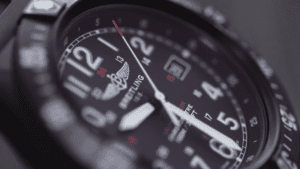

Breitling Colt Skyracer - Ref. X74320


The Colt Skyracer is probably the single coolest quartz watch you can buy. This limited-edition watch is made up of Breitlight, which is a proprietary polymer made by Breitling. The 45-millimeter case weighs next to nothing yet is still durable and highly scratch resistant. The Breitling Superquartz movement is accurate to within 10 seconds a year. This watch is all about form following function. Even the strap has standard measurements and can easily be removed thanks to a proprietary design.


The Longines Hydroconquest – Ref. L3.665.4
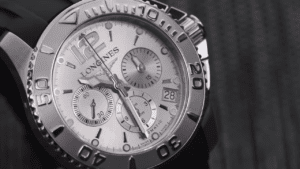

Longines Hydroconquest - Ref. L3.665.4


This watch is a beast, and this is our pick for someone looking for a larger timepiece. The nearly 48-millimeter case can seem daunting, but the angular lugs help it wear well for its size. And the chronograph pushers and crown guards complement the angular design of the case so well. The watch is also water resistant to 300 meters. Now some of the Longines Hydroconquest are quartz watches but this one is powered by a modified ETA 7753. It’s essentially the workhorse Valjoux 7750 modified to have the sub dials at three six and nine. One of the coolest parts of this watch is the bezel that is reminiscent of the Rolex Yacht-Master.


The Bell & Ross Sport Heritage – Ref. BRV123-ST-HER/SRB
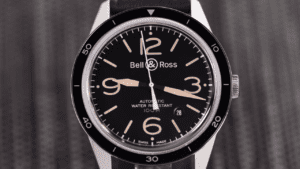

Bell & Ross Sport Heritage - BRV123-ST-HER/SRB


Bell & Ross is a brand known for its striking instrument style timepieces, but before their watches looked like they came right out of an airplane’s cockpit they had a more traditional styling. The BR123 Sport Heritage checks all the boxes for a vintage inspired timepiece. It has a faux patina on the legible Arabic numerals, hands and indices. It features a black 60-minute fixed bezel and also has some subtle red text on the dial and a domed sapphire crystal. And to top it off a nice tropic style rubber strap completes the vintage inspiration. The exhibition case back shows off the modest Bell & Ross caliber 302, and the movement is housed in a 43-millimeter case with sharp tapered lugs. This watch balances elegance and ruggedness perfectly.


The Nomos Orion – Ref. 301
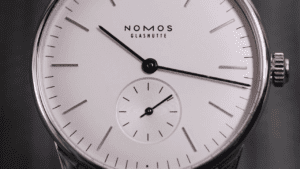

Nomos Orion - Ref. 301


Nomos watches can sometimes have a fairly polarizing style, but the Orion seen here is just classic. It features a sleek case that has some of the best curves in the watch game. The watch is a modest 35-millimeters, but with its long lugs it wears nicely on plenty of wrist sizes. The watch is powered by Nomos’ in-house caliber Alpha. It’s a manual wound movement that represents the brand’s self-sufficiency perfectly. The clean silver dial with gold indices and blued hands is so perfectly designed I just catch myself looking down at my wrist. And the strap on this Nomos is one of the brands shell cordovan versions and is the epitome of what a leather strap should be. If you want a dress watch then look no further than the Nomos Orion.


The Baume & Mercier Clifton – Ref. MOA10052
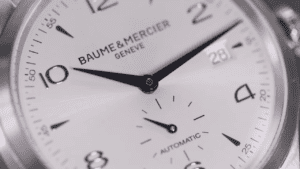

Baume & Mercier Clifton - Ref. MOA10052


Staying with more of the dress watch style we’ve got the Baume & Mercier Clifton. This watch does a great job on straddling the formal and the casual. The clean silver dial with blued hands lend themselves to the dressier watches, but the Arabic numerals and the 41-millimeter case size are on the sporty-er side. Baume & Mercier keep the cost reasonable on this watch by using a Sellita caliber SW200-1. While not an in-house movement this is another great example of a time-tested robust automatic Swiss movement.


The TAG Heuer Aquaracer 500m – Ref. WAK2110
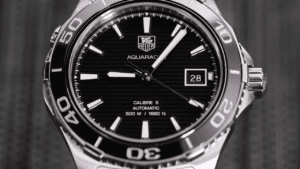

TAG Heuer Aquaracer 500m - Ref. WAK2110


This list wouldn’t be complete without a TAG Heuer. They offer so many great watches and at a reasonable price point. The one we chose was the Aquaracer. It’s a robust sport watch that can take a beating. This is a watch that has countless options as well so there’s plenty of style variations to choose from. We went with this classic black plank dial and matching ceramic black bezel. This watch does so many things right. Though slightly smaller from the previous design, the 41-millimeter case is the sweet spot for sport watches. 500-meter water resistance is plenty and the TAG Heuer Calibre 5 is a solid automatic movement.


As you can see there are plenty of solid watches at or below the $2,000 mark. Let us know your top picks for luxury watches under $2,000 and as always thanks for watching.


The post Top 7 Watches Under $2,000 appeared first on Crown & Caliber Blog.

пятница, 14 февраля 2020 г.

Top 7 Watches Under $2,000

TOP_7_WATCHES_UNDER_2000

\Video Transcript

Here at Crown & Caliber we often feature watches that can cost $4,000 and $5,000, and sometimes even more, and let’s be honest that can be a lot of money. So, we thought we’d feature some of our favorite watches that are a little bit more affordable. Here are top seven picks four watches under $2,000.

The Omega Speedmaster Date – Ref. 3513.30.00

Omega Speedmaster Date - Ref. 3513.30.00

This is an Omega that doesn’t seem to get as much love because it’s not a traditional Speedmaster, but what this Speedmaster lacks in heritage it more than makes up for in practicality. The Speedmaster Date comes in a more modest 39 millimeters. Its got an automatic movement, but unlike the Speedmaster Reduced that has a somewhat finicky movement this Speedmaster has the Omega Caliber 1152. It is based on the Valjoux 7750. and it is a tank. It is a fully integrated chronograph that stands the test of time. The use of the Valjoux 7750 does mean that the chronograph sub-dials are now shifted to 6, 9, and 12, which again, breaks with the traditional appearance of 3, 6, and 9, but as a benefit it does make space for the three o’clock date window. Which brings us to another notable aspect of the watch: the date. The addition of the date is somewhat controversial because again it’s a departure from the traditional Speedmaster, but from a practicality standpoint it is definitely welcomed. In keeping with the departure from tradition we went with the silver dial option.

The Breitling Colt Skyracer – Ref. X74320

Breitling Colt Skyracer - Ref. X74320

The Colt Skyracer is probably the single coolest quartz watch you can buy. This limited-edition watch is made up of Breitlight, which is a proprietary polymer made by Breitling. The 45-millimeter case weighs next to nothing yet is still durable and highly scratch resistant. The Breitling Superquartz movement is accurate to within 10 seconds a year. This watch is all about form following function. Even the strap has standard measurements and can easily be removed thanks to a proprietary design.

The Longines Hydroconquest – Ref. L3.665.4

Longines Hydroconquest - Ref. L3.665.4

This watch is a beast, and this is our pick for someone looking for a larger timepiece. The nearly 48-millimeter case can seem daunting, but the angular lugs help it wear well for its size. And the chronograph pushers and crown guards complement the angular design of the case so well. The watch is also water resistant to 300 meters. Now some of the Longines Hydroconquest are quartz watches but this one is powered by a modified ETA 7753. It’s essentially the workhorse Valjoux 7750 modified to have the sub dials at three six and nine. One of the coolest parts of this watch is the bezel that is reminiscent of the Rolex Yacht-Master.

The Bell & Ross Sport Heritage – Ref. BRV123-ST-HER/SRB

Bell & Ross Sport Heritage - BRV123-ST-HER/SRB

Bell & Ross is a brand known for its striking instrument style timepieces, but before their watches looked like they came right out of an airplane’s cockpit they had a more traditional styling. The BR123 Sport Heritage checks all the boxes for a vintage inspired timepiece. It has a faux patina on the legible Arabic numerals, hands and indices. It features a black 60-minute fixed bezel and also has some subtle red text on the dial and a domed sapphire crystal. And to top it off a nice tropic style rubber strap completes the vintage inspiration. The exhibition case back shows off the modest Bell & Ross caliber 302, and the movement is housed in a 43-millimeter case with sharp tapered lugs. This watch balances elegance and ruggedness perfectly.

The Nomos Orion – Ref. 301

Nomos Orion - Ref. 301

Nomos watches can sometimes have a fairly polarizing style, but the Orion seen here is just classic. It features a sleek case that has some of the best curves in the watch game. The watch is a modest 35-millimeters, but with its long lugs it wears nicely on plenty of wrist sizes. The watch is powered by Nomos’ in-house caliber Alpha. It’s a manual wound movement that represents the brand’s self-sufficiency perfectly. The clean silver dial with gold indices and blued hands is so perfectly designed I just catch myself looking down at my wrist. And the strap on this Nomos is one of the brands shell cordovan versions and is the epitome of what a leather strap should be. If you want a dress watch then look no further than the Nomos Orion.

The Baume & Mercier Clifton – Ref. MOA10052

Baume & Mercier Clifton - Ref. MOA10052

Staying with more of the dress watch style we’ve got the Baume & Mercier Clifton. This watch does a great job on straddling the formal and the casual. The clean silver dial with blued hands lend themselves to the dressier watches, but the Arabic numerals and the 41-millimeter case size are on the sporty-er side. Baume & Mercier keep the cost reasonable on this watch by using a Sellita caliber SW200-1. While not an in-house movement this is another great example of a time-tested robust automatic Swiss movement.

The TAG Heuer Aquaracer 500m – Ref. WAK2110

TAG Heuer Aquaracer 500m - Ref. WAK2110

This list wouldn’t be complete without a TAG Heuer. They offer so many great watches and at a reasonable price point. The one we chose was the Aquaracer. It’s a robust sport watch that can take a beating. This is a watch that has countless options as well so there’s plenty of style variations to choose from. We went with this classic black plank dial and matching ceramic black bezel. This watch does so many things right. Though slightly smaller from the previous design, the 41-millimeter case is the sweet spot for sport watches. 500-meter water resistance is plenty and the TAG Heuer Calibre 5 is a solid automatic movement.

As you can see there are plenty of solid watches at or below the $2,000 mark. Let us know your top picks for luxury watches under $2,000 and as always thanks for watching.


The post Top 7 Watches Under $2,000 appeared first on Crown & Caliber Blog.

пятница, 17 января 2020 г.

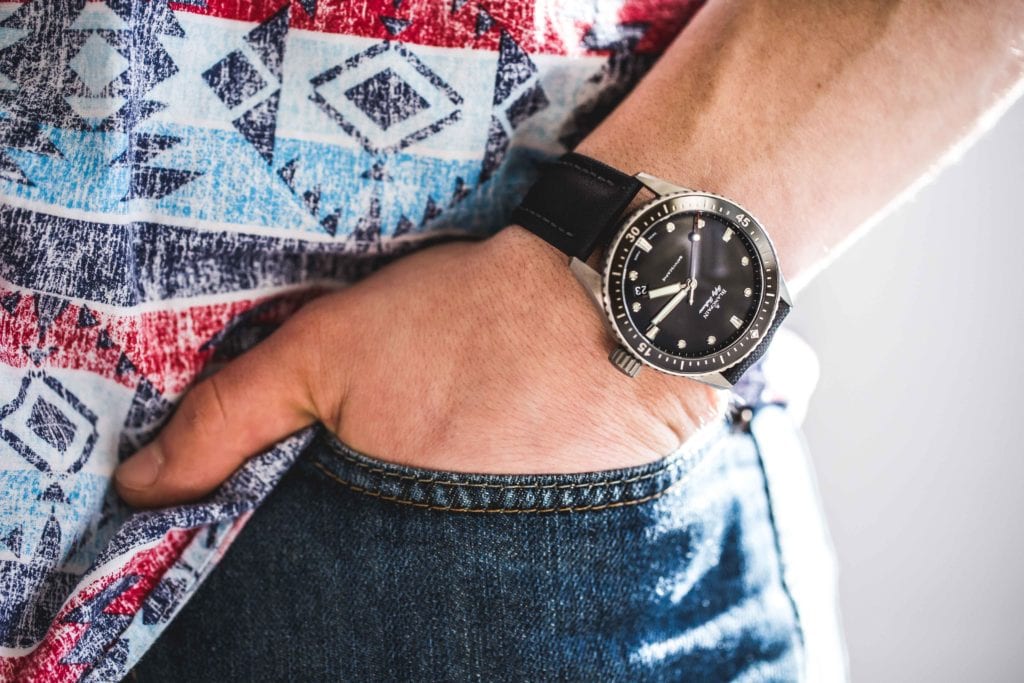
A Deep Dive on the Blancpain Fifty Fathoms

The Quintessential Dive Watch


When you consider the quintessential dive watch, a number of different models probably come to mind. You may think of the Rolex Submariner, the OMEGA Seamaster, or the Breitling Superocean. Still, the original dive watch optimized for professional divers was the Blancpain Fifty Fathoms. In 1950, the new CEO of Blancpain and avid diver Jean-Jacques Fiechter aimed to create the ultimate dive watch.


His impetus was a near-fatal diving experience he had off the coast of France. During a dive, Fiechter lost track of time and ran out of air. This made him realize that a reliable timekeeping device was just as vital to a diver as an oxygen tank. In three short years, Fiechter made his dream a reality with the Fifty Fathoms in 1953. However, he didn’t do it alone. He enlisted the help of some of the most elite divers in the world: navy frogmen. Together, they developed one of the most robust dive watches on the market. This is the story of the Blancpain Fifty Fathoms.


Origins of the Blancpain Fifty Fathoms


Around the same time Fiechter came to Blancpain as CEO, the French Ministry of Defense established a new unit of commando frogmen, similar to the United States’ Navy Seals. Captain Robert Maloubier and Lieutenant Claude Jean Riffaud headed up the group. Soon, they began looking for a mechanical watch fit for their squadron. Unknowingly, Fiechter, Maloubier, and Riffaud were in search of a similar model. It needed to be water resistant, antimagnetic, self-winding, and highly legible in any conditions, from murky waters to nighttime.


Fiechter quickly began research and development. Soon, he’d patented a doubled sealed crown that ensured the watch’s water resistance even if got pulled out. He also patented a unique, notched, unidirectional rotating bezel that could help divers to track elapsed time during a dive. In addition, he patented a locking mechanism for the bezel. This not only kept the bezel from rotating and giving inaccurate elapsed time but also kept out salt and sand. Lastly, Fiechter patented a new screw-down caseback technology by enhancing the seal.


It wasn’t long before Maloubier and Riffaud heard of Fiechter’s patents and development of a new dive watch. They approached him and quickly realized they all shared the same vision for a model unlike any other made before. Maloubier and Riffaud brought their ideas to the table. The watch should feature a black dial and large, bold, luminescent markers. A short time later, Feichter delivered twenty prototypes to Maloubier and Riffaud for testing. The watches passed with flying colors. Then, in 1953, the Blancpain Fifty Fathoms became the official watch of the French combat diving corps.


A year later in 1954, Blancpain debuted the model to the world at the annual Baselworld fair. It came equipped with all the technical features patented by Fiechter and the design specifications set by Maloubier and Riffaud. In addition, it featured a 42mm case, which was quite large for the era. The Fifty Fathoms also boasted a depth rating of, you guessed it, 50 fathoms or roughly 91 meters.


Evolution of the Blancpain Fifty Fathoms


The Fifty Fathoms quickly caught the attention of other divers and military forces. Soon, Israel, America, Spain, Germany, and others began issuing the model. After a few more years, the Fifty Fathoms received attention within the civilian market. In 1956, famed diver Jacques-Yves Cousteau wore the model in an underwater documentary called The Silent World. The film went on to win the Palme d’Or at the Cannes Film festival and an Oscar the following year. Despite its more widespread presence, the Fifty Fathoms continued to be considered a divers tool more than a typical wristwatch. As a result, you’d most often find the model at diving shops instead of traditional jewelers or watch boutiques.


Over the years, the design of the Fifty Fathoms continued to evolve. One of the most important updates to the collection came in the 1960s with the release of radiation safe models. You may be familiar with Panerai’s shift from the Radiomir that used a radium-based material for its lume to the Luminor that used a safer luminescent material. Blancpain went through a similar shift with the Fifty Fathoms. Into the 1970s, Blancpain went on to create dozens of different models for certain military forces and their specifications. Some of the most notable reflect a trend of the era: the cushion-shaped case.


Blancpain and the Fifty Fathoms in the Modern Era


By 1980, the Quartz Crisis had made such an impact on Blancpain, the company was forced to close its doors. It was then that the future of the Fifty Fathoms became uncertain. Three years later, the legendary Jean-Claude Biver purchased the brand and revived it. However, Biver’s intention was to take the brand back to its roots, with models that proceeded the Fifty Fathoms. It wasn’t until after the illustrious Swatch Group purchased Blancpain in 1993 that the Fifty Fathoms would finally re-enter the brand’s catalog.


After a nearly two decade hiatus, the model made its monumental return in 1997. It did so as part of a trilogy of the brand’s timepieces for land, air, and sea. Still, it wouldn’t be until another decade later in 2007 that the Fifty Fathoms was officially reborn as a collection. The 2007 edition and the models to follow closely capture the spirit of vintage Fifty Fathom designs. However, they boast modern upgrades, like greater water resistance up to 300 meters and manufacture movements.


The post A Deep Dive on the Blancpain Fifty Fathoms appeared first on Crown & Caliber Blog.
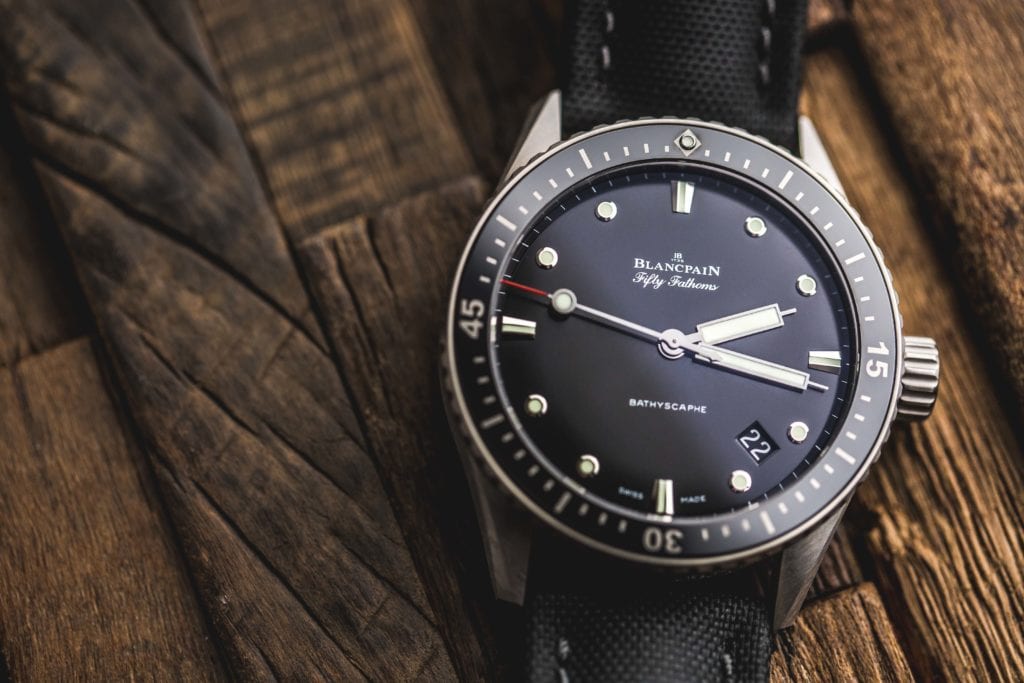
A Deep Dive on the Blancpain Fifty Fathoms

The Quintessential Dive Watch

When you consider the quintessential dive watch, a number of different models probably come to mind. You may think of the Rolex Submariner, the OMEGA Seamaster, or the Breitling Superocean. Still, the original dive watch optimized for professional divers was the Blancpain Fifty Fathoms. In 1950, the new CEO of Blancpain and avid diver Jean-Jacques Fiechter aimed to create the ultimate dive watch.

His impetus was a near-fatal diving experience he had off the coast of France. During a dive, Fiechter lost track of time and ran out of air. This made him realize that a reliable timekeeping device was just as vital to a diver as an oxygen tank. In three short years, Fiechter made his dream a reality with the Fifty Fathoms in 1953. However, he didn’t do it alone. He enlisted the help of some of the most elite divers in the world: navy frogmen. Together, they developed one of the most robust dive watches on the market. This is the story of the Blancpain Fifty Fathoms.

Origins of the Blancpain Fifty Fathoms

Around the same time Fiechter came to Blancpain as CEO, the French Ministry of Defense established a new unit of commando frogmen, similar to the United States’ Navy Seals. Captain Robert Maloubier and Lieutenant Claude Jean Riffaud headed up the group. Soon, they began looking for a mechanical watch fit for their squadron. Unknowingly, Fiechter, Maloubier, and Riffaud were in search of a similar model. It needed to be water resistant, antimagnetic, self-winding, and highly legible in any conditions, from murky waters to nighttime.

Fiechter quickly began research and development. Soon, he’d patented a doubled sealed crown that ensured the watch’s water resistance even if got pulled out. He also patented a unique, notched, unidirectional rotating bezel that could help divers to track elapsed time during a dive. In addition, he patented a locking mechanism for the bezel. This not only kept the bezel from rotating and giving inaccurate elapsed time but also kept out salt and sand. Lastly, Fiechter patented a new screw-down caseback technology by enhancing the seal.

It wasn’t long before Maloubier and Riffaud heard of Fiechter’s patents and development of a new dive watch. They approached him and quickly realized they all shared the same vision for a model unlike any other made before. Maloubier and Riffaud brought their ideas to the table. The watch should feature a black dial and large, bold, luminescent markers. A short time later, Feichter delivered twenty prototypes to Maloubier and Riffaud for testing. The watches passed with flying colors. Then, in 1953, the Blancpain Fifty Fathoms became the official watch of the French combat diving corps.

A year later in 1954, Blancpain debuted the model to the world at the annual Baselworld fair. It came equipped with all the technical features patented by Fiechter and the design specifications set by Maloubier and Riffaud. In addition, it featured a 42mm case, which was quite large for the era. The Fifty Fathoms also boasted a depth rating of, you guessed it, 50 fathoms or roughly 91 meters.


Evolution of the Blancpain Fifty Fathoms

The Fifty Fathoms quickly caught the attention of other divers and military forces. Soon, Israel, America, Spain, Germany, and others began issuing the model. After a few more years, the Fifty Fathoms received attention within the civilian market. In 1956, famed diver Jacques-Yves Cousteau wore the model in an underwater documentary called The Silent World. The film went on to win the Palme d’Or at the Cannes Film festival and an Oscar the following year. Despite its more widespread presence, the Fifty Fathoms continued to be considered a divers tool more than a typical wristwatch. As a result, you’d most often find the model at diving shops instead of traditional jewelers or watch boutiques.

Over the years, the design of the Fifty Fathoms continued to evolve. One of the most important updates to the collection came in the 1960s with the release of radiation safe models. You may be familiar with Panerai’s shift from the Radiomir that used a radium-based material for its lume to the Luminor that used a safer luminescent material. Blancpain went through a similar shift with the Fifty Fathoms. Into the 1970s, Blancpain went on to create dozens of different models for certain military forces and their specifications. Some of the most notable reflect a trend of the era: the cushion-shaped case.

Blancpain and the Fifty Fathoms in the Modern Era

By 1980, the Quartz Crisis had made such an impact on Blancpain, the company was forced to close its doors. It was then that the future of the Fifty Fathoms became uncertain. Three years later, the legendary Jean-Claude Biver purchased the brand and revived it. However, Biver’s intention was to take the brand back to its roots, with models that proceeded the Fifty Fathoms. It wasn’t until after the illustrious Swatch Group purchased Blancpain in 1993 that the Fifty Fathoms would finally re-enter the brand’s catalog.

After a nearly two decade hiatus, the model made its monumental return in 1997. It did so as part of a trilogy of the brand’s timepieces for land, air, and sea. Still, it wouldn’t be until another decade later in 2007 that the Fifty Fathoms was officially reborn as a collection. The 2007 edition and the models to follow closely capture the spirit of vintage Fifty Fathom designs. However, they boast modern upgrades, like greater water resistance up to 300 meters and manufacture movements.

The post A Deep Dive on the Blancpain Fifty Fathoms appeared first on Crown & Caliber Blog.
How To Use a Breitling Navitimer


Brief History of the Breitling Navitimer


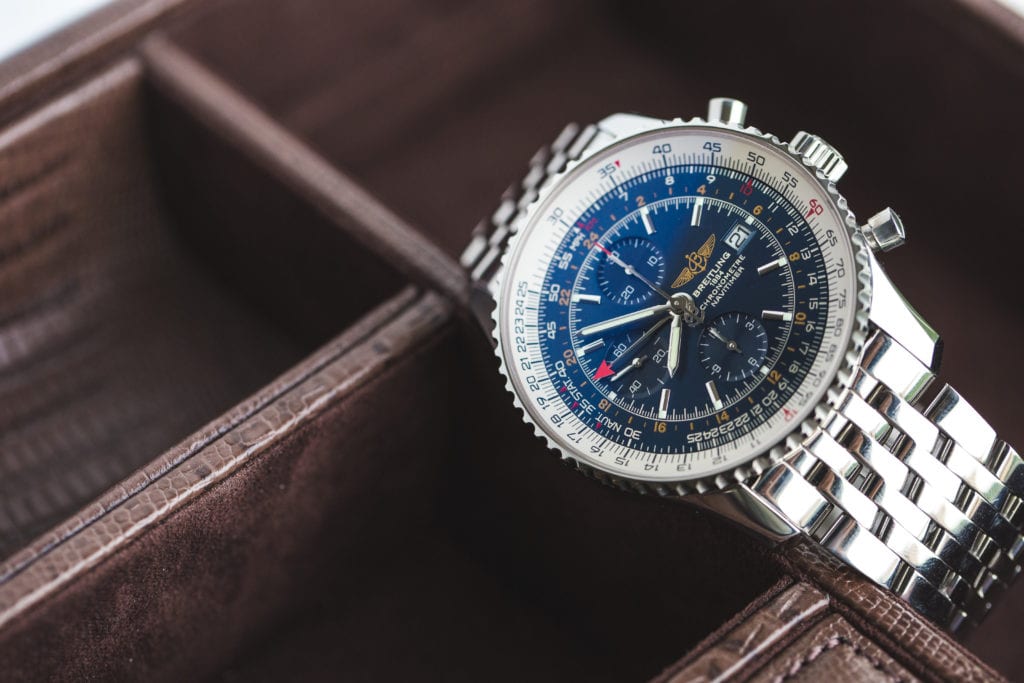
The Breitling brand has become synonymous with superior pilot watches since the release of the Chronomat in 1942. With its debut came the introduction of a totally new and patented technology specifically designed for pilots: the slide-rule bezel. Over the course of the next decade, the brand continued to develop this technology. During that time, they forged a partnership with the Aircraft Owners and Pilots Association. The AOPA helped Breitling refine the slide-rule bezel in a way that would best serve the evolving needs of pilots. By 1952, the pair had created a new and enhanced slide-rule bezel, which launched in an all-new model: the Navitimer.


Differences between the Chronomat and Navitimer


A slide-rule bezel was not a completely innovative feature when Breitling first introduced it in the Chronomat in 1942. What made Breitling’s slide-rule bezel unique was that the brand integrated it with a chronograph complication. Fittingly, the slide-rule bezel of the Chronomat is called the Type 42. In addition, the slide-rule bezel of the Navitimer is called the Type 52. There are two primary differences between the two types of slide rule bezels in the two different models. Early Chronomats featured different numbers or units on both the outer and inner scales compared to the Navitimer and modern Chronomat models.


Understanding the Slide-Rule Bezel


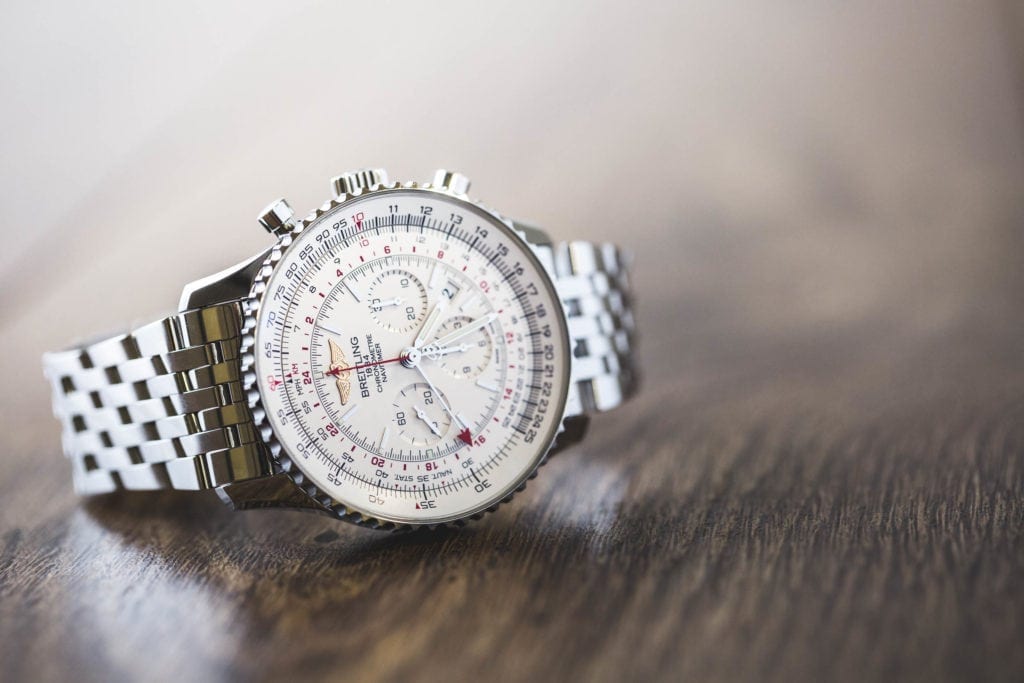
A slide-rule bezel can look pretty intimidating at first. It contains two logarithmic scales, an inner one and an outer one. The outer scale rotates bi-directionally, and the inner scale is fixed. Together, they can help the wearer perform a variety of mathematical calculations. It’s also important to note that the slide rule bezel doesn’t take into account decimal points.


So, for example, the number 25 and 250 would be notated the same on the slide rule bezel. Because this function lacks decimal points, you need to have a general idea of the answer when performing a calculation. Lastly, since the slide-rule bezel is comprised of logarithmic scales, every time you double a number, the distance will be the same. Again, for example, the distance between ten and twenty is the same as the distance from twenty to 40. All of this information may seem overwhelming. However, it should make more sense once we explore how to use the Navitimer’s slide-rule bezel with some specific examples.


How Pilot’s Might Use the Navitimer’s Slide-Rule Bezel


Pilots primarily used the Navitimer to calculate things like speed and distance. This would help them to track important elements like flight times, fuel consumption, or wind impact. So, for example, here’s how a pilot might calculate fuel consumption. First, the pilot needs to know the average amount of fuel used per hour and the length of the flight. Say the plane uses an average of twenty liters of fuel per hour and the flight is three hours long. The pilot would rotate the outer scale until the unit twenty lined up with the twelve-o’clock hour marker. This would set the rate. Then, the pilot would locate eighteen on the inner scale to signify 180 minutes or three hours. Lastly, the pilot would read the corresponding number of liters consumed after three hours on the outer scale: 60 liters.


How to Use the Navitimer’s Slide-Rule Bezel for Everyday Calculations


If you’re not a pilot, you can also use the Navitimer’s slide-rule bezel. It can help you to perform other calculations that are more applicable in daily life. One example is calculating the tip on a bill at a restaurant. Say you want to calculate a 20% tip on a $40.00 tab. Remember that calculating a percentage is essentially a division equation. In the case of a 20% tip, you’ll always be dividing by five. When doing a division equation on a slide-rule bezel, your dividend will always be on the outer scale.


Subsequently, your divisor will always be on the inner scale. Another important thing to note when doing division or multiplication calculations with the slide-rule bezel is the red number ten on the fixed inner scale. So, in this example, rotate your outer scale until 40 lines up with five on the inner scale. Then, look at the red number ten on the inner scale and read the corresponding number on the outer scale. This should be eight or an $8.00 tip.


Other Applications of the Navitimer’s Slide-Rule Bezel


In addition to these more detailed examples, you can use the Navitimer’s slide-rule bezel for a wide array of calculations. One instance is conversions. The Navitimer can help you convert miles to kilometers, Fahrenheit to Celsius, or dollars to Euros. We hope this helps you understand how to use a Navitimer a bit better and some practical applications where it could come in handy.


The post How To Use a Breitling Navitimer appeared first on Crown & Caliber Blog.

четверг, 16 января 2020 г.

How To Use a Breitling Navitimer

Brief History of the Breitling Navitimer

The Breitling brand has become synonymous with superior pilot watches since the release of the Chronomat in 1942. With its debut came the introduction of a totally new and patented technology specifically designed for pilots: the slide-rule bezel. Over the course of the next decade, the brand continued to develop this technology. During that time, they forged a partnership with the Aircraft Owners and Pilots Association. The AOPA helped Breitling refine the slide-rule bezel in a way that would best serve the evolving needs of pilots. By 1952, the pair had created a new and enhanced slide-rule bezel, which launched in an all-new model: the Navitimer.

Differences between the Chronomat and Navitimer

A slide-rule bezel was not a completely innovative feature when Breitling first introduced it in the Chronomat in 1942. What made Breitling’s slide-rule bezel unique was that the brand integrated it with a chronograph complication. Fittingly, the slide-rule bezel of the Chronomat is called the Type 42. In addition, the slide-rule bezel of the Navitimer is called the Type 52. There are two primary differences between the two types of slide rule bezels in the two different models. Early Chronomats featured different numbers or units on both the outer and inner scales compared to the Navitimer and modern Chronomat models.

Understanding the Slide-Rule Bezel


A slide-rule bezel can look pretty intimidating at first. It contains two logarithmic scales, an inner one and an outer one. The outer scale rotates bi-directionally, and the inner scale is fixed. Together, they can help the wearer perform a variety of mathematical calculations. It’s also important to note that the slide rule bezel doesn’t take into account decimal points.

So, for example, the number 25 and 250 would be notated the same on the slide rule bezel. Because this function lacks decimal points, you need to have a general idea of the answer when performing a calculation. Lastly, since the slide-rule bezel is comprised of logarithmic scales, every time you double a number, the distance will be the same. Again, for example, the distance between ten and twenty is the same as the distance from twenty to 40. All of this information may seem overwhelming. However, it should make more sense once we explore how to use the Navitimer’s slide-rule bezel with some specific examples.

How Pilot’s Might Use the Navitimer’s Slide-Rule Bezel

Pilots primarily used the Navitimer to calculate things like speed and distance. This would help them to track important elements like flight times, fuel consumption, or wind impact. So, for example, here’s how a pilot might calculate fuel consumption. First, the pilot needs to know the average amount of fuel used per hour and the length of the flight. Say the plane uses an average of twenty liters of fuel per hour and the flight is three hours long. The pilot would rotate the outer scale until the unit twenty lined up with the twelve-o’clock hour marker. This would set the rate. Then, the pilot would locate eighteen on the inner scale to signify 180 minutes or three hours. Lastly, the pilot would read the corresponding number of liters consumed after three hours on the outer scale: 60 liters.

How to Use the Navitimer’s Slide-Rule Bezel for Everyday Calculations

If you’re not a pilot, you can also use the Navitimer’s slide-rule bezel. It can help you to perform other calculations that are more applicable in daily life. One example is calculating the tip on a bill at a restaurant. Say you want to calculate a 20% tip on a $40.00 tab. Remember that calculating a percentage is essentially a division equation. In the case of a 20% tip, you’ll always be dividing by five. When doing a division equation on a slide-rule bezel, your dividend will always be on the outer scale.

Subsequently, your divisor will always be on the inner scale. Another important thing to note when doing division or multiplication calculations with the slide-rule bezel is the red number ten on the fixed inner scale. So, in this example, rotate your outer scale until 40 lines up with five on the inner scale. Then, look at the red number ten on the inner scale and read the corresponding number on the outer scale. This should be eight or an $8.00 tip.

Other Applications of the Navitimer’s Slide-Rule Bezel

In addition to these more detailed examples, you can use the Navitimer’s slide-rule bezel for a wide array of calculations. One instance is conversions. The Navitimer can help you convert miles to kilometers, Fahrenheit to Celsius, or dollars to Euros. We hope this helps you understand how to use a Navitimer a bit better and some practical applications where it could come in handy.


The post How To Use a Breitling Navitimer appeared first on Crown & Caliber Blog.