Показаны сообщения с ярлыком theatre. Показать все сообщения

пятница, 21 февраля 2020 г.

Театр Аннотация: Инцидент Номер В Нью-Диорама Театр

Франко МилаццоТеатр Аннотация: Инцидент Номер В Нью-Диорама Театр Инцидент Номер, Новая Диорама Театр 3

Фото: Другой Ричард

“Что-то в этой комнате было упущено. И мы собираемся, чтобы найти его”.

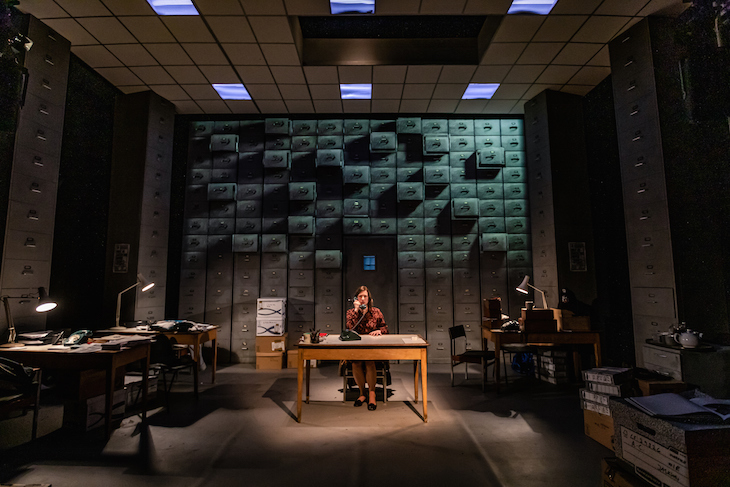
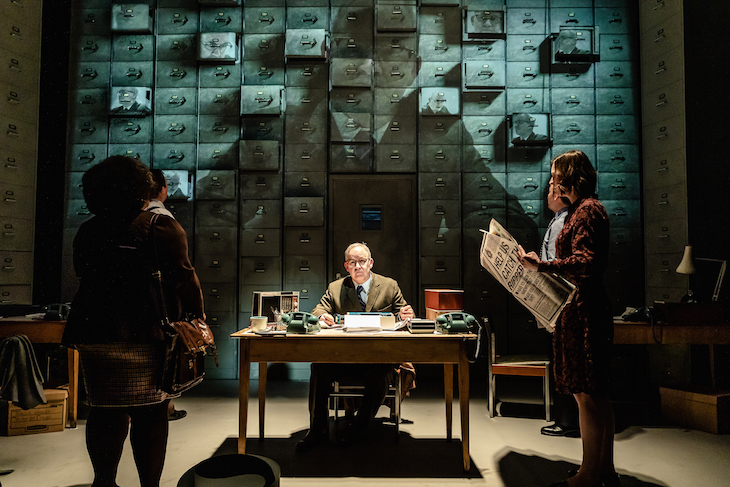
Мы все знаем, что обычно происходит, когда эта линия говорит в голливудском фильме молниеносной монтаж в шквал нахмуренными бровями и раздраженные выражения возбужденную с оргазмическая вспышка облегчения и радости. В номере инцидента, часто мрачный пересказ неудачной полицейское расследование йоркширский потрошитель, нет такой голливудский финал.

Фото: Другой Ричард

Оливия Херста и сценарий Дэвида Бирна погружает нас прямиком в охоту за серийным убийцей семидесятых: зрители бросают лицом в физическим и эмоциональным центром. Это не для слабонервных. Ужасные подробности и реальные изображения передаются на рожон, которые оставили 13 мертвых женщин и еще семь серьезно избили, прежде чем это закончилось в 1980 году.

Наша точка зрения заключается в том, что Меган Уинтерберн (Шарлотта Мелиа), сотрудник полиции и один из основных членов команды, занимающейся поиском Потрошителя. С помощью ретроспективных кадров мы видим Уинтерберн и ее коллеги упустили множество возможностей, чтобы арестовать их цель, и как она хотела, он играл, учитывая то, что она узнала позже.

Фото: Другой Ричард

Продолжительностью около двух с половиной часов, Херст и Бирн покрывать большие расстояния. Наряду с впечатляюще точный удар за ударом счет поиска, есть несколько обходных путей, как привилегированного положения мужчины и токсичных мужественности, возможно, сдерживали процесс, и как сожаление, и разочарование может испортить любой успех, каким бы большим.

Фото: Другой Ричард

Как театральный опыт, больше отвлекающий маневр, чем фактическое ведет сюда. Мешает неуклюжую экспозицию и обеспчение диалога, первый час шлифует перед сценой неподдельный интерес приходит. Заключительный акт является победителем, но имеется достаточное количество драматических выбега прежде чем мы туда доберемся. Это позор, поскольку есть некоторые достойные сообщения из этой самой проторенной сюжет и яркие выступления от Мелиа, Наташа волшебными, как коварный журналист Тиш Морган и Кэти Бриттен в двойной роли полицейского Сильвия Свонсон и жертвы Морин Лонг.

Инцидент номер, новая диорама театр, 15-16 Тритон месте, NW1 3BF. Авиабилеты £16, до 14 марта 2020 года.

Последнее Обновление 21 Февраля 2020 Года

Londonist в переводе

среда, 19 февраля 2020 г.

Review: High in the gods for David Suchet – Poirot and More

Linda Burgess climbs the eternal staircase at the Opera House in Wellington to watch the virtuoso actor. At the interval her legs are aching. But in the second half, magic happens.

There’s one person wearing a face mask, just the one, and it turns his face into a disposable nappy with two scared eyes above. His eyes roam the theatre. Oh hell, is he looking guilty? After interval he’s gone. Just his leaving makes me aware of a tickle in my throat. Oh God, I’m going to cough. Ahem ahem. I’m going to cough and if I do, this mixed group of Wellingtonians and people who’ve come in from the hinterland – well, they could turn, I could be like Simon from Lord of the Flies as they swoop on me in their gold sandals, floral frocks and quirky skirts and hunt the virus, kill the virus, slit its throat.

We’d bought our seats late, on a whim, we’d come in from the garden and driven down to Ticketek, crazy with the knowledge that we live in this city of culture and never go to anything except movies at 3pm on Sundays. We’re going to go to David Suchet – Poirot and More not because – well sort of because – he’s Poirot, but mostly because I saw him a few years back in a documentary about The Orient Express. I liked him. And that was enough for the madcap decision to visit Ticketek. I never expected Robert to agree.

Expensive seats, even though they were up in the gallery, because it was pretty much sold out. The gods, it used to be called, and if I’d remembered that I could well have just continued looking to see if the hydrangeas needed deadheading rather than getting in the car with our credit cards. My thighs will cringe for months at the memory of creeping down those steep steps without even a rail to hold on to. Given the paranoia about health and safety in Wellington, how has the Opera House got away with it? Aren’t several of those even slightly wobbly on their pins – as in, theatre goers in general – cartwheeling involuntarily down those steps on a weekly basis?

We make it to our seats, second row, and it’s hot up there. Oh God it’s hot. Those in the know have brought smart little fans with them, Japanese, Samoan, there’s quite a range. Those mad enough to buy the programmes that their kids are going to have to chuck in the recycling when they die, are using them to create a draught, but those of us too cheap to spend even another cent just sit remembering teaching in a prefab at Palmerston North Girls High in high summer, when our fringe stuck to our forehead and the back of our neck where hair met skin became unbearably damp and sticky.

There’s so little room, it’s economy class Air NZ without the free wine. We’re both quite compact people: how can anyone who’s not a hobbit bear it? There are empty seats behind us and at interval, I crawl on my hands and knees to get somewhere with some space, somewhere, anywhere, that is not directly behind the man with the big head. Ahhh. An aisle seat, I can stick my feet out on the stairs and get a tiny bit comfortable.

A killjoy by nature, I’ve liked the first half, sort of. The audience is thrumming with happy appreciation. I’m in competition with the man in front, murmuring the answers to Suchet’s semi-rhetorical questions in an obnoxiously know-it-all way. The person in the distance, who is Suchet, is quite a presence; he tells a great anecdote and he’s made me laugh, which is a good start. But amusing anecdotes do not an amazing evening make. At the interval we agree that if you compared home on comfy sofa, or in spacious seats at cinema, with being with the real deal, then…

But after the interval – long enough for those prepared to mount those steps to buy posh, enviable iceblocks – things change. My feet are up, which always helps, but best of all, Suchet turns the evening into something precious. He gives us what he was always going to: the “and more”. He moves beyond charming, chuckle-rousing tales of his mother and old dears from Sussex and how people can’t quite work out if Suchet and Poirot are the same person, and he puts himself to work. He gives us a masterclass in how an actor inhabits a role, abandons his own personality and takes on another. How to use a different voice from one’s own, how to use a different walk. He uses heavenly words like alliteration, onomatopoeia and iambic pentameter. He talks about how it’s all there in the script for the actor, if the writer is good enough. Especially if the writer is Shakespeare. He briefly goes bananas when he entreats the entire audience to go home and write, write, clearly unaware that in Wellington everyone already does. There he is, the perfect balance of natural talent, of skill, of insight, imagination and hard hard work.

He explains, he performs; he tells and he shows. He’s Macbeth at the death of his wife. He’s Caliban when his island’s invaded. He is the most majestic talent you could ever hope to see.

I feel sad, I say, that these days there are kids who’ll never do Shakespeare. Thanks to being an English teacher once, I know all those plays, I say, as if he needs to be told. We go back up those bloody awful steps, mentally rejoicing that we’ll never ever see them again, then it’s down, down, down all the stairs – how high we must’ve been! – with just the pressure of the bodies fore and aft holding us upright. Though not just the bodies fore and aft, but that happy floating feeling you get when you’ve had a damn fine time. Been in the presence of genius. Been, as it turns out, a total pushover. And, as a bonus, escaped being quarantined. Out the door, thank God, away from the flood of too many people and too much excited chatter and into the warm, muggy, wet-ish, windy-ish Wellington night.

David Suchet – Poirot and More is in Christchurch tonight and in Auckland on Saturday February 22.

вторник, 18 февраля 2020 г.

The Bread & Puppet Theatre: A Living Museum of American Hippie Culture

The year is 1979. Thousands of people flock to a farm field in Vermont, and wait for their stilt-walking hosts to christen the “Circus Ring” field with their presence. When they do, it’s in a parade of unbridled joy – a celebration of misfits, mainstream dissent, and all the freshly-baked rye you can eat. It’s a deceptively simple weapon – bread – slathered with aïoli sauce (garlic mayonnaise) and serve for free. Why? Because “theatre is like bread,” says the now 86 year-old founder of Bread & Puppet Theatre, Peter Schumann. The American theatre company that has been feeding the people, literally and metaphorically, since 1961 with Schumann’s homemade bread and homegrown performances. From the streets of New York’s Greenwich Village to the fields of Vermont, half a century later, this incredible company still stands firmly on its stilts as masters of merrymaking, rebellion – and baking.

Domestic Resurrection Circus 1988. Clarke Mackey / Flickr Domestic Resurrection Circus 1988. Clarke Mackey / Flickr

We have to admit: the first time saw a photograph of Bread and Puppet (B&P) in action, we thought we’d found a strange cult. They were fabulously bohemian but looked like something along the lines of the last great Californian hippy commune from the 1960s, in which white-clothed pacifists dance in the woods, keeping nothing but the company of a few goats and rusty Volkswagens…

via Bread and Puppet Festival Vermont 1993. Sean Connors / Flickr Bread & Puppet’s Our Annual Domestic Resurrection Circus 1988 Glover, Vermont. (photo RT Simon)

While Bread & Puppet is indeed not a cult, it is one of the OG “Back-to-the-Land” hippie communes from the 1970s that decades on, is still unchanged, and going strong in 2020. This is not just a puppet show, it’s a living museum piece on American hippie culture…

Bread & Puppet is founded on the central principle that art should be as basic as bread to life and Peter Schumann still single-handedly bakes traditional sourdough rye bread in a wood fire oven for the thousands of audience members who attend the Theater’s performances worldwide. It takes him several days.

Peter © Joseybakerbread.co

Schumann was a German WWII refugee who turned to violin playing, dancing and sculpting for catharsis. “We had to live wild and strange … trying to collect things to eat”, Peter remembers of his childhood, running from bombs and war. From the age of ten, he was learning to survive in the countryside where he learned how to glean the fields, grind the grain and make bread for his family.

The company was actually founded in Munich, Germany, before Peter brought it to Manhattan’s Lower East Side in the early 1960s, where he carried his tradition of baking and sharing fresh rye bread with the local community. The company’s manifesto gave the elitist New York art scene a welcome reality check.

Bread & Puppets proudly declared themselves as peddlers of profound, cheap art. Why, he argued, should those two elements be mutually exclusive? “Art is not a business!” they explained, “Art has to be cheap and available to everybody. It need to be everywhere…”

The Bread and Puppet Theater stage a protest of the Vietnam War in Washington. Fred W. McDarrah

Bread & Puppet took to the streets, often with Schumann dressed as a giant Uncle Sam, protesting everything from the war in Vietnam to nuclear power plants; the conflict in El Salvador to various political conventions with puppets that The New York Times described as “huge, godlike beings” in 1977. They also made quite splash at New York City’s annual Halloween Parade.

The company embodied a perfectly freewheeling, bohemian nature, but was executing very calculated moves to make activism more accessible to the public. People knew about canvasing, they knew about protesting. But protesting with puppets? Genius. “[He] re-invented the idea of the political parade,” Bread & Puppet alumnus John Bell told MNC.

According to a 1970s New York Times review however, Schumann was hesitant to pigeonhole the motivation for his work as solely political. After calling New York its base for over a decade, Bread & Puppet officially moved to Plainfield Vermont in 1973, to Goddard College where he had been offered a residency with his theatre.

Domestic Resurrection Circus 1988. Clarke Mackey / Flickr

“In part it was a family decision,” says Bell, “the Schumanns had 5 kids, they lived in a cramped apartment in the Lower East Side, they were robbed a couple of times. It was not a safe situation.”

Domestic Resurrection Circus 1988. Peter Shumann bakes his famous bread. Clarke Mackey / Flickr

But also, “The ‘Back To the Land’ movement was happening, a concept that overlapped with the counterculture of the 1960s, calling for people to leave the big cities and to grow food from the land with an emphasis on a greater degree of self-sufficiency and local community. “City life is a sort of imitation of life,” says Schumann. “I never wanted to be in the city”.

Domestic Resurrection Circus 1988. Clarke Mackey / Flickr

In addition to the pigs, chickens, and puppeteers, Schumann set up a printshop, a store, and a museum in a 150-yr-old barn.

Domestic Resurrection Circus 1988. Clarke Mackey / Flickr

The highlight of the company’s creative energy was always its annual “Domestic Resurrection Circus”, which ran from 1970 to 1998 in the woods, which Bell calls “an interesting 27-year collection and development of work.” For one week, tens of thousands of people camped under the summer stars for festivities inspired by the grand carnivals and of folklore from around the world. Which is where all those frolicking-in-the-fields photographs come into play.

Domestic Resurrection Circus 1988. Clarke Mackey / Flickr

“In the late afternoon, the audience gathers around the natural amphitheater to watch the circus with its paper mache animal act,” explains one retro TV spot, “its jazzy music, and political satire. Finally at dusk, ‘The Pageant’ – a vast allegorical drama – is presented by a cast of over 100 volunteer performers on a 20-acre stage of rolling fields and forest.” Check it out:

  • [embedded content]

“[Schumann] would say the purpose of the pageants was to look at the sky,” says Bell, “to think about the contrast between the green field and the blue sky, or that the puppet show was just an excuse, a framework to be able to see the landscape.”

“In a way it was a surprise that it became so popular,” says Bell, “especially in Glover, VT, and it ended up becoming too popular, got too big for the town of Glover and for Bread and Puppet itself.”

Unfortunately, the massive festival came to a halt in the ’90s after one man’s fatal accident when a fight broke overnight at the camp, forcing Schumann to cancel the festival. Festival-goers have been known for their open use of hallucinogens, particularly mushrooms. Since then, Bread & Puppet offers smaller weekend performances throughout the summer, and there are still plenty of shows to catch in New York City.

via Eating bread after the show. Jim / Flickr

In 2018, the company visited the middle states of the US. “We think it’s import to bring fast, cheap, political theatre to those areas,” their member Joshua Krugman, “In a time when we need to be doing what the rest of the world is doing, that is, rising up…”

Tyler Kellen & Tara Alan / Flickr terry j. allen / Flickr

The theatre also runs an apprenticeship program. There are five resident company puppeteers, according to member Amelia Castillo. “These people work for Bread and Puppet full time and participate in all projects,” she told MNC, “The Bread and Puppet “company” is an expanding and contracting thing: apart from our full time members, there are scores of puppeteers, artists and activists who join us for the summer, for a residency or for tour. Some are old full time company members, summer staff members, community members or longtime friends.” The common thread of their colourful backgrounds is a kind of knack for creativity, and nurturing community – they have foundations in poetry, farming, and philosophy; music, nursing and activism.

Peter Schumann

If the team had to whittle down the company’s energy to three words today, Bell says they’d be “Activist, Optimistic, [and] Life-embracing.” Above all, it was about community, and about fighting for the kind of world he wanted to live in, with the only tools he had – and that’s what brings us back to bread.

Peter Schumann at the Queens Museum © Scott Rudd Schumann Rye bread at the Queens Museum © Scott Rudd

There’s something incredibly soothing about watching and listening to Peter Schumann make bread and talk about his childhood. And here is his rye bread recipe in case you’re curious to try it out. Here he is in action:

  • [embedded content]

While the Bread & Puppet Museum is only officially open in summer only, but in true hippie hospitality, visitors are still welcome year-round “to come in, turn on the lights, and have a look around”. Just dress warmly in winter and be ready to enjoy the “massive accumulation of puppets, masks, paintings and graphics,” unlike any other in the world. See for yourself…

Schumann photographed by Sally Pollak / Seven Days (via) Tyler Kellen & Tara Alan / Flickr Tyler Kellen & Tara Alan / Flickr Jim / Flickr

The imminent future will bring Bread & Puppet to Nogales, Sonora (to create a piece of public theatre with migrants on both sides of the border) and Lebanon, where they’ll work with teens in a refugee camp to create an inaugural piece of theatre for a new arts space there. And of course, come summer, those “indoor shows on Friday evenings, and Circuses and Pageants outdoors on Sundays. ” Mark your calendars, friends.

Learn more about Bread & Puppet Theater on their official website

понедельник, 17 февраля 2020 г.

Stoppard’s Leopoldstadt Is A Moving Exploration Of Memory And Family


Photo: Marc Brenner


Tom Stoppard’s new drama, Leopoldstadt, is a deep dive into the heart of a family album: this album is one with more than the usual family drama, though, as we follow the lives of the Jacobowitz and Merz family over three generations, delving into their history while witnessing Jewish celebrations, the first world war, harsh antisemitism and, finally, the Holocaust.


Photo: Marc Brenner


Beginning in the imperial grandeur of Vienna, Leopoldstadt takes us on a two-hour journey from pre-first world war to the post-war misery of the 1950s. Rumoured to be his last play, Leopoldstadt is inspired by Stoppard’s own family tree and the recent revelations of his Jewish origin. Along with dates projected onto the stage, signalling where we are in history, original photographs of Stoppard’s family are displayed, as well as a hand-drawn family tree.


Photo: Marc Brenner


The family tree is definitely necessary — the two families are so large, that even the characters themselves forget how they are related to one another. Out of this 40 strong cast, however, only a handful of the characters are properly developed and focused on. Hermann (Adrian Scarborough) and his ‘Christian’ wife Gretl (Faye Castelow) particularly stand out: their gradual decline throughout the two-hour play is a sad, but necessary, thing to watch.


Photo: Marc Brenner


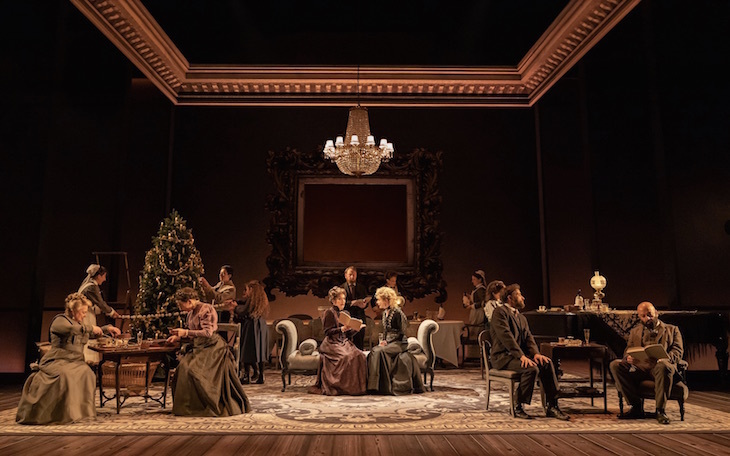
The drama almost entirely plays out within the four walls of the grand Viennese living room, but sounds of smashing glass, fighting, and bombs from outside suggest that things are getting dangerous. Even amid the increasingly tense developments outside of the house, there are moments of comedy. These, however, get fewer and further between following the 1938 Anschluss: the whole family have to move into a single room, and the extent of what their Jewish identity means for their fate comes to light. Historically, Leopoldstadt is spot on. Facts and figures are peppered into the play, so by the end, the audience has not only received a lesson in Jewish traditions (such as the significance of food items at the Passover feast) but also learnt the finer details of the Austrian experience of the second world war.


Photo: Marc Brenner


The large cast is a visual reminder of the sheer number of Jews that were the victims of the Holocaust: in the final scene, in 1955, there are only three family members left. One of the survivors, Rosa (Jenna Augen), reels off the locations of the others’ deaths: Auschwitz, Dachau, Auschwitz, Auschwitz…


A fantastically executed, moving play about identity, family and memory, Leopoldstadt reminds us why there are some things that should simply never be forgotten.


Leopoldstadt, Wyndham’s Theatre, Charing Cross Road, WC2H 0DA. Tickets from £15, until 13 June 2020.


Стоппарда Леопольдштадт это движется разведка память и семейные

Фото: Марк Бреннер

Тома Стоппарда новой драмы, Леопольдштадт, это глубокое погружение в сердце семейного альбома: этот альбом является одним С больше, чем обычная семейная драма, хотя, как мы следить за жизнью Jacobowitz и Мерц семьи на протяжении трех поколений, вникая в их историю, свидетелем еврейских праздников, окончания Первой мировой войны, суровых антисемитизм и, наконец, Холокост.

Фото: Марк Бреннер

Начало в имперское величие Вены Леопольдштадт берет нас в двух часах езды от предварительной Первой мировой войны на послевоенную нищету 1950-х годов. По слухам, его последняя пьеса, Леопольдштадт вдохновлен собственное семейное древо Стоппарда и недавних откровений о своем еврейском происхождении. Вместе с датами проецируется на стадии, сигнализируя, где мы находимся в истории, подлинные фотографии из семейного Стоппарда отображаются, а также нарисованные от руки генеалогическое дерево.

Фото: Марк Бреннер

Семейное древо, безусловно, надо — две семьи настолько велики, что даже сами персонажи забыть, как они связаны друг с другом. Из этих 40 сильный бросок, однако лишь немногие из героев должным образом разработаны и ориентированы на. Герман (Эдриан Скарборо) и его «христианских» жена Гретель (Фэй Castelow) особенно выделяются: их постепенное снижение на протяжении двух часов играть-это печальное, но необходимое, что нужно смотреть.

Фото: Марк Бреннер

Драма почти полностью играет в четырех стенах великого Венского гостиной, но звуки бьющегося стекла, бои, бомбы и снаружи то, что ситуация становится опасной. Даже на фоне все более напряженные события за пределами дома, есть моменты комедии. Эти, однако, сделать меньше и далее между после 1938 аншлюс: всей семьей придется переехать в одноместный номер, и масштабы того, что их принадлежность к еврейству средства для их судьбы приходит к свету. Исторически, Леопольдштадт месте. Факты и цифры засыпали в игру, так что к концу, зрители не только получили урок в еврейской традиции (такие как значение продовольственных товаров в Пасху), но и узнали тонкости австрийского опыта Второй мировой войны.

Фото: Марк Бреннер

Большой литой является визуальным напоминанием огромного количества евреев, которые стали жертвами Холокоста: в финальной сцене, в 1955 году, есть только три члена семьи. Один из выживших, Роза (Дженна глаз), катушки с места на чужих смертях: Освенцим, Дахау, Освенцим, Освенцим…

Фантастически выполнены, трогательно игра о личности, семье и памяти, Леопольдштадт напоминает нам, почему есть некоторые вещи, которые просто никогда не будут забыты.

Леопольдштадт, уиндхема театр, Чаринг Кросс Роуд, почтовый индекс wc2h 0DA. Билеты от £15 до 13 июня 2020 года.

Londonist в переводе

Stoppard’s Leopoldstadt Is A Moving Exploration Of Memory And Family

Photo: Marc Brenner

Tom Stoppard’s new drama, Leopoldstadt, is a deep dive into the heart of a family album: this album is one with more than the usual family drama, though, as we follow the lives of the Jacobowitz and Merz family over three generations, delving into their history while witnessing Jewish celebrations, the first world war, harsh antisemitism and, finally, the Holocaust.

Photo: Marc Brenner

Beginning in the imperial grandeur of Vienna, Leopoldstadt takes us on a two-hour journey from pre-first world war to the post-war misery of the 1950s. Rumoured to be his last play, Leopoldstadt is inspired by Stoppard’s own family tree and the recent revelations of his Jewish origin. Along with dates projected onto the stage, signalling where we are in history, original photographs of Stoppard’s family are displayed, as well as a hand-drawn family tree.

Photo: Marc Brenner

The family tree is definitely necessary — the two families are so large, that even the characters themselves forget how they are related to one another. Out of this 40 strong cast, however, only a handful of the characters are properly developed and focused on. Hermann (Adrian Scarborough) and his ‘Christian’ wife Gretl (Faye Castelow) particularly stand out: their gradual decline throughout the two-hour play is a sad, but necessary, thing to watch.

Photo: Marc Brenner

The drama almost entirely plays out within the four walls of the grand Viennese living room, but sounds of smashing glass, fighting, and bombs from outside suggest that things are getting dangerous. Even amid the increasingly tense developments outside of the house, there are moments of comedy. These, however, get fewer and further between following the 1938 Anschluss: the whole family have to move into a single room, and the extent of what their Jewish identity means for their fate comes to light. Historically, Leopoldstadt is spot on. Facts and figures are peppered into the play, so by the end, the audience has not only received a lesson in Jewish traditions (such as the significance of food items at the Passover feast) but also learnt the finer details of the Austrian experience of the second world war.

Photo: Marc Brenner

The large cast is a visual reminder of the sheer number of Jews that were the victims of the Holocaust: in the final scene, in 1955, there are only three family members left. One of the survivors, Rosa (Jenna Augen), reels off the locations of the others’ deaths: Auschwitz, Dachau, Auschwitz, Auschwitz…

A fantastically executed, moving play about identity, family and memory, Leopoldstadt reminds us why there are some things that should simply never be forgotten.

Leopoldstadt, Wyndham’s Theatre, Charing Cross Road, WC2H 0DA. Tickets from £15, until 13 June 2020.