Показаны сообщения с ярлыком christmas. Показать все сообщения

пятница, 29 мая 2020 г.

Getting to the Poinsettia

With its brightly-coloured, star-shaped bracts, the poinsettia is one of the most recognisable symbols of Christmas in the world. We find it in supermarkets, garden centres and florists, as well as emblazoned on Christmas cards and wrapping paper. At once cheap and cheerful, celebrated and cherished, it’s perhaps not surprising that we have turned this showy little shrub into a favourite seasonal icon.
The poinsettia has come a long way from its Central American roots, where once it was used by the Aztecs to create purple dye and a treatment for fevers. The USA’s first ambassador to Mexico, Joel Robert Poinsett, first spotted the plant’s horticultural potential in 1828. From his plantation in South Carolina his newly discovered Mexican spurge found its way to legendary plant collector John Bartram, and thence into the hands of plantsman Robert Buist. Buist foresaw the poinsettia’s commercial potential, and was probably the first to have sold them under their correct latin name Euphorbia pulcherrima, meaning ‘the most beautiful euphorbia’. Poinsettias were initially sold as cut flowers rather than plants, which might surprise and inspire today’s florists. The Ecke family from Southern California were the first to offer them as pot plants, and they’re still the main producer of poinsettias in the USA today.

Poinsettias are grown and pedalled in their hundreds of millions every Christmas, destined to grace fireplaces, coffee tables and windowsills for a few brief days before being consigned to the dustbin. Few of us bother to keep them alive and fewer still know how to coax them into reflowering. Poinsettias will tolerate the heat in our homes, but any spell of cold prior to that could be enough to kill them. All that deflects from the terrible waste of energy and effort involved in nurturing a poinsettia is that it’s a living thing, and therefore not considered ‘rubbish’ in the same way as discarded wrapping paper or cracker gifts. Never mind that they are grown as a monoculture in heated greenhouses and sprayed with chemicals to keep them healthy and compact, before being transported long distances in climate-controlled vehicles. An environmentally friendly choice they are certainly not! The National Farmers’ Union recommends buying British to support UK growers and thereby reducing the distance plants have to travel to reach your home.

Here are a few more tips if you want to keep your poinsettia looking lush and lively for longer:
  1. Poinsettias loath cold. If they experience 13ºC or below for 15 minutes or more, the leaves will drop. That means that almost any plant picked up outside a florist or petrol station will already be at death’s door. Save your pennies rather than waste them on a plant you cannot save. Even the short journey between a reputable retailer and boot of your car could be enough to initiate an early autumn, so ask for your plant to be loosely wrapped in paper or bubble wrap, including the top part.
  2. Poinsettias are brittle shrubs. Check inside the sleeve for broken branches and pick a compact plant with plenty of unblemished bracts.
  3. Choose a plant with unopened flowers. The part of the poinsettia we all recognise is not in fact a flower, but an array of brightly coloured leaves called bracts. The actual flowers are the yellow or green bead-like clusters in the centre of these bracts. Pick a plant where just a few have opened, as the plant is likely to last longer.
  4. Let air flow around your plant, but keep it away from drafts. As soon as you get home remove the plastic sleeve from your poinsettia to prevent too much moist air from building up and causing mould. Cold and hot drafts are a killer, so avoid positioning near doors, next to a window or above a radiator.
  5. Keep your poinsettia warm, brightly lit and well-watered. They do best at 18ºC or above during the flowering season, but avoid placing them above a radiator or open fire as this will quickly dehydrate them. Poinsettias originate from Mexico and are accustomed to decent light levels, making them unsuitable for dark rooms. Plants are often under-potted to reduce costs and make them easier to transport, so regular watering may be needed. Let the surface of the compost dry out between times and never allow them to become waterlogged.

If at first you don’t succeed, don’t be too hard on yourself. The damage was probably done before you purchased your plant. 99% of purchasers only manage to keep their plant alive for a few weeks, after which they have served their purpose anyway. Should you be determined to join the 1% who rejoice in keeping a poinsettia from one year to the next, here’s the advice offered by the Royal Horticultural Society :
  1. Prune hard in April, to about 10cm (4 inches), and keep at a temperature of 13°C (an unheated spare bedroom is normally ideal, provided you don’t forget it’s there!).
  2. Repot using fresh compost in early May. Grow on in a light, cool place over summer. A temperature of 15-18°C (60-65°F) is ideal. This is somewhat cooler than most houses, so the windowsill of a north-facing room would be ideal.
  3. Flowering and colourful flushing of the bracts is initiated by a short winter day-length, occurring naturally in December and January. This is a little late to produce a timely Christmas display, so, from November onwards, plants should be placed in a dark room or airing cupboard after twelve hours of daylight and protected from artificial light sources overnight.
  4. Poinsettias need a constant temperature of around 18°C to colour-up well, so bring them into a warm room over Christmas.
  5. Commercially grown poinsettias are often treated with a growth suppressant or dwarfing chemicals to create a compact plant. Plants grown on for a second year may revert to their taller, natural habitat. (Personally I find this a lot more attractive.)
You may by now have decided that there are better things to do with your life, for which you’d be quickly forgiven. Reflowering a poinsettia is about as unrewarding as completing a tax return, even for the most enthusiastic environmentalist or green-fingered horticulturalist. Better to chuck it out and start again next year, or not bother at all. A poinsettia really is just for Christmas, not for life. TFG.

понедельник, 30 декабря 2019 г.

Honey & Spices Granola

Christmas is now slowly coming to an end, but somehow we are still feeling festive. The New Year is after all very close!


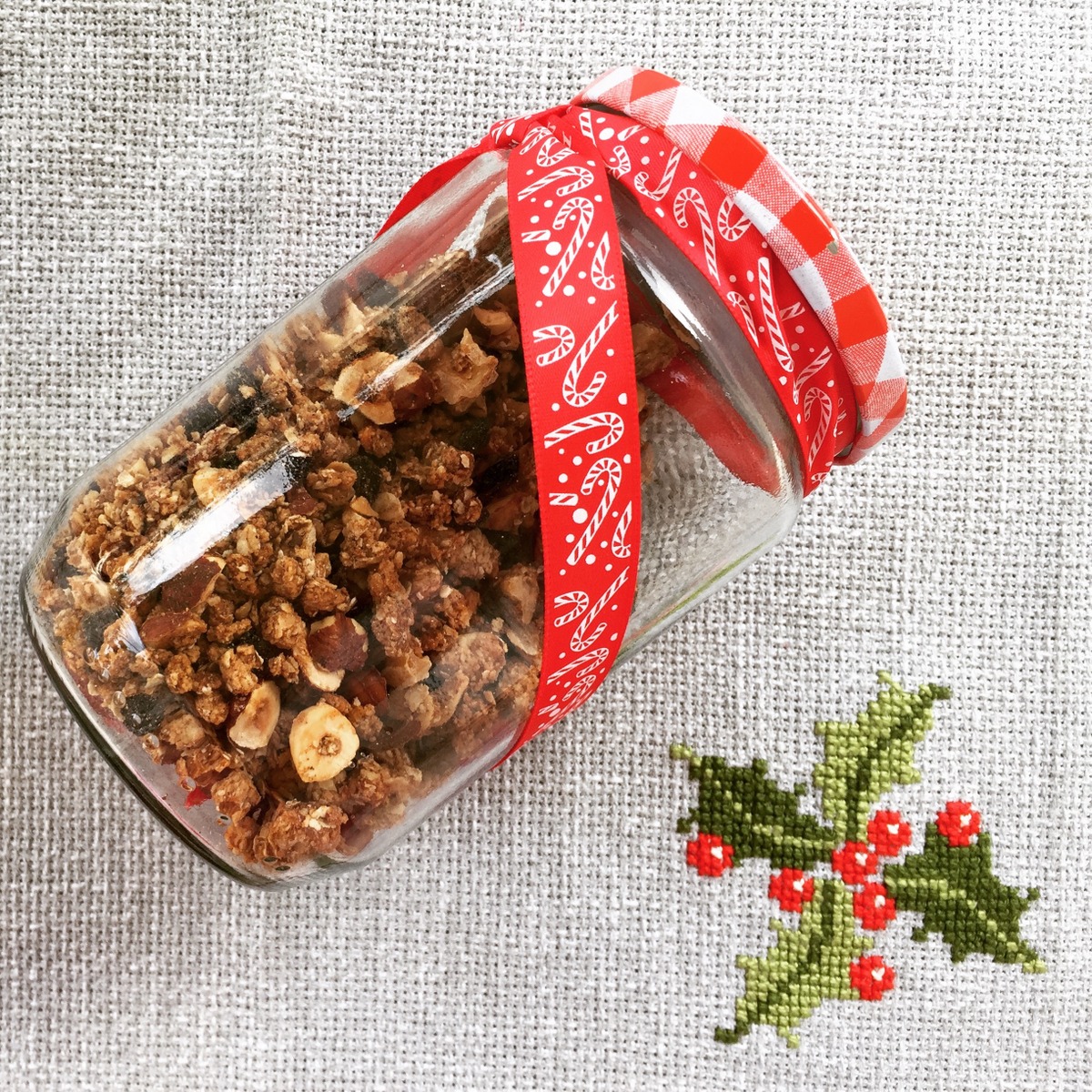
This week we have selected a wonderful recipe that will certainly fill you with warmth. A honey & spices granola! It is filled with fragrant spices, such as cloves, cinnamon and nutmeg and sweetened with vanilla fir honey. And because we’re feeling very festive, we’ve used our apple oil to give our granola a wonderful subtle aroma. This granola makes for a perfect gift for the New Year. Just put it in a lovely jar with a colourful ribbon.


But it’s also the ideal way to use up any leftover nuts and dried fruit you may have from Christmas. And as the year is coming to an end, we love the idea of clearing out our kitchen cupboards and starting fresh. So have a look, gather all leftover nuts and dried fruit, and join us, as we say goodbye to 2019 with one last recipe.


Makes one large jar


200g oats
100g mixed nuts (we used walnuts and hazelnuts)
1 tsp ground cloves
2 tsp ground cinnamon
1 tsp ground nutmeg
pinch of salt
3 tbsp apple oil
4 tbsp vanilla fir honey
50g dried fruit (we used raisins)


Preheat the oven at 160C.


Roughly chop the nuts. Place them in a large baking dish, along with the oats.


In a small bowl, whisk together the apple oil, honey, spices and pinch of salt.


Pour over the oats and nuts and using your hands or a wooden spoon, mix everything very well together, until all oats and nuts are coated in the aromatic olive oil-honey.


Bake at 160C for around 30min, stirring every 10 minutes.


Remove from the oven and add the dried fruit.

Honey & Spices Granola

Christmas is now slowly coming to an end, but somehow we are still feeling festive. The New Year is after all very close!


This week we have selected a wonderful recipe that will certainly fill you with warmth. A honey & spices granola! It is filled with fragrant spices, such as cloves, cinnamon and nutmeg and sweetened with vanilla fir honey. And because we’re feeling very festive, we’ve used our apple oil to give our granola a wonderful subtle aroma. This granola makes for a perfect gift for the New Year. Just put it in a lovely jar with a colourful ribbon.


But it’s also the ideal way to use up any leftover nuts and dried fruit you may have from Christmas. And as the year is coming to an end, we love the idea of clearing out our kitchen cupboards and starting fresh. So have a look, gather all leftover nuts and dried fruit, and join us, as we say goodbye to 2019 with one last recipe.


Makes one large jar


200g oats
100g mixed nuts (we used walnuts and hazelnuts)
1 tsp ground cloves
2 tsp ground cinnamon
1 tsp ground nutmeg
pinch of salt
3 tbsp apple oil
4 tbsp vanilla fir honey
50g dried fruit (we used raisins)


Preheat the oven at 160C.


Roughly chop the nuts. Place them in a large baking dish, along with the oats.


In a small bowl, whisk together the apple oil, honey, spices and pinch of salt.


Pour over the oats and nuts and using your hands or a wooden spoon, mix everything very well together, until all oats and nuts are coated in the aromatic olive oil-honey.


Bake at 160C for around 30min, stirring every 10 minutes.


Remove from the oven and add the dried fruit.


The post Honey & Spices Granola appeared first on Oliveology.

Honey & Spices Granola

Christmas is now slowly coming to an end, but somehow we are still feeling festive. The New Year is after all very close!

This week we have selected a wonderful recipe that will certainly fill you with warmth. A honey & spices granola! It is filled with fragrant spices, such as cloves, cinnamon and nutmeg and sweetened with vanilla fir honey. And because we’re feeling very festive, we’ve used our apple oil to give our granola a wonderful subtle aroma. This granola makes for a perfect gift for the New Year. Just put it in a lovely jar with a colourful ribbon.

But it’s also the ideal way to use up any leftover nuts and dried fruit you may have from Christmas. And as the year is coming to an end, we love the idea of clearing out our kitchen cupboards and starting fresh. So have a look, gather all leftover nuts and dried fruit, and join us, as we say goodbye to 2019 with one last recipe.

Makes one large jar

200g oats
100g mixed nuts (we used walnuts and hazelnuts)
1 tsp ground cloves
2 tsp ground cinnamon
1 tsp ground nutmeg
pinch of salt
3 tbsp apple oil
4 tbsp vanilla fir honey
50g dried fruit (we used raisins)

Preheat the oven at 160C.

Roughly chop the nuts. Place them in a large baking dish, along with the oats.

In a small bowl, whisk together the apple oil, honey, spices and pinch of salt.

Pour over the oats and nuts and using your hands or a wooden spoon, mix everything very well together, until all oats and nuts are coated in the aromatic olive oil-honey.

Bake at 160C for around 30min, stirring every 10 minutes.

Remove from the oven and add the dried fruit.

The post Honey & Spices Granola appeared first on Oliveology.

среда, 25 декабря 2019 г.

Christmas break at 24oranges HQ

By


We’ve been busy this year to the point of having a tough time posting this fall, but we should be back on top of things for 2020. It is Christmas day as I write this, and the plan is to eat Italian food, drink, listen to Christmas music and play with the little houses above, courtesy of a supermarket chain that has been handing them out.


Although many people complained about the plastic, after work on December 24 I was handed an entire box of these houses (the special offer was over) and could not resist taking as many home as I could. I decided to make a traditional Dutch winter scene for you, complete with an ‘oliebollen’ stand, a food usually eaten on New Year’s Eve, and ‘koek en zopie’, cake and a hot beverage with alcohol usually enjoyed after ice skating. It’s not winter at all here in Amsterdam, it’s 9 degrees!


As always, co-blogger Branko is working on his list of favourite stories of 2019, which should be online before the year is out.


Thanks to everyone for reading us and sharing the weird and fun news of 24oranges, and Happy Holidays!


No comments yet.

Christmas break at 24oranges HQ


We’ve been busy this year to the point of having a tough time posting this fall, but we should be back on top of things for 2020. It is Christmas day as I write this, and the plan is to eat Italian food, drink, listen to Christmas music and play with the little houses above, courtesy of a supermarket chain that has been handing them out.


Although many people complained about the plastic, after work on December 24 I was handed an entire box of these houses (the special offer was over) and could not resist taking as many home as I could. I decided to make a traditional Dutch winter scene for you, complete with an ‘oliebollen’ stand, a food usually eaten on New Year’s Eve, and ‘koek en zopie’, cake and a hot beverage with alcohol usually enjoyed after ice skating. It’s not winter at all here in Amsterdam, it’s 9 degrees!


As always, co-blogger Branko is working on his list of favourite stories of 2019, which should be online before the year is out.


Thanks to everyone for reading us and sharing the weird and fun news of 24oranges, and Happy Holidays!

Christmas break at 24oranges HQ

We’ve been busy this year to the point of having a tough time posting this fall, but we should be back on top of things for 2020. It is Christmas day as I write this, and the plan is to eat Italian food, drink, listen to Christmas music and play with the little houses above, courtesy of a supermarket chain that has been handing them out.

Although many people complained about the plastic, after work on December 24 I was handed an entire box of these houses (the special offer was over) and could not resist taking as many home as I could. I decided to make a traditional Dutch winter scene for you, complete with an ‘oliebollen’ stand, a food usually eaten on New Year’s Eve, and ‘koek en zopie’, cake and a hot beverage with alcohol usually enjoyed after ice skating. It’s not winter at all here in Amsterdam, it’s 9 degrees!

As always, co-blogger Branko is working on his list of favourite stories of 2019, which should be online before the year is out.

Thanks to everyone for reading us and sharing the weird and fun news of 24oranges, and Happy Holidays!

четверг, 19 декабря 2019 г.

Honey & Grape Molasses Carrots

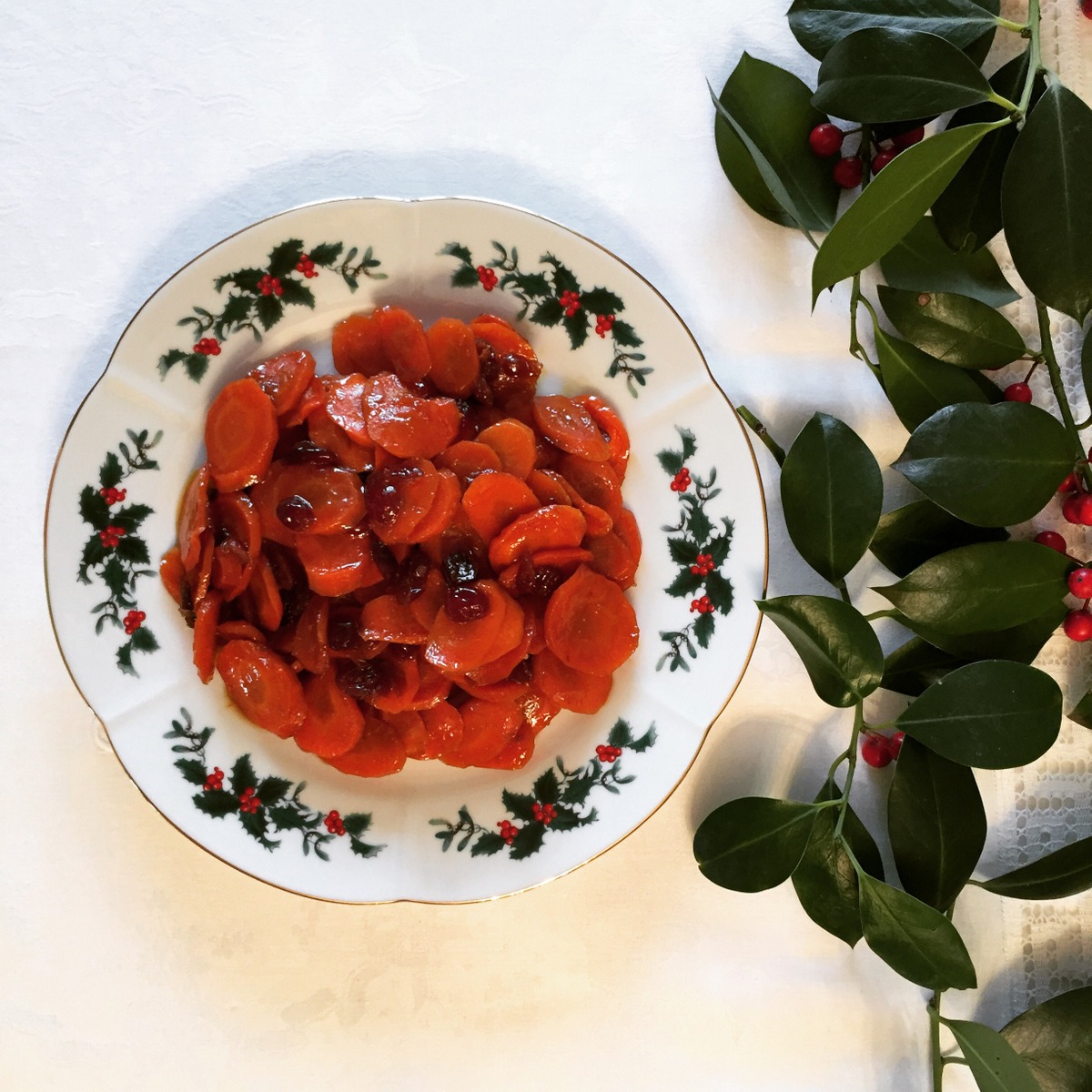
This week we’ve got a lovely Christmas recipe for you. As we all know, carrots are the perfect ingredient to accompany our Christmas meal. This week we’re preparing them combining some very unique ingredients: orange blossom honey and grape molasses! We got our inspiration from our Valentine’s Dinner Experience (our first for 2020), in which our talented chef Lida is making a honey carrot soup. Yes, honey and carrots are very good friends!


In this recipe we added grape molasses, an ingredient that adds depth and balances the sweetness of the honey. It is made purely from grape must. A staple in my own kitchen, I highly recommend it!


So let’s get cooking. And have a warm and peaceful Christmas everyone!


Serves 6 as a side
1kg carrots
50g cranberries
5 tbps olive oil
3 tbsp orange blossom honey
3 tbsp grape molasses
1 large orange, zest and juice
salt (to taste)


Preheat the oven at 180C


Slice the carrots diagonally in uniform thin slices. They will shrink a bit while cooking, so make quite big slices.


Place them in a large baking tray, in one layer.


Sprinkle the cranberries.


In a separate bowl, whisk together the olive oil, honey, grape molasses, orange zest and juice. Season with salt.


Drizzle over the carrots and toss well everything together.


Roast in the oven until tender.

Honey & Grape Molasses Carrots

This week we’ve got a lovely Christmas recipe for you. As we all know, carrots are the perfect ingredient to accompany our Christmas meal. This week we’re preparing them combining some very unique ingredients: orange blossom honey and grape molasses! We got our inspiration from our Valentine’s Dinner Experience (our first for 2020), in which our talented chef Lida is making a honey carrot soup. Yes, honey and carrots are very good friends!


In this recipe we added grape molasses, an ingredient that adds depth and balances the sweetness of the honey. It is made purely from grape must. A staple in my own kitchen, I highly recommend it!


So let’s get cooking. And have a warm and peaceful Christmas everyone!


Serves 6 as a side
1kg carrots
50g cranberries
5 tbps olive oil
3 tbsp orange blossom honey
3 tbsp grape molasses
1 large orange, zest and juice
salt (to taste)


Preheat the oven at 180C


Slice the carrots diagonally in uniform thin slices. They will shrink a bit while cooking, so make quite big slices.


Place them in a large baking tray, in one layer.


Sprinkle the cranberries.


In a separate bowl, whisk together the olive oil, honey, grape molasses, orange zest and juice. Season with salt.


Drizzle over the carrots and toss well everything together.


Roast in the oven until tender.


The post Honey & Grape Molasses Carrots appeared first on Oliveology.

Honey & Grape Molasses Carrots

This week we’ve got a lovely Christmas recipe for you. As we all know, carrots are the perfect ingredient to accompany our Christmas meal. This week we’re preparing them combining some very unique ingredients: orange blossom honey and grape molasses! We got our inspiration from our Valentine’s Dinner Experience (our first for 2020), in which our talented chef Lida is making a honey carrot soup. Yes, honey and carrots are very good friends!

In this recipe we added grape molasses, an ingredient that adds depth and balances the sweetness of the honey. It is made purely from grape must. A staple in my own kitchen, I highly recommend it!

So let’s get cooking. And have a warm and peaceful Christmas everyone!

Serves 6 as a side
1kg carrots
50g cranberries
5 tbps olive oil
3 tbsp orange blossom honey
3 tbsp grape molasses
1 large orange, zest and juice
salt (to taste)

Preheat the oven at 180C

Slice the carrots diagonally in uniform thin slices. They will shrink a bit while cooking, so make quite big slices.

Place them in a large baking tray, in one layer.

Sprinkle the cranberries.

In a separate bowl, whisk together the olive oil, honey, grape molasses, orange zest and juice. Season with salt.

Drizzle over the carrots and toss well everything together.

Roast in the oven until tender.

The post Honey & Grape Molasses Carrots appeared first on Oliveology.

The British Museum Membercast: A Tudor Christmas

The British Museum Membercast is a monthly podcast made available to ‘all studious and curious persons’. Comedian, podcaster and super-fan Iszi Lawrence (The Z List Dead List) presents snippets from exclusive Members’ lectures at the Museum, artfully woven together with interviews and her own musings.

Please share your comments and feedback about the podcast! You can talk to us on Twitter @britishmuseum using the hashtag #membercast or email friends@britishmuseum.org

The British Museum Membercast: A Tudor Christmas

The British Museum Membercast is a monthly podcast made available to ‘all studious and curious persons’. Comedian, podcaster and super-fan Iszi Lawrence (The Z List Dead List) presents snippets from exclusive Members’ lectures at the Museum, artfully woven together with interviews and her own musings.

Please share your comments and feedback about the podcast! You can talk to us on Twitter @britishmuseum using the hashtag #membercast or email friends@britishmuseum.org

среда, 18 декабря 2019 г.

Getting to the Poinsettia

With its brightly-coloured, star-shaped bracts, the poinsettia is one of the most recognisable symbols of Christmas in the world. We find it in supermarkets, garden centres and florists, as well as emblazoned on Christmas cards and wrapping paper. At once cheap and cheerful, celebrated and cherished, it’s perhaps not surprising that we have turned this showy little shrub into a favourite seasonal icon.


The poinsettia has come a long way from its Central American roots, where once it was used by the Aztecs to create purple dye and a treatment for fevers. The USA’s first ambassador to Mexico, Joel Robert Poinsett, first spotted the plant’s horticultural potential in 1828. From his plantation in South Carolina his newly discovered Mexican spurge found its way to legendary plant collector John Bartram, and thence into the hands of plantsman Robert Buist. Buist foresaw the poinsettia’s commercial potential, and was probably the first to have sold them under their correct latin name Euphorbia pulcherrima, meaning ‘the most beautiful euphorbia’. Poinsettias were initially sold as cut flowers rather than plants, which might surprise and inspire today’s florists. The Ecke family from Southern California were the first to offer them as pot plants, and they’re still the main producer of poinsettias in the USA today.


Poinsettias are grown and pedalled in their hundreds of millions every Christmas, destined to grace fireplaces, coffee tables and windowsills for a few brief days before being consigned to the dustbin. Few of us bother to keep them alive and fewer still know how to coax them into reflowering. Poinsettias will tolerate the heat in our homes, but any spell of cold prior to that could be enough to kill them. All that deflects from the terrible waste of energy and effort involved in nurturing a poinsettia is that it’s a living thing, and therefore not considered ‘rubbish’ in the same way as discarded wrapping paper or cracker gifts. Never mind that they are grown as a monoculture in heated greenhouses and sprayed with chemicals to keep them healthy and compact, before being transported long distances in climate-controlled vehicles. An environmentally friendly choice they are certainly not! The National Farmers’ Union recommends buying British to support UK growers and thereby reducing the distance plants have to travel to reach your home.


Here are a few more tips if you want to keep your poinsettia looking lush and lively for longer:


  1. Poinsettias loath cold. If they experience 13ºC or below for 15 minutes or more, the leaves will drop. That means that almost any plant picked up outside a florist or petrol station will already be at death’s door. Save your pennies rather than waste them on a plant you cannot save. Even the short journey between a reputable retailer and boot of your car could be enough to initiate an early autumn, so ask for your plant to be loosely wrapped in paper or bubble wrap, including the top part.

  2. Poinsettias are brittle shrubs. Check inside the sleeve for broken branches and pick a compact plant with plenty of unblemished bracts.

  3. Choose a plant with unopened flowers. The part of the poinsettia we all recognise is not in fact a flower, but an array of brightly coloured leaves called bracts. The actual flowers are the yellow or green bead-like clusters in the centre of these bracts. Pick a plant where just a few have opened, as the plant is likely to last longer.

  4. Let air flow around your plant, but keep it away from drafts. As soon as you get home remove the plastic sleeve from your poinsettia to prevent too much moist air from building up and causing mould. Cold and hot drafts are a killer, so avoid positioning near doors, next to a window or above a radiator.

  5. Keep your poinsettia warm, brightly lit and well-watered. They do best at 18ºC or above during the flowering season, but avoid placing them above a radiator or open fire as this will quickly dehydrate them. Poinsettias originate from Mexico and are accustomed to decent light levels, making them unsuitable for dark rooms. Plants are often under-potted to reduce costs and make them easier to transport, so regular watering may be needed. Let the surface of the compost dry out between times and never allow them to become waterlogged.


If at first you don’t succeed, don’t be too hard on yourself. The damage was probably done before you purchased your plant. 99% of purchasers only manage to keep their plant alive for a few weeks, after which they have served their purpose anyway. Should you be determined to join the 1% who rejoice in keeping a poinsettia from one year to the next, here’s the advice offered by the Royal Horticultural Society :


  1. Prune hard in April, to about 10cm (4 inches), and keep at a temperature of 13°C (an unheated spare bedroom is normally ideal, provided you don’t forget it’s there!).

  2. Repot using fresh compost in early May. Grow on in a light, cool place over summer. A temperature of 15-18°C (60-65°F) is ideal. This is somewhat cooler than most houses, so the windowsill of a north-facing room would be ideal.

  3. Flowering and colourful flushing of the bracts is initiated by a short winter day-length, occurring naturally in December and January. This is a little late to produce a timely Christmas display, so, from November onwards, plants should be placed in a dark room or airing cupboard after twelve hours of daylight and protected from artificial light sources overnight.

  4. Poinsettias need a constant temperature of around 18°C to colour-up well, so bring them into a warm room over Christmas.

  5. Commercially grown poinsettias are often treated with a growth suppressant or dwarfing chemicals to create a compact plant. Plants grown on for a second year may revert to their taller, natural habitat. (Personally I find this a lot more attractive.)

You may by now have decided that there are better things to do with your life, for which you’d be quickly forgiven. Reflowering a poinsettia is about as unrewarding as completing a tax return, even for the most enthusiastic environmentalist or green-fingered horticulturalist. Better to chuck it out and start again next year, or not bother at all. A poinsettia really is just for Christmas, not for life. TFG.


четверг, 12 декабря 2019 г.

White cauliflower soup

Christmas is around the corner and all of us are feeling very festive here at Oliveology! Have you checked our advent calendar yet? We’ve got a special treat every day, how exciting!


We’ve had a very busy few weeks, planning our delicious events for 2020!


We are very excited to share with you some very interesting workshops: In February we will warm up with our Greek stews & soups workshop. In March we will learn how to make Traditional Greek pies, and at the end of March we have our Vegan Workshop.


When it comes to dinner experiences, On Valentine’s Day we have a special dinner experience planned, focusing on the senses. In June we have a dinner & a talk around Greek olive oil mythologies, with lots traditional dishes, slowly cooked in olive oil. The latter by yours truly.


So in case you are looking for an unusual gift this Christmas, our Events Gift Card is what you need!


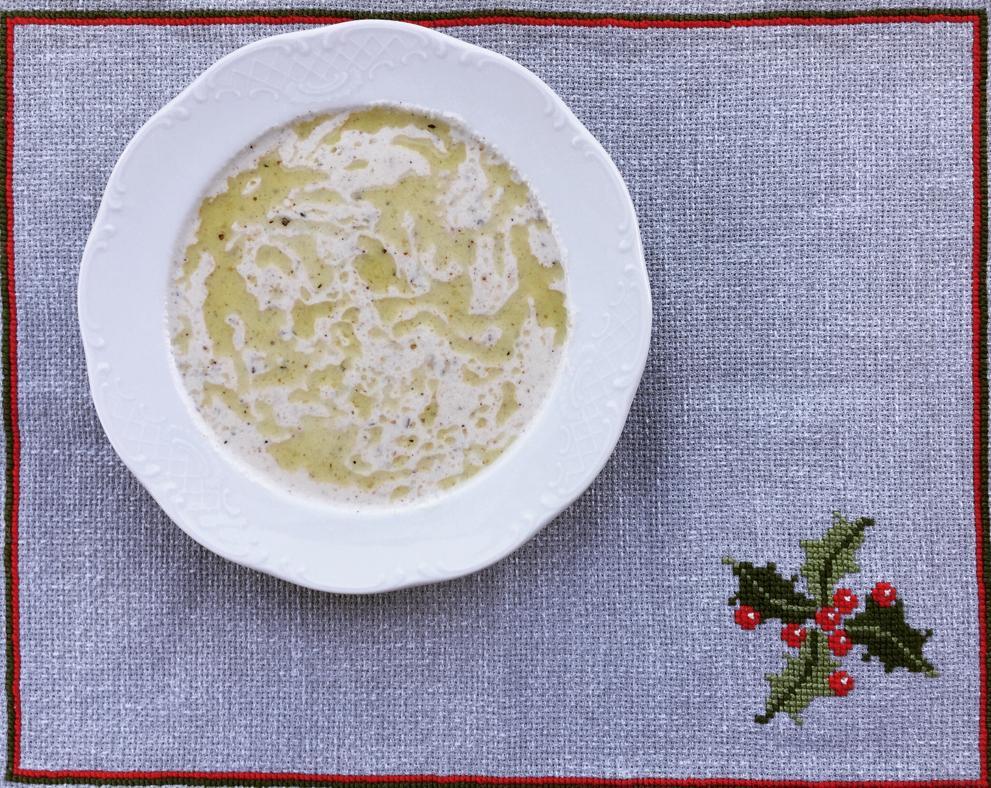
Following last week’s festive spirit, when we made a warm orange salad with our truffle honey, this week we have prepared a white soup made with one of my favourite Oliveology ingredients: our apple oil! Imagine olives pressed with apples, walnuts, cinnamon, honey & sage, what a combination! And like we did in our celeriac soup, we’ve added a little secret ingredient: almonds!


Serves 6 as a starter


1 kg cauliflower
5 tbsp apple oil
salt, pepper, dried thyme
50g almonds
2 cups of milk


Preheat the oven at 180C.


Break the cauliflower in florets and place it in a single layer in a large baking tray. Add the almonds. Season with salt, pepper and dried <a href="https://oliveology.co.uk/glossary/thyme/" data-tooltip="

Thyme

Thyme grows everywhere in Greece. It has a long history of being used both as a culinary herb and for its healing properties." class="glossaryLink">thyme. Drizzle the apple oil and toss everything gently together until all florets and almonds are coated with the oil and the seasoning.


Bake until the cauliflower is golden and tender, for around 30min. Remove from the oven and let cool.


Using a blender, blend the cauliflower and almonds, adding the milk. You can work in batches if necessary.


Transfer the soup in a large pot. Cook until bubbly hot, adding more milk if needed. Check for seasoning.


Serve immediately, drizzling more apple oil.

White cauliflower soup

Christmas is around the corner and all of us are feeling very festive here at Oliveology! Have you checked our advent calendar yet? We’ve got a special treat every day, how exciting!


We’ve had a very busy few weeks, planning our delicious events for 2020!


We are very excited to share with you some very interesting workshops: In February we will warm up with our Greek stews & soups workshop. In March we will learn how to make Traditional Greek pies, and at the end of March we have our Vegan Workshop.


When it comes to dinner experiences, On Valentine’s Day we have a special dinner experience planned, focusing on the senses. In June we have a dinner & a talk around Greek olive oil mythologies, with lots traditional dishes, slowly cooked in olive oil. The latter by yours truly.


So in case you are looking for an unusual gift this Christmas, our Events Gift Card is what you need!


Following last week’s festive spirit, when we made a warm orange salad with our truffle honey, this week we have prepared a white soup made with one of my favourite Oliveology ingredients: our apple oil! Imagine olives pressed with apples, walnuts, cinnamon, honey & sage, what a combination! And like we did in our celeriac soup, we’ve added a little secret ingredient: almonds!


Serves 6 as a starter


1 kg cauliflower
5 tbsp apple oil
salt, pepper, dried thyme
50g almonds
2 cups of milk


Preheat the oven at 180C.


Break the cauliflower in florets and place it in a single layer in a large baking tray. Add the almonds. Season with salt, pepper and dried thyme. Drizzle the apple oil and toss everything gently together until all florets and almonds are coated with the oil and the seasoning.


Bake until the cauliflower is golden and tender, for around 30min. Remove from the oven and let cool.


Using a blender, blend the cauliflower and almonds, adding the milk. You can work in batches if necessary.


Transfer the soup in a large pot. Cook until bubbly hot, adding more milk if needed. Check for seasoning.


Serve immediately, drizzling more apple oil.


The post White cauliflower soup appeared first on Oliveology.

White cauliflower soup

Christmas is around the corner and all of us are feeling very festive here at Oliveology! Have you checked our advent calendar yet? We’ve got a special treat every day, how exciting!

We’ve had a very busy few weeks, planning our delicious events for 2020!

We are very excited to share with you some very interesting workshops: In February we will warm up with our Greek stews & soups workshop. In March we will learn how to make Traditional Greek pies, and at the end of March we have our Vegan Workshop.

When it comes to dinner experiences, On Valentine’s Day we have a special dinner experience planned, focusing on the senses. In June we have a dinner & a talk around Greek olive oil mythologies, with lots traditional dishes, slowly cooked in olive oil. The latter by yours truly.

So in case you are looking for an unusual gift this Christmas, our Events Gift Card is what you need!

Following last week’s festive spirit, when we made a warm orange salad with our truffle honey, this week we have prepared a white soup made with one of my favourite Oliveology ingredients: our apple oil! Imagine olives pressed with apples, walnuts, cinnamon, honey & sage, what a combination! And like we did in our celeriac soup, we’ve added a little secret ingredient: almonds!

Serves 6 as a starter

1 kg cauliflower
5 tbsp apple oil
salt, pepper, dried thyme
50g almonds
2 cups of milk

Preheat the oven at 180C.

Break the cauliflower in florets and place it in a single layer in a large baking tray. Add the almonds. Season with salt, pepper and dried thyme. Drizzle the apple oil and toss everything gently together until all florets and almonds are coated with the oil and the seasoning.

Bake until the cauliflower is golden and tender, for around 30min. Remove from the oven and let cool.

Using a blender, blend the cauliflower and almonds, adding the milk. You can work in batches if necessary.

Transfer the soup in a large pot. Cook until bubbly hot, adding more milk if needed. Check for seasoning.

Serve immediately, drizzling more apple oil.


The post White cauliflower soup appeared first on Oliveology.

пятница, 6 декабря 2019 г.

Festive Orange Salad

As we are well into winter and a few weeks away from Christmas, many of us are wondering what to prepare this year for our festive table. Let’s have a look at our recipes.


There is of course the question of stuffing. Shall we go with a vegan one? A less ordinary one made with bulgur wheat, or a colourful one with dried nectarines, cherries and almonds?


What is your favourite Christmas main? Here at Oliveology every year we’ve got different traditions and family recipes that come into the discussion.


But no matter what your main course is, plenty of colourful vegetable-based plates are a must! The last few years, we went for green. We loved our festive Brussels sprouts with walnut oil. Or how about a crunchy fresh green salad with galomyzithra cheese, dried figs and grape molasses?


This year we got our inspiration from one very unique ingredient. Truffle honey. Our truffle honey is made from acacia honey, infused with slivers of real black summer truffle. The intense aroma of this truffle honey pairs particularly well with cheese and charcuterie platters. But it is an excellent ingredient to add a unique flavour and a little luxury to this year’s table.


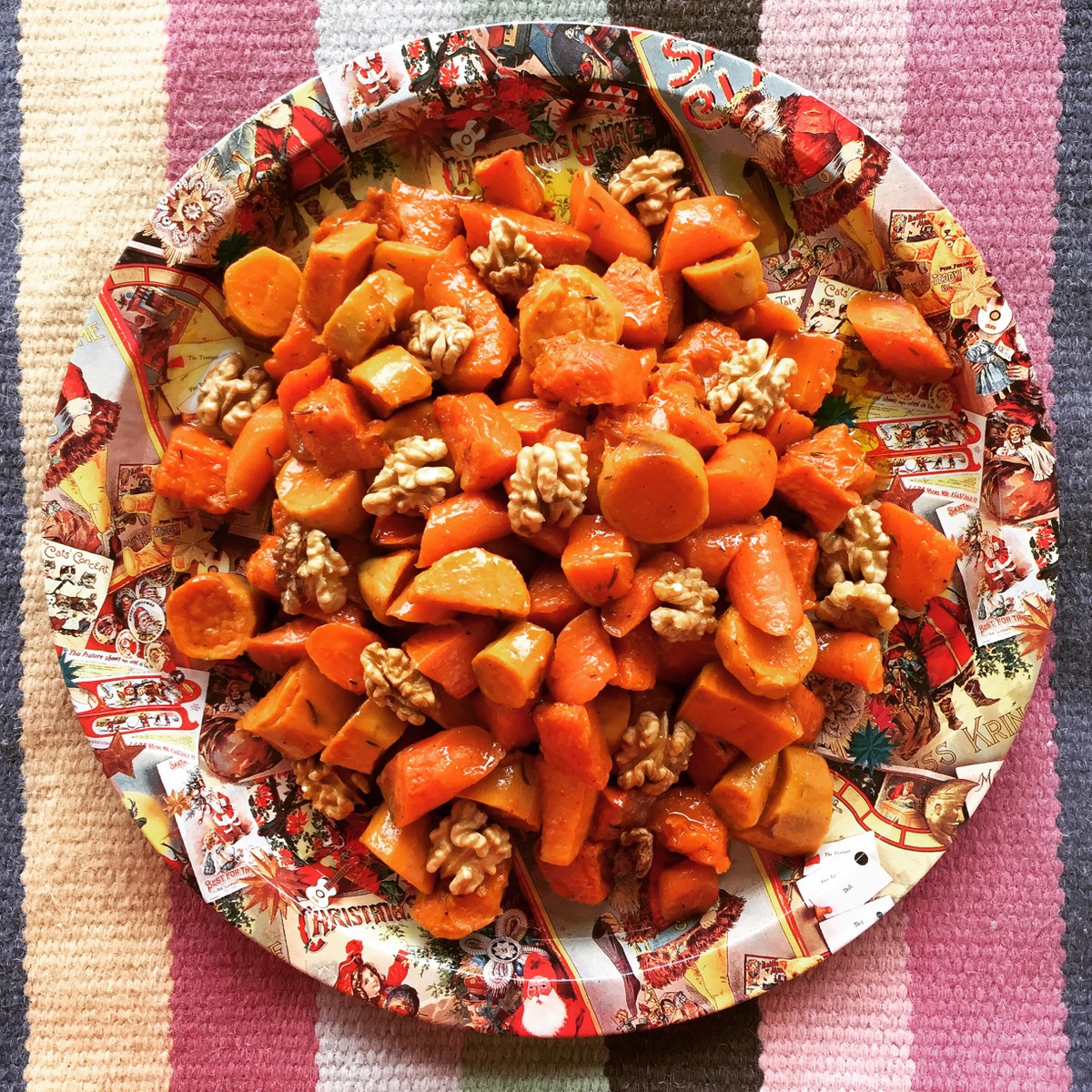
And as we are going for a colourful table, we have chosen a selection of orange winter vegetables. The inspiration came from a restaurant dish I used to prepare years back, where the chef was using only orange vegetables-what a brilliant idea! The result is a memorable dish that will definitely appeal not only to truffle lovers, but also to those who have never tasted truffle before.


Serves 6


1kg pumpkin
500g carrots
500g sweet potato
½ jar truffle honey
1/3 cup olive oil
1/3 cup of water
dried thyme
salt, pepper
50g walnuts (to serve)


Peel the pumpkin, carrots and sweet potatoes. Cut the vegetables in large bite-sized pieces and place in a large roasting tray.


In a bowl, whisk together the truffle honey, olive oil, water, <a href="https://oliveology.co.uk/glossary/thyme/" data-tooltip="

Thyme

Thyme grows everywhere in Greece. It has a long history of being used both as a culinary herb and for its healing properties." class="glossaryLink">thyme, salt and pepper.


Drizzle on top of your vegetables and toss everything together.


Bake at 180C for about 45 minutes, or until the vegetables are tended inside and slightly crunchy on the outside.


Sprinkle some walnuts and serve warm in a colourful platter.

Festive Orange Salad

As we are well into winter and a few weeks away from Christmas, many of us are wondering what to prepare this year for our festive table. Let’s have a look at our recipes.


There is of course the question of stuffing. Shall we go with a vegan one? A less ordinary one made with bulgur wheat, or a colourful one with dried nectarines, cherries and almonds?


What is your favourite Christmas main? Here at Oliveology every year we’ve got different traditions and family recipes that come into the discussion.


But no matter what your main course is, plenty of colourful vegetable-based plates are a must! The last few years, we went for green. We loved our festive Brussels sprouts with walnut oil. Or how about a crunchy fresh green salad with galomyzithra cheese, dried figs and grape molasses?


This year we got our inspiration from one very unique ingredient. Truffle honey. Our truffle honey is made from acacia honey, infused with slivers of real black summer truffle. The intense aroma of this truffle honey pairs particularly well with cheese and charcuterie platters. But it is an excellent ingredient to add a unique flavour and a little luxury to this year’s table.


And as we are going for a colourful table, we have chosen a selection of orange winter vegetables. The inspiration came from a restaurant dish I used to prepare years back, where the chef was using only orange vegetables-what a brilliant idea! The result is a memorable dish that will definitely appeal not only to truffle lovers, but also to those who have never tasted truffle before.


Serves 6


1kg pumpkin
500g carrots
500g sweet potato
½ jar truffle honey
1/3 cup olive oil
1/3 cup of water
dried thyme
salt, pepper
50g walnuts (to serve)


Peel the pumpkin, carrots and sweet potatoes. Cut the vegetables in large bite-sized pieces and place in a large roasting tray.


In a bowl, whisk together the truffle honey, olive oil, water, thyme, salt and pepper.


Drizzle on top of your vegetables and toss everything together.


Bake at 180C for about 45 minutes, or until the vegetables are tended inside and slightly crunchy on the outside.


Sprinkle some walnuts and serve warm in a colourful platter.


The post Festive Orange Salad appeared first on Oliveology.

Festive Orange Salad

As we are well into winter and a few weeks away from Christmas, many of us are wondering what to prepare this year for our festive table. Let’s have a look at our recipes.

There is of course the question of stuffing. Shall we go with a vegan one? A less ordinary one made with bulgur wheat, or a colourful one with dried nectarines, cherries and almonds?

What is your favourite Christmas main? Here at Oliveology every year we’ve got different traditions and family recipes that come into the discussion.

But no matter what your main course is, plenty of colourful vegetable-based plates are a must! The last few years, we went for green. We loved our festive Brussels sprouts with walnut oil. Or how about a crunchy fresh green salad with galomyzithra cheese, dried figs and grape molasses?

This year we got our inspiration from one very unique ingredient. Truffle honey. Our truffle honey is made from acacia honey, infused with slivers of real black summer truffle. The intense aroma of this truffle honey pairs particularly well with cheese and charcuterie platters. But it is an excellent ingredient to add a unique flavour and a little luxury to this year’s table.

And as we are going for a colourful table, we have chosen a selection of orange winter vegetables. The inspiration came from a restaurant dish I used to prepare years back, where the chef was using only orange vegetables-what a brilliant idea! The result is a memorable dish that will definitely appeal not only to truffle lovers, but also to those who have never tasted truffle before.

Serves 6

1kg pumpkin
500g carrots
500g sweet potato
½ jar truffle honey
1/3 cup olive oil
1/3 cup of water
dried thyme
salt, pepper
50g walnuts (to serve)

Peel the pumpkin, carrots and sweet potatoes. Cut the vegetables in large bite-sized pieces and place in a large roasting tray.

In a bowl, whisk together the truffle honey, olive oil, water, thyme, salt and pepper.

Drizzle on top of your vegetables and toss everything together.

Bake at 180C for about 45 minutes, or until the vegetables are tended inside and slightly crunchy on the outside.

Sprinkle some walnuts and serve warm in a colourful platter.

The post Festive Orange Salad appeared first on Oliveology.

London Launch: The Winter Forest

Festive fun is a term that encompasses Christmas. It means warming drinks, log fires, delicious seasonal food and a lot of fairy lights. The winter forest is no different as this winter wonderland is set to a backdrop of snow-covered pine trees and festive cheer.


Image: The Winter Forest


The Winter Forest


Broadgate Circle, London, EC2M 2QS


Nearest Tube: Liverpool Street


Opening hours: Open until the 20th December


Following the launch of their brand new building in Finsbury Avenue Square, Broadgate promises to be more Christmassy than ever. With the opening of Everyman Broadgate, you can watch the latest releases and Christmas films until your heart is content. And if that doesn’t get you into the spirit, head to the Fever-Tree Winter Lodge. It is open every day and is the perfect spot for an afterwork drink – you can even join a gin masterclass.


Image: The Winter Forest


There is a quiz night every Monday up until the 16th December as well as a whole host of live music performances. See the upcoming show here. This year the Winter Forest have teamed up with the mental health charity, Mind in the City, Hackney and Waltham, so book onto as many events as you like to raise funds. There are some particularly great classes about self-care, including top tips on how to get a better night’s sleep and to understand our stresses better.


Finally, it wouldn’t be Christmas without the option to make your own floral wreath. There are a number of workshops timetabled to create festive floral table decorations, centerpieces, as well as wreathes for your front door. The Winter Forest promises to be magical place full of festive cheer and spirit and if you really want to meet father Christmas this is the place to be, as he will be gracing Broadgate with his presence from time to time!


Will you be heading to The Winter Forest? Let us know what you thought of it in the comments below! If you like our posts, you’ll love our Instagram.


The post London Launch: The Winter Forest appeared first on London Living.