From my lofty vantage point on the broad ramparts of Angers’s medieval fortress, the high points of this attractive city stand proud above the rooftops, an open invitation to explore.
Dominating the Old Town are the soaring twin towers of the cathedral and the bell tower of Saint-Aubin, whilst further out, I can clearly see the huge yellow balloon that marks the Terra Botanica theme park.
There’s plenty more to enjoy in Angers than medieval masonry, but by starting your tour at the castle you can enjoy two of the city’s highlights in one visit.
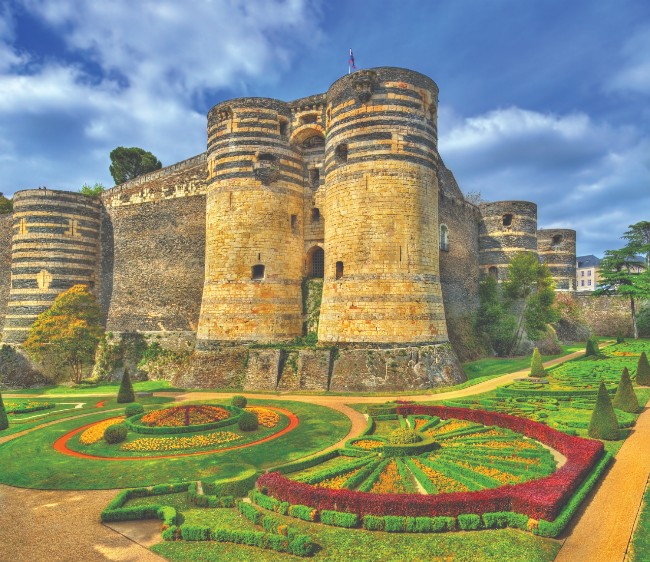
Angers castle. Photo: Shutterstock
Situated close to the confluence of the rivers Loire and Maine – where France’s longest river joins one of its shortest – Angers gave its name to the Anjou region, birthplace of England’s Plantagenet dynasty. The bigwigs here were first counts, then dukes, but never kings of France; although the last Duke, René of Anjou, held the titles of King of Naples and Sicily in the 15th century. When he died without an heir in 1480, Anjou was annexed to France by King Louis XI.
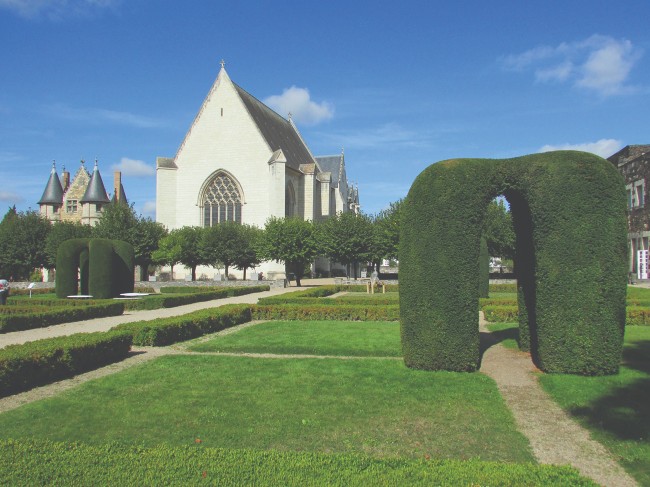
Castles rarely pack a more powerful punch than this one, which dominates the banks of the Maine with 17 towers set into ramparts nearly half a kilometre long. Built from local black schist, it is patterned with white tuffeau stone, familiar from châteaux further east along the Loire Valley. Visit the 15th-century Royal Residence, admire the Angevin vaulting in the castle chapel, and wander through the gardens, both inside the walls and in the moat. Then head up onto the parapet for that sweeping bird’s-eye view.
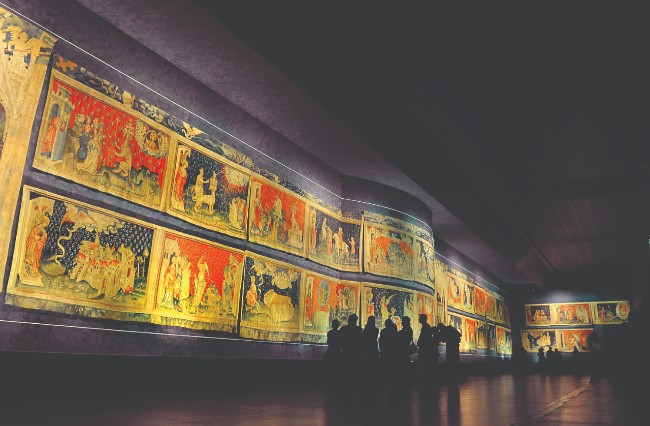
Angers Castle is also home to the vast Apocalypse Tapestry, the world’s largest medieval tapestry. Commissioned in 1375 by Louis I, Duke of Anjou and brother to King Charles V, it is made entirely of wool and depicts the prophetic visions of St John – the struggle between Good and Evil – as written in the Book of Revelations in 1AD.
The castle and tapestry are both accessible free to holders of an Angers City Pass (24, 48 or 72 hours, from €15), which can be bought from the Tourist Office opposite the château, but be aware that some attractions are closed on Mondays. While you’re there, pick up a map to the self-guided tourist trail through the Old Town and across the Maine; but don’t set off before popping into the nearby Anjou Wines to discover the local vintages – red, white, rosé and sparkling.
The formal gardens at Angers Castle. Photo: Gillian Thornton
For an atmospheric place to stay in the heart of the Old Town, book one of five rooms at L’Oisellerie, just behind the cathedral. This 16th-century timber-framed property has been beautifully restored by its passionate young owners. Look out for their ground-floor shop selling an array of local products. But do ask for a room on a lower floor if you don’t like stairs!
A CITY OF ART
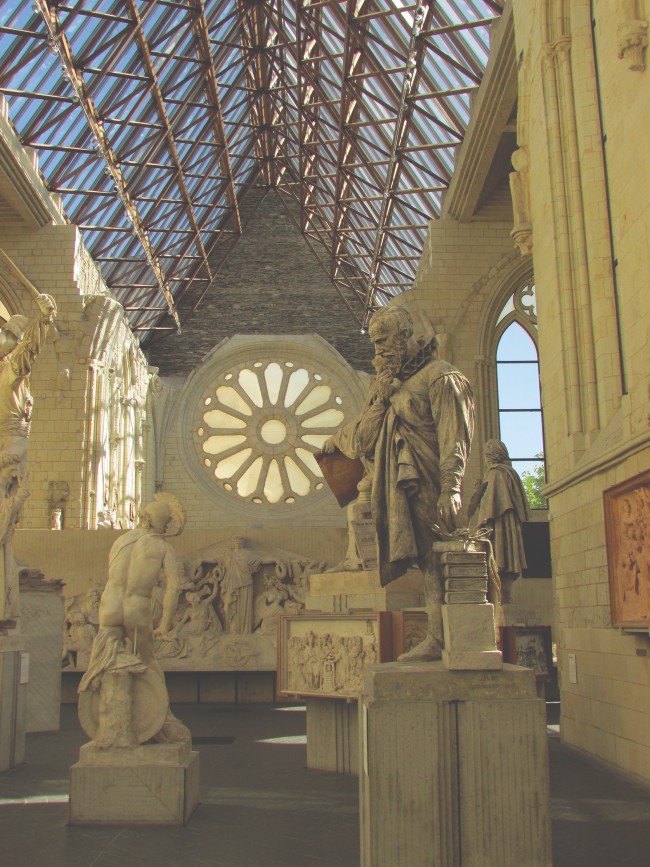
In the heart of the historic quarter is one my favourite museums in the whole of France, the Galerie David d’Angers, which showcases the work of Pierre-Jean David, who later adopted the name of the town where he had been born in 1788. The son of a wood carver and sculptor, David studied drawing locally before heading to Paris where his fame quickly grew. From 1811 onwards, he regularly sent his studio casts and other works to Angers, as a thank you for the financial support he had received. Further works were donated by David’s family on his death in 1856, and today many of them are displayed in the stunning surroundings of the ruined abbey church. Expect casts of monumental sculptures from public commissions, busts of 19th-century movers and shakers and miniature portraits in medallion format, as well as the plaster model for the pediment of the Panthéon in Paris.
Galerie David d’Angers. Photo: Gillian Thornton
Across the public gardens, there’s more art to be found in the Musée des Beaux-Arts. The museum is housed in the historic Logis Barrault, which was built in the late 15th century for Olivier Barrault, aide to the King and twice mayor of Angers. Highlights include works by artists such as Fragonard, Watteau, Ingres and Jongkind.
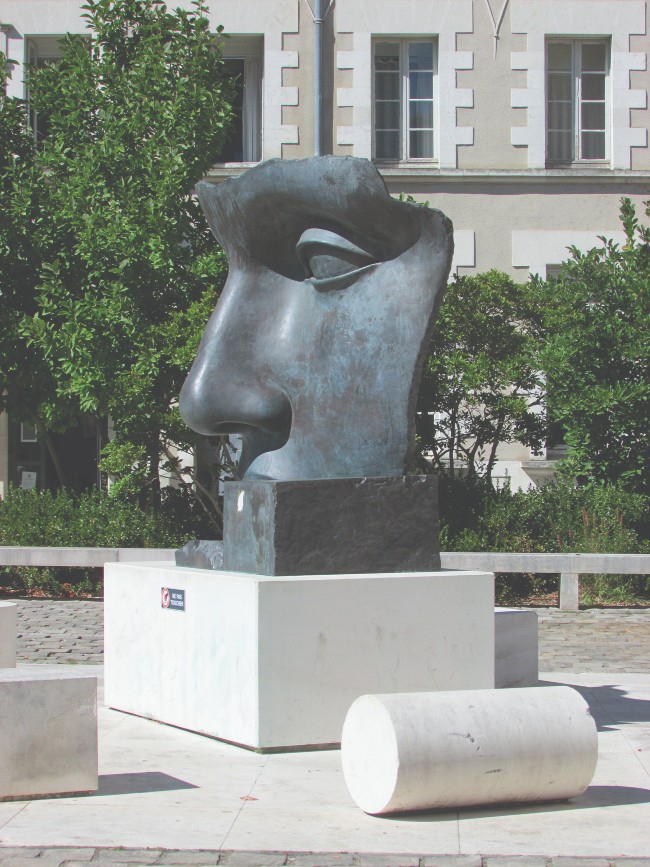
Sculpture outside the Musée des Beaux-Arts. Photo: Gillian Thornton
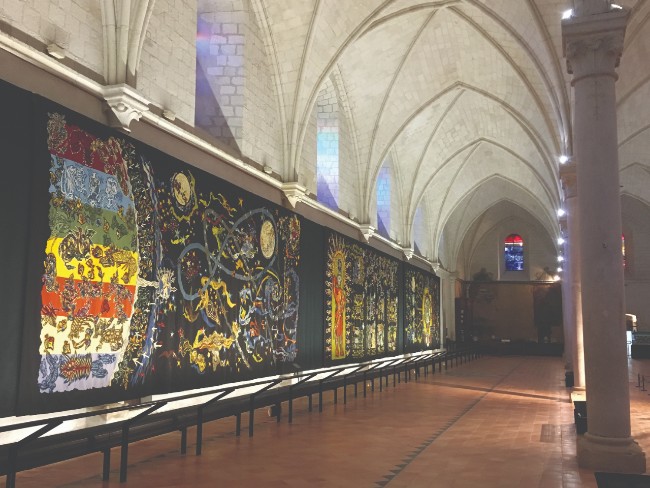
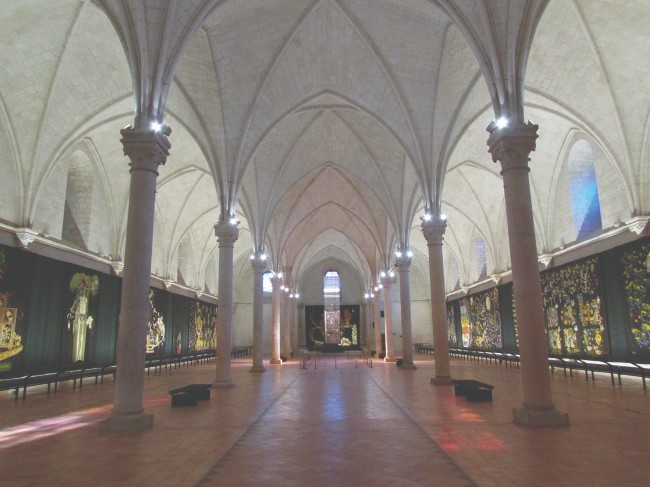
Then continue your cultural tour by crossing the Maine to the Doutre district – the name of which comes from outre, or beyond – for more artistic surprises at St John’s Hospital. Inside this masterpiece of Plantagenet Gothic architecture, the Musée Jean Lurçat now fills the vaulted space that was once the Great Hall of the Sick. Leader of the French tapestry-making revival, Lurçat’s monumental work, Le Chant du Monde, portrays his vision of the world – destruction and chaos in the first four tapestries; hope and joy in the following six. Prepare to be amazed.
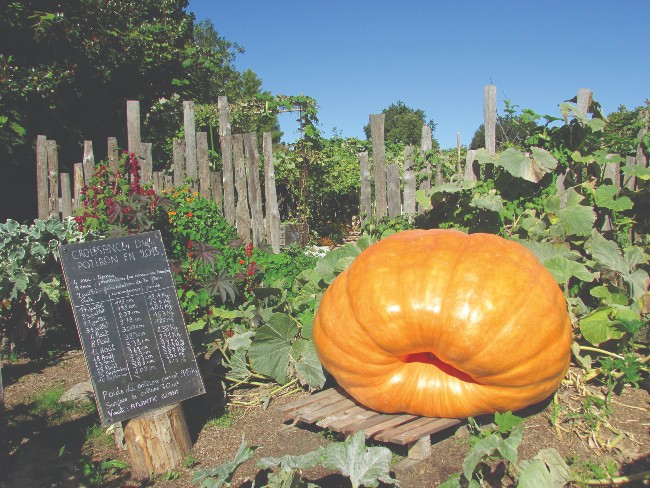
Terra Botanica is a truly unique attraction. Photo: Gillian Thornton
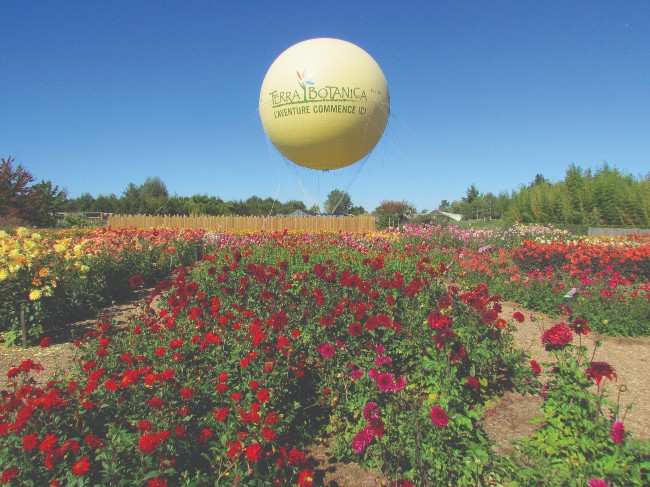
Just 10 minutes by car from the town centre, Terra Botanica is Europe’s only theme park dedicated to plants. Anjou is a big horticultural region, and Angers will host the four-yearly World Horticultural Congress in 2022. I wasn’t sure what to expect at Terra Botanica, but came away thinking you need several hours to do justice to this unique attraction. With its various climate zones, tropical greenhouses and family activities, there really is something here for everyone. Watch a 3D cinema show, take a serene boat ride, and walk through a butterfly house. You can even soar 150 metres up in a tethered balloon to look down on the colourful gardens, the lakes and the glasshouses.
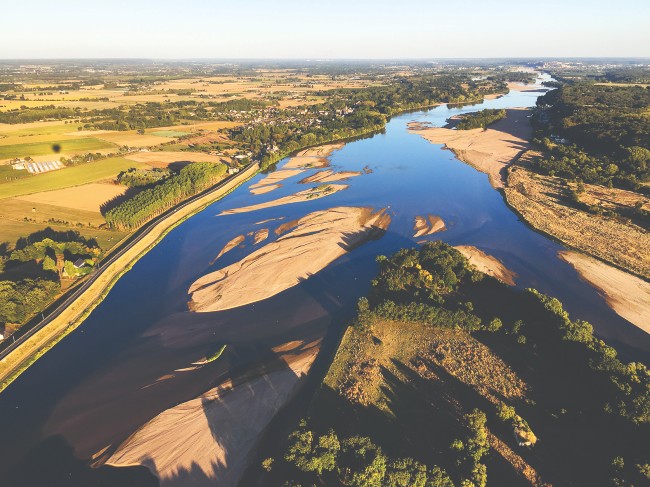
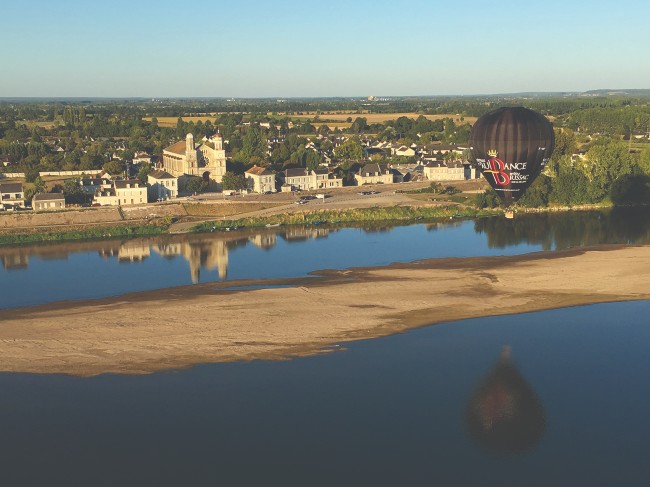
But on my last evening, I went one better – well, a few hundred feet better – with a balloon flight over the Loire with Montgolfières d’Anjou from their base at Gennes. There can be few more serene experiences than floating above the bustle of everyday life, waving at mini-people below, and watching the shadows lengthen as evening falls, and then touching down as the sun slips below the horizon, stowing the balloon, and celebrating at the field edge with a glass of sparkling Anjou. A magical finale to anyone’s city stay.
Loire east of Angers as seen from a hot-air balloon. Photo: Gillian Thornton ANGERS ESSENTIALS
GETTING THERE
BY CAR: Travel from Portsmouth with Brittany Ferries to Caen-Ouistreham (162 miles) or Saint-Malo (125 miles).
BY TRAIN: Angers is 90 minutes from Paris by TGV.
WHERE TO STAY AND EAT: Gillian stayed at L’Oisellerie guesthouse and enjoyed meals at La Réserve, the rooftop restaurant of Théâtre Le Quai, opposite the castle, and the friendly Bistrot des Ducs, 6 rue des deux haies.
5 MUST-DO EXPERIENCES IN ANGERS
With a wealth of historic architecture, art galleries, gardens and museums, it can be hard to know where to start in Angers. To cut down on dithering time, kick-start your visit by checking out our top five attractions:
CASTLE AND APOCALYPSE TAPESTRY
The whole rampart walk is now accessible, offering great views over the castle precincts, Old Town and riverbanks. The Monument Café in the castle grounds serves delicious savoury and sweet dishes in verrines (small glass pots). Eat inside the Governor’s lodging or in the garden.
Le Chant du Monde contemporary tapestry. Photo: Gillian Thornton
GALERIE DAVID D’ANGERS
This enchanting small gallery is stuffed to the rafters with sculptures, busts and friezes of all sizes, as well as studio casts and drawings, all housed in a magnificent 13th-century ‘ruined’ abbey church with a glass roof which illuminates the exhibits to maximum effect.
Stunning contemporary tapestries by Jean Lurçat are displayed at the former St John’s Hospital, founded around 1180 under the instigation of Henry II of England. Check out the tranquil garden, pharmaceutical jars, and the remains of a 17th-century cloister.
Terra Botanica, the dahlia collection. Photo: Gillian Thornton
Opened in 2010,Terra Botanica is Europe’s only theme park dedicated to plants. With a mix of beautiful gardens and greenhouses, fun activities and educational elements, discover the world through its 275,000 species and exceptional collections of orchids, roses, palm trees and more.
For an unforgettable special treat, head out of town to enjoy a serene flight over the Anjou countryside with Montgolfières d’Anjou. Prices are: Monday to Friday evenings, €200 per person; weekend or public holiday evenings, €230; sunrise, €380. From France Today magazine
Hot-air balloon over the Loire. Photo: Gillian Thornton
Ski season is in full swing, and so for those heading off to the slopes, here is our pick of where to stay, eat, drink and shop in one of France’s chicest ski resorts, Megève.
Whilst many of Megève’s more affluent addresses can actually be found slightly out of town, M de Megève offers guests five-star luxury right in the heart of the village. Its contemporary chalet style feels fresh, modern, but oh-so-cosy, with a roaring fire in the lounge, fluffy throws in the bar, and every room accessorized with soft woolen blankets and cushions. Guests can also enjoy two fantastic restaurants, cocktails in the bar, or if you prefer, try the new génépi tasting menu (the herb-infused local liqueur), and an underground spa which is just the tonic after a day on the slopes, with a swimming pool, a huge Jacuzzi, sauna, steam room, and an exotic treatment menu which is perfect for warming up in winter.
If you want to get out of the village centre, then Le Chalet Zannier fulfills all your dreams of a cosy chalet hideaway. Nestled on a sloping snow-covered hill, this intimate hotel (which has just 12 rooms) offers a peaceful retreat from the buzz of the village, where days can be spent lounging by your own crackling fire, being pampered in the low-lit underground spa, or enjoying a complimentary tea-time in the bar with hot chocolate and cakes freshly prepared by the chalet’s pastry chef. If you don’t feel like heading out into the cold you can even stay for dinner; the hotel’s restaurant La Ferme de Mon Père is hugely popular with locals and non-guests thanks to its simple, seasonal dishes prepared with the best French produce.
Whilst this may look like a spot for people watching and posing, and you’d be right in both cases, the food here is actually good. It also offers a well-balanced mix of Savoie classics; think tartiflette, raclette and plates of local cheese. There are also some slightly lighter, more international dishes, salads, burgers, and so on, if you’ve had your fill of French fromage.
For a lighter, and cheaper bite to eat (Megève is notoriously expensive), you can’t go wrong at the quaint and cosy crêperie, Chez Olivia. Sweet crêpes and savoury galettes (the buckwheat pancakes traditionally from Brittany) start at just €4, depending on how many toppings you go for. Pop in for a tasty lunch or an afternoon crêpe for a goûter (the French equivalent of afternoon tea-time).
Even if you’re not staying at Hotel M de Megève, you should definitely dine at one of its two restaurants, perhaps after an apéro at the bar first. Les Grands Crus de Fondues will not only give you your fondue fix whilst in the mountains, but you can also choose your own combination of cheeses to personalize your food to your taste. If you’re not sure where to start then resident fromager Thomas Lecomte will help you compose your perfect fondue, and choose a unique assortment of side dishes including pineapple, raspberry, kiwi, and if you’re feeling adventurous, even snails. My French dining partner declared it “the best fondue I have ever had.”
Whilst many gastronomes set their sights on dining at Flocons de Sel, Emmanuel Renaut’s famed three-star establishment located around a ten-minute drive from Megève, you can sample the chef’s fantastic cuisine in the more relaxed and central setting of his bistro, Flocons Village. You’ll have to make a reservation as it’s unsurprisingly a hugely popular spot, offering guests the chance to experience a taste of Renaut’s style (and desserts by Flocons de Sel’s pastry chef Aurélie Collomb-Clerc ) for just €41 for a three-course menu, or €34 for two.
Edouard Loubet’s “Filet de Boeuf en Croute” at Le M de Megève
If you’re looking to sample another famous chef’s cuisine, then foodies should head to Le M restaurant where two-Michelin star chef Edouard Loubet has designed this season’s menu. Expect French classics, including the most beautifully cooked magret de canard, as well as some local dishes such as crozets, a buckwheat pasta from Savoie. The dessert menu is a hard-to-choose-from selection of Loubert’s own comfortingly classic recipes, from a traditional but elegantly presented tarte tatin to a wonderfully creamy pistachio crème brûlée, which has been given a fun and naughty twist with the addition of a bitter chocolate doughnut.
Edouard Loubert’s “Volaille Fermière de Grand Mère & Parmentier de Rave du Pauvre” at Le M de Megève
A mug of steaming hot chocolate is one of the most delicious ways to warm up in the mountains, and arguably nobody does it better than Parisian master chocolatier Jean-Paul Hévin. Thanks to the new Grand Hôtel du Soleil d’or, which has recently opened with its very own La Chocolaterie, you can now enjoy cups of Hévin’s delectable hot chocolate freshly whisked behind the bar, and accompanied by a tempting selection of homemade cakes.
La Chocolaterie at Grand Hôtel du Soleil d’or
DRINK
Along with the Bistrot de Megève, which is also a great spot for a drink if you manage to snag a table on the heated terrace, Le Hibou Blanc is another of the village hotspots to see and be seen thanks to its central location in the heart of the action. Enjoy a glass of wine come apéro time, or stay long in to the night enjoying its cocktail creations and snacking on sharing dishes such as charcuterie boards, foie gras, and oysters.
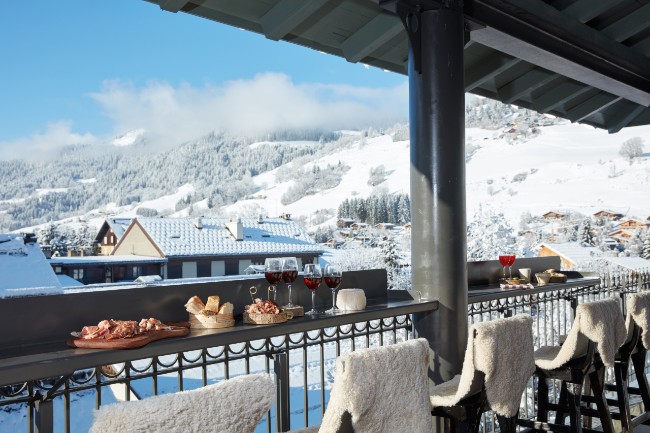
While the Grand Hôtel du Soleil d’or will tempt you by day with hot chocolate and cakes, by night it will draw you to to enjoy its rooftop bar, the only one in Megève, with its craft cocktails and dressed up chalet décor; think ultra-luxe sheepskin pillows and an impressive glittering chandelier. It’s definitely got more of a party vibe than some of the other bars in town, so head here if you’re in the mood for some late night revelry, or alternatively start your evening here whilst it’s still light to take in the impressive panoramic views of Megève with a drink in hand.
The bar at the Grand Hôtel du Soleil d’or
SHOP
With the likes of Hermès, Eric Bompard, Fusalp and Rossignol, you could just as easily spend your days shopping as you could on the slopes. But as well as being a hotspot for designer labels, Megève is also, and perhaps more interestingly, the perfect spot to sample some of the region’s most famous cuisine in one of its many gourmet épiceries.
L’Épicerie is an excellent spot to know about for picking up local products from the Savoie region, from honey, to cheese, to wine and locally brewed beer, and especially if you pop in on a Saturday when you might be lucky enough to catch a wine or cheese tasting going on. The family-run Épicerie des Fermes also has a great selection of local products (including huge pots of homemade desserts in the fridge) but also a choice of products from around Europe, which are particularly useful if you’re cooking something up in a rented apartment.
Épicerie Noémie is the newest gourmet spot in Megève, stocking products from Edmond de Rothschild Heritage, particularly charcuterie, wine, and huge wheels of truffle-laced cheese. And for something sweeter, it’s hard to walk past La Boutique aux Chocolats Megève and not go inside to pick up a box of chocolates completely handmade by owners Françoise Legon and Caroline Vouillon, whose grandfather founded the shop back in 1962.
M de Megève horse carriage. Photo: @ Karin Creuzet
Embark on a coast-to-coast gastronomic journey with Justin Postlethwaite, taking in the foothills and upper reaches of the Pyrénées, from Collioure all the way to the Pays Basque
Draw a line on a map, Mediterranean to Atlantic, from Collioure to Bayonne, and not only do you bisect France’s southwestern tip in the shadow of the mighty Pyrénées, you also create an imaginary coast-to-coast gustatory odyssey that will encompass some truly exceptional food and drink.
This is a culinary corner packed with passionate producers who call the départements of Pyrénées-Orientales, Ariège, Haute-Garonne and Hautes-Pyrénées (all in Occitanie) and Pyrénées-Atlantiques (in Nouvelle-Aquitaine) their home. Surf and turf treats vie for space on your plate here, with fishy specialities and delicious viandes sharing iconic status – often based on decades of finely honed know-how.
BEST IN THE WORLD
Where better to start in the oh-so-picturesque fishing village of Collioure than with the ultimate apéro nibble on a sunny day: locally fished and hand-salted anchovies served on toasts atop a sun-kissed slice of juicy tomato?
Collioure anchovies enjoy a reputation for being amongst the best in the world, and today there remain two traditional companies (conserveries) preserving them in jars and tins: Roque (since 1870) and Desclaux (since 1903).
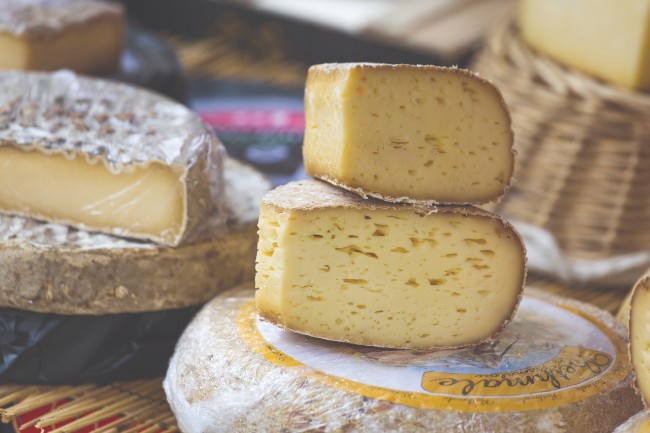
Bethmale cheese at market. Photo: Shutterstock
You can buy these fishies preserved in oil or salt. The salted ones are whole and require a little preparation before serving: remove the median and small lateral bones, then soak in cold water for about 30 minutes before draining, drying and serving. Anchovies in oil can be served as they are.
These two firms create other apéro-time goodies, including anchoïade, a tapenade-like spread whipped up with capers, oil and garlic. Pop into their outlets and you can try their products before you buy.
Made not far from Collioure, along the coast, on the sea-facing slopes of the historical Roussillon region (now part of the Occitanie super-region), Banyuls is a French appellation d’origine contrôlée fortified apéritif or dessert wine. Its production involves a process called mutage, a bit like that used for making port, in which the fermentation process is halted by the addition of distilled alcohol to kill the yeast so that the grape sugars remain.
A notoriously scrummy food match for Banyuls, which is around 16 per cent proof, is chocolate; but it also pairs well with berry-based desserts (seek out Céret’s rich red cherries) and caramel too.
Talking of desserts, synonymous with the French Catalonia region that corresponds to the current Pyrénées-Orientales département is crème catalane, a baked thick cream scented with lemon zest and cinnamon and topped with caramelised sugar. (Like crème brûlée, only lighter.) Keep an eye out, too, for rousquilles, soft, ring-shaped treats made with crumbly biscuit pastry and covered with lemon- or aniseed-flavoured icing.
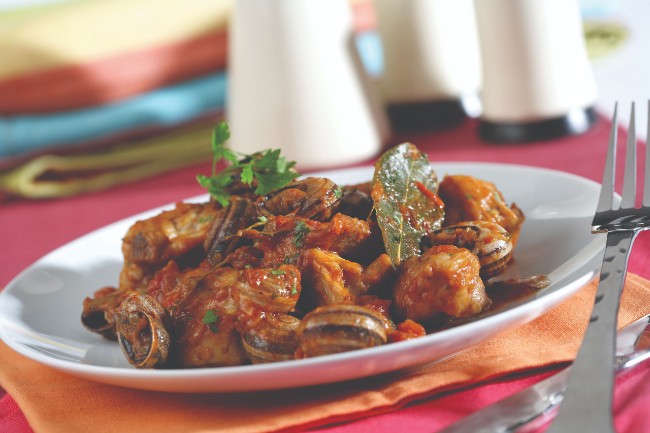
Conill amb cargols, Catalan for ‘rabbit with snails’
CATALAN INFLUENCE
The Catalan influence is also strong in rich and hearty main course stews such as conill amb cargols (Catalan for ‘rabbit with snails’ – look for lapin aux escargots à la catalane on French menus), jointed rabbit pieces in a tomato sauce with red and green peppers and garlic. Equally moreish is boles de Picolat (Catalan meatballs, in French called boulettes de viande à la catalane), which is pork and beef meatballs served in a stew of haricots blancs, green olives and cèpes.
Top of the table when it comes to stews, however, is the Béarn (the historical southwestern region) staple la garbure. A slow-simmered mix of ham (preferably jambon de Bayonne), cabbage, potatoes and other vegetables, plus haricots tarbais, it is celebrated on the first weekend of September in Oloron-Sainte-Marie in the Pyrénées-Atlantiques at the “world garbure championships”, called La Garburade.
For fromage fans, the verdant foothills of Ariège are the place to source the region’s favourite cheese, the semi-hard and fairly mild Bethmale, made in the village of the same name. Source it at the market that takes place in Saint-Girons every Thursday and Saturday. Other unmissable cheeses are la tomme de brebis des Pyrénées and le Pic de Calabasse, while further north in Basque-Béarn country the better known – and AOC-labelled – Ossau-Iraty ewe’s milk cheese is the brebis of choice.
Gateau à la broche. Photo: CRT Occitanie/ D VIET
SPECIALITY SHOPS
Moving into the mountains, way up in the Hautes-Pyrénées, the département has its own version of gâteau à la broche, a batter-style dessert spooned on a spit in an open fire. Saint-Lary-Soulan has speciality shops selling it, while Arreau lays on an annual celebration. Elsewhere, for the sweet-toothed, the ski resort of Cauterets is home to the famed berlingot candies. Their sweetness was historically appreciated by visitors to the local spa because it helped to disguise the taste of the thermal waters!
Heading north, in the direction of the Pays Basque, for curious carnivores there is an AOC meat product to sink your teeth into: porc noir de Bigorre. Native to the Bigorre, an area bordering the Hautes-Pyrénées, Gers and Haute-Garonne, this breed of pig was brought back from near-extinction to become one of the most sought-after by top chefs and canny gourmands alike.
La Ferme de Luis is where Armand Touzanne has dedicated more than 35 years to rearing the endangered native race of the Pre-Pyrénées. In 1981 there were only two males still alive, but Armand realised that by producing pork with a distinctive flavour, using traditional rearing techniques, he could find a market for his meat – his pigs feast heartily on grass, chestnuts and local fruit and vegetables, and their fat is known to be very digestible.
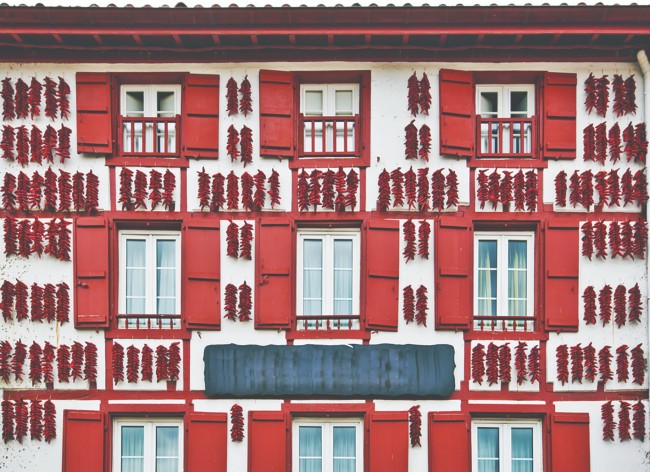
Peppers hanging up to dry in Espelette. Photo: Shutterstock
MODERN TASTES
Rearing this old-fashioned pig chimed with modern tastes and trends, and success grew – now the hams hang in acclaimed restaurants from Toulouse to Paris, and in 2015 the jambon noir de Bigorre and porc noir de Bigorre achieved AOC status. Today there are 60 breeders and two artisan-charcutiers who prepare the meat for sale in its various guises, be it cooked and preserved in jars (pâtés, rillettes), dried (saucisse sèche) or fresh cuts – roasts and sausages.
In the French Basque country, the delicacies remain numerous and varied, including many cheeses and the sweet gâteau basque.
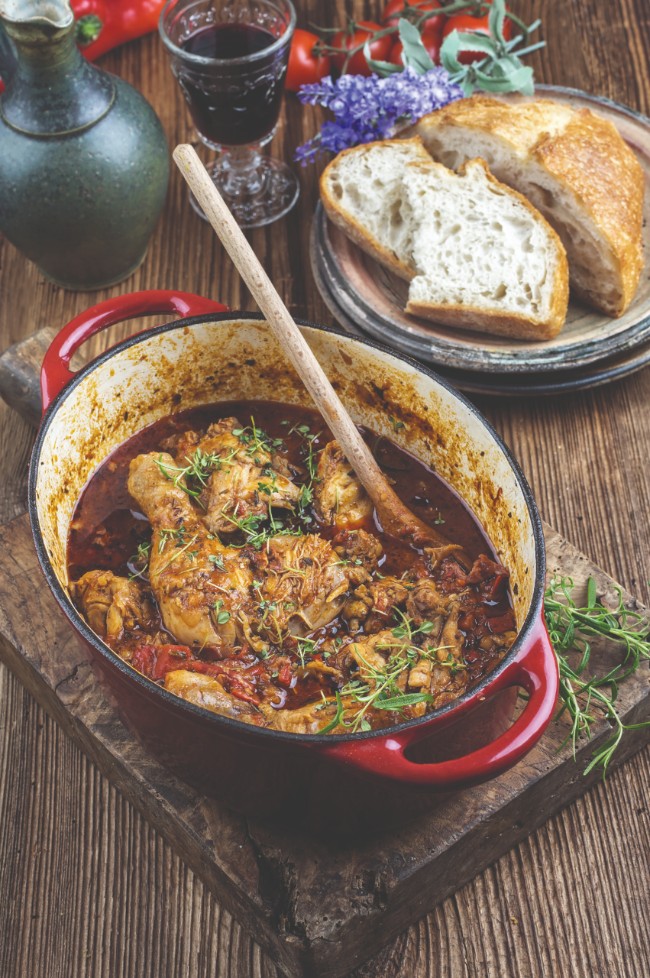
Party town Bayonne is home to wonderful cured ham and also has strong chocolate- making traditions, while the red pepper-adorned walls of Espelette reveal just how much the spicy chilli is appreciated – it is a key element of poulet basquaise and axoa, the local veal stew. You can then round off your regional culinary appreciation tour with a visit to a bar or a cidrerie, where you will raise a glass or three at a txotx (pronounced ‘tchotch’), the ritual of opening a Basque cider barrel.
“Eskerriska!” (‘eske-ris-ka’, ‘Cheers!’ in Basque) – is the cry!