Показаны сообщения с ярлыком learn. Показать все сообщения

суббота, 15 февраля 2020 г.

Tweet of the Week #68: The Sweet Taste of French Revolution

Tweet of the Week

Valentine’s Day means serious business for Japanese candy makers and for good reason. This celebration of all things romantic accounts for no less than a quarter of chocolate yearly sales, a market worth a little more over ¥1 billion.


Eat my chocolate


Celebrated since 1958 in Japan, V-Day is all about Japanese women offering chocolate to their lovers and male entourage on February 14th. While their one true love receives the precious honmai-choco (true feeling chocolate), their friends and colleagues make do with giri-chocolate which is given out of obligation rather than love.


But Japanese style Valentine’s Day is a bittersweet deal for women, who easily end up spending thousands of yen on chocolate boxes. Their kindness is somewhat repaid on March 14th, AKA White Day, when men pay them back with gifts of their own.


However, more and more women aren’t keen to open their wallets to satisfy their male colleagues’ sweet tooth.


Is offering giri-chocolate finally a thing of the past?


Valentine’s Day is still the front runner for chocolate sales in Japan, but for how long? After two disappointing years in a row, with the market dropping respectively 6% and 3% in 2018 and 2019, Halloween is now close to snatching the first place.


While the range of valentine gifts is actually expanding, the public interest seems to have turned somewhat sour. The chocolate industry took a big hit with the growing perception that giri-chocolates are in fact, a form of power harassment at work.


So every year, confectioners have to come up with ingenious marketing campaigns to encourage consumers to indulge their desire for sweets, whether they’re gifting the sweets to someone else or themselves.


Taste of what?!


Leveraging Japanese people’s romantic perception of France is always a good strategy to sell stuff in Japan. But we bet cake shop chain Ginza Cozy Corner’s marketing team didn’t think long enough about this advertisement campaign shared by twitter user @R_Kakiuchi_0921.


今年(ことし)のチョコレートケーキが不穏(ふおん)すぎる。


= This year’s chocolate cake is too disturbing.


A delicious pun made from the poster’s caption: 今年のチョコレートケーキは、フランス革命(かくめい)の味(あじ)。Translation? “This year’s chocolate cake tastes like the French revolution.”


Let us know if you have an idea of what the French revolution would taste like, we’re curious.


50 shades of taste


Meals are a way to connect with people, to learn more about a culture and talking about food is probably a universal conversation starter. So let’s focus on the word (taste) and help you go beyond 美味(おい)しい and うまい.


You’ll find tons of expressions very easy to remember with the word.


JapaneseRomajiEnglish
味が濃(こ)いaji ga koihave a strong taste
味があるaji ga aruhave flavor
味がいいaji ga iihave a good taste
味が薄(うす)いaji ga usuilightly seasoned
味がないaji ga naitasteless
味が悪(わる)いaji ga waruiunpalatable/ tastes bad

You can expand your vocabulary with the words 風味(ふうあじ)which translates “flavor” and 後味(あとあじ), for “after taste”.


JapaneseRomajiEnglish
風味があるfuumi ga arusavory
風味のないfuumi no naiinsipid
風味をつけるfuumi o tsukeruto season (a dish)
後味がいいatoaji ga iileaves a good aftertaste in one’s mouth
後味が悪いatoaji ga waruileaves a bad taste in one’s mouth

By the way, when you taste a dish, you use the verb 味見(あじみ)する. Quite easy to remember, isn’t it?


Now, when it comes to describing the food you can use the following adjectives:


JapaneseRomajiEnglish
甘(あま)いamaisweet
甘口(あまくちamakuchisweet, mild
辛(から)いkaraispicy
辛口(からくちkarakuchispicy/ dry (wine)
塩辛(しおから)い (casual 塩(しょ)っぱい)shyokarai (shyoppai)salty
酸(す)っぱいsuppaisour
甘酸(あます)っぱいamasuppaisweet and sour
甘辛(あまから)いamakaraisweet and salty
苦(にが)いnigai bitter
渋(しぶ)いshibuiastringent

Additional Vocabulary)


JapaneseRomajiEnglish
今年(ことしkotoshithis year
チョコレートケーキchokoreeto keekiChocolate cake
不穏(ふおん)すぎるfuon sugirutoo disturbing
フランス革命(かくめい)furansu kakumeiFrench revolution
本命チョコhonmei chokoChocolate you offer to the person you’re romantically involved with or you love romantically
義理チョコgiri chokoChocolate you offer to friends or colleague as a “duty”
バレンタイン・デーbarentain deeValentine’s Day

For more on learning Japanese


Tweet of the Week #68: The Sweet Taste of French Revolution

Tweet of the Week

Valentine’s Day means serious business for Japanese candy makers and for good reason. This celebration of all things romantic accounts for no less than a quarter of chocolate yearly sales, a market worth a little more over ¥1 billion.

Eat my chocolate

Celebrated since 1958 in Japan, V-Day is all about Japanese women offering chocolate to their lovers and male entourage on February 14th. While their one true love receives the precious honmai-choco (true feeling chocolate), their friends and colleagues make do with giri-chocolate which is given out of obligation rather than love.

But Japanese style Valentine’s Day is a bittersweet deal for women, who easily end up spending thousands of yen on chocolate boxes. Their kindness is somewhat repaid on March 14th, AKA White Day, when men pay them back with gifts of their own.

However, more and more women aren’t keen to open their wallets to satisfy their male colleagues’ sweet tooth.

Is offering giri-chocolate finally a thing of the past?

Valentine’s Day is still the front runner for chocolate sales in Japan, but for how long? After two disappointing years in a row, with the market dropping respectively 6% and 3% in 2018 and 2019, Halloween is now close to snatching the first place.

While the range of valentine gifts is actually expanding, the public interest seems to have turned somewhat sour. The chocolate industry took a big hit with the growing perception that giri-chocolates are in fact, a form of power harassment at work.

So every year, confectioners have to come up with ingenious marketing campaigns to encourage consumers to indulge their desire for sweets, whether they’re gifting the sweets to someone else or themselves.

Taste of what?!

Leveraging Japanese people’s romantic perception of France is always a good strategy to sell stuff in Japan. But we bet cake shop chain Ginza Cozy Corner’s marketing team didn’t think long enough about this advertisement campaign shared by twitter user @R_Kakiuchi_0921.

今年(ことし)のチョコレートケーキが不穏(ふおん)すぎる。

= This year’s chocolate cake is too disturbing.

A delicious pun made from the poster’s caption: 今年のチョコレートケーキは、フランス革命(かくめい)の味(あじ)。Translation? “This year’s chocolate cake tastes like the French revolution.”

Let us know if you have an idea of what the French revolution would taste like, we’re curious.

50 shades of taste

Meals are a way to connect with people, to learn more about a culture and talking about food is probably a universal conversation starter. So let’s focus on the word (taste) and help you go beyond 美味(おい)しい and うまい.

You’ll find tons of expressions very easy to remember with the word.

JapaneseRomajiEnglish
味が濃(こ)いaji ga koihave a strong taste
味があるaji ga aruhave flavor
味がいいaji ga iihave a good taste
味が薄(うす)いaji ga usuilightly seasoned
味がないaji ga naitasteless
味が悪(わる)いaji ga waruiunpalatable/ tastes bad

You can expand your vocabulary with the words 風味(ふうあじ)which translates “flavor” and 後味(あとあじ), for “after taste”.

JapaneseRomajiEnglish
風味があるfuumi ga arusavory
風味のないfuumi no naiinsipid
風味をつけるfuumi o tsukeruto season (a dish)
後味がいいatoaji ga iileaves a good aftertaste in one’s mouth
後味が悪いatoaji ga waruileaves a bad taste in one’s mouth

By the way, when you taste a dish, you use the verb 味見(あじみ)する. Quite easy to remember, isn’t it?

Now, when it comes to describing the food you can use the following adjectives:

JapaneseRomajiEnglish
甘(あま)いamaisweet
甘口(あまくちamakuchisweet, mild
辛(から)いkaraispicy
辛口(からくちkarakuchispicy/ dry (wine)
塩辛(しおから)い (casual 塩(しょ)っぱい)shyokarai (shyoppai)salty
酸(す)っぱいsuppaisour
甘酸(あます)っぱいamasuppaisweet and sour
甘辛(あまから)いamakaraisweet and salty
苦(にが)いnigai bitter
渋(しぶ)いshibuiastringent

Additional Vocabulary)

JapaneseRomajiEnglish
今年(ことしkotoshithis year
チョコレートケーキchokoreeto keekiChocolate cake
不穏(ふおん)すぎるfuon sugirutoo disturbing
フランス革命(かくめい)furansu kakumeiFrench revolution
本命チョコhonmei chokoChocolate you offer to the person you’re romantically involved with or you love romantically
義理チョコgiri chokoChocolate you offer to friends or colleague as a “duty”
バレンタイン・デーbarentain deeValentine’s Day

For more on learning Japanese

пятница, 14 февраля 2020 г.

Fukuoka Foreign Language College: A Welcoming Home for International Students in Japan

FFLC - Featured Picture

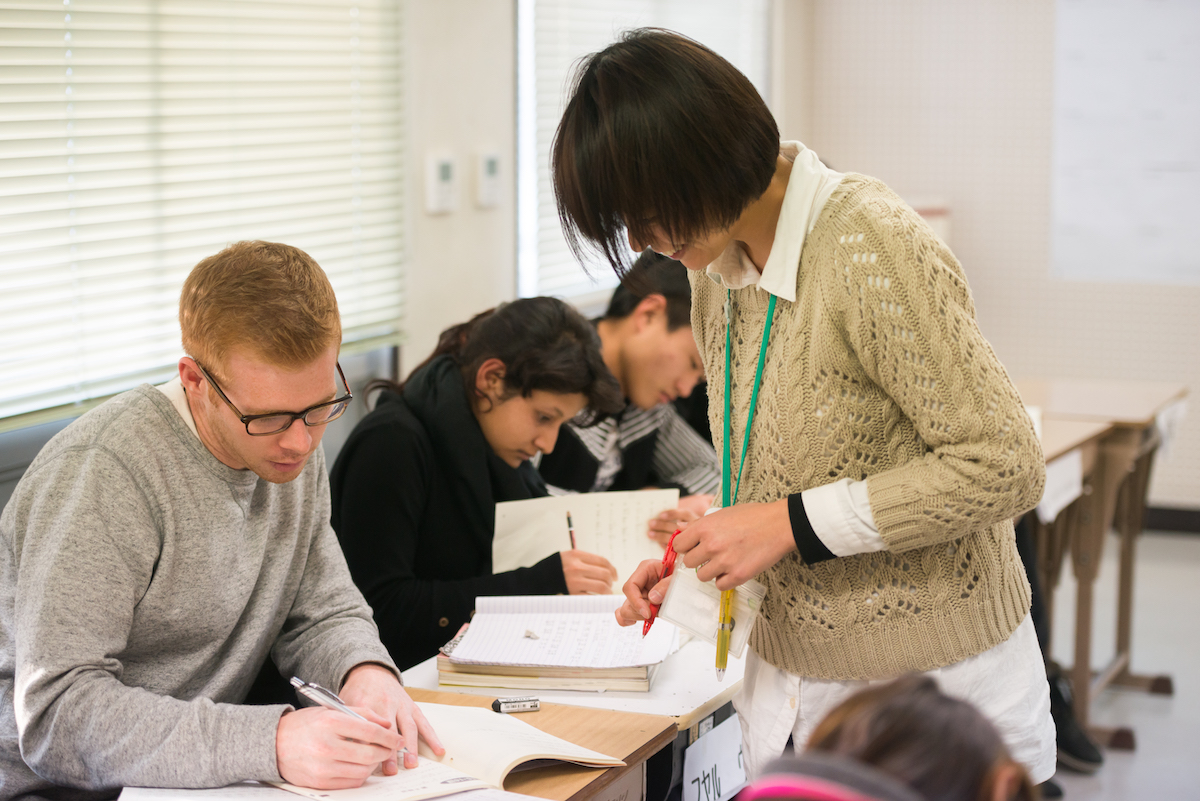
Located in an unassuming area, just one stop away from Fukuoka’s famous Hakata Station is Fukuoka Foreign Language College (FFLC). As one of Kyushu’s best Japanese language schools, the school also serves as a vocational school for Japanese students eager to study in an international environment.


A quiet place for studying!

After walking down the school’s corridors holding over 115 years of history, we sat down with FFLC’s team to chat about the variety of courses available to international students. The school prides itself on offering much more than typical Japanese classes. Ongoing support for your life in Japan, a rich cultural program, and a green campus set the school apart.


Fukuoka’s lively atmosphere is perfect for international students


Fukuoka offers all the commodities of a modern and big city while being relatively compact and international. Being the main city of Kyushu, there’s more shopping, eating, and places to explore than you could ever want. Even with all this, Fukuoka is far from a concrete jungle—its laid back atmosphere is the complete opposite of the typical stress associated with city living.


What’s more, the cost of living in Fukuoka is approximately 30% cheaper than in other big Japanese cities like Tokyo. A good one-room apartment located near Hakata Station costs around ¥61,500 per month, whereas the rent for a 1R located in central Tokyo can easily cost over ¥100,000. Despite being a medium-sized city, Fukuoka offers plenty of part-time job opportunities too. FFLC has several partnerships with local businesses and provides guidance to students searching for work.


Fukuoka is compact enough that you can get almost anywhere by bike.

Thanks to its ideal location, most FFLC students actually don’t even bother getting a commuter pass. They all come to school by bicycle! With Fukuoka Airport being only 20 minutes away from the city center (and the school), they can hop on a plane and spend the weekend partying in South Korea and still be back in time to finish their homework for class.


‘Fukuoka is truly a welcoming city for foreigners and so is our school, where we cultivate a positive environment and a culture of equality.’


Feel at home while studying in Japan


Japan has a culture of encouraging teachers to take an active part in their students’ growth, providing guidance for them to become productive members of society.


That’s precisely what FFLC offers international students—the guidance they need to better understand Japanese society and overcome the cultural barriers that may hinder their experience learning Japanese.


‘We’ve chosen different shades of green for our school’s logo because we believe people, like plants, grow and change over time.’


The school nurtures a multicultural environment and pays attention to students’ needs. They’ve set up a prayer room on the school grounds and are more than happy to give tips on eating halal or vegetarian. The team encourages an atmosphere where students can develop cultural sensitivity and awareness of cultural differences.


Everyone is welcome here.

Fukuoka is a place where you can easily make friends with locals due to large foreign communities willing to help and guide international students.


Master Japanese through total immersion


FFLC applies the “direct method,” which promotes learning in a Japanese-only environment. This method has been proven very effective in helping students feel confident in their language skills.


‘We want to be like family for our students, to guide them like parents would and help them get the skills they need to become global citizens.’ 


FFLC emphasizes passion and teamwork, always working on improving a solid curriculum. The school rotates teachers who each specialize in a different aspect of the Japanese language, so students can become proficient in all four skills: reading, writing, speaking, and listening.


FFLC - Fukuoka Foreign Language College - Teaching


What makes FFLC so special is a shared campus with Japanese students enrolled in the English language department. Thanks to numerous partnerships with foreign universities, FFLC is an attractive school for Japanese students who are eager to master English. The school has used this unique environment to set in place a tutoring program, pairing Japanese and international students together. Students can help each other with their studies and become friends.


Have fun while learning with cultural events


Most schools organize cultural and social events, but FFLC sets the bar very high. Following their philosophy of learning being fun, the school hosts at least 100 social gatherings for students a year!


These events are dedicated to deepening students’ knowledge of Japanese culture and include calligraphy classes, festivals, tea ceremonies, and ikebana (flower arranging). Each event offers a good opportunity to get closer to the locals and to experience cultural exchange.


Beyond the culture, the team also organizes parties, trips, and sports outings.


Kickstart your career in Fukuoka


Home to large tech firms such as LINE, Fukuoka is well known abroad as Japan’s fastest-growing startup hub. Nicknamed Japan’s Silicon Valley, the city is flourishing with successful new businesses that are constantly seeking tech-savvy English-speaking workers.


In the past few years, the local government has made a lot of efforts to encourage young people to start their own business, going so far as to introduce Japan’s very first “startup visa” for foreign entrepreneurs. If you’re working in IT and looking to build your business in Japan, Fukuoka will welcome you with open arms and a special start-up package!


FFLC comes in as the perfect getaway for you to land a job in Japan. On top of being one of Kyushu’s best Japanese language schools, the school is also a vocational college that offers associate degrees fully recognized by Japanese immigration. After completing your Japanese studies, pursue your education through the school’s programs in international business and tourism.

Fukuoka Foreign Language College: A Welcoming Home for International Students in Japan

FFLC - Featured Picture

Located in an unassuming area, just one stop away from Fukuoka’s famous Hakata Station is Fukuoka Foreign Language College (FFLC). As one of Kyushu’s best Japanese language schools, the school also serves as a vocational school for Japanese students eager to study in an international environment.

A quiet place for studying!

After walking down the school’s corridors holding over 115 years of history, we sat down with FFLC’s team to chat about the variety of courses available to international students. The school prides itself on offering much more than typical Japanese classes. Ongoing support for your life in Japan, a rich cultural program, and a green campus set the school apart.

Fukuoka’s lively atmosphere is perfect for international students

Fukuoka offers all the commodities of a modern and big city while being relatively compact and international. Being the main city of Kyushu, there’s more shopping, eating, and places to explore than you could ever want. Even with all this, Fukuoka is far from a concrete jungle—its laid back atmosphere is the complete opposite of the typical stress associated with city living.

What’s more, the cost of living in Fukuoka is approximately 30% cheaper than in other big Japanese cities like Tokyo. A good one-room apartment located near Hakata Station costs around ¥61,500 per month, whereas the rent for a 1R located in central Tokyo can easily cost over ¥100,000. Despite being a medium-sized city, Fukuoka offers plenty of part-time job opportunities too. FFLC has several partnerships with local businesses and provides guidance to students searching for work.

Fukuoka is compact enough that you can get almost anywhere by bike.

Thanks to its ideal location, most FFLC students actually don’t even bother getting a commuter pass. They all come to school by bicycle! With Fukuoka Airport being only 20 minutes away from the city center (and the school), they can hop on a plane and spend the weekend partying in South Korea and still be back in time to finish their homework for class.

‘Fukuoka is truly a welcoming city for foreigners and so is our school, where we cultivate a positive environment and a culture of equality.’

Feel at home while studying in Japan

Japan has a culture of encouraging teachers to take an active part in their students’ growth, providing guidance for them to become productive members of society.

That’s precisely what FFLC offers international students—the guidance they need to better understand Japanese society and overcome the cultural barriers that may hinder their experience learning Japanese.

‘We’ve chosen different shades of green for our school’s logo because we believe people, like plants, grow and change over time.’

The school nurtures a multicultural environment and pays attention to students’ needs. They’ve set up a prayer room on the school grounds and are more than happy to give tips on eating halal or vegetarian. The team encourages an atmosphere where students can develop cultural sensitivity and awareness of cultural differences.

Everyone is welcome here.

Fukuoka is a place where you can easily make friends with locals due to large foreign communities willing to help and guide international students.

Master Japanese through total immersion

FFLC applies the “direct method,” which promotes learning in a Japanese-only environment. This method has been proven very effective in helping students feel confident in their language skills.

‘We want to be like family for our students, to guide them like parents would and help them get the skills they need to become global citizens.’ 

FFLC emphasizes passion and teamwork, always working on improving a solid curriculum. The school rotates teachers who each specialize in a different aspect of the Japanese language, so students can become proficient in all four skills: reading, writing, speaking, and listening.

FFLC - Fukuoka Foreign Language College - Teaching

What makes FFLC so special is a shared campus with Japanese students enrolled in the English language department. Thanks to numerous partnerships with foreign universities, FFLC is an attractive school for Japanese students who are eager to master English. The school has used this unique environment to set in place a tutoring program, pairing Japanese and international students together. Students can help each other with their studies and become friends.

Have fun while learning with cultural events

Most schools organize cultural and social events, but FFLC sets the bar very high. Following their philosophy of learning being fun, the school hosts at least 100 social gatherings for students a year!

These events are dedicated to deepening students’ knowledge of Japanese culture and include calligraphy classes, festivals, tea ceremonies, and ikebana (flower arranging). Each event offers a good opportunity to get closer to the locals and to experience cultural exchange.

Beyond the culture, the team also organizes parties, trips, and sports outings.

Kickstart your career in Fukuoka

Home to large tech firms such as LINE, Fukuoka is well known abroad as Japan’s fastest-growing startup hub. Nicknamed Japan’s Silicon Valley, the city is flourishing with successful new businesses that are constantly seeking tech-savvy English-speaking workers.

In the past few years, the local government has made a lot of efforts to encourage young people to start their own business, going so far as to introduce Japan’s very first “startup visa” for foreign entrepreneurs. If you’re working in IT and looking to build your business in Japan, Fukuoka will welcome you with open arms and a special start-up package!

FFLC comes in as the perfect getaway for you to land a job in Japan. On top of being one of Kyushu’s best Japanese language schools, the school is also a vocational college that offers associate degrees fully recognized by Japanese immigration. After completing your Japanese studies, pursue your education through the school’s programs in international business and tourism.

среда, 12 февраля 2020 г.

プレイボーイ and Other Japanese Words for Naughty Dating Behavior

When I first came to Japan, I was soon introduced to the “Charisma Man” stereotype. According to this stereotype, foreign guys are irresistible to Japanese women who are utterly incapable of distinguishing between suitable and unsuitable mates, happily dating losers that foreign women see right through.


As my first cautious dips into the dating world taught me, however, Japanese women have plenty of ways to deflate wannabe Charisma Men themselves.


Usingしつこい to describe persistence


Overly enthusiastic daters may hear the word しつこい (persistent), for example.


Though the word itself doesn’t always have a bad connotation, in the dating scene it’s used to mean a person who just won’t take no for an answer. If you’re a student, on the other hand, and someone says 勉(べん)強(きょう)する努(ど)力(りょく)をしつこくやってるね (he/she is persistently putting in the effort to study) for example, the connotation is more positive.


Of course, not everyone has the self-awareness to realize when they are being しつこい. Japanese have a secret slang for such people—KY which is pronounced けーわい. This term is taken from the phrase 空(くう)読(よ)めない (someone who can’t understand social cues), which we’ve talked about before.


In dating, this describes a totally clueless person who is missing the hints that whoever they’re pursuing is just not interested. At all.


KY people may hear this associated with words like 不(ふ)安 (あん)in sentences such as 不安にさせる (you’re making me uneasy) or in extreme cases paired with the word 下(した)心(ごころ). 下心 is an interesting compound word made up of the kanji 下(した )(under) and 心(こころ) (heart). It means the person has an ulterior motive that’s usually malicious.


Looking for love in all the wrong places


One of the problems with a lot of stereotypes about Japanese women is the tacit implication that they’re only looking for a casual partner and any foreign guy will do. Of course, if a woman for a one-night-stand (ゆきずりの女(おんな)), or guy for said one night (ゆきずりの男(おとこ )) is what you want then, party on!


Those looking for something more serious might want to watch out for non-playful accusations of ナンパ. ナンパ is used for picking up would-be dates in a creepy low-grade sense rather than talking to them like a normal person. Definitely avoid using cheesy pick-up lines (口(く)説(ど)き文(もん)句(く)).


We’re not here to hate on pick up lines though—a line is only cheesy if the recipient isn’t interested, after all.


Are you an 遊び人?


Japanese can be a vague language and not all words in dating are clearly defined. A particularly tricky one is 遊(あそ )ぶ (to play). Sometimes it can simply mean to have fun with someone. 遊びに行(い)こうか or “let’s go play,” is still a common way to invite someone out, but if you get called an 遊び人(にん), it means you’re a player.


Let’s say that you’re really just a frustrated single who’s just testing the waters to truly find “the one,” and they’ve got you all wrong. You can exclaim, ぼくは遊び人ではない (I’m not a player)!


Another way to say “player” is チャラい. I have yet to see this word attached to a woman, surprisingly. It seems that guys being players is pretty common in Japan as the word 女たらし is another one attached to men who are womanizers. Then there’s just straight-up プレイボーイ (taken from the English word playboy).


Naturally, there are stronger forms for particularly lecherous guys such as 変(へん)態(たい) (perv) or スケベ (letch) which can, of course, be swear words depending on how they are used.


Other seemingly innocent phrases can also be repurposed for dating. A strange example is 計(けい)算(さん) (calculate) that can become 計算高(だか)い (a calculating person) in dating. Likewise, tactics (駆(か)け引(ひ)き) can be used for that person who seems to have their seduction plan suspiciously well prepared. You may also see the verb 付(つ)け込(こ)んでる (To take advantage of) repurposed with obvious connotations.


Words for dumping someone


We’ve talked previously about Japan’s love of repeating verbs such as 擬(ぎ)態(たい)(ご ) (repeating phrases often used as onomatopoeia) many times, so it shouldn’t come as a surprise that these are also found in dating. A common one is チャラチャラする which is a verb for messing around.


There used to be an entire group dedicated to these players called チャラチャラした人が嫌(きら )い (I hate people who just mess around with you), on the Japanese social media platform Mixi.


This Valentine’s Day, it’s important to get the balance right as Japanese has a lot of words for kicking a useless guy or gal to the curb. 振(ふ)る (to dump someone) and 捨(す)てる (to throw away) are both verbs associated with relationships that are on that “It’s not you, it’s me,” stage. 捨てる is an especially heinous one as it’s also used for throwing out trash.


You’ve heard about my future spouse calling me an old guy in Japan’s secret number code and a certain ex-girlfriend who owes me some broken-heart money, now it’s time to share your stories.


Let us know in the comments if you’ve ever been accused of being an 遊び人 or if you’ve ever been thrown out like Monday’s trash with 捨てる.

プレイボーイ and Other Japanese Words for Naughty Dating Behavior

When I first came to Japan, I was soon introduced to the “Charisma Man” stereotype. According to this stereotype, foreign guys are irresistible to Japanese women who are utterly incapable of distinguishing between suitable and unsuitable mates, happily dating losers that foreign women see right through.

As my first cautious dips into the dating world taught me, however, Japanese women have plenty of ways to deflate wannabe Charisma Men themselves.

Usingしつこい to describe persistence

Overly enthusiastic daters may hear the word しつこい (persistent), for example.

Though the word itself doesn’t always have a bad connotation, in the dating scene it’s used to mean a person who just won’t take no for an answer. If you’re a student, on the other hand, and someone says 勉(べん)強(きょう)する努(ど)力(りょく)をしつこくやってるね (he/she is persistently putting in the effort to study) for example, the connotation is more positive.

Of course, not everyone has the self-awareness to realize when they are being しつこい. Japanese have a secret slang for such people—KY which is pronounced けーわい. This term is taken from the phrase 空(くう)読(よ)めない (someone who can’t understand social cues), which we’ve talked about before.

In dating, this describes a totally clueless person who is missing the hints that whoever they’re pursuing is just not interested. At all.

KY people may hear this associated with words like 不(ふ)安 (あん)in sentences such as 不安にさせる (you’re making me uneasy) or in extreme cases paired with the word 下(した)心(ごころ). 下心 is an interesting compound word made up of the kanji 下(した )(under) and 心(こころ) (heart). It means the person has an ulterior motive that’s usually malicious.

Looking for love in all the wrong places

One of the problems with a lot of stereotypes about Japanese women is the tacit implication that they’re only looking for a casual partner and any foreign guy will do. Of course, if a woman for a one-night-stand (ゆきずりの女(おんな)), or guy for said one night (ゆきずりの男(おとこ )) is what you want then, party on!

Those looking for something more serious might want to watch out for non-playful accusations of ナンパ. ナンパ is used for picking up would-be dates in a creepy low-grade sense rather than talking to them like a normal person. Definitely avoid using cheesy pick-up lines (口(く)説(ど)き文(もん)句(く)).

We’re not here to hate on pick up lines though—a line is only cheesy if the recipient isn’t interested, after all.

Are you an 遊び人?

Japanese can be a vague language and not all words in dating are clearly defined. A particularly tricky one is 遊(あそ )ぶ (to play). Sometimes it can simply mean to have fun with someone. 遊びに行(い)こうか or “let’s go play,” is still a common way to invite someone out, but if you get called an 遊び人(にん), it means you’re a player.

Let’s say that you’re really just a frustrated single who’s just testing the waters to truly find “the one,” and they’ve got you all wrong. You can exclaim, ぼくは遊び人ではない (I’m not a player)!

Another way to say “player” is チャラい. I have yet to see this word attached to a woman, surprisingly. It seems that guys being players is pretty common in Japan as the word 女たらし is another one attached to men who are womanizers. Then there’s just straight-up プレイボーイ (taken from the English word playboy).

Naturally, there are stronger forms for particularly lecherous guys such as 変(へん)態(たい) (perv) or スケベ (letch) which can, of course, be swear words depending on how they are used.

Other seemingly innocent phrases can also be repurposed for dating. A strange example is 計(けい)算(さん) (calculate) that can become 計算高(だか)い (a calculating person) in dating. Likewise, tactics (駆(か)け引(ひ)き) can be used for that person who seems to have their seduction plan suspiciously well prepared. You may also see the verb 付(つ)け込(こ)んでる (To take advantage of) repurposed with obvious connotations.

Words for dumping someone

We’ve talked previously about Japan’s love of repeating verbs such as 擬(ぎ)態(たい)(ご ) (repeating phrases often used as onomatopoeia) many times, so it shouldn’t come as a surprise that these are also found in dating. A common one is チャラチャラする which is a verb for messing around.

There used to be an entire group dedicated to these players called チャラチャラした人が嫌(きら )い (I hate people who just mess around with you), on the Japanese social media platform Mixi.

This Valentine’s Day, it’s important to get the balance right as Japanese has a lot of words for kicking a useless guy or gal to the curb. 振(ふ)る (to dump someone) and 捨(す)てる (to throw away) are both verbs associated with relationships that are on that “It’s not you, it’s me,” stage. 捨てる is an especially heinous one as it’s also used for throwing out trash.

You’ve heard about my future spouse calling me an old guy in Japan’s secret number code and a certain ex-girlfriend who owes me some broken-heart money, now it’s time to share your stories.

Let us know in the comments if you’ve ever been accused of being an 遊び人 or if you’ve ever been thrown out like Monday’s trash with 捨てる.

вторник, 11 февраля 2020 г.

Kanji Cheat Sheet: Buying Cold Medicine in Japan

Head spinning and temperature rising, I stumbled into the nearest drugstore in Tokyo. Luckily, they’re as ubiquitous as vending machines because this was my first time getting sick in Japan. 


When I pulled out my phone to check online for recommended medicine, I realized I had already run out of data for that month. Flailing around, I tried my best to explain how terrible I was feeling to the poor shop attendant who earnestly tried to listen to what the disheveled girl at the counter was trying to tell him.


In the end, I was able to use my few remaining brain cells to conjure up some kanji I remembered studying in Japanese language class. Stay in school, kids.


In the end, I was able to use my few remaining brain cells to conjure up some kanji I remembered studying in Japanese language class. Stay in school, kids.


One of the scariest things that can happen to you when you live abroad for the first time is getting sick and not having any medicine on you. Finding the right kind of medicine with only a limited grasp of Japanese is like playing a scary video game like Resident Evil on expert mode. In the dark. With one hand behind your back!


Lesson learned—bring medicine from your home country with you when moving to Japan. If you do run out of your old reliables, use this chart that lays out the most basic terminology for Japanese medicine.


EnglishJapaneseRomaji
Pharmacy薬局yakkyoku
Cold medicineかぜ薬kazegusuri
Runny nose 鼻みずhanamizu
Sore throatのどの痛みnodonoitami
Fevernetsu
Cough suppressant せき止めsekitome

Read the full article on GaijinPot Study!

Kanji Cheat Sheets: Buying Cold Medicine in Japan

Head spinning and temperature rising, I stumbled into the nearest drugstore in Tokyo. Luckily they’re as ubiquitous as vending machines because this was my first time getting sick in Japan. 


When I pulled out my phone to check online for recommended medicine, I realized I had already run out of data for that month. Flailing around, I tried my best to explain how terrible I was feeling to the poor shop attendant who earnestly tried to listen to what the disheveled girl at the counter was trying to tell him.


In the end, I was able to use my few remaining brain cells to conjure up some kanji I remembered studying in Japanese language class. Stay in school, kids.


In the end, I was able to use my few remaining brain cells to conjure up some kanji I remembered studying in Japanese language class. Stay in school, kids.


One of the scariest things that can happen to you when you live abroad for the first time is getting sick and not having any medicine on you. Finding the right kind of medicine with only a limited grasp of Japanese is like playing a scary video game like Resident Evil on expert mode. In the dark. With one hand behind your back!


Lesson learned—bring medicine from your home country with you when moving to Japan. If you do run out of your old reliables, use this chart that lays out the most basic terminology for Japanese medicine.


EnglishJapaneseRomaji
Pharmacy薬局yakkyoku
Cold medicineかぜ薬kazegusuri
Runny nose 鼻みずhanamizu
Sore throatのどの痛みnodonoitami
Fevernetsu
Cough suppressant せき止めsekitome

Read the full article on GaijinPot Study!

Kanji Cheat Sheet: Buying Cold Medicine in Japan

Head spinning and temperature rising, I stumbled into the nearest drugstore in Tokyo. Luckily, they’re as ubiquitous as vending machines because this was my first time getting sick in Japan. 

When I pulled out my phone to check online for recommended medicine, I realized I had already run out of data for that month. Flailing around, I tried my best to explain how terrible I was feeling to the poor shop attendant who earnestly tried to listen to what the disheveled girl at the counter was trying to tell him.

In the end, I was able to use my few remaining brain cells to conjure up some kanji I remembered studying in Japanese language class. Stay in school, kids.

In the end, I was able to use my few remaining brain cells to conjure up some kanji I remembered studying in Japanese language class. Stay in school, kids.

One of the scariest things that can happen to you when you live abroad for the first time is getting sick and not having any medicine on you. Finding the right kind of medicine with only a limited grasp of Japanese is like playing a scary video game like Resident Evil on expert mode. In the dark. With one hand behind your back!

Lesson learned—bring medicine from your home country with you when moving to Japan. If you do run out of your old reliables, use this chart that lays out the most basic terminology for Japanese medicine.

EnglishJapaneseRomaji
Pharmacy薬局yakkyoku
Cold medicineかぜ薬kazegusuri
Runny nose 鼻みずhanamizu
Sore throatのどの痛みnodonoitami
Fevernetsu
Cough suppressant せき止めsekitome

Read the full article on GaijinPot Study!

Kanji Cheat Sheets: Buying Cold Medicine in Japan

Head spinning and temperature rising, I stumbled into the nearest drugstore in Tokyo. Luckily they’re as ubiquitous as vending machines because this was my first time getting sick in Japan. 

When I pulled out my phone to check online for recommended medicine, I realized I had already run out of data for that month. Flailing around, I tried my best to explain how terrible I was feeling to the poor shop attendant who earnestly tried to listen to what the disheveled girl at the counter was trying to tell him.

In the end, I was able to use my few remaining brain cells to conjure up some kanji I remembered studying in Japanese language class. Stay in school, kids.

In the end, I was able to use my few remaining brain cells to conjure up some kanji I remembered studying in Japanese language class. Stay in school, kids.

One of the scariest things that can happen to you when you live abroad for the first time is getting sick and not having any medicine on you. Finding the right kind of medicine with only a limited grasp of Japanese is like playing a scary video game like Resident Evil on expert mode. In the dark. With one hand behind your back!

Lesson learned—bring medicine from your home country with you when moving to Japan. If you do run out of your old reliables, use this chart that lays out the most basic terminology for Japanese medicine.

EnglishJapaneseRomaji
Pharmacy薬局yakkyoku
Cold medicineかぜ薬kazegusuri
Runny nose 鼻みずhanamizu
Sore throatのどの痛みnodonoitami
Fevernetsu
Cough suppressant せき止めsekitome

Read the full article on GaijinPot Study!

суббота, 8 февраля 2020 г.

Tweet of the Week #67: Dealing With Chikan

tweet-of-the-week_05

Japan is a safe country. Unless you’re a woman riding on a packed train during rush hour, that is. Chikan (痴漢(ちかん)), or train groping, continues to be a problem in Japan, and Japanese authorities are not doing enough to tackle the issue.


Japan needs to do better to stop chikan


Let’s be clear—sexual harassment on trains is not a recent phenomenon, nor is it limited to Japan. We’d bet the problem can be traced back to when public transportation first became commonly used to commute to work and school. Current statistics indicate women to be the majority of the victims, but public attitudes don’t make it easy for men to speak up after being groped on a train either.


In a culture that values social harmony over individual needs, gropers profit from their victims’ fear of causing a fuss in public.


Japanese victims are speaking-up more than before, but it’s far from being enough. In a culture that values social harmony over individual needs, gropers profit from their victims’ fear of causing a fuss in public.


Over the years, Japanese authorities have only taken halfway measures to deter gropers. Women-only train carriages, poster campaigns, and web applications to call for help discreetly all serve as small bandaids on a nationwide problem.


What can you do if you witness groping on the train? A Twitter Thread


While the authorities run around in circles battling sexual harassment with stickers and comic-style posters, passengers are left with little guidance on how to react when witnessing chikan. The bystander effect is even harder to shake off in Japan, where people worry about getting in trouble for stepping in.


Drawing from his very own experience, Twitter user @keizi666 wrote a series of tweets giving advice on how to safely apprehend a train groper.


みんなに知(し)っておいて欲(ほ)しいんだけど、目(め)の前(まえ)で痴漢(ちかん)してるやつを見(み)つけることがあるんですよ。無(な)いと思(おも)うでしょ?そのうちあるから。その時(とき)に落(お)ち着(つ)いて行動(こうどう)して犯人(はんにん)を確保(かくほ)する方法(ほうほう)です。


・バレないように現場(げんば)を写真(しゃしん)や動画(どうが)で抑(おさ)える。
・必(かなら)ず顔(かお)も映(うつ)るようにするるようにするるようにするるようにする。
・必ず複数(ふくすう)の男性(だんせい)で確保する。


つづく


= I’d like everyone to know that witnessing groping right in front of you can happen. You think it doesn’t happen, right? But it does. And when it does, here’s what you should know to stay calm and apprehend the culprit.


  • Discreetly take a video or picture of the act.

  • Make sure you record the culprit’s face.

  • Make sure to have several men around to help apprehend the culprit.

To be continued.


@keizi666 goes on with more crucial pointers on how to ensure the culprit doesn’t get away while avoiding putting yourself in danger.


・確保する時は両腕(りょううで)とベルトを後(うし)ろからしっかり掴(つか)む。
・スマホを取(と)り上(あ)げて、絶対(ぜったい)に犯人に返(かえ)さない。
・被害者(ひがいしゃ)がいないと立件(りっけん)できないので被害者にもお願(ねが)いして来(き)てもらう。女性(じょせい)のケアがあるといい。
・駅員(えきいん)を呼(よ)んで警察(けいさつ)に来てもらう。
・次(つぎ)の被害を防(ふせ)ぐために、必ず警察に渡(わた)す。


つづく


  • When you apprehend the culprit, firmly hold both their arms and belt from behind.

  • Confiscate the culprit’s cellphone and don’t give it back by any means.

  • A police case cannot be opened without the victim, so ask them to come with you. Getting help from a woman to take care of the victim is a good idea.

  • Call the station staff and get the police to come.

  • Make sure to hand over (the culprit and your proof) to the police to prevent future crime.

To be continued.


・しっかりと、大(おお)きな声(こえ)で相手(あいて)を従(したが)わせてください。けっこう言(い)うことを聞(き)く。
・犯人の言(い)い訳(わけ)は無視(むし)。
・会社(かいしゃ)や学校(がっこう)に遅(おく)れるなど、都合(つごう)もあるかも知(し)れないけど一旦(いったん)忘(わす)れましょう。
・線路(せんろ)に逃(に)げることも考慮(こうりょ)し、しっかり確保する。
・ポケットの外(そと)から武器(ぶき)の有無(うむ)も確認(かくにん)。


つづく


  • Make the culprit obey using a firm and loud voice. Quite often they obey to what you say.

  • Ignore excuses from the culprit.

  • Let’s forget about the inconvenience of being late for school or work for the time being.

  • Firmly secure the culprit, taking into consideration that they may escape on the railway tracks.

  • Pat the outside of their pockets to check for weapons.

To be continued.


Following with a few more tweets,@keizi666 emphasizes how we should always be on the lookout and anticipate these incidents. Anticipation is key to keep our cool and gather evidence. Getting proof is also very important to avoid false claims and protect both the victim and yourself.


Stepping in is hard, but next time you witness a groper, do something about it.


Vocabulary


JapaneseRomajiEnglish
目(め)の前(まえ)でme no mae de(right) in front of you
痴漢(ちかん)する
 chikan surugrope
やつyatsuguy/bastard
でしょdeshyoright?
そのうちsono uchisomeday, sooner or later
その時(とき)にsono toki niat that moment
落(お)ち着(つ)くochitsukucalm down
行動(こうどう)するkoudou suruact/behave
犯人(はんにん)hanninculprit
確保(かくほ)するkakuho suru secure
バレないようにbarenai you ninot to be found out
現場(げんば)genbascene (of a crime)
動画(どうが)dougamovie
抑(おさ)えるosaerucontrol, hold
必(かなら)ずkanarazuwithout fail, absolutely
顔(かお)kaoface
つづくtsuzukuto be continued
両腕(りょううで)ryouudeboth arms
ベルトberutobelt
後(うし)ろからushiro karafrom behind
掴(つか)むtsukamugrab/hold/seize
しっかりshikkarifirmly
取(と)り上(あ)げるtoriageru confiscate
絶対(ぜったい)にzettai niby no means/absolutely
返(かえ)すkaesugive back
被害者(ひがいしゃ)higaishavictim
立件(りっけん)rikkencase

Prepare yourself for what may come with the expression ておく


Japanese doesn’t really have tenses, right? That’s why you’ve got grammar books filled with phrases like ておく, to learn how to nuance your speech.


The expression “verb te form + おく” conveys that you’re acting or will act, with the future in mind. You’re anticipating future circumstances or actions. It might help to know the verb おく means “to place”.


寝(ね)る前(まえ)に、明日(あした)着(き)る服(ふく)の準備(じゅんび)をしておきます。


= Before I go to sleep, I prepare my clothes for the next day.


マスクが売(う)り切(き)れる前に、買(か)っておこう。= I’ll buy some masks before they’re out of stock.


そのままにしておいてください。= Please leave it as it is (so you can pick up where you left off in the future).


A final and particular usage of the expression, one that you may hear a lot if you’re an anime aficionado, is やめておく(shortened to やめとく in casual speech) which means you’re giving up doing something.


しばらくは飲(の)み会(かい)はやめておきます。= I’ll stop going for drinks for a while.


Additional vocabulary


JapaneseRomajiEnglish
お願(ねが)いするonegaisuruask (polite)
女性(じょせい)jyoseiwoman
ケアkeacare
駅員(えきいんekiin station staff
もらうmorau get
呼(よ)ぶyobucall
警察(けいさつ)keisatsupolice
次(つぎ)のtsugi nonext…
防(ふせ)ぐfuseguprevent
ためにtame niin order to/for
渡(わた)すwatasuhand over
大(おお)きな声(こえ)でookina koe deloudly
従(したが)わせるshitagawaserumake someone obey
 無視(むし) mushi disregard
遅(おく)れるokureru be late
都合(つごう)tsugouconvenience
線路(せんろ)に逃(に)げるsenro ni nigerurun away on the train tracks
考慮(こうりょ)するkouryo suruconsider/take into account
ポケットpokettopocket
武器(ぶきbuki weapon
確認(かくにんkakuninverification
しばらくshibarakufor a while
やめるyameru stop

For more on learning Japanese