Показаны сообщения с ярлыком Reviews. Показать все сообщения

вторник, 18 февраля 2020 г.

‘The Call of the Wild’ Review: It’s Not ‘Cats,’ But CGI Dogs Aren’t Much Better

Jack London’s “The Call of the Wild” is the OG of anthropomorphized adventure stories, transforming its St. Bernard-Scotch Collie mix into an engrossing protagonist without turning him into a primal cartoon. The epic 19th century tale of Buck, the domesticated pet who finds himself sold into the Yukon and battling life as a sled dog, maintains a tricky balance: Although London roots his story in the canine perspective, Buck’s back-to-nature plight is always realistic.


It’s a wonder, then, why 20th Century Fox (now Disney label 20th Century Studios) decided to adapt London’s story by turning Buck into a motion-capture monstrosity, the most prominent unnatural ingredient in a movie all about the natural world. The 2020 “Call of the Wild” isn’t all-out atrocity so much as a question mark, a formulaic adventure story spruced up with cutting-edge technology in search of a purpose.


If director Chris Sanders’ family-friendly treatment never devolves into a “Cats”-level atrocity, it’s only because Buck behaves more or less like a real dog. From the moment the hulking creature bounds onto the steps of a mansion somehow too small to hold him, computer graphics work overtime to create the impression that he’s nothing more than an eager pup who commands too much space for his own good.


Unfortunately, Buck’s eyes tell a different story. There’s a haunting, hyperreal quality to Buck’s expressive features, a queasy tension between accuracy and embellishment that — like Jon Favreau’s “The Lion King” — simply doesn’t add up, and only grows more unstable as Buck’s story takes flight.


The essence of London’s story remains unchanged. Stuffed into a crate and off to sea, Buck finds himself in the frosty Yukon wilderness in the midst of the gold rush, and forced into brutal training sessions with other canines as he learns the literal ropes of yanking a sled through the snow. Ace cinematographer Janusz Kaminski works wonders with the icy terrain, and Buck’s training presents some of the movie’s most engaging sequences as it propels through rapid-fire action from a dog’s point of view.


But it can’t overcome the sentimentalism of Michael Green’s script, which finds Buck first following the whims of a well-intentioned mailman (Omar Sy) before getting stuck with a more abusive taskmaster (Dan Stevens). Only the melancholic John Thornton (Harrison Ford, buried in a Rip Van Winkle beard) provides Buck with some measure of genuine companionship, as the man reveals his tragic backstory and finds a new best friend to help him explore the wilderness before them.


When “The Call of the Wild” takes the humans out of the picture, the unnatural effects prove less of a distraction. A late-night showdown between the sled dogs finds Buck reaching for pack dominance, and it’s a vivid, wordless sequence that harkens back to the 1923 silent adaptation. Similarly, Buck’s attraction to that proverbial call — and his surreal encounters with the wolves who beckon — have an ethereal quality that actually benefits from the subhuman characteristics of the motion-capture technology.


Too bad, then, that Buck doesn’t fare as well in the presence of humans. Set to John Powell’s lively but generic orchestral score, the dog’s journeys through human turf are often undercut by his all-too-human ability to interact with flesh-and-blood actors: It looks ridiculous. Ford gives a soulful performance, but his tender interactions with Buck — who engages with his master as if he comprehends every word — are so unconvincing that it’s a wonder that the studio didn’t throw in the towel and let the animal talk.


Other curious decisions percolate throughout, from Ford’s intrusive voiceover (which makes little sense by the end of the story) to a one-note villain who pops back into the picture for no other reason than to move the drama into its climax.


As CGI atrocities go, “The Call of the Wild” is less egregious than “Lion King” or Tom Hooper’s bomb, even as it sits on the same continuum. Those movies removed humans from the picture with disturbing post-apocalyptic connotations, while this one sits at the center of a human-animal conflict that no amount of technology can possibly resolve. The result is one big whiff — or is that woof? — that proves London’s storytelling talents were ahead of his time, and quite possibly this one as well.


Grade: C


Twentieth Century Studios releases “The Call of the Wild” in theaters on February 21, 2020.

понедельник, 17 февраля 2020 г.

‘The Call of the Wild’ Review: It’s Not ‘Cats,’ but CGI Dogs Aren’t Much Better

Jack London’s “The Call of the Wild” is the OG of anthropomorphized adventure stories, transforming its St. Bernard-Scotch Collie mix into an engrossing protagonist without turning him into a primal cartoon. The epic 19th century tale of Buck, the domesticated pet who finds himself sold into the Yukon and battling life as a sled dog, maintains a tricky balance: Although London roots his story in the canine perspective, Buck’s back-to-nature plight is always realistic.

It’s a wonder, then, why 20th Century Fox (now Disney label 20th Century Studios) decided to adapt London’s story by turning Buck into a motion-capture monstrosity, the most prominent unnatural ingredient in a movie all about the natural world. The 2020 “Call of the Wild” isn’t all-out atrocity so much as a question mark, a formulaic adventure story spruced up with cutting-edge technology in search of a purpose.

If director Chris Sanders’ family-friendly treatment never devolves into a “Cats”-level atrocity, it’s only because Buck behaves more or less like a real dog. From the moment the hulking creature bounds onto the steps of a mansion somehow too small to hold him, computer graphics work overtime to create the impression that he’s nothing more than an eager pup who commands too much space for his own good.

Unfortunately, Buck’s eyes tell a different story. There’s a haunting, hyperreal quality to Buck’s expressive features, a queasy tension between accuracy and embellishment that — like Jon Favreau’s “The Lion King” — simply doesn’t add up, and only grows more unstable as Buck’s story takes flight.

The essence of London’s story remains unchanged. Stuffed into a crate and off to sea, Buck finds himself in the frosty Yukon wilderness in the midst of the gold rush, and forced into brutal training sessions with other canines as he learns the literal ropes of yanking a sled through the snow. Ace cinematographer Janusz Kaminski works wonders with the icy terrain, and Buck’s training presents some of the movie’s most engaging sequences as it propels through rapid-fire action from a dog’s point of view.

But it can’t overcome the sentimentalism of Michael Green’s script, which finds Buck first following the whims of a well-intentioned mailman (Omar Sy) before getting stuck with a more abusive taskmaster (Dan Stevens). Only the melancholic John Thornton (Harrison Ford, buried in a Rip Van Winkle beard) provides Buck with some measure of genuine companionship, as the man reveals his tragic backstory and finds a new best friend to help him explore the wilderness before them.

When “The Call of the Wild” takes the humans out of the picture, the unnatural effects prove less of a distraction. A late-night showdown between the sled dogs finds Buck reaching for pack dominance, and it’s a vivid, wordless sequence that harkens back to the 1923 silent adaptation. Similarly, Buck’s attraction to that proverbial call — and his surreal encounters with the wolves who beckon — have an ethereal quality that actually benefits from the subhuman characteristics of the motion-capture technology.

Too bad, then, that Buck doesn’t fare as well in the presence of humans. Set to John Powell’s lively but generic orchestral score, the dog’s journeys through human turf are often undercut by his all-too-human ability to interact with flesh-and-blood actors: It looks ridiculous. Ford gives a soulful performance, but his tender interactions with Buck — who engages with his master as if he comprehends every word — are so unconvincing that it’s a wonder that the studio didn’t throw in the towel and let the animal talk.

Other curious decisions percolate throughout, from Ford’s intrusive voiceover (which makes little sense by the end of the story) to a one-note villain who pops back into the picture for no other reason than to move the drama into its climax.

As CGI atrocities go, “The Call of the Wild” is less egregious than “Lion King” or Tom Hooper’s bomb, even as it sits on the same continuum. Those movies removed humans from the picture with disturbing post-apocalyptic connotations, while this one sits at the center of a human-animal conflict that no amount of technology can possibly resolve. The result is one big whiff — or is that woof? — that proves London’s storytelling talents were ahead of his time, and quite possibly this one as well.

Grade: C

Twentieth Century Studios releases “The Call of the Wild” in theaters on February 21, 2020.

суббота, 15 февраля 2020 г.

‘Ordinary Love’ Review: Lesley Manville and Liam Neeson in Marriage Story That’s the Anti-‘Phantom Thread’

Ordinary Love” isn’t really a movie about cancer, even though this tender and discreet portrait of a marriage on fire begins with a woman (Lesley Manville) asking her longtime husband (Liam Neeson) to feel the lump she finds under her left breast. It isn’t even a movie about dying, even though Lisa Barros D’Sa and Glenn Leyburn’s direction casts a moribund pall over the drama from the moment it starts. On the contrary — and true to the title of Owen McCafferty’s semi-autobiographical script — “Ordinary Love” is a story about all of the ways that even the strongest of couples can be separated before death does them part; a story about how different kinds of pain can trace the limits and boundlessness of sharing your life with someone.


Tom and Joan have been together for so long that the world outside of their marriage only seems to exist in soft focus. The two retirees live a quiet upper-middle-class existence in a seaside Irish town, and spend their afternoons power-walking along the water in order to satisfy the demands of their FitBits (she always wears earbuds, but they still manage to make each other laugh along the way). They bicker a lot, but only to remind each other they’re still alive. “I know what you’re going to say” is the most honest part of every argument, and also the reason for having them. When someone asks after Joan’s husband, she can only reply that “He’s Tom all the time.”


The tumor is the first new test this couple has faced in a long time, even if it points towards a previous tragedy that may be holding their marriage together by centrifugal force. They react to the various test results and screenings in different but consistently inconsistent ways; Joan braces for the worst, while Tom is petrified of letting his wife know that he’s scared. Strange pockets of distance begin to grow between them, as the film’s Haneke-still compositions start to separate these characters in time and space (sometimes it divides them across different floors, sometimes by different shots, and sometimes by nothing more than the crack between two panes of glass in a restaurant window). Joan’s hair falls out in clumps as she sweats through a chemo-induced fever, while Tom drowns his sorrows with a beer in front of the television. To what extent is this happening to both of them? How feasible is it for two people to share in this kind of hardship?


The probing nature of these eternal questions — when asked with the seriousness they demand — is enough to make “Ordinary Love” feel like something of an ultra-sedate counterpoint to “Phantom Thread,” in which Manville was the bystander to a marriage sustained by the transference of pain from one partner to the other. Reynolds Woodcock would make Alma suffer, Alma would return the favor, and both would find strength in the weaknesses they wielded. But the average couple doesn’t know how to handle that kind of well-controlled sadomasochism; the average couple is always looking for ways to make love symmetrical in a way that life can never be. And while “Ordinary Love” is so hermetically sealed inside the bubble of its cracking relationship that the film always feels like it’s about to suffocate to death, it’s so attuned to the meniscus of a “healthy” marriage that it remains touching even at its most inert.


Of course, it helps that Manville and Neeson are both extraordinary actors who are able to conjure a deep sense of shared history between them. This is a movie that knows that watching bad TV and bickering at the supermarket aren’t the tribulations of a marriage, but the marrow of it. It isn’t always entertaining to watch — and even those who see themselves reflected in this story might find themselves growing stir-crazy by the sparseness of its telling — but it never rings false.


At the risk of glibly extrapolating lived experience from the events of Neeson’s personal life, his best performances often find him deteriorating into grief; it’s amazing how such a large man can disappear in front of your eyes in a way that makes the space around him look that much emptier. Manville does an extraordinary job of navigating between bitterness and brittleness; never over the top and sometimes heartbreakingly soft, she plays Joan as a woman whose greatest hurt might be the loosening sense of unity that’s kept she and Tom together for all these years.


On the other hand, it’s a gamble to cast such remarkable (and recognizable) performers as two pointedly regular people. The movie’s greatest value lies in how it blows up the most average of conflicts into the stuff of big screen drama, but “Ordinary Love” is too sedate to milk the disconnect between its everyday saga and the larger-than-life stars who embody it; this could be anyone’s story, but it isn’t, and the film is too in denial of that tension to make anything meaningful from it. Still, there’s something to be said for a movie that shines a light into matters of the heart without having to break yours completely, and longtime couples will find this to be Valentine’s Day viewing par excellence. It’s rare to see something so unafraid to reckon with the finite boundaries of a partnership, and the way that marriage constantly forces people to renegotiate what it really means to share a life together.


Grade: B-


“Ordinary Love” is now playing in theaters.

пятница, 14 февраля 2020 г.

‘Ordinary Love’ Review: Lesley Manville and Liam Neeson in Marriage Story That’s the Anti-‘Phantom Thread’

Ordinary Love” isn’t really a movie about cancer, even though this tender and discreet portrait of a marriage on fire begins with a woman (Lesley Manville) asking her longtime husband (Liam Neeson) to feel the lump she finds under her left breast. It isn’t even a movie about dying, even though Lisa Barros D’Sa and Glenn Leyburn’s direction casts a moribund pall over the drama from the moment it starts. On the contrary — and true to the title of Owen McCafferty’s semi-autobiographical script — “Ordinary Love” is a story about all of the ways that even the strongest of couples can be separated before death does them part; a story about how different kinds of pain can trace the limits and boundlessness of sharing your life with someone.

Tom and Joan have been together for so long that the world outside of their marriage only seems to exist in soft focus. The two retirees live a quiet upper-middle-class existence in a seaside Irish town, and spend their afternoons power-walking along the water in order to satisfy the demands of their FitBits (she always wears earbuds, but they still manage to make each other laugh along the way). They bicker a lot, but only to remind each other they’re still alive. “I know what you’re going to say” is the most honest part of every argument, and also the reason for having them. When someone asks after Joan’s husband, she can only reply that “He’s Tom all the time.”

The tumor is the first new test this couple has faced in a long time, even if it points towards a previous tragedy that may be holding their marriage together by centrifugal force. They react to the various test results and screenings in different but consistently inconsistent ways; Joan braces for the worst, while Tom is petrified of letting his wife know that he’s scared. Strange pockets of distance begin to grow between them, as the film’s Haneke-still compositions start to separate these characters in time and space (sometimes it divides them across different floors, sometimes by different shots, and sometimes by nothing more than the crack between two panes of glass in a restaurant window). Joan’s hair falls out in clumps as she sweats through a chemo-induced fever, while Tom drowns his sorrows with a beer in front of the television. To what extent is this happening to both of them? How feasible is it for two people to share in this kind of hardship?

The probing nature of these eternal questions — when asked with the seriousness they demand — is enough to make “Ordinary Love” feel like something of an ultra-sedate counterpoint to “Phantom Thread,” in which Manville was the bystander to a marriage sustained by the transference of pain from one partner to the other. Reynolds Woodcock would make Alma suffer, Alma would return the favor, and both would find strength in the weaknesses they wielded. But the average couple doesn’t know how to handle that kind of well-controlled sadomasochism; the average couple is always looking for ways to make love symmetrical in a way that life can never be. And while “Ordinary Love” is so hermetically sealed inside the bubble of its cracking relationship that the film always feels like it’s about to suffocate to death, it’s so attuned to the meniscus of a “healthy” marriage that it remains touching even at its most inert.


Of course, it helps that Manville and Neeson are both extraordinary actors who are able to conjure a deep sense of shared history between them. This is a movie that knows that watching bad TV and bickering at the supermarket aren’t the tribulations of a marriage, but the marrow of it. It isn’t always entertaining to watch — and even those who see themselves reflected in this story might find themselves growing stir-crazy by the sparseness of its telling — but it never rings false.

At the risk of glibly extrapolating lived experience from the events of Neeson’s personal life, his best performances often find him deteriorating into grief; it’s amazing how such a large man can disappear in front of your eyes in a way that makes the space around him look that much emptier. Manville does an extraordinary job of navigating between bitterness and brittleness; never over the top and sometimes heartbreakingly soft, she plays Joan as a woman whose greatest hurt might be the loosening sense of unity that’s kept she and Tom together for all these years.

On the other hand, it’s a gamble to cast such remarkable (and recognizable) performers as two pointedly regular people. The movie’s greatest value lies in how it blows up the most average of conflicts into the stuff of big screen drama, but “Ordinary Love” is too sedate to milk the disconnect between its everyday saga and the larger-than-life stars who embody it; this could be anyone’s story, but it isn’t, and the film is too in denial of that tension to make anything meaningful from it. Still, there’s something to be said for a movie that shines a light into matters of the heart without having to break yours completely, and longtime couples will find this to be Valentine’s Day viewing par excellence. It’s rare to see something so unafraid to reckon with the finite boundaries of a partnership, and the way that marriage constantly forces people to renegotiate what it really means to share a life together.

Grade: B-

“Ordinary Love” is now playing in theaters.

‘Fantasy Island’ Review: Blumhouse’s Awful Reboot Is a Total Nightmare

Just how dire is Hollywood’s dependence on intellectual property? The “Sonic the Hedgehog” movie wasn’t even this week’s most desperate attempt to bring an old brand into multiplexes. Not that rebooting ABC’s “Fantasy Island” for the big screen was an inherently bad idea — the 1977 television show’s “‘Twilight Zone’ in paradise” vibe is always sunny and evergreen — but there’s a real whiff of desperation to the way that Blumhouse has dusted it off, and this slapdash programmer is such a complete shrug of a movie that it feels almost defiantly apathetic from the moment it starts. Dumb in ways that range from inane to insulting, but always growing duller by the minute, this new “Fantasy Island” is only a few minutes old before your greatest wish is to be watching literally anything else.

So there’s an island (played by Fiji, in the film’s best performance). And fantasies come true there. But — and here’s the catch! — people need to be careful what they wish for. Aladdin learned that lesson, Brendan Fraser in “Bedazzled” learned that lesson, and now a bunch of attractive television stars are going to learn that lesson or die trying. The movie is off and running before anyone can even shout “The plane! The plane!,” as five contest winners promptly land in paradise for a stay at a mysterious resort that they read about on Reddit (if you think this isn’t a movie that ends with one of the survivors joking that they’re going to leave a bad review on Yelp, you are wrong).

Gwen (Maggie Q, acquitting herself well), is the closest thing the movie has to a lead character, and it’s clear that she wants something from the experience that a normal vacation couldn’t provide. Brax (Jimmy O. Yang) and JD Weaver (Ryan Hansen), on the other hand, are step-brothers who seem to want something that you could probably arrange at a Club Med: Namely, to party with beautiful people in swimsuits (“this doesn’t suck,” JD mistakenly observes upon arriving at the hotel). The movie lucks into its funniest moment when the island grants these boys their ultimate fantasy, and the first thing we see is… someone jet-skiing in a swimming pool. Every “Lost” has its Nikki and Paulo, I suppose.

Bringing up the rear are wannabe soldier Patrick Sullivan (Austin Stowell, burdened with a melodramatic backstory this movie has no way to support), and the ultra-horny Melanie Cole (Lucy Hale), who wears so much eye shadow that it looks like she smeared the Smoke Monster all over her face (in fairness, there turns out to be a reason for this). When it comes time for the guests to find their rooms, Melanie tells Patrick that he can “bung-a-LOW” with her. That’s about as clever as this “Fantasy Island” gets. Of course, all of these characters have their secrets — Melanie most of all — and it’s only a matter of time before the island’s enigmatic Oz figure manages to expose them.


His name, of course, is Mr. Roarke, and Michael Peña’s full-bore Ricardo Montalbán impression is almost reason enough for this movie to exist. “Anything and everything is possible here,” he tells his guests, repeating a mantra that screenwriters Jillian Jacobs, Chris Roach, and Jeff Wadlow (who also directed the film) apparently struggled to internalize when reconceiving “Fantasy Island.” No matter how low your expectations, it’s hard to forgive a movie about boundless imagination for not having a single new idea. Which isn’t to say that the script doesn’t offer a few unexpected riffs on some old ones.

Playing Melanie’s high school bully, “Mr. Robot” star Portia Doubleday provides the most curious wrinkle, and breaks open this reboot’s increasingly unintelligible rules even as she forces along its asinine revenge plot. It’s rare to see such an intricate mythology at work in a movie that feels like it’s just making stuff up as it goes along, and while it’s intriguing to consider how one person’s fantasy is often located inside another person’s nightmare — and that our world only works if we all concede to the compromises of real life — this tossed off genre exercise doesn’t have the gumption to follow through on its “Inception”-like approach to human desire. (It does, however, have a very confused-looking Michael Rooker as a renegade who shows up with a machete whenever a scene is too lifeless to be salvaged any other way.)

Having said that, the genre that “Fantasy Island” exists inside is up for debate, as Wadlow’s direction struggles to settle on the right tone. Or even a tone. Half-assed jump scares punctuate a handful of brainless action beats as the movie is pulled between PG-13 horror and the kind of stringy psychothrillers that were made for teens who needed somewhere dark to make out (“Swimfan” comes to mind); like raw dough that’s stretched too thin to even put in the oven, Wadlow’s film doesn’t split the difference between modes so much as it sags between them. Between the blood that drips from the ceiling and the steroidal torturer who stalks the cast across the island, you can feel that the film is desperate to shake loose from its source material and embrace the idea that violent delights have violent ends, but the finished product is entombed by the morality play mechanics it inherited from the original.

By the time this “Fantasy Island” arrives at its gallingly stupid final twist, you’ll be dying to go home.

Grade: D

“Fantasy Island” is now playing in theaters.

$20 vs. $200 Scarves – Style Hallmarks of a Quality Men’s Scarf

When it’s cold outside, it’s tempting to think of a scarf merely as a way to keep your neck warm–but it can actually be quite a stylish complement to your cold-weather outfits. Does price impact this, though, and if so, how?


Differentiating $20 vs. $200 Scarves


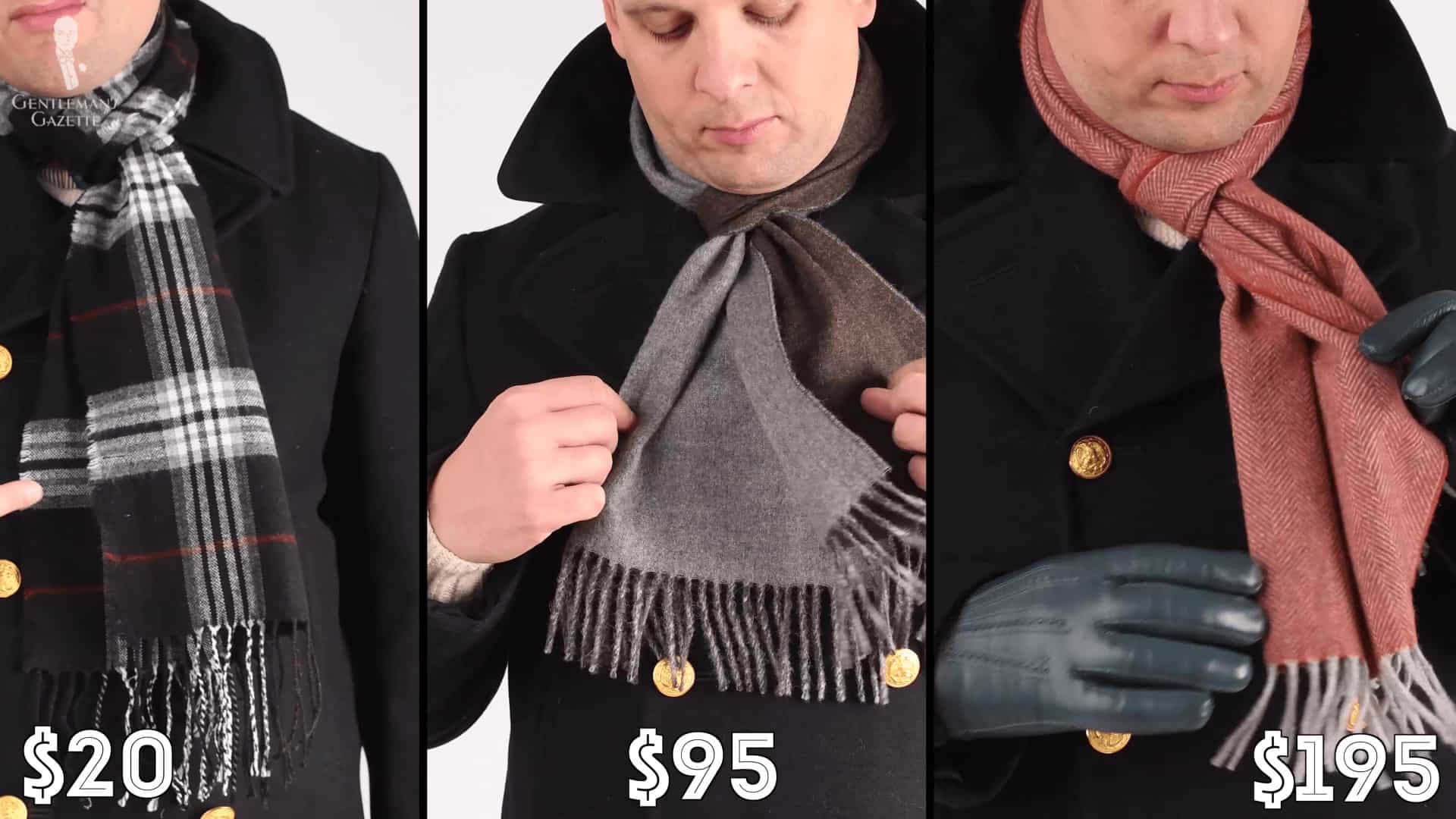
A scarf is a fantastic way to add some color, patterns, and visual interests to your outfit. Of course, a scarf must not just be beautiful, but also functional and warm. Even though it might not seem like it from the outset, a $20 scarf is very different in terms of color, pattern, material, length, and especially, the details. So today, we got a $20 scarf from Target, and we’re comparing it to a $95 scarf and a $195 scarf.


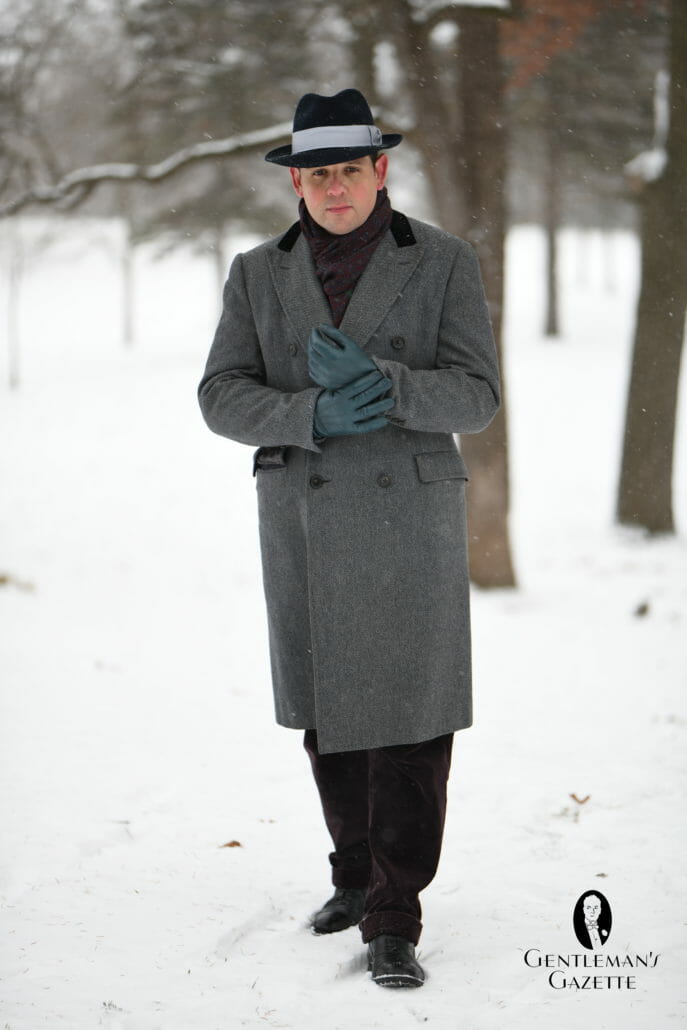
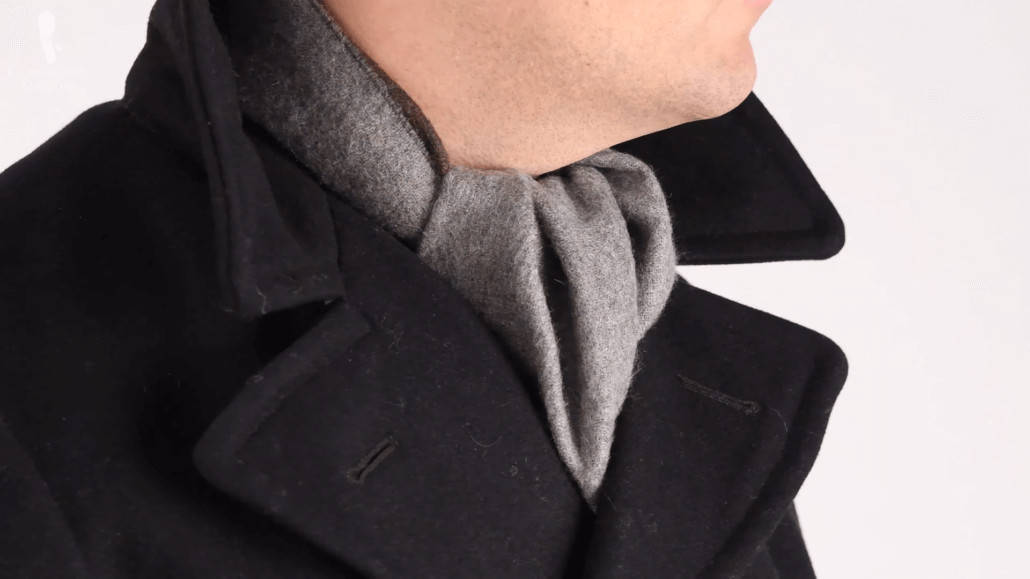
In addition to the gloves, this winter ensemble is further accented by a patterned scarf


Scarf Colors


When I was looking for $20 scarves, I noticed that most of them come usually in shades of black or grey. For scarves, the big problem with black, gray, or other dark colors like navy, is that most outerwear (overcoats in particular) is also black, gray, or navy. So if you have a scarf in the same color, there’s not enough visual contrast to make for an interesting outfit. You want a special color; let’s say, a burnt orange, maybe a nice yellow, or something green.

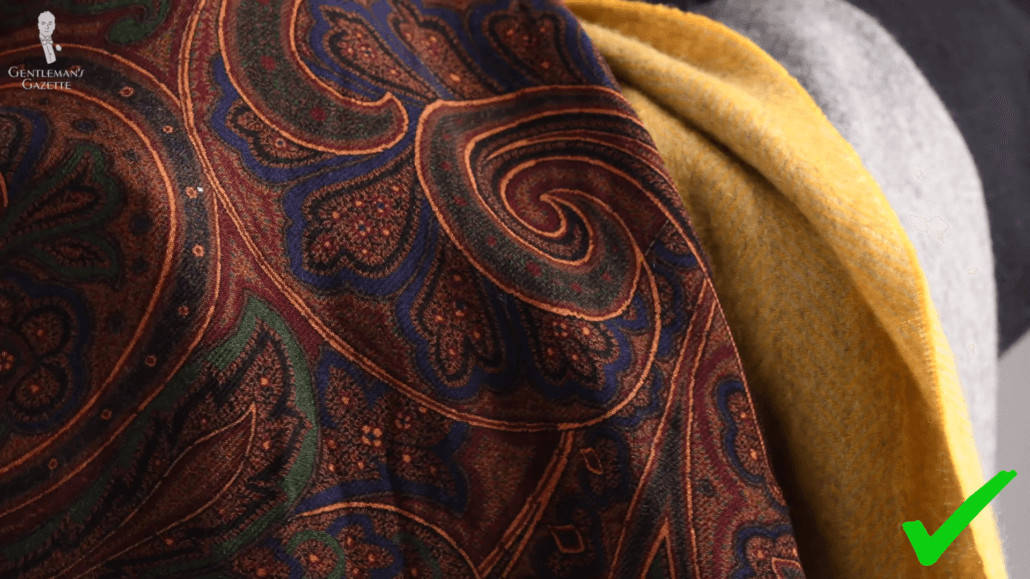
With a less expensive scarf, you can look for a long time, but these colors usually don’t exist. On the other hand, more expensive scarves usually come in much more sophisticated color palettes. There is a much broader range of unusual colors that are contrasting to your general outerwear. Of course, when patterns are involved, they’re usually multiple colors that are all designed to work well together, but they make it incredibly easy for you to combine them with other colors and accessories. What accessories, you might think? Well, especially gloves, and maybe a hat because when it’s cold outside, that’s what you need.


Scarf comparison
Scarf comparison


Scarf Patterns


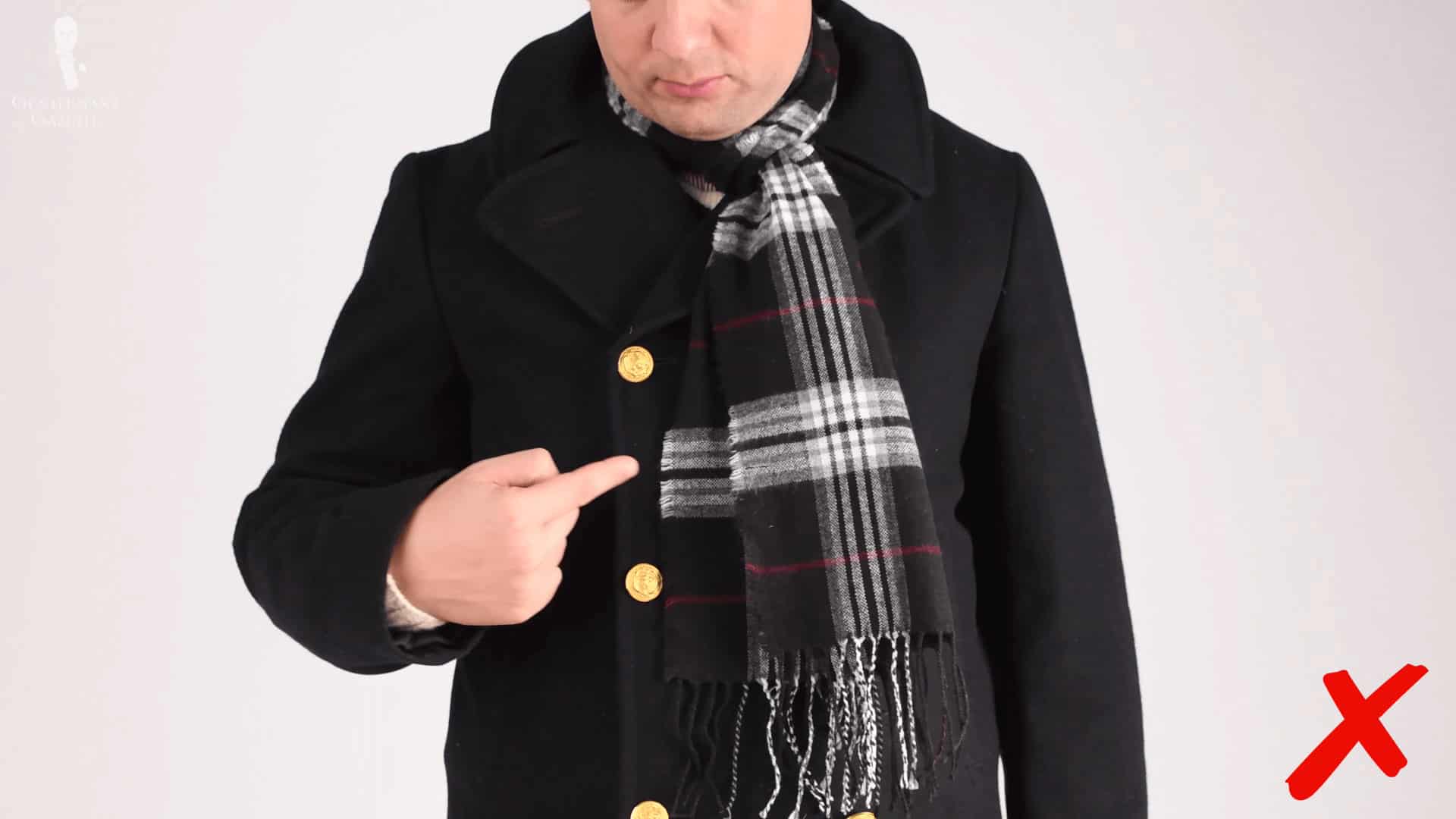
Other than the color, the pattern is also really important for a scarf. Most “standard” scarves are just plain solids, but even the weave can have an impact on how it’s perceived. In my experience, most cheap scarves come either in a solid color (such as black, gray, navy, or maybe red), and if they have a pattern, it’s usually some form of a check. This is somewhat inspired or copied from a Burberry scarf.

In my research, most cheap scarves don’t seem to have a sophisticated color palette. Rather, they usually feature white, sometimes red, and that’s about it. They’re also mostly designed as scarves for women, which means they’re oftentimes thinner and also a little bit shorter. Even if they’re designed as a unisex scarf, they are never made specifically for men, which means they don’t really work 100% for men. Overall, they’re just bland and at best, functional.


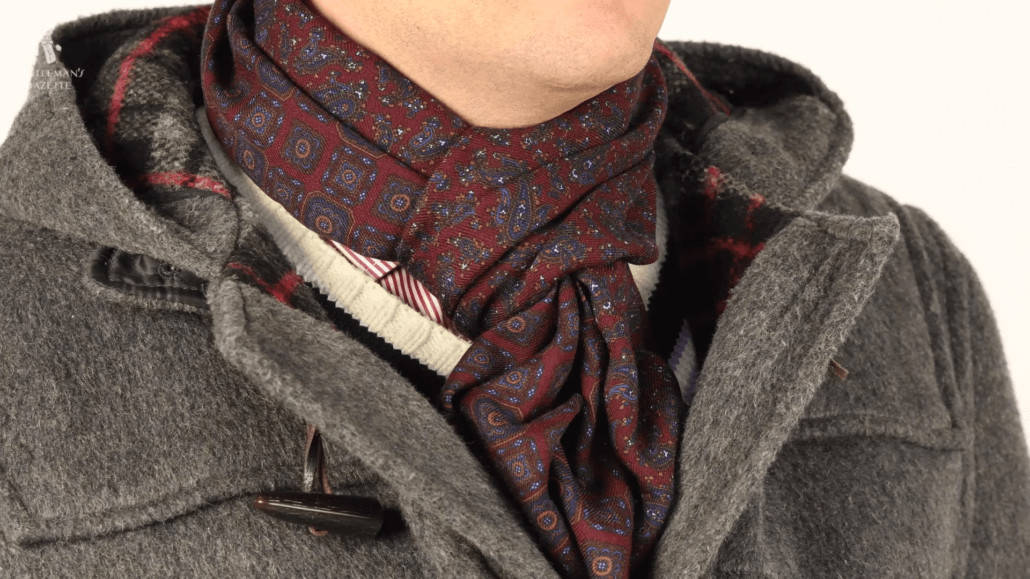
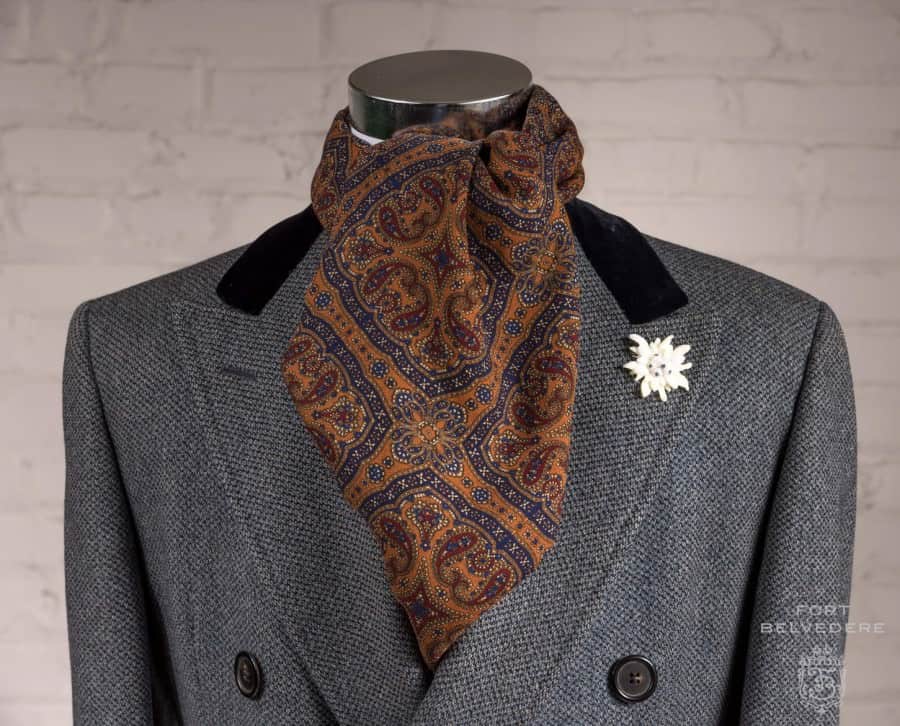
On the other hand, if you invest in a more expensive scarf, you’ll get lovely patterns like a bold or classic paisley or a micropattern similar to that of a tie. They are designed in a way that works well with typical overcoat patterns, such as a herringbone. Sometimes, they also come in small micro-checks or bolder stripes, so even if you have a striped overcoat, the scarf will still work with it very harmoniously.

Also, while $20 scarves have the same pattern on each side, more expensive scarves, oftentimes, come in a tubular design featuring different patterns and/or colors on each side. You can also play with materials and have, let’s say, a silk side on one side and a wool or wool-silk blend on the other. For example, a $95 scarf from Fort Belvedere which is woven in alpaca. It’s rather thick, keeps you really warm but when you tie it around your neck, the different colors on each side just create a very nice visual interest. Still, you don’t always have to show it to others, so you can just have one color show or both depending on how you feel and what your outfit looks like.


A boring scarf from Target


Scarf Materials


The $20 scarf is made from 100% acrylic (which is also known as nylon), so it’s an artificial fiber that is extremely inexpensive. It’s very soft, but it’s also very prone to pilling so it’s not an investment. This scarf won’t be a piece that you can wear for years to come, because it will look pilled and old and ugly after probably a season or two. That’s especially true for men with beard stubble, so it’s just something that won’t stand the test of time.


On the other hand, more expensive scarves are made from different materials, preferably natural materials. Why? Because they’re soft, they’ll keep you warm, and if the yarns are of a long staple length, it is just something that will be around for years to come. If you upgrade a little bit (let’s say you go with a $95 scarf), you will likely encounter all-wool scarves which keep you warm, or you could go with something like an alpaca scarf (which is lanolin-free and also keeps you warmer than wool).


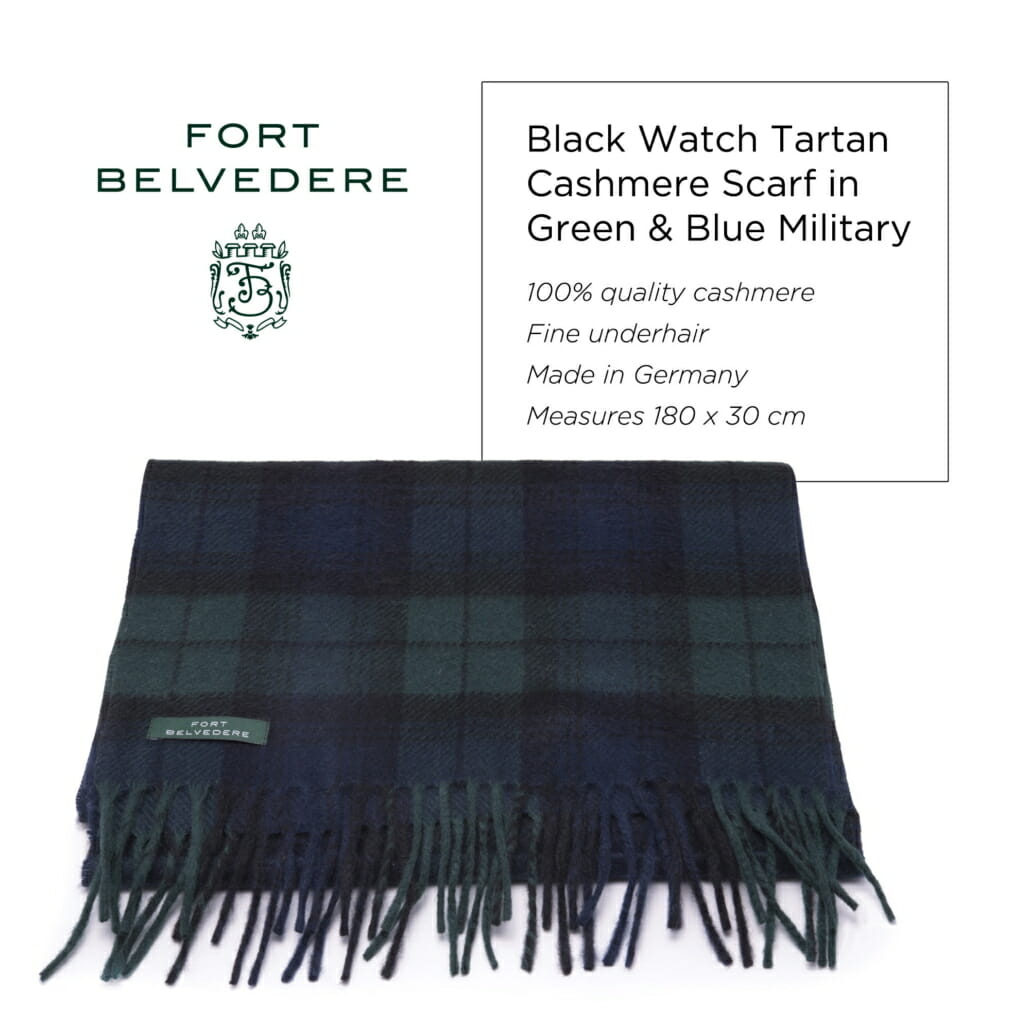
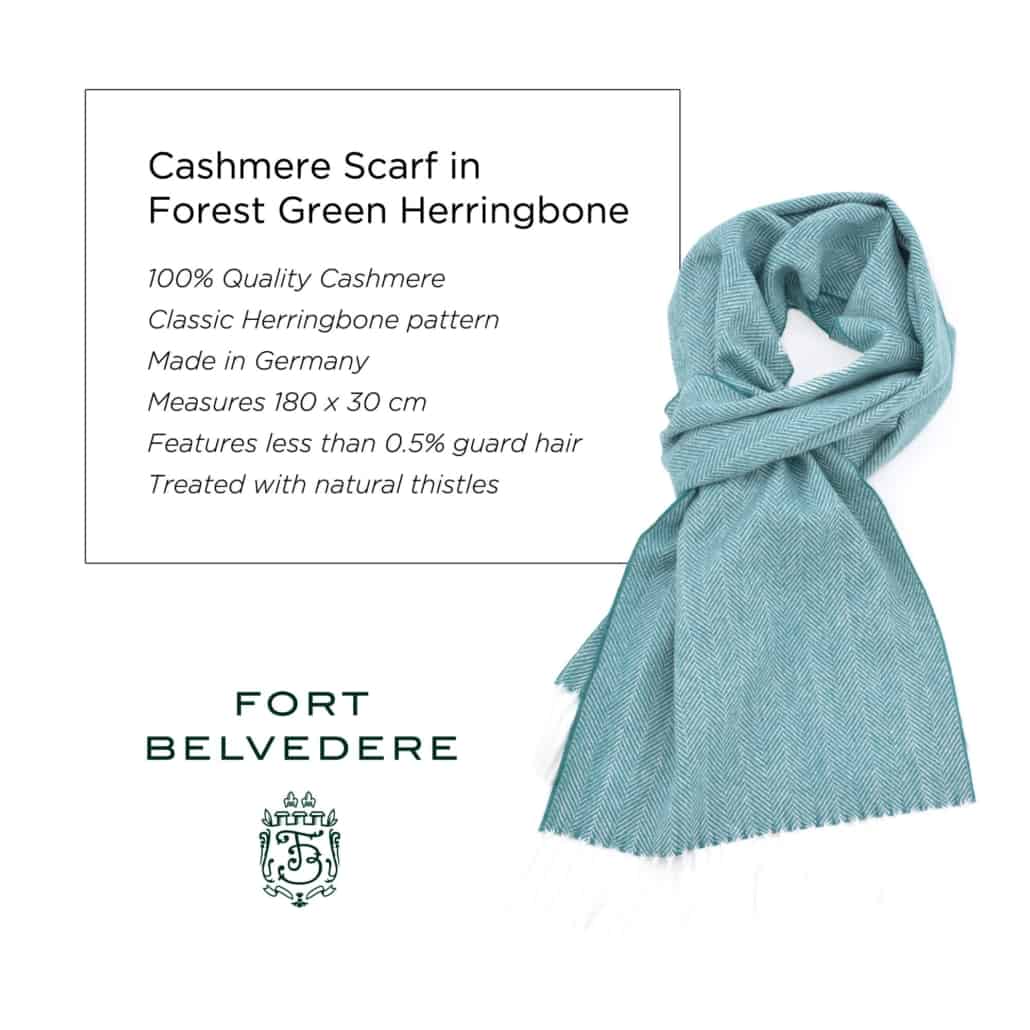
Fort Belvedere Cashmere Scarf in Forest Green


One of the classic premium scarf materials is cashmere. It’s derived from a goat and is extremely soft, yet at the same time, it’s warm. Because there’s a relatively low amount of friction (unlike with a pair of cashmere socks or a cashmere sweater), a quality product should last for decades. Not all cashmere or wool is alike, though, and just because something is 100% wool doesn’t mean it’s the same quality as another scarf that comes in 100% wool.

Scarf Weaves


While most people just look at the material composition, the weave of a scarf is also very important. It has a huge impact on the density of the fabric and how heavy it is. A $20 scarf is typically more lightweight, because they want to use less material even though it may have a much larger surface. Considering today’s items, the nylon scarf from Target is much bigger (but lighter) than the other scarves from Fort Belvedere, which are slimmer. In a nutshell, the more expensive scarf will be warmer and more comfortable on your skin, and will last longer.


Donegal tweed overcoat. fedora hat, Fort Belvedere yellow gloves and blue scarf
Having the right accessories can really upgrade an entire outfit no matter the season


Withstanding Climates


One thing that’s rarely discussed when it comes to scarves is the climate you live in. With a $20 scarf, they usually come one-size-fits-all, designed for women, maybe unisex, never for men, and they don’t come in different weights. There’s just one kind that supposedly works for everyone. Now if you live in Canada where it gets really cold, of course, you need a scarf that keeps you very warm. On the other hand, if you live in the Caribbean or let’s say, in Arizona, where you have just very mild winters and you just want a little something, a cashmere scarf would be overkill and will just make you sweat all the time.

Expensive scarf manufacturers such as Fort Belvedere offer different weight classes, so you can get exactly the scarf that works in your climate. Meanwhile, the $20 scarf from Target is a middle-of-the-road scarf. It is not made for very mild climates, but also not made very cold climates. A silk-wool blend scarf from Fort Belvedere is a little thinner and it’s made for milder winters. The wool with a silk blend still insulates enough, but it’s not something that will make you overheat. It is rather elegant and stylish for a really cold winter. Our cashmere scarves have the same pattern on both sides, but they have a really nice color, are very soft, and keep me very warm.


If warmth is the thing I care about the most, then I’d go with one of our $95 alpaca scarves, simply because the alpaca hair is hollow and has air inside of it, meaning it insulates better than other natural fibers. Also, because the scarf is double-sided, it’s rather heavy and substantial. The weave is very tight (so no air blows through it), and it’s still very soft because it’s royal baby alpaca. So overall, no matter where you live, there is a scarf for you that works for your climate.

Scarf Dimensions


Last but not least, an underrated aspect in regards to scarves is the dimension. For men, we found that most scarves that are about 30 centimeters (or 12 inches) wide and 180 centimeters (72 inches) long are really great for men, because they allow you to wear scarves in many different ways. On the other hand, women’s scarves are often quite wide, meant to be doubled up, and worn in a different way. So for men, they usually don’t work quite as well.


The $20 scarf from Target is rather wide and thin, with a loose and open weave. The other ones from Fort Belvedere are more tightly woven, in more high-quality materials, and have exactly the right dimensions for elegant gentlemen. Sometimes, I see men who prefer an even longer scarf. Personally, I don’t like it as much, because then it dangles outside of my coat–but of course, at the end of the day, it all depends on your personal preference.


So why is it that the $20 scarves come in different dimensions than more expensive scarves, you might wonder? Well, basically, the cheaper scarf is designed in a way so you can get the most yield out of the woven fabric (so you can sell the most pieces). On the other hand, a more expensive scarf is designed with the wearer in mind. We want something that makes you look good and comfortable and warm when you wear it. So that approach just shows in the way everything is done, from the dimensions to the feel, the longevity, and the way it combines with the rest of your wardrobe.

Conclusion


At the end of the day, if all you have is $20, I suggest you go with a solid color, and go with something that contrasts with your peacoats or other overcoats. If you’re ready to step up your scarf game, I suggest you get at least three or four different ones in different weight classes, because sometimes you may want something in a transitional season (spring or fall). Other times, you’ll want something for a really cold winter, with different colors, patterns, and scales. This way, you can change the entire look of your outfit just by changing a few accessories, such as your gloves and your scarf.


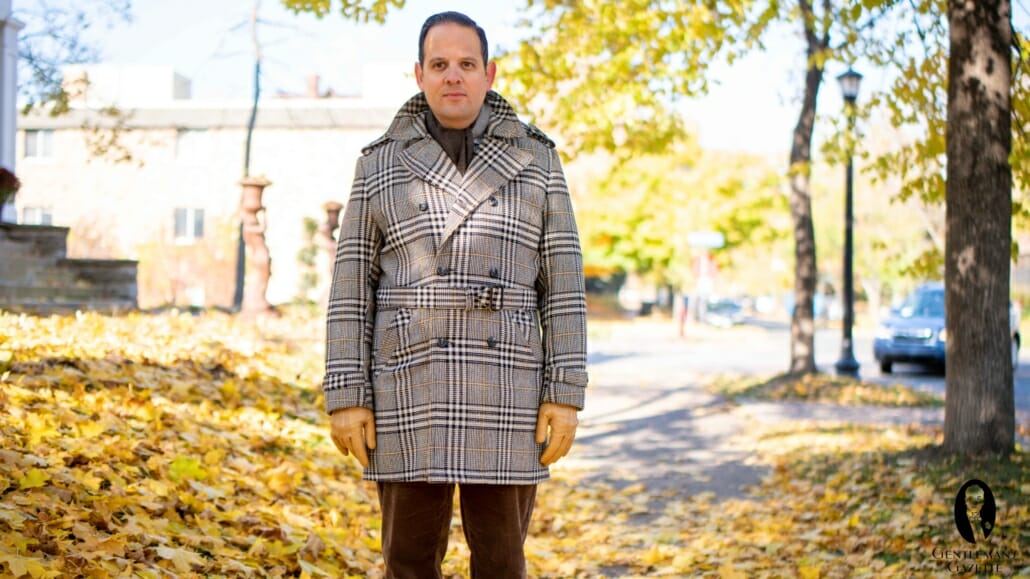
Sven Raphael Schneider wearing a vintage double-breasted check plaid overcoat with an Alpaca double-sided scarf and leather gloves
Sven Raphael Schneider wearing a vintage double-breasted check plaid overcoat from Austin Reed with an Alpaca double-sided scarf and leather gloves


Even if you think you will not get the value out of a $200 scarf because it’s ten times as expensive as a $20 scarf, I urge you to think about it this way: if the inexpensive scarf just lasts you one or two seasons (versus the expensive scarf lasting you 20 years), the cost-per-wear is roughly the same. At the same time, it feels more comfortable, it keeps you warmer, it is designed for you and your situation and overall, you’ll just always look better and more presentable.

What are your ideal characteristics in a scarf? Share with us in the comments below!

понедельник, 10 февраля 2020 г.

Allen Edmonds Park Avenue Cap Toe Oxford: Is It Worth It? – Iconic American Dress Shoe Review

The Park Avenue from Allen Edmonds is perhaps the standard to which all other American dress shoes are compared. In this installment of our ongoing series Is It Worth It?, we take a closer look at the iconic cap toe footwear and share our thoughts on whether or not it’s worth it.


History of Allen Edmonds


In 1922, Elbert W. Allen Sr. founded a shoe company in Belgium, Wisconsin. Ralph Spiegel was an initial investor and partner to Allen but he was later bought out by William Edmonds. Therefore, the company was christened Allen Edmonds. The company quickly gained notoriety for their innovative manufacturing processes such as removing nails and metal shanks from their construction to create a more flexible and lightweight shoe, referred to as Osteopathic in its early years of production. The shank of an Allen Edmonds shoe would often be made of wood to maintain durability while increasing comfort.


After providing shoes to the US Army and Navy during World War II, Allen Edmonds gained a major following as many of the soldiers from these branches of the military became lifelong customers of the brand. Thereafter, founder Elbert Allen died in 1946 at which time, his son Elbert Jr. took over control of the company. He was followed in turn by his brother Boyd in 1968 and then by John Stollenwerk in 1980. The original factory in Belgium, Wisconsin burned to the ground in January of 1984. Following both a literal and metaphorical rebuild, Allen Edmonds opened a factory in nearby Port Washington, Wisconsin where they still operate today.
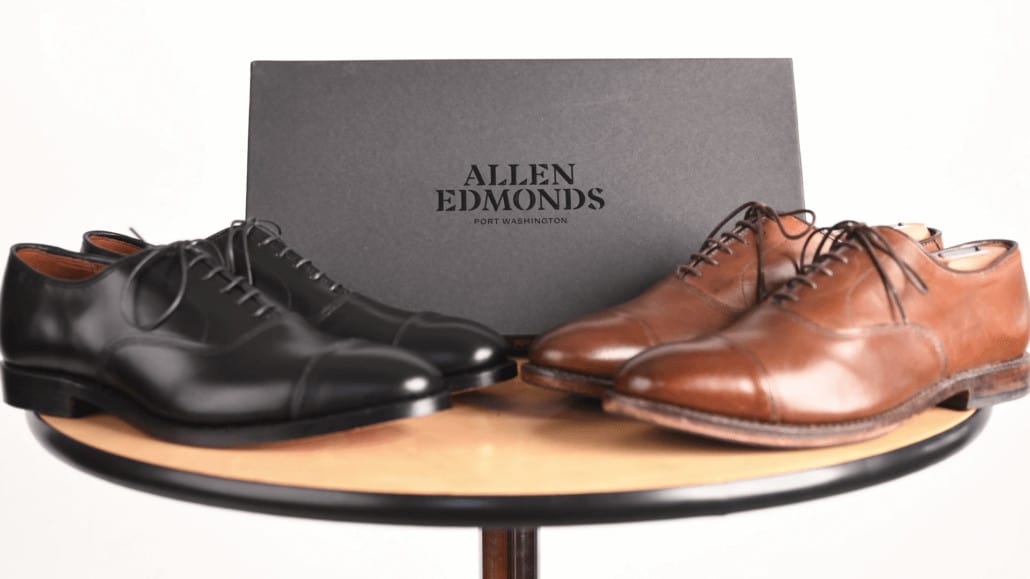

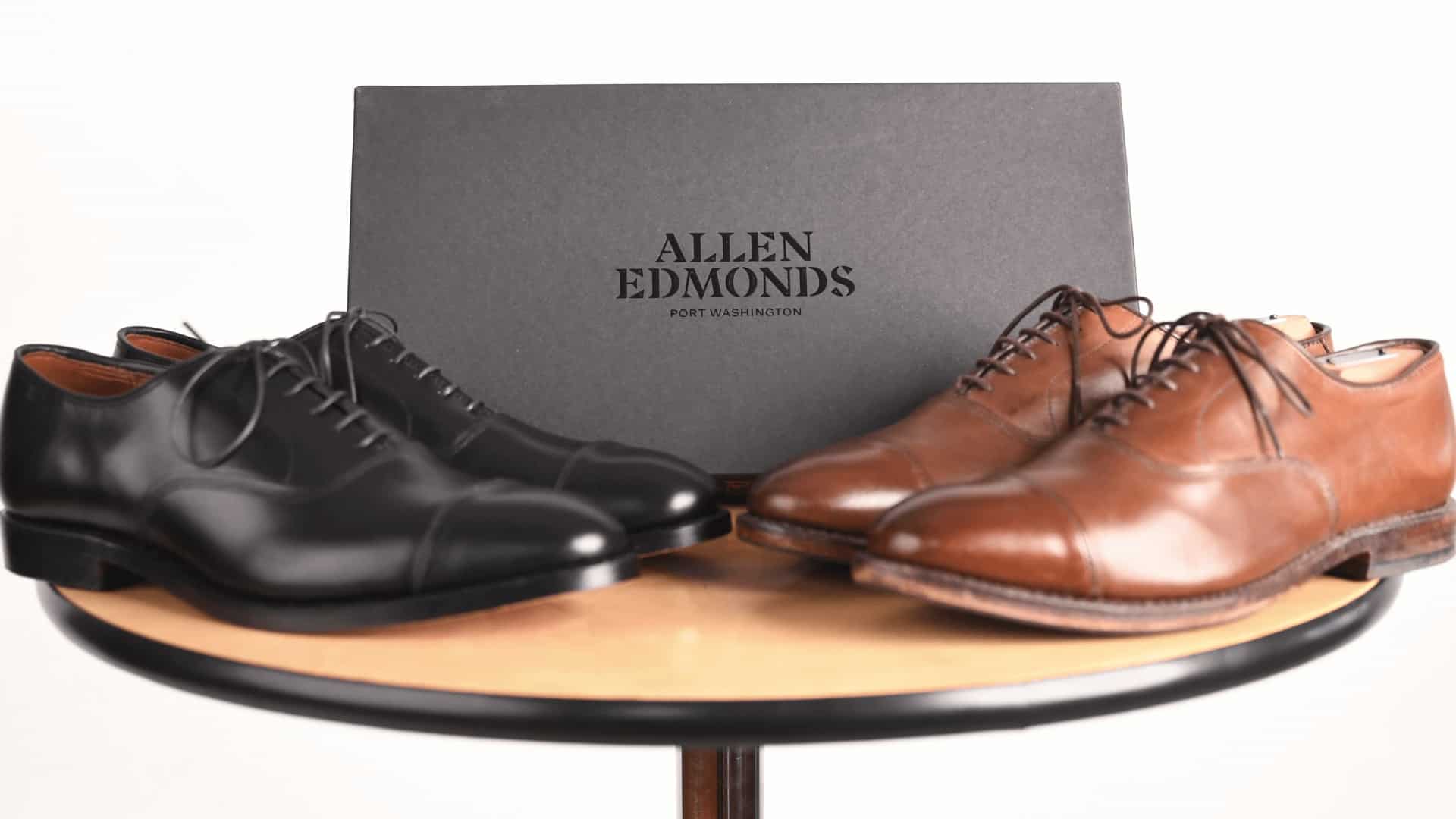
Allen Edmonds Park Avenues in Black and Brown

Allen Edmonds Park Avenues in Black and Brown


In 1987, the subsidiary company Woodlore was launched, manufacturing shoe trees and other accessories. The 1990s were a period of great growth and expansion for Allen Edmonds during which time, they purchased the main shoe company of Lewiston, Maine and began to diversify their product range incorporating other products such as umbrellas.


In 2003, the company invested $100 million to refit their factory in order to cut down on production costs. This may have been assigned that the boom of the 90s was coming to an end. By 2006, they were again concerned with rising manufacturing costs and wanted to enter other shoe markets. As such, they closed their Factory in Lewiston, Maine and opened a factory in the Dominican Republic. While the factory in Port Washington still produces the classic lines of dress shoes, some of the other lines such as boat shoes are now produced in the Dominican Republic. Additionally, some leathers for other models are cut in the Dominican Republic and then assembled in the United States. Also in 2006, 90% of the company’s shares were purchased by Minneapolis based investment firm, Goldner Hawn Johnson and Morrison for $100 million.


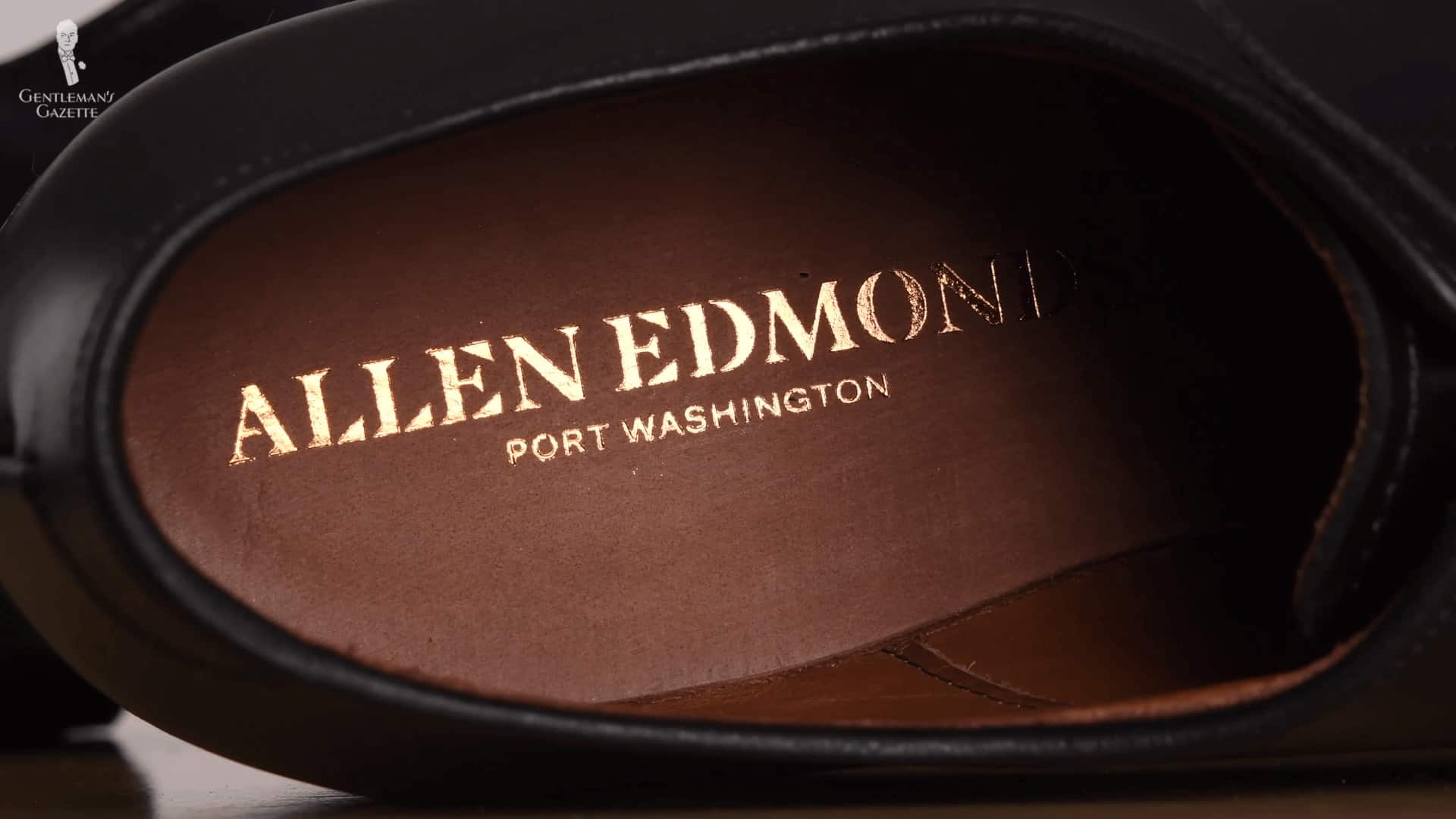
Allen Edmonds

Allen Edmonds


In 2013, the company was acquired by private equity firm, Brentwood Associates and in 2016, Brentwood sold it to shoe conglomerate, Caleres for $255 million. The current president today is Malcolm Robinson who has previously worked for a variety of other menswear brands including Phillips-Van Heusen.


Today, Allen Edmonds pride themselves on their history and status as an iconic American shoe company. Ronald Reagan, George H. W. Bush, Bill Clinton, and George W. Bush are just some of the many American presidents who have worn Allen Edmonds shoes and Park Avenues, in particular. Allen Edmonds also differentiates itself from many other shoe companies by offering a recrafting service whereby customers can send in old or worn pairs of Allen Edmonds shoes to be largely rebuilt for a fee. As part of this recrafting, the welt will be replaced and a new cork lining inserted, the soles, heels, and laces will also be replaced and the uppers will be polished. So long as there are no deep cracks or tears in the leather of the uppers and linings, Allen Edmonds will generally be able to recraft a shoe two or three times. While you could, of course, take a pair of Allen Edmonds shoes to your local cobbler to be repaired, sending it to Allen Edmonds means that the shoe will be stretched over the original last shape again ensuring that it maintains its original dimensions.


Despite Allen Edmonds heritage and reputation for quality, however, they do find themselves today at a bit of a crossroads. Their attempts in recent years to reach a younger, less formal clientele with more avant-garde designs haven’t necessarily fared well. This approach also alienated some longtime customers meaning that Allen Edmonds was somewhat stuck in the middle. Also, other longtime buyers and fans within the menswear community both on online forums and YouTube, among other places, have begun to notice increasing issues with quality control.
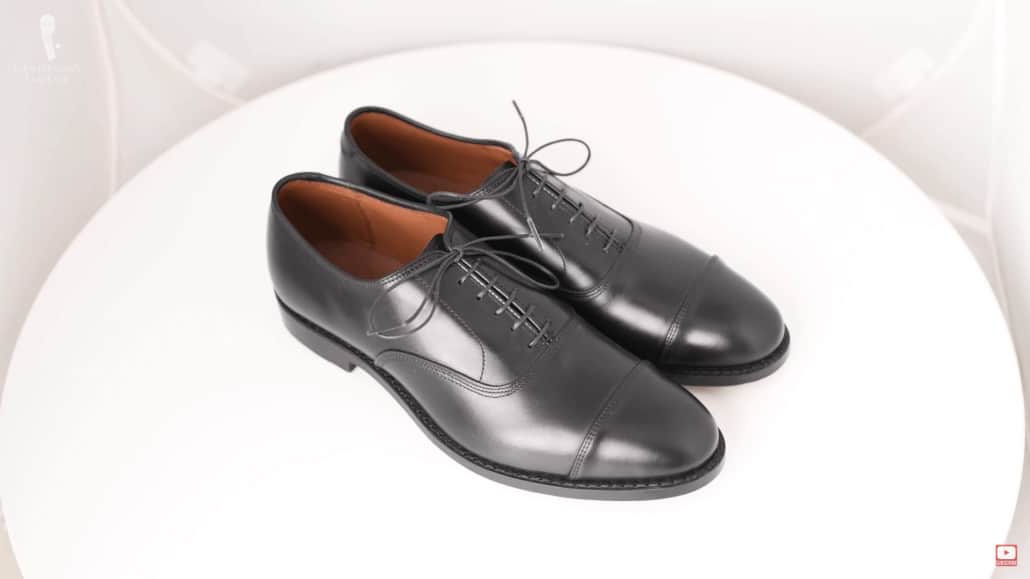

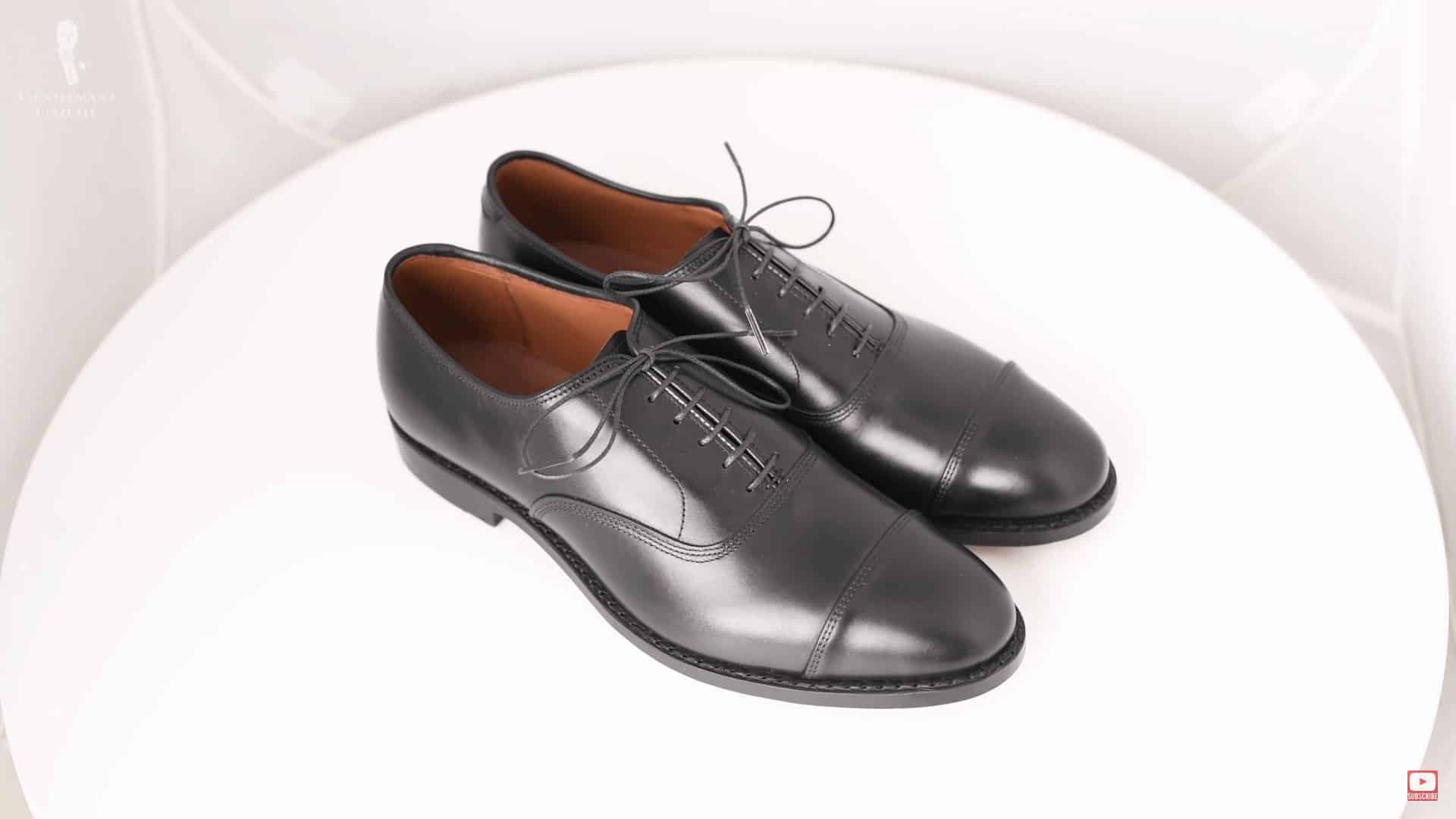
Allen Edmonds Park Avenue Oxfords In Black

Allen Edmonds Park Avenue Oxfords In Black


Park Avenue: The Iconic Cap Toe Oxfords


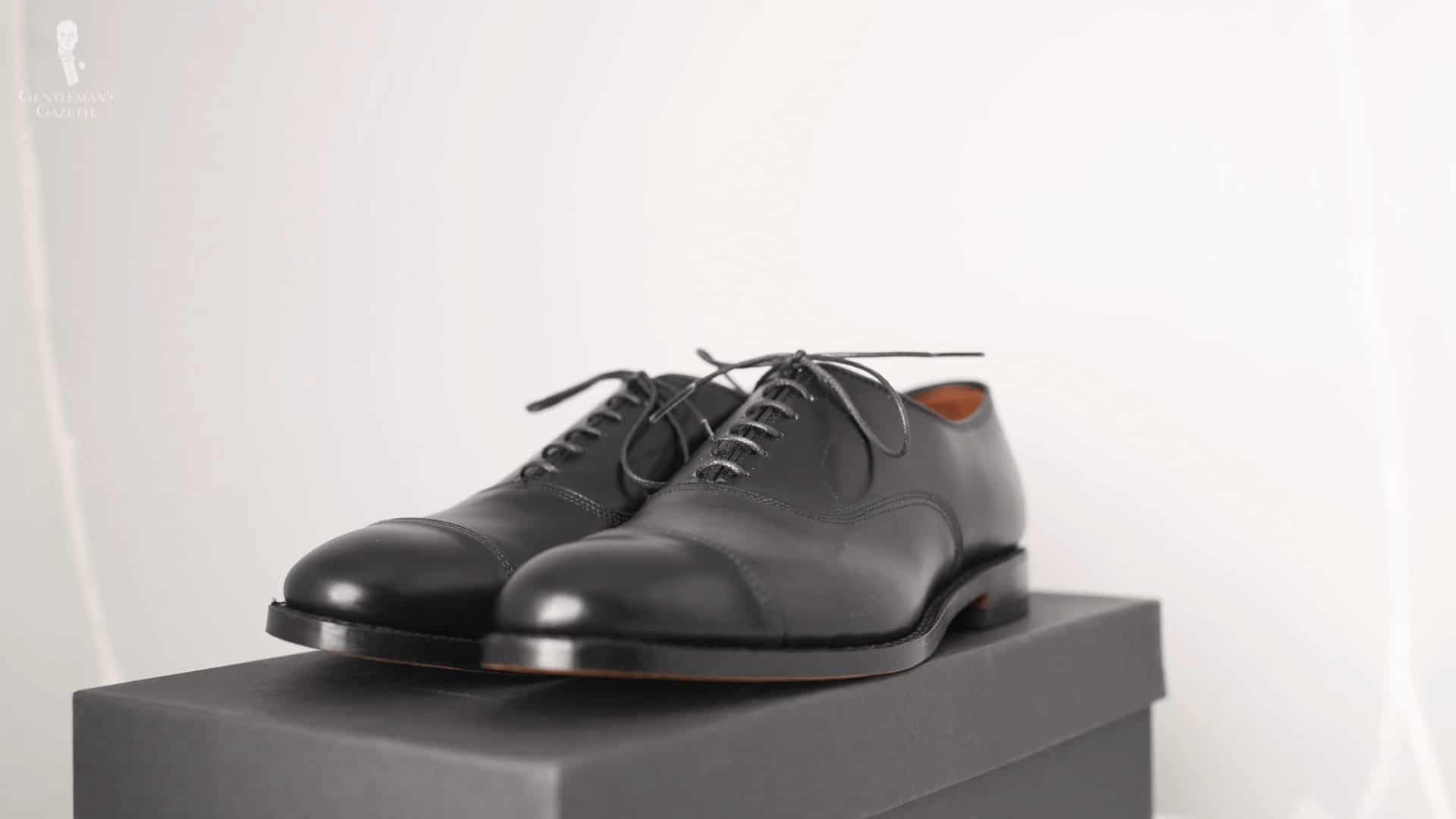
Their signature model, the Park Avenue, is a lace-up cap toe Oxford dress shoe. Allen Edmonds refers to it on their website as a cap toe balmoral. While Balmoral is a term often used, especially in America, to refer to Oxfords, it most technically refers only to a kind of boot. And what’s an Oxford? The shortest answer is this, Oxford shoes have a closed lacing system where the vamp is sewn on to the quarter whereas derby shoes have an open lacing system where the quarters are sewn onto the vamp.


Allen Edmonds Park Avenues up close

Allen Edmonds Park Avenues up close


Like many models of Allen Edmonds shoes, the Park Avenues are Goodyear welted meaning that the uppers are stitched to a cork filled welt and then to the sole. The Park Avenue receives an assembly method that Allen Edmonds refers to as their 360-degree bench welt construction. A 360-degree welt holds no real advantage over the more conventional 270-degree welt, in terms of quality, but it does allow Allen Edmonds to more easily replace the welt and the sole when shoes are being recrafted.


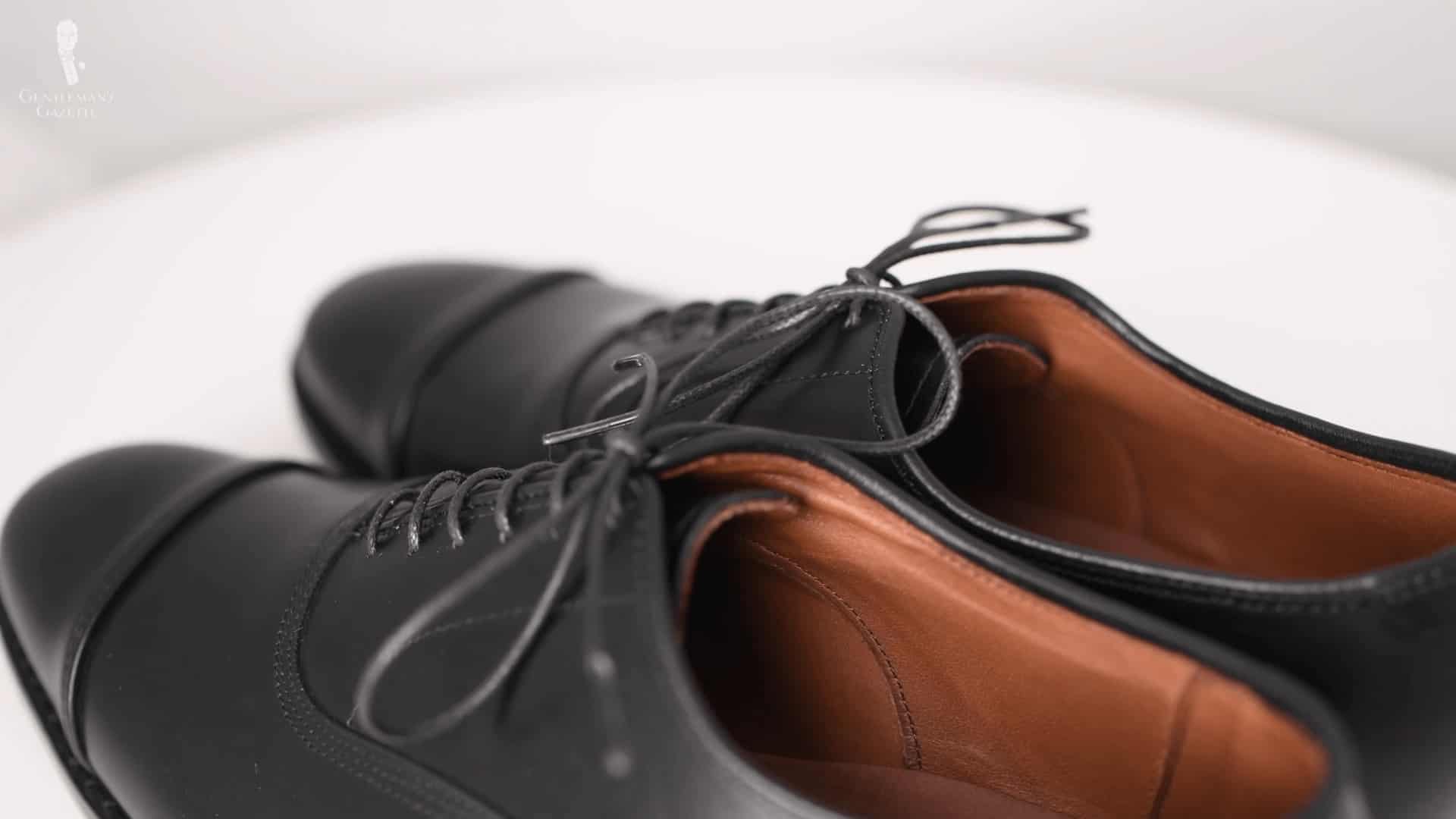
The shoes feature a single oak sole with rubber top lifts on the heel, lined calfskin leather uppers made from premium Horween leather, and six pairs of eyelets for the laces. They are welted on the 65 last which is Allen Edmonds’ most popular shape and also used for many other models including the closely-related fifth avenue. This particular last is known for being slightly longer than the typical American dress shoe last adding some sleekness to the overall shape. With that said though, the overall styling of the shoe is very traditionally American. While it’s not exactly chunky or unattractive, the shape isn’t nearly as refined as what you might see from many other British or Italian shoemakers today. In addition to this, the toe cap is a good deal shorter than many other brands.


A Closer Look at the Park Avenue


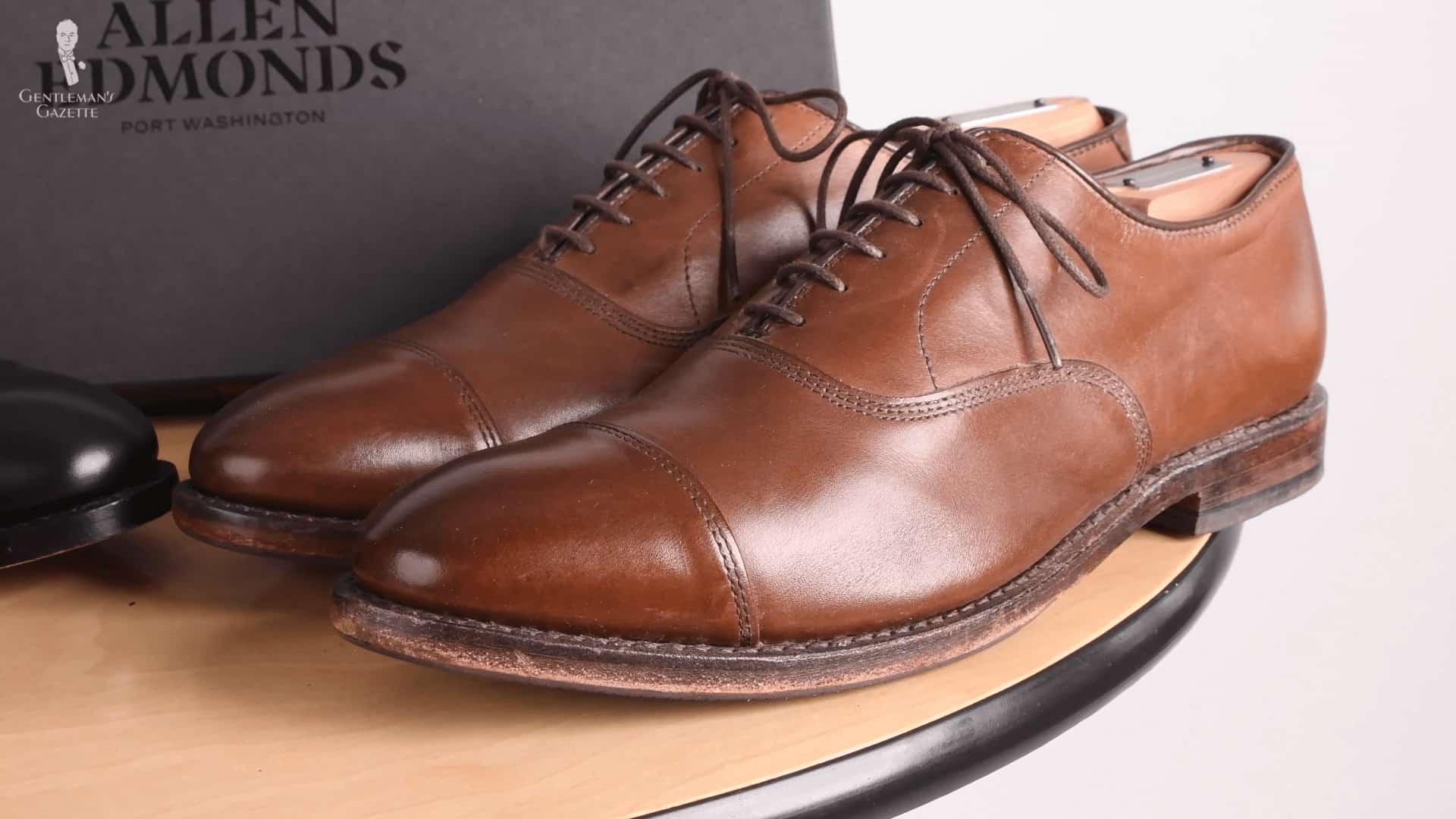
For this review, we purchased a new pair of shoes online directly from Allen Edmonds for a retail price of $395. We decided to go with black which is perhaps the most signature and conservative shade. In addition to this new pair, we’re also featuring a pair in brown that I’ve personally owned for about a year now. My pair are factory seconds meaning that I purchased them at a discount with the understanding that they didn’t necessarily meet the quality control standards to be sold at full price, which I got for $250. Furthermore, as I have poor balance due to a disability, I had rubber half soles added to my shoes by a local cobbler.


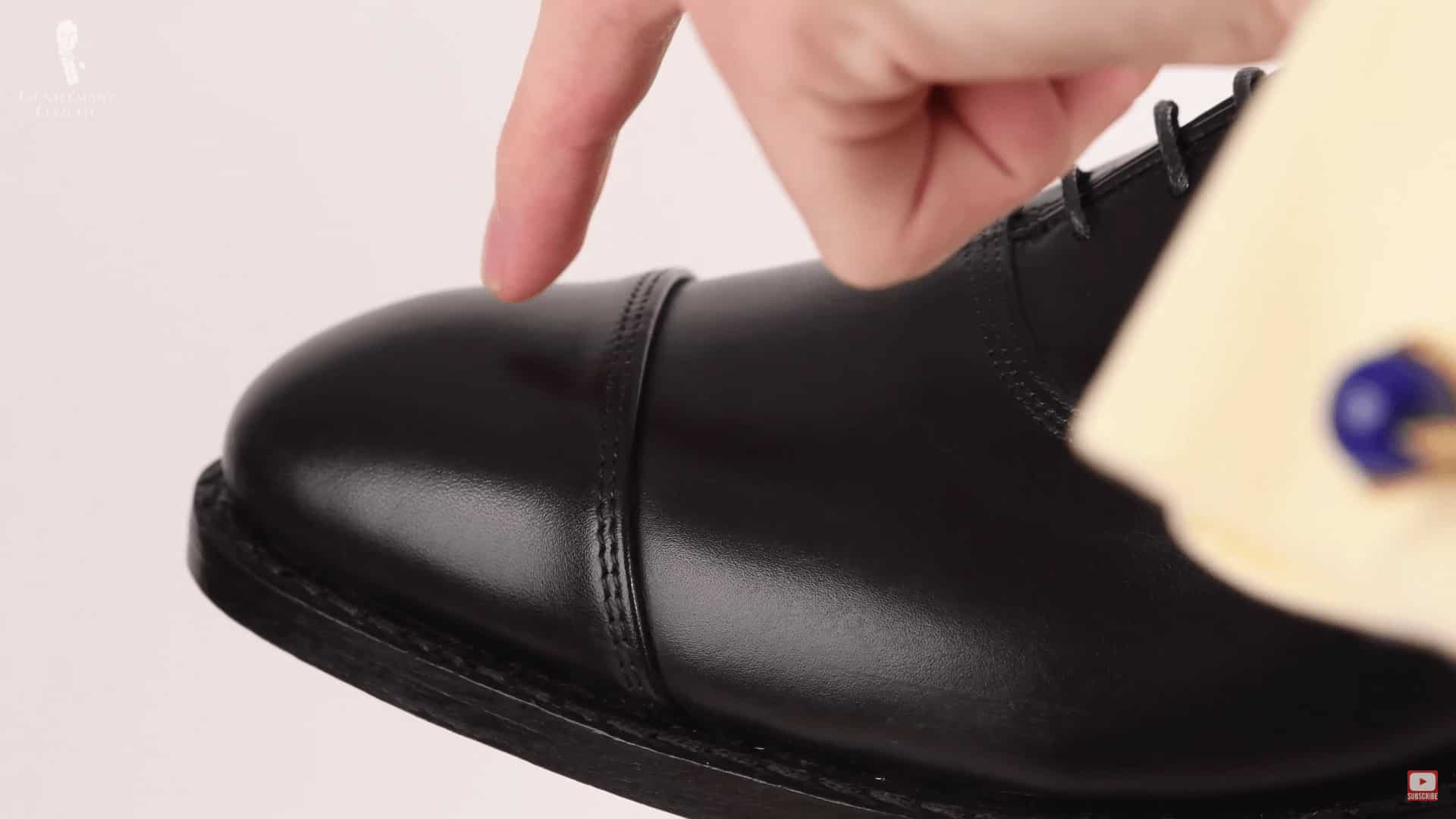
One unattractive feature of the Park Avenue is the slight hump where the vamp meets the toe cap

One unattractive feature of the Park Avenue is the slight hump where the vamp meets the toe cap


Workmanship


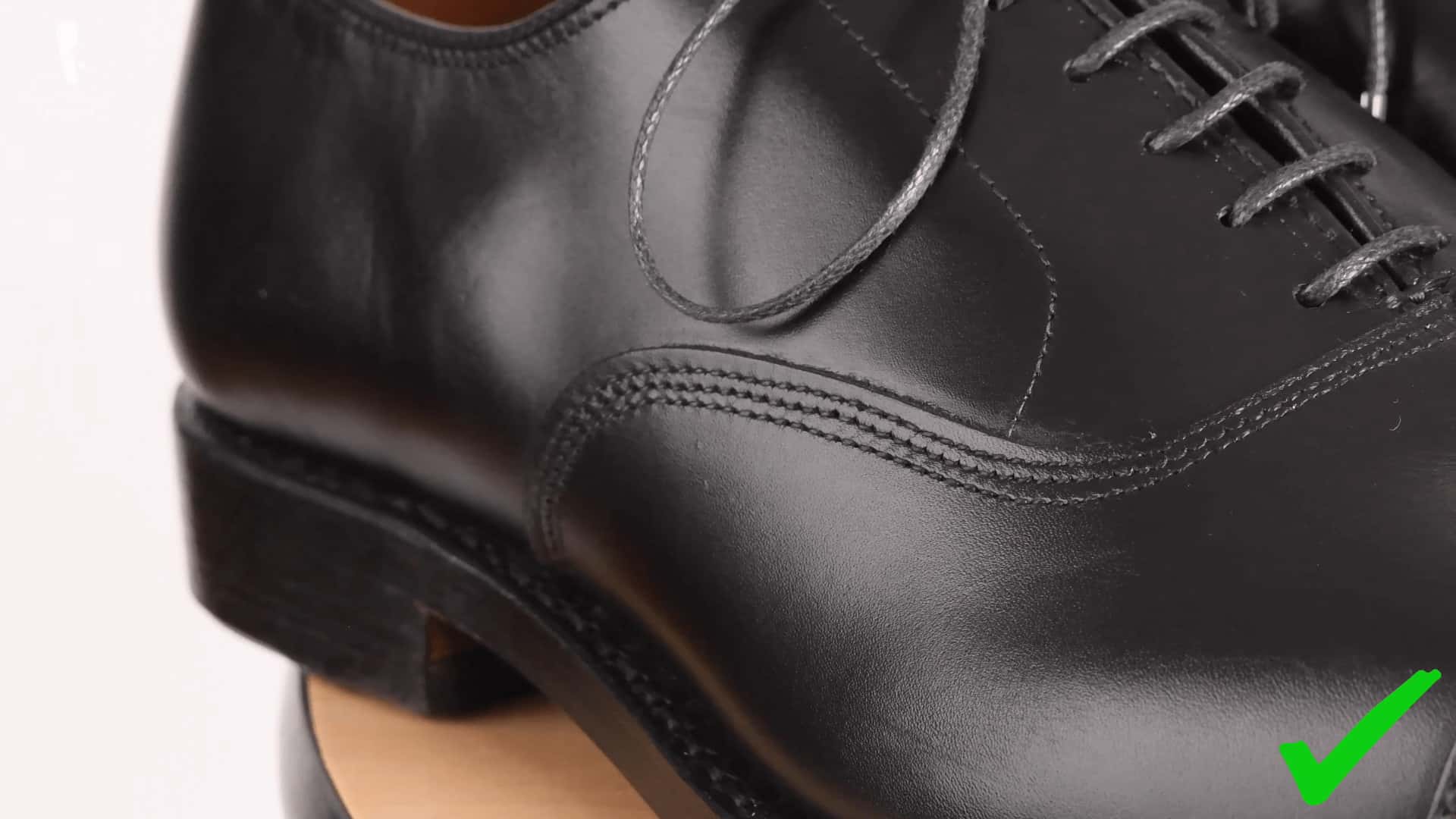
Allen Edmonds does offer a variety of other sole styles in addition to standard leather including dainite rubber. Overall, we found the workmanship on this new pair of shoes to be of high quality. Stitching on the uppers was uniform with a pleasing stitch density and very few loose thread ends and the welt stitching was largely uniform with a few minor imperfections. There was a slight notch where the welt meets the heel on the left shoe but this wasn’t major. The leather did have creases or imperfections in some areas but these were all quite minor and could likely be covered or even removed with proper care and polishing over time.


A closer look at the uniform stitching on the uppers

A closer look at the uniform stitching on the uppers


One somewhat unattractive feature is the slight hump where the vamp meets the toe cap, this could be mitigated during production by skiving or trimming away at the underside of the leather at the seam to a greater degree. The sides of the soles received a uniform black painting that didn’t greatly spill over onto the undersides of the soles.


My factory second pair did have more imperfections in the leather of the uppers and the soles and some uneven stitching on the welt. Still, this was to be expected given that they were factory seconds and they’ve been holding up well over a year’s worth of occasional wear.


Preston's factory seconds Park Avenues in Brown

Preston’s factory seconds Park Avenues in Brown


Comfort


Regarding fit and comfort of the Park Avenues, we’ll start with my own personal pair since I’ve obviously worn them quite a bit more. I will say that they did have a bit of a break-in period, perhaps two or three wears, where I did find them to be slightly uncomfortable, particularly in the heels where I experienced some irritation and mild blistering. After this initial break-in period though, I’ve had no further issues and I now find my shoes to be quite comfortable.


I wear a size 8 and 1/2 D in most dress shoes and that’s the size of both my personal pair of Park Avenues and the ones we just purchased. I find that both pairs fit relatively well though the quarters do gap somewhat and there is a bit of space in the heel. I could certainly try a different fit, in fact, one point of pride for Allen Edmonds is the wide variety of different fit options they offer. Many models will range all the way from size 5 Triple A at the smallest and narrowest to 15 Triple E at the largest and widest. I was fitted to a size 8 and 1/2 D, however, when I visited an Allen Edmonds store locally so it may just be that the 65 last on which the Park Avenue is built isn’t the ideal last shape for my foot.


As a side note, I’ll also mention that I do own a handful of other pairs of Allen Edmonds shoes in different styles and made on different lasts and I’ve found that the initial break-in period and overall fit of the shoe has varied somewhat from pair to pair. After these varying break-in periods though, I have again found that the shoes fit well overall and are generally quite comfortable. Raphael also owns a handful of Allen Edmonds shoes, as well as boots, and his experience has varied from pair to pair. Some pairs he likes more than others.


Slight creases on the leather

Slight creases on the leather


A Note On Quality Control Issues


In addition to the overall quality control issues we alluded to earlier, while we didn’t experience any major defects with the pair we purchased for this review and I also didn’t experience anything major with my factory second pair, it’s becoming an increasingly shared opinion in online menswear spaces that Allen Edmonds has begun to cut back on quality control to some degree. This should be taken with a grain of salt, however, as demand for premium quality calfskin continues to increase worldwide and even reputable brands like Horween can sometimes struggle to find enough perfect leather pieces for every single pair of shoes they produce. Other brands, for example, fellow American company, Alden, have managed to keep up their extremely exacting quality standards. With this though, their prices are substantially higher, as much as $600 per pair and discounts on their shoes are rare.


So you may have to be a bit more cautious when buying from Allen Edmonds today but we’re not going to go so far as to suggest that the overall quality of their product has dramatically decreased. With that said though, the Kavalier has also done a video on the current state of Allen Edmonds as a company today and you can find it here.


Are They Worth It?


Ultimately, the answer is likely going to depend on your budget as well as your taste. As we said before, Allen Edmonds currently sells Park Avenues on their website for a retail price of $395 though they do often run sales so you should be able to find them for less. The shoes are well made with no major flaws and durable construction.


If you properly care for them and wear them in rotation with other shoes, they should last you for a good many years. Remember also that you can send them back to the factory in Port Washington for around a hundred to a hundred and fifty dollars per pair to have them re-crafted extending their life even further.


Even so, their overall look is definitely conservative and not quite as elegant as some other British or Italian models that you might find today. If you’re looking for a more flattering silhouette at a similar price point, you might want to consider spending your money elsewhere. Speaking personally, I don’t mind the slightly stodgy or old-fashioned silhouette of the shoes, in fact, I find some more modern European models to be too bold so this isn’t a downside for me.


If you haven’t purchased from Allen Edmonds before and you’d like to try out some of their styles including the Park Avenue, you might want to do as I did and try factory seconds first. Currently, seconds aren’t available on the Allen Edmonds website all the time but you will find them occasionally. If you do decide to sign up for their email list, they’ll notify you when seconds go on sale.


So while they may not be the most elegant dress shoes on the market today and quality control is perhaps a bit more of a gamble than it was in past years, the models from Allen Edmonds and the Park Avenue, in particular, stand as quality American dress shoes. They’re durable, comfortable, recraftable, and made in the USA with a few exceptions on each of these points.


Our Verdict


Are they the best shoes on the market today? Not necessarily but they are a dependable shoe that should serve you well as a sort of base model and for that reason, we think they are worth it.


What do you think of the Allen Edmond Park Avenues? Share your thoughts in the comments section! 

Allen Edmonds Park Avenue Cap Toe Oxford: Is It Worth It? – Iconic American Dress Shoe Review

The Park Avenue from Allen Edmonds is perhaps the standard to which all other American dress shoes are compared. In this installment of our ongoing series Is It Worth It?, we take a closer look at the iconic cap toe footwear and share our thoughts on whether or not it’s worth it.

History of Allen Edmonds

In 1922, Elbert W. Allen Sr. founded a shoe company in Belgium, Wisconsin. Ralph Spiegel was an initial investor and partner to Allen but he was later bought out by William Edmonds. Therefore, the company was christened Allen Edmonds. The company quickly gained notoriety for their innovative manufacturing processes such as removing nails and metal shanks from their construction to create a more flexible and lightweight shoe, referred to as Osteopathic in its early years of production. The shank of an Allen Edmonds shoe would often be made of wood to maintain durability while increasing comfort.

After providing shoes to the US Army and Navy during World War II, Allen Edmonds gained a major following as many of the soldiers from these branches of the military became lifelong customers of the brand. Thereafter, founder Elbert Allen died in 1946 at which time, his son Elbert Jr. took over control of the company. He was followed in turn by his brother Boyd in 1968 and then by John Stollenwerk in 1980. The original factory in Belgium, Wisconsin burned to the ground in January of 1984. Following both a literal and metaphorical rebuild, Allen Edmonds opened a factory in nearby Port Washington, Wisconsin where they still operate today.

Allen Edmonds Park Avenues in Black and Brown

Allen Edmonds Park Avenues in Black and Brown

In 1987, the subsidiary company Woodlore was launched, manufacturing shoe trees and other accessories. The 1990s were a period of great growth and expansion for Allen Edmonds during which time, they purchased the main shoe company of Lewiston, Maine and began to diversify their product range incorporating other products such as umbrellas.

In 2003, the company invested $100 million to refit their factory in order to cut down on production costs. This may have been assigned that the boom of the 90s was coming to an end. By 2006, they were again concerned with rising manufacturing costs and wanted to enter other shoe markets. As such, they closed their Factory in Lewiston, Maine and opened a factory in the Dominican Republic. While the factory in Port Washington still produces the classic lines of dress shoes, some of the other lines such as boat shoes are now produced in the Dominican Republic. Additionally, some leathers for other models are cut in the Dominican Republic and then assembled in the United States. Also in 2006, 90% of the company’s shares were purchased by Minneapolis based investment firm, Goldner Hawn Johnson and Morrison for $100 million.

Allen Edmonds

Allen Edmonds

In 2013, the company was acquired by private equity firm, Brentwood Associates and in 2016, Brentwood sold it to shoe conglomerate, Caleres for $255 million. The current president today is Malcolm Robinson who has previously worked for a variety of other menswear brands including Phillips-Van Heusen.

Today, Allen Edmonds pride themselves on their history and status as an iconic American shoe company. Ronald Reagan, George H. W. Bush, Bill Clinton, and George W. Bush are just some of the many American presidents who have worn Allen Edmonds shoes and Park Avenues, in particular. Allen Edmonds also differentiates itself from many other shoe companies by offering a recrafting service whereby customers can send in old or worn pairs of Allen Edmonds shoes to be largely rebuilt for a fee. As part of this recrafting, the welt will be replaced and a new cork lining inserted, the soles, heels, and laces will also be replaced and the uppers will be polished. So long as there are no deep cracks or tears in the leather of the uppers and linings, Allen Edmonds will generally be able to recraft a shoe two or three times. While you could, of course, take a pair of Allen Edmonds shoes to your local cobbler to be repaired, sending it to Allen Edmonds means that the shoe will be stretched over the original last shape again ensuring that it maintains its original dimensions.

Despite Allen Edmonds heritage and reputation for quality, however, they do find themselves today at a bit of a crossroads. Their attempts in recent years to reach a younger, less formal clientele with more avant-garde designs haven’t necessarily fared well. This approach also alienated some longtime customers meaning that Allen Edmonds was somewhat stuck in the middle. Also, other longtime buyers and fans within the menswear community both on online forums and YouTube, among other places, have begun to notice increasing issues with quality control.

Allen Edmonds Park Avenue Oxfords In Black

Allen Edmonds Park Avenue Oxfords In Black

Park Avenue: The Iconic Cap Toe Oxfords

Their signature model, the Park Avenue, is a lace-up cap toe Oxford dress shoe. Allen Edmonds refers to it on their website as a cap toe balmoral. While Balmoral is a term often used, especially in America, to refer to Oxfords, it most technically refers only to a kind of boot. And what’s an Oxford? The shortest answer is this, Oxford shoes have a closed lacing system where the vamp is sewn on to the quarter whereas derby shoes have an open lacing system where the quarters are sewn onto the vamp.

Allen Edmonds Park Avenues up close

Allen Edmonds Park Avenues up close

Like many models of Allen Edmonds shoes, the Park Avenues are Goodyear welted meaning that the uppers are stitched to a cork filled welt and then to the sole. The Park Avenue receives an assembly method that Allen Edmonds refers to as their 360-degree bench welt construction. A 360-degree welt holds no real advantage over the more conventional 270-degree welt, in terms of quality, but it does allow Allen Edmonds to more easily replace the welt and the sole when shoes are being recrafted.

The shoes feature a single oak sole with rubber top lifts on the heel, lined calfskin leather uppers made from premium Horween leather, and six pairs of eyelets for the laces. They are welted on the 65 last which is Allen Edmonds’ most popular shape and also used for many other models including the closely-related fifth avenue. This particular last is known for being slightly longer than the typical American dress shoe last adding some sleekness to the overall shape. With that said though, the overall styling of the shoe is very traditionally American. While it’s not exactly chunky or unattractive, the shape isn’t nearly as refined as what you might see from many other British or Italian shoemakers today. In addition to this, the toe cap is a good deal shorter than many other brands.

A Closer Look at the Park Avenue

For this review, we purchased a new pair of shoes online directly from Allen Edmonds for a retail price of $395. We decided to go with black which is perhaps the most signature and conservative shade. In addition to this new pair, we’re also featuring a pair in brown that I’ve personally owned for about a year now. My pair are factory seconds meaning that I purchased them at a discount with the understanding that they didn’t necessarily meet the quality control standards to be sold at full price, which I got for $250. Furthermore, as I have poor balance due to a disability, I had rubber half soles added to my shoes by a local cobbler.

One unattractive feature of the Park Avenue is the slight hump where the vamp meets the toe cap

One unattractive feature of the Park Avenue is the slight hump where the vamp meets the toe cap

Workmanship

Allen Edmonds does offer a variety of other sole styles in addition to standard leather including dainite rubber. Overall, we found the workmanship on this new pair of shoes to be of high quality. Stitching on the uppers was uniform with a pleasing stitch density and very few loose thread ends and the welt stitching was largely uniform with a few minor imperfections. There was a slight notch where the welt meets the heel on the left shoe but this wasn’t major. The leather did have creases or imperfections in some areas but these were all quite minor and could likely be covered or even removed with proper care and polishing over time.

A closer look at the uniform stitching on the uppers

A closer look at the uniform stitching on the uppers

One somewhat unattractive feature is the slight hump where the vamp meets the toe cap, this could be mitigated during production by skiving or trimming away at the underside of the leather at the seam to a greater degree. The sides of the soles received a uniform black painting that didn’t greatly spill over onto the undersides of the soles.

My factory second pair did have more imperfections in the leather of the uppers and the soles and some uneven stitching on the welt. Still, this was to be expected given that they were factory seconds and they’ve been holding up well over a year’s worth of occasional wear.

Preston's factory seconds Park Avenues in Brown

Preston’s factory seconds Park Avenues in Brown

Comfort

Regarding fit and comfort of the Park Avenues, we’ll start with my own personal pair since I’ve obviously worn them quite a bit more. I will say that they did have a bit of a break-in period, perhaps two or three wears, where I did find them to be slightly uncomfortable, particularly in the heels where I experienced some irritation and mild blistering. After this initial break-in period though, I’ve had no further issues and I now find my shoes to be quite comfortable.

I wear a size 8 and 1/2 D in most dress shoes and that’s the size of both my personal pair of Park Avenues and the ones we just purchased. I find that both pairs fit relatively well though the quarters do gap somewhat and there is a bit of space in the heel. I could certainly try a different fit, in fact, one point of pride for Allen Edmonds is the wide variety of different fit options they offer. Many models will range all the way from size 5 Triple A at the smallest and narrowest to 15 Triple E at the largest and widest. I was fitted to a size 8 and 1/2 D, however, when I visited an Allen Edmonds store locally so it may just be that the 65 last on which the Park Avenue is built isn’t the ideal last shape for my foot.

As a side note, I’ll also mention that I do own a handful of other pairs of Allen Edmonds shoes in different styles and made on different lasts and I’ve found that the initial break-in period and overall fit of the shoe has varied somewhat from pair to pair. After these varying break-in periods though, I have again found that the shoes fit well overall and are generally quite comfortable. Raphael also owns a handful of Allen Edmonds shoes, as well as boots, and his experience has varied from pair to pair. Some pairs he likes more than others.

Slight creases on the leather

Slight creases on the leather

A Note On Quality Control Issues

In addition to the overall quality control issues we alluded to earlier, while we didn’t experience any major defects with the pair we purchased for this review and I also didn’t experience anything major with my factory second pair, it’s becoming an increasingly shared opinion in online menswear spaces that Allen Edmonds has begun to cut back on quality control to some degree. This should be taken with a grain of salt, however, as demand for premium quality calfskin continues to increase worldwide and even reputable brands like Horween can sometimes struggle to find enough perfect leather pieces for every single pair of shoes they produce. Other brands, for example, fellow American company, Alden, have managed to keep up their extremely exacting quality standards. With this though, their prices are substantially higher, as much as $600 per pair and discounts on their shoes are rare.

So you may have to be a bit more cautious when buying from Allen Edmonds today but we’re not going to go so far as to suggest that the overall quality of their product has dramatically decreased. With that said though, the Kavalier has also done a video on the current state of Allen Edmonds as a company today and you can find it here.

Are They Worth It?

Ultimately, the answer is likely going to depend on your budget as well as your taste. As we said before, Allen Edmonds currently sells Park Avenues on their website for a retail price of $395 though they do often run sales so you should be able to find them for less. The shoes are well made with no major flaws and durable construction.

If you properly care for them and wear them in rotation with other shoes, they should last you for a good many years. Remember also that you can send them back to the factory in Port Washington for around a hundred to a hundred and fifty dollars per pair to have them re-crafted extending their life even further.

Even so, their overall look is definitely conservative and not quite as elegant as some other British or Italian models that you might find today. If you’re looking for a more flattering silhouette at a similar price point, you might want to consider spending your money elsewhere. Speaking personally, I don’t mind the slightly stodgy or old-fashioned silhouette of the shoes, in fact, I find some more modern European models to be too bold so this isn’t a downside for me.

If you haven’t purchased from Allen Edmonds before and you’d like to try out some of their styles including the Park Avenue, you might want to do as I did and try factory seconds first. Currently, seconds aren’t available on the Allen Edmonds website all the time but you will find them occasionally. If you do decide to sign up for their email list, they’ll notify you when seconds go on sale.

So while they may not be the most elegant dress shoes on the market today and quality control is perhaps a bit more of a gamble than it was in past years, the models from Allen Edmonds and the Park Avenue, in particular, stand as quality American dress shoes. They’re durable, comfortable, recraftable, and made in the USA with a few exceptions on each of these points.

Our Verdict

Are they the best shoes on the market today? Not necessarily but they are a dependable shoe that should serve you well as a sort of base model and for that reason, we think they are worth it.

What do you think of the Allen Edmond Park Avenues? Share your thoughts in the comments section!