Показаны сообщения с ярлыком Places. Показать все сообщения

вторник, 18 февраля 2020 г.

Return To Roots At Sukasantai Farmstay

Sukasantai Farmstay is an ecological retreat in Indonesia designed by GOY Architects

There exists an ever-growing body of literature that promotes the benefits of human interaction with nature. In Japan, forest bathing is a time-honoured exercise that is believed to ward off illnesses. In Singapore, the practice of biophilia in design (a term popularised by Edward O. Wilson in 1984) and of building therapeutic gardens and community farms has become widespread.


But the need to get away from the city to green spaces that promote wellbeing is an ancient impulse. They range from fanciful imperial retreats and country cottages to the humbler, present-day holiday campsites for families.


With climate change and frantic urban living the reality for most people today, there is a rise of a different kind of getaway that is not themed after luxurious resorts for the well-heeled indulged within fenced premises.


Rather, they advocate a closed-loop, ecological lifestyle and while offering a restorative holiday, surreptitiously question the toll that relentless productivity, reliance on genetic engineering, and increasing energy consumption inflict on the land and food we consume.


They take the form of farm stays and therapeutic retreats with digital detoxes thrown in, where air-conditioned comfort is not a given, but guests can rough it out and go back to basics, in tune with the rhythms of the day and task of the hour.


Their compounds are not necessarily gated and guests can interact with the local community and participate in planting and harvesting activities alongside with them. One such retreat is the Sukasantai Farmstay, a family-owned and run organic vegetable farmstay located on the highlands of Gunung Gede, Sukabumi, Indonesia.


“With the growing disconnection of people not knowing how and where food comes from, the farm hopes to reconnect this disjuncture.”
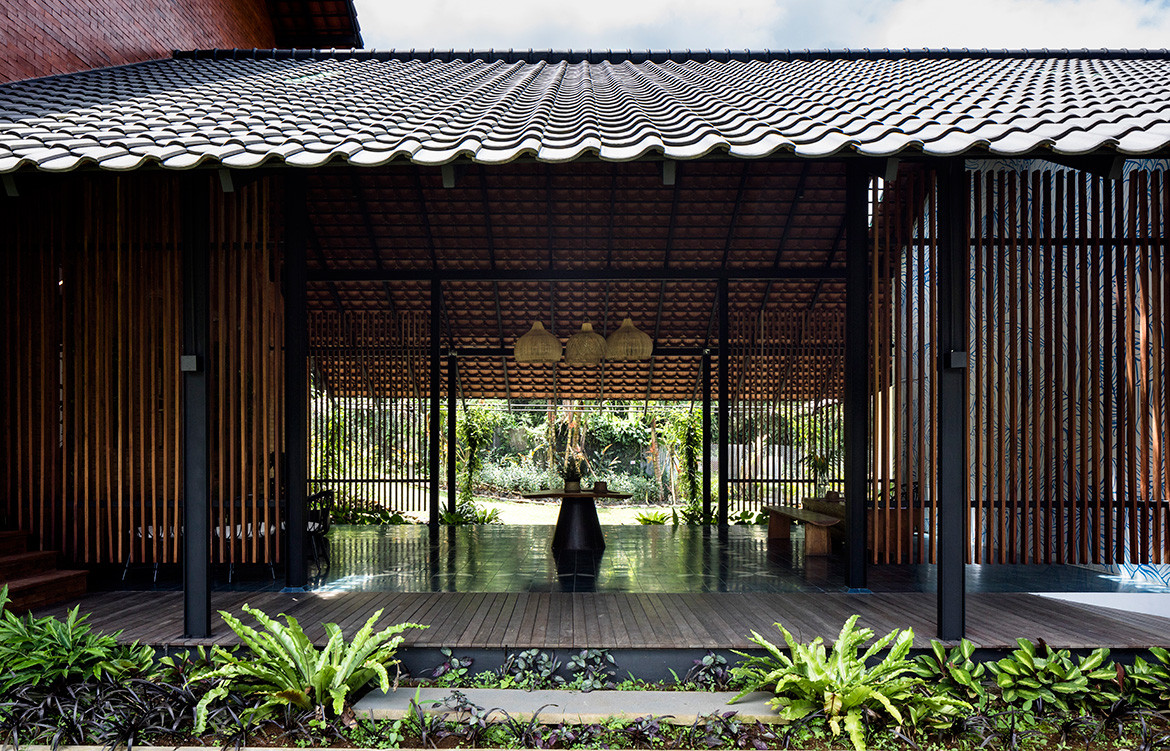


Sukasantai Farmstay is an ecological retreat in Indonesia designed by GOY Architects


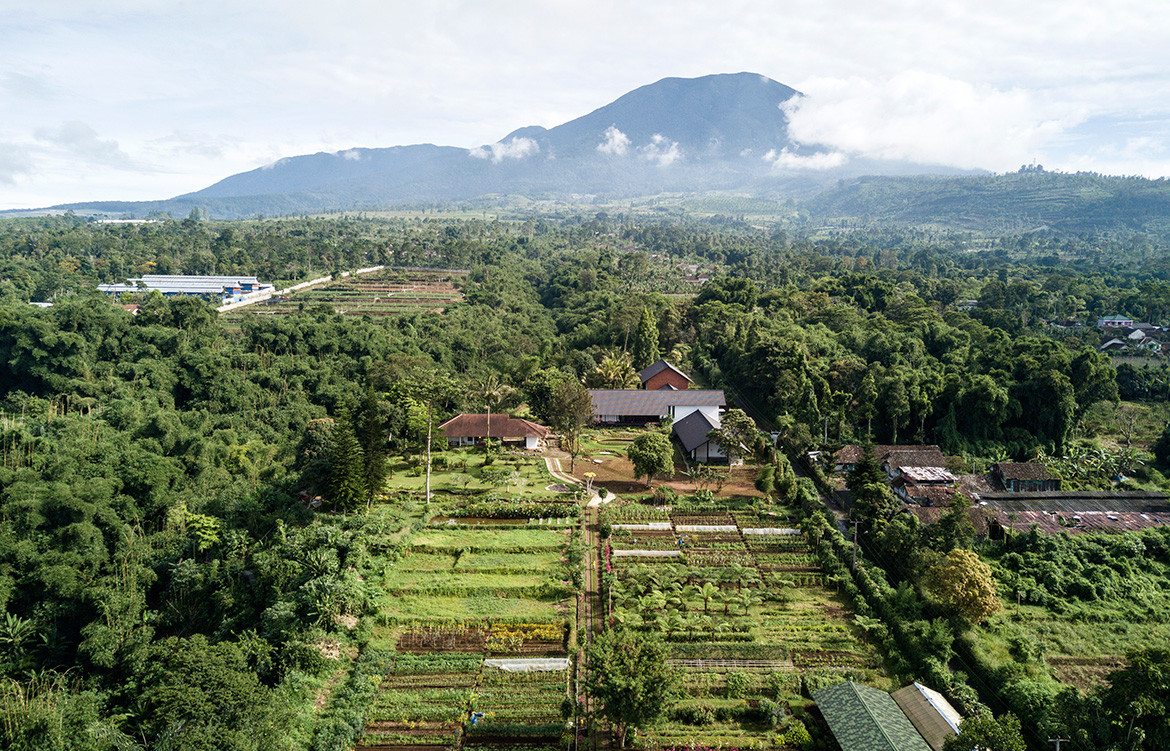
The 6-hectare farm had its beginnings as a hobby project to supply the family with vegetables free of synthetic fertilizers and pesticides, but soon grew into a small home-delivery enterprise, selling organic vegetables directly to consumers in Jakarta using recycled crates. The idea then evolved into building a farm stay as a means for city dwellers to be reacquainted with nature and the origins of their food supply.


“With the growing disconnection of people not knowing how and where food comes from, the farm hopes to reconnect this disjuncture,” said Stephanie Moriyama, owner of Sukasantai Farmstay. The original family bungalow is preserved on-site and an independent, larger wing of accommodation was added on a sloping terrain next to it. Stephanie, a trained landscape architect, engaged an architect she had collaborated with on a previous project in Singapore to design the new wing on the farm. This became one of the impetus for architect Zhenru Goy to launch her practice in 2015.


“The architecture was crafted around the existing mature trees such that guests can enjoy [them] from the interior.”
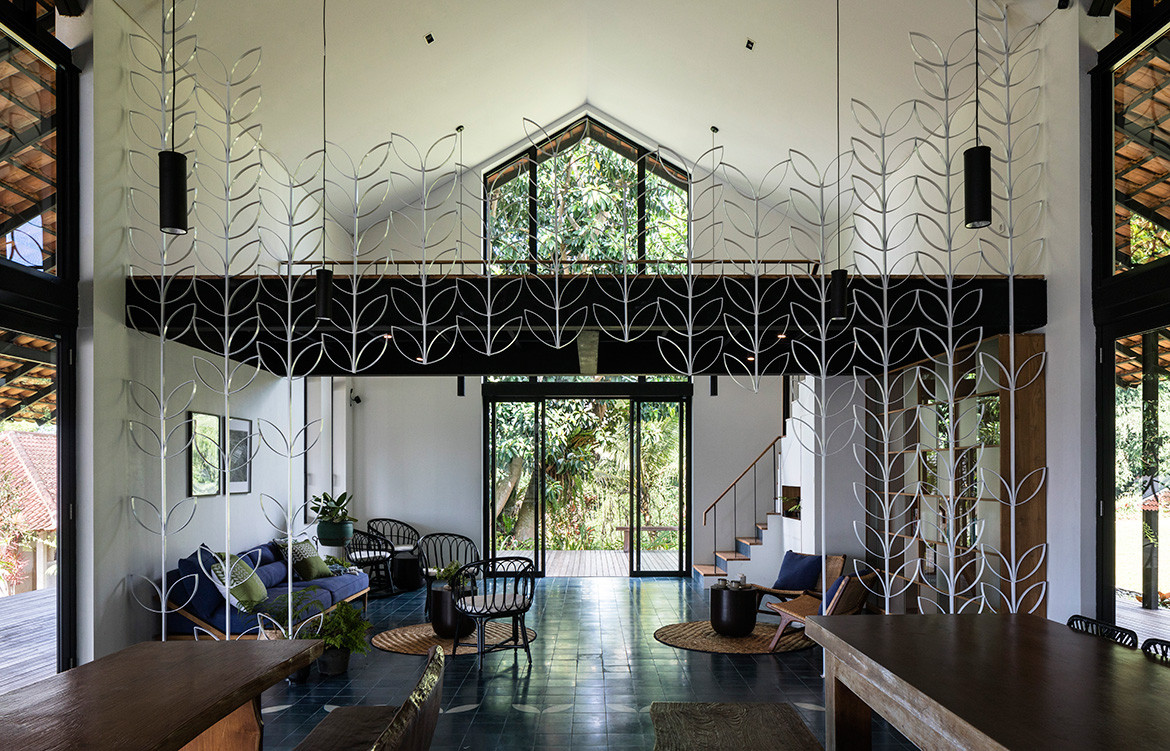


Sukasantai Farmstay is an ecological retreat in Indonesia designed by GOY Architects


At Sukasantai, both Stephanie and Zhenru employed the simplest and most restrained of approach to consolidate the programme and layout of site. They eschewed the dispersed chalet layout so that guests are compelled to socialise and room service can be simplified.


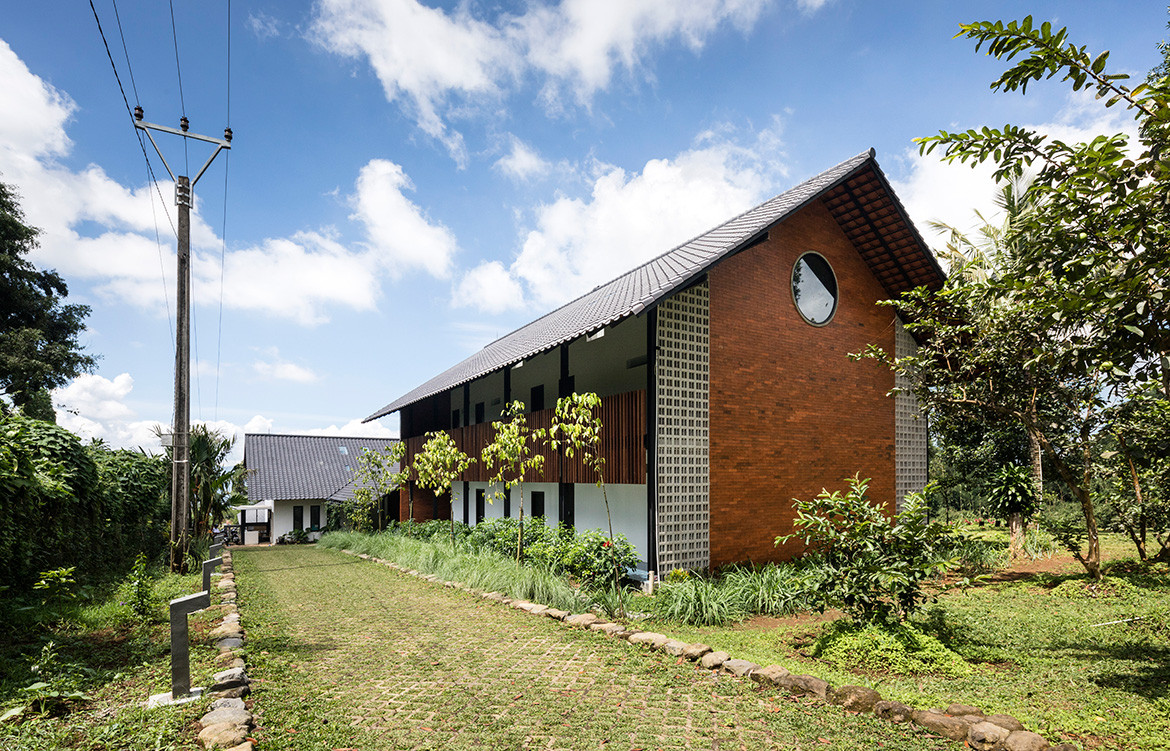
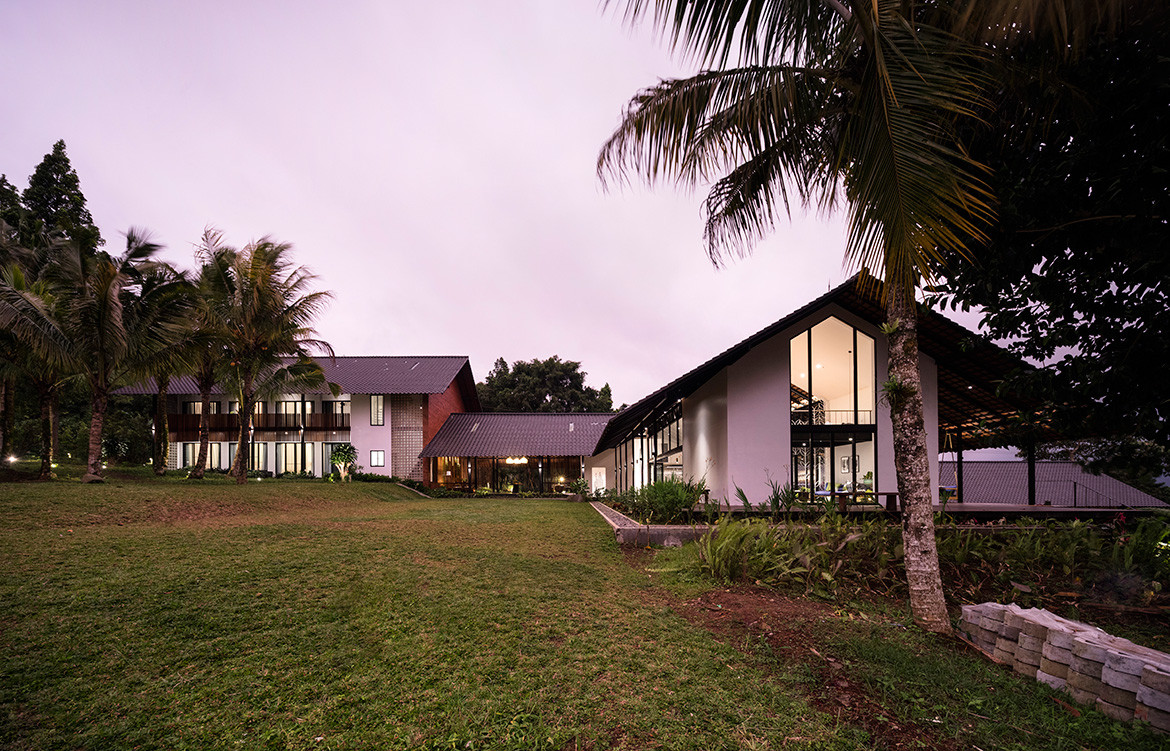
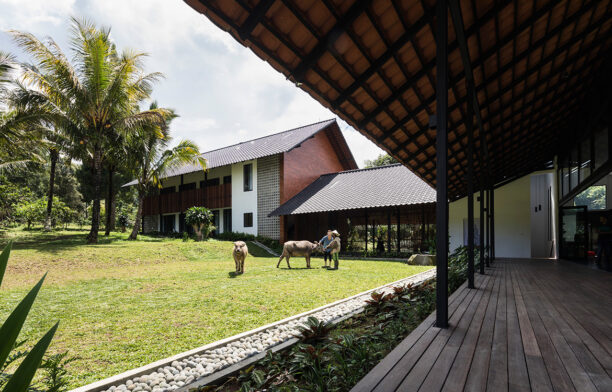
All 12 bedrooms the farm offers are lined across a linear block stretching some 75 metres over a terrain that dips gently down. They open out to a view of the bamboo forest valley while the bathrooms effectively become a barrier screening them from the noisier public road. The mid-point of this wing is bisected by a dining hall that spatially divides two implied courtyards of the wing.


“Our design was also informed by the existing mature trees on-site,” says Zhenru. “A 10-metre-tall ficus elastica tree is our main feature for the dining space. We framed the tree by terminating the gable end wall with glass – showcasing the robust trunks and verdant leaves. The architecture was crafted around the existing mature trees such that guests can enjoy [them] from the interior.”


The development is a showcase of building sustainably with the land, respecting its topography and trees.
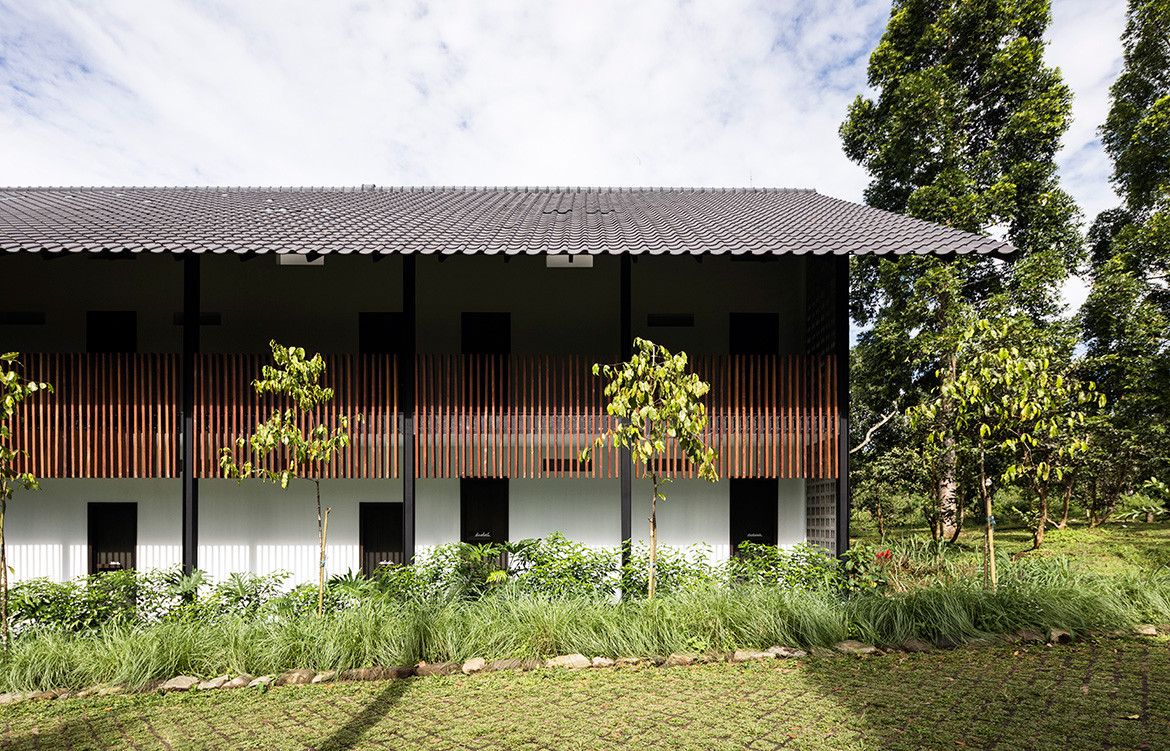


Sukasantai Farmstay is an ecological retreat in Indonesia designed by GOY Architects


The dining hall is anchored by an open kitchen with self-serving dining concept, and guests are encouraged to participate in authentic “farm-to-fork” experiences such as vegetable harvesting, fruit picking, fishing, bamboo shoot hunting, sourdough bread workshops, tempeh making and other means of working for their meals. The rich volcanic soil here is host to over a hundred varieties of vegetable, medicinal plants, tropical fruits such as guavas, soursop, jackfruit, durian, and up to ten varieties of local bananas. They give the farm biodiversity that a purely commercial orchard would have lacked.
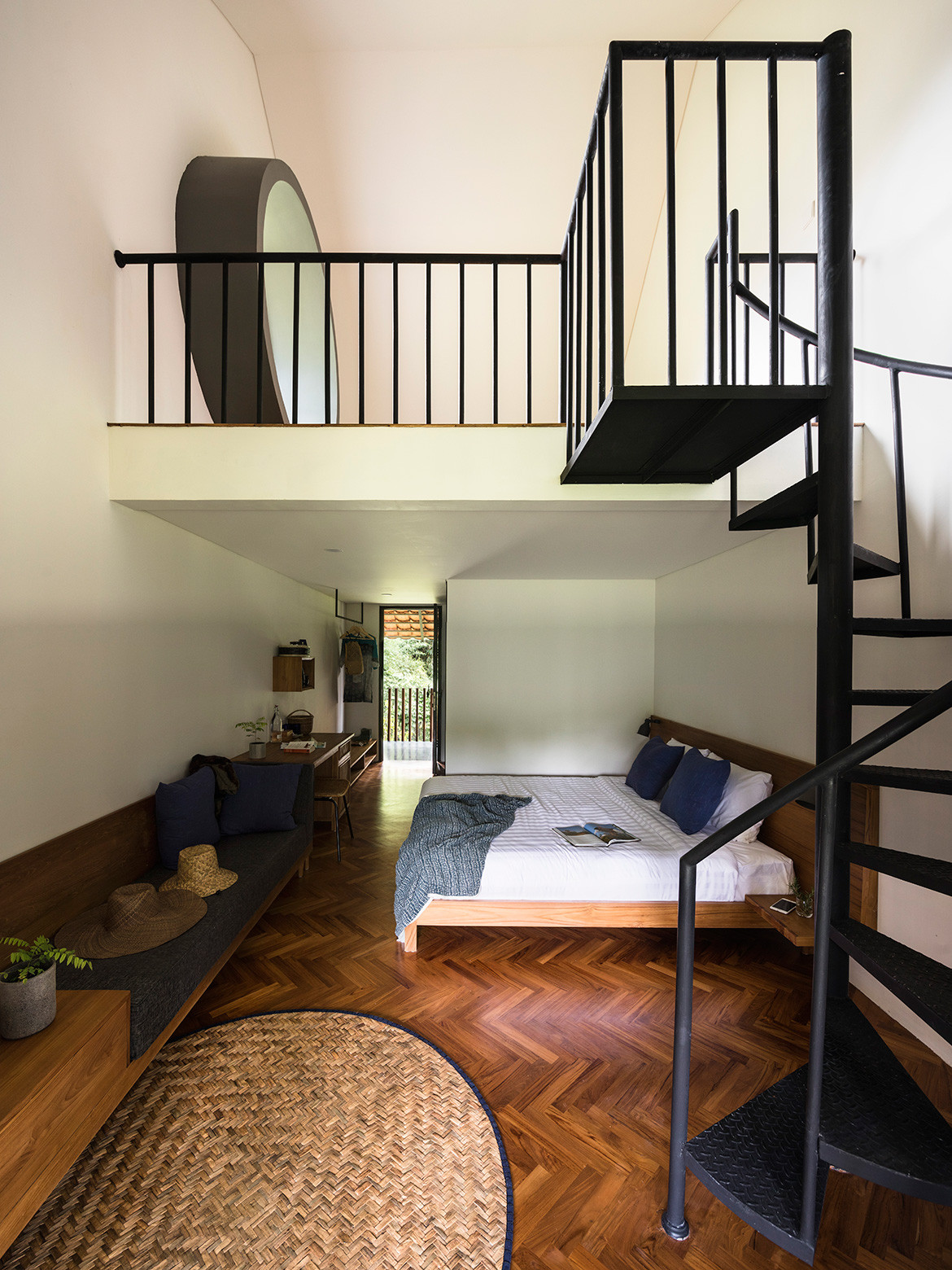

Sukasantai Farmstay is an ecological retreat in Indonesia designed by GOY Architects


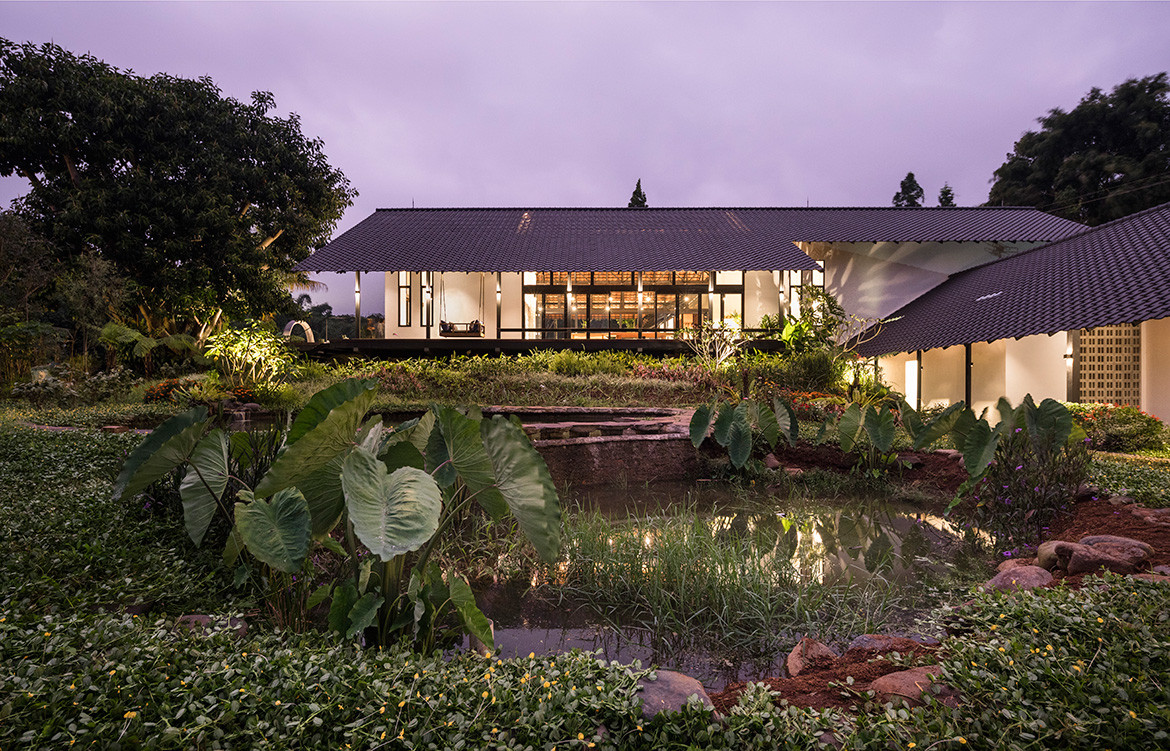
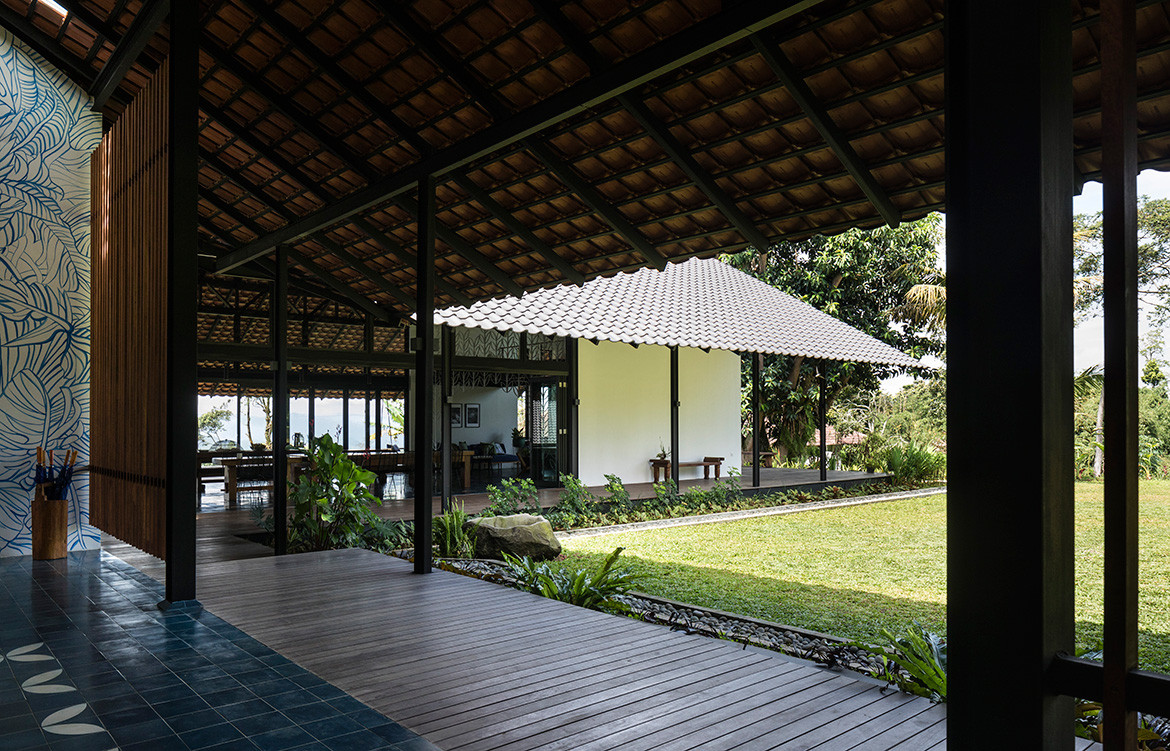
With its all-year-round cool and wet montane climate, the high-ceilinged rooms are not air-conditioned, nor are the major roofs padded with insulation. “We had to convince the engineer to try his utmost to design the roof structure to be free of any bracing struts,” Zhenru explains, “because we wanted it to be as simple as possible.” Rainwater falls freely over the eaves onto gravel-filled swales and drains downwards to a fishpond, then a reservoir where it is used for irrigation by gravity flow alone. The development is a showcase of building sustainably with the land, respecting its topography and trees, working with locally available materials and workers to build and operate with.


The understated vernacular design allowed the natural beauty of the site with its volcanic mountain as a backdrop to shine through without intrusive embellishments. There are no unnatural trappings of Wi-Fi, swimming pools, tennis courts or spas as the social enterprise agenda takes spatial precedence over the built environment. The effect is therefore not unlike a naïve painting of an extended habitat by a child; a staggered pitched roof shading open rooms amidst verdant palms. At night, lighting is kept discreet so that on a clear night, there will be no light pollution to mar the view of the stars, and that is about as unimposing and light-footed as one can get.


Goy Architects
goyarchitects.com


We think you might also like Aman Kyoto by Kerry Hill Architects
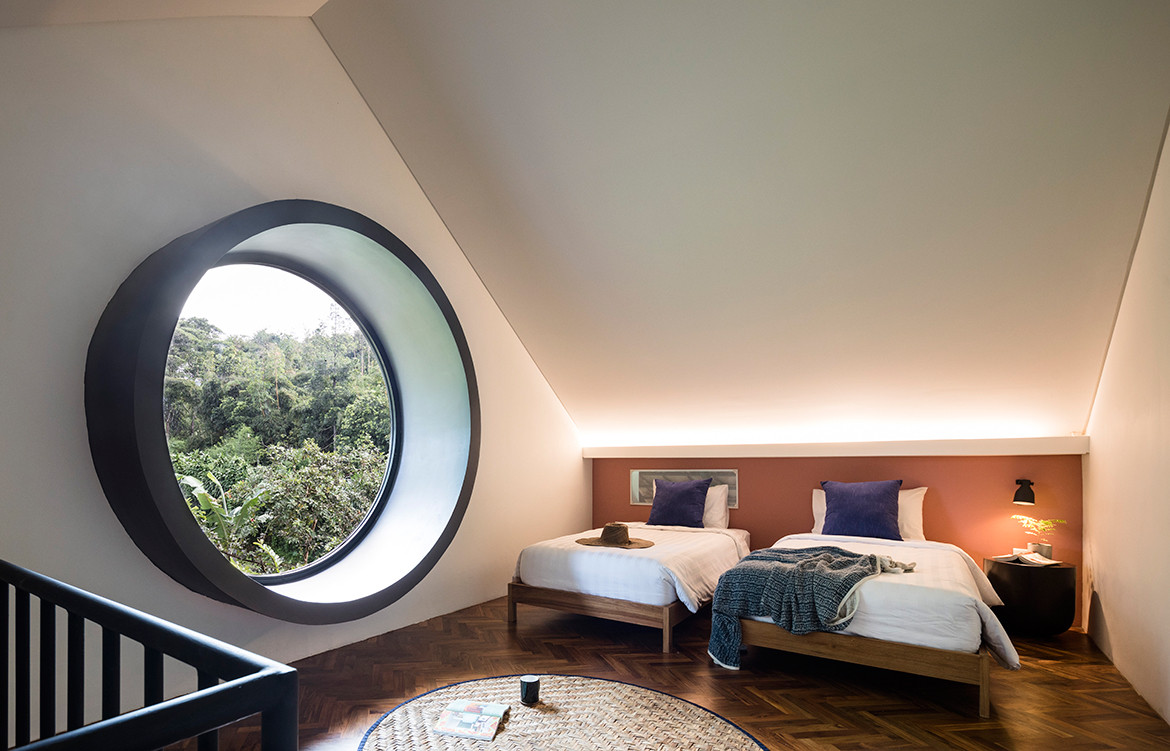

Sukasantai Farmstay is an ecological retreat in Indonesia designed by GOY Architects


Sukasantai Farmstay is an ecological retreat in Indonesia designed by GOY Architects


The post Return To Roots At Sukasantai Farmstay appeared first on Habitusliving.com.

Return To Roots At Sukasantai Farmstay

Sukasantai Farmstay is an ecological retreat in Indonesia designed by GOY Architects

There exists an ever-growing body of literature that promotes the benefits of human interaction with nature. In Japan, forest bathing is a time-honoured exercise that is believed to ward off illnesses. In Singapore, the practice of biophilia in design (a term popularised by Edward O. Wilson in 1984) and of building therapeutic gardens and community farms has become widespread.

But the need to get away from the city to green spaces that promote wellbeing is an ancient impulse. They range from fanciful imperial retreats and country cottages to the humbler, present-day holiday campsites for families.

With climate change and frantic urban living the reality for most people today, there is a rise of a different kind of getaway that is not themed after luxurious resorts for the well-heeled indulged within fenced premises.

Rather, they advocate a closed-loop, ecological lifestyle and while offering a restorative holiday, surreptitiously question the toll that relentless productivity, reliance on genetic engineering, and increasing energy consumption inflict on the land and food we consume.

They take the form of farm stays and therapeutic retreats with digital detoxes thrown in, where air-conditioned comfort is not a given, but guests can rough it out and go back to basics, in tune with the rhythms of the day and task of the hour.

Their compounds are not necessarily gated and guests can interact with the local community and participate in planting and harvesting activities alongside with them. One such retreat is the Sukasantai Farmstay, a family-owned and run organic vegetable farmstay located on the highlands of Gunung Gede, Sukabumi, Indonesia.


“With the growing disconnection of people not knowing how and where food comes from, the farm hopes to reconnect this disjuncture.”


Sukasantai Farmstay is an ecological retreat in Indonesia designed by GOY Architects

The 6-hectare farm had its beginnings as a hobby project to supply the family with vegetables free of synthetic fertilizers and pesticides, but soon grew into a small home-delivery enterprise, selling organic vegetables directly to consumers in Jakarta using recycled crates. The idea then evolved into building a farm stay as a means for city dwellers to be reacquainted with nature and the origins of their food supply.

“With the growing disconnection of people not knowing how and where food comes from, the farm hopes to reconnect this disjuncture,” said Stephanie Moriyama, owner of Sukasantai Farmstay. The original family bungalow is preserved on-site and an independent, larger wing of accommodation was added on a sloping terrain next to it. Stephanie, a trained landscape architect, engaged an architect she had collaborated with on a previous project in Singapore to design the new wing on the farm. This became one of the impetus for architect Zhenru Goy to launch her practice in 2015.


“The architecture was crafted around the existing mature trees such that guests can enjoy [them] from the interior.”


Sukasantai Farmstay is an ecological retreat in Indonesia designed by GOY Architects

At Sukasantai, both Stephanie and Zhenru employed the simplest and most restrained of approach to consolidate the programme and layout of site. They eschewed the dispersed chalet layout so that guests are compelled to socialise and room service can be simplified.

All 12 bedrooms the farm offers are lined across a linear block stretching some 75 metres over a terrain that dips gently down. They open out to a view of the bamboo forest valley while the bathrooms effectively become a barrier screening them from the noisier public road. The mid-point of this wing is bisected by a dining hall that spatially divides two implied courtyards of the wing.

“Our design was also informed by the existing mature trees on-site,” says Zhenru. “A 10-metre-tall ficus elastica tree is our main feature for the dining space. We framed the tree by terminating the gable end wall with glass – showcasing the robust trunks and verdant leaves. The architecture was crafted around the existing mature trees such that guests can enjoy [them] from the interior.”


The development is a showcase of building sustainably with the land, respecting its topography and trees.


Sukasantai Farmstay is an ecological retreat in Indonesia designed by GOY Architects

The dining hall is anchored by an open kitchen with self-serving dining concept, and guests are encouraged to participate in authentic “farm-to-fork” experiences such as vegetable harvesting, fruit picking, fishing, bamboo shoot hunting, sourdough bread workshops, tempeh making and other means of working for their meals. The rich volcanic soil here is host to over a hundred varieties of vegetable, medicinal plants, tropical fruits such as guavas, soursop, jackfruit, durian, and up to ten varieties of local bananas. They give the farm biodiversity that a purely commercial orchard would have lacked.

Sukasantai Farmstay is an ecological retreat in Indonesia designed by GOY Architects

With its all-year-round cool and wet montane climate, the high-ceilinged rooms are not air-conditioned, nor are the major roofs padded with insulation. “We had to convince the engineer to try his utmost to design the roof structure to be free of any bracing struts,” Zhenru explains, “because we wanted it to be as simple as possible.” Rainwater falls freely over the eaves onto gravel-filled swales and drains downwards to a fishpond, then a reservoir where it is used for irrigation by gravity flow alone. The development is a showcase of building sustainably with the land, respecting its topography and trees, working with locally available materials and workers to build and operate with.

The understated vernacular design allowed the natural beauty of the site with its volcanic mountain as a backdrop to shine through without intrusive embellishments. There are no unnatural trappings of Wi-Fi, swimming pools, tennis courts or spas as the social enterprise agenda takes spatial precedence over the built environment. The effect is therefore not unlike a naïve painting of an extended habitat by a child; a staggered pitched roof shading open rooms amidst verdant palms. At night, lighting is kept discreet so that on a clear night, there will be no light pollution to mar the view of the stars, and that is about as unimposing and light-footed as one can get.

Goy Architects
goyarchitects.com

We think you might also like Aman Kyoto by Kerry Hill Architects
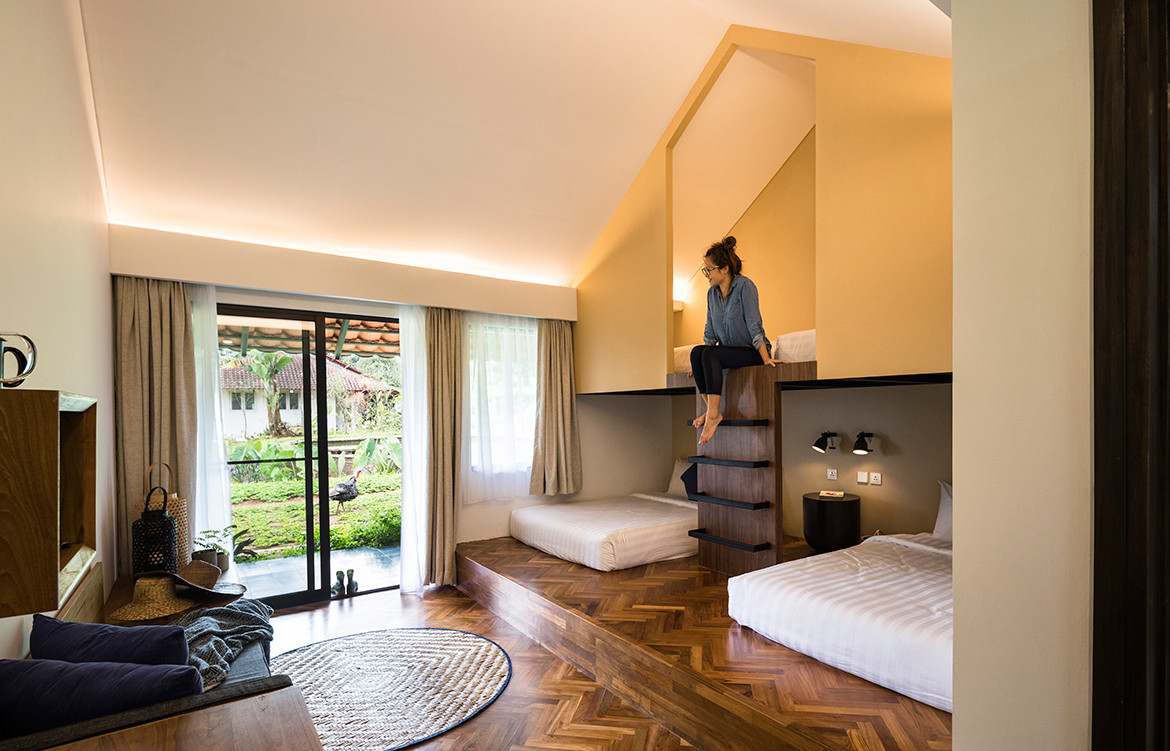
Sukasantai Farmstay is an ecological retreat in Indonesia designed by GOY Architects

Sukasantai Farmstay is an ecological retreat in Indonesia designed by GOY Architects

The post Return To Roots At Sukasantai Farmstay appeared first on Habitusliving.com.

суббота, 15 февраля 2020 г.

Leeuwarden: exploring the unmissable Dutch north

Let’s be clear: you need to visit Leeuwarden. Amsterdam may be the capital of the Netherlands, Utrecht might be the coolest, and Den Haag might be the second-largest city, but guys, you’re missing out if you think the north doesn’t have anything to offer.


I guarantee the closest you’ve ever probably come to the north of the Netherlands is Giethoorn which becomes so popular with tourists during the summer that it’s almost impossible to wander around those mini canals without at least thirty people coming into dangerous proximity of your personal space every time you turn a corner.


Look, the other cities are great and all, but there are plenty of places up north that will tickle your fancy.


I’m here to fly the flag for Friesland. It gets a bad rap from a lot of people, for various reasons, which we’ll go into another time, but if you think we’ve got nothing to offer up here, you’re highly mistaken.


Leading with Leeuwarden


Leeuwarden is Friesland’s capital. Maybe that name rings a bell? It should, because it was the Cultural Capital of Europe a mere two years ago, bringing a wave of incredible acts and festivals to the city throughout the year.


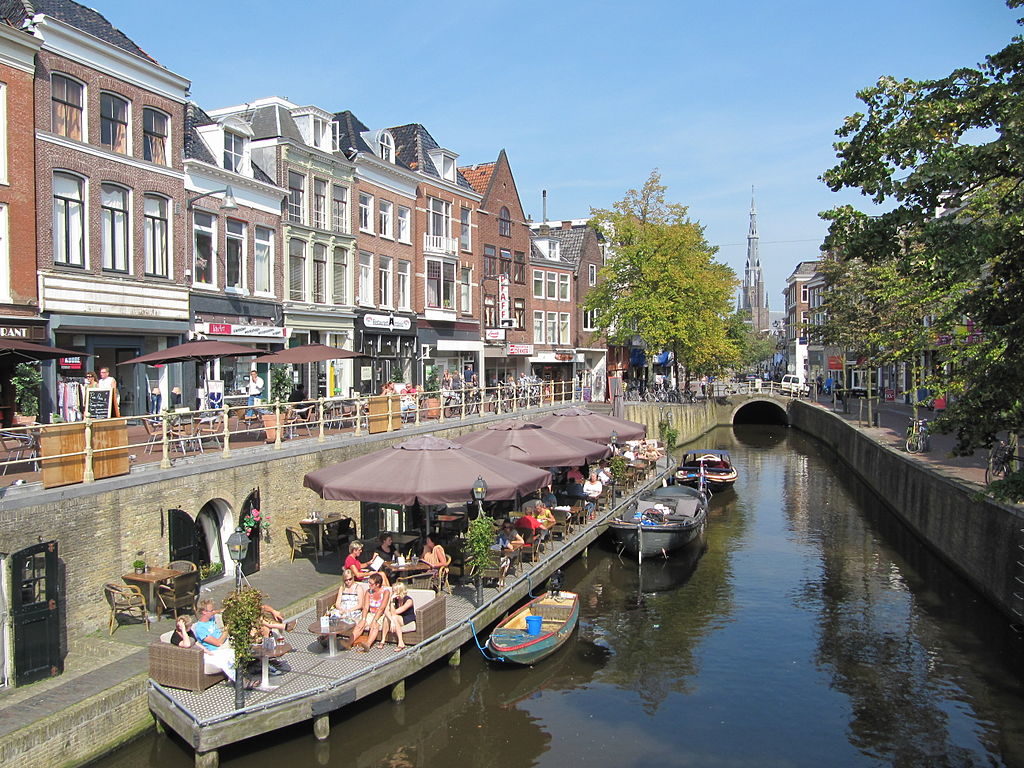
Leeuwarden is well worth a visit. It offers all the charm of larger-scale cities in a smaller, more intimate setting. Its cobbled side streets have gritty stories to tell, it’s overflowing with culture and street art, and its main shopping street sits canal side, along with stacks of cafes, bars and restaurants which offer you the perfect spot for some riveting people watching.


buildings-and-restaurants-along-a-canal-in-leeuwarden
Summer day in Leeuwarden? What a dream. Image: M.M.Minderhoud/Wikimedia

How to get to Leeuwarden


If that’s tickled your fancy, you’ll need to know how to make it to the north in one piece.


Luckily, it’s super easy. From Amsterdam, you’re a mere two-hour train journey away from Leeuwarden’s centre. Once you’ve made the journey, you can hop straight off the train and be in the hustle and bustle within five minutes. From other Dutch cities it’s just as simple.


Of course, taxi services and buses are widely available too, but these could end up making your journey a heck of a lot longer, which means less time to enjoy Leeuwarden!


What can I do there?


Leeuwarden is brimming with fantastic museums, shops, bars and unique experiences that you can’t turn down. You can easily spend an entire day getting lost down the side streets and stumbling upon new areas that just demand to be explored.


Let’s look at four of the best things you can do if you want a quick peak into Leeuwarden’s history and culture:


Fries Museum


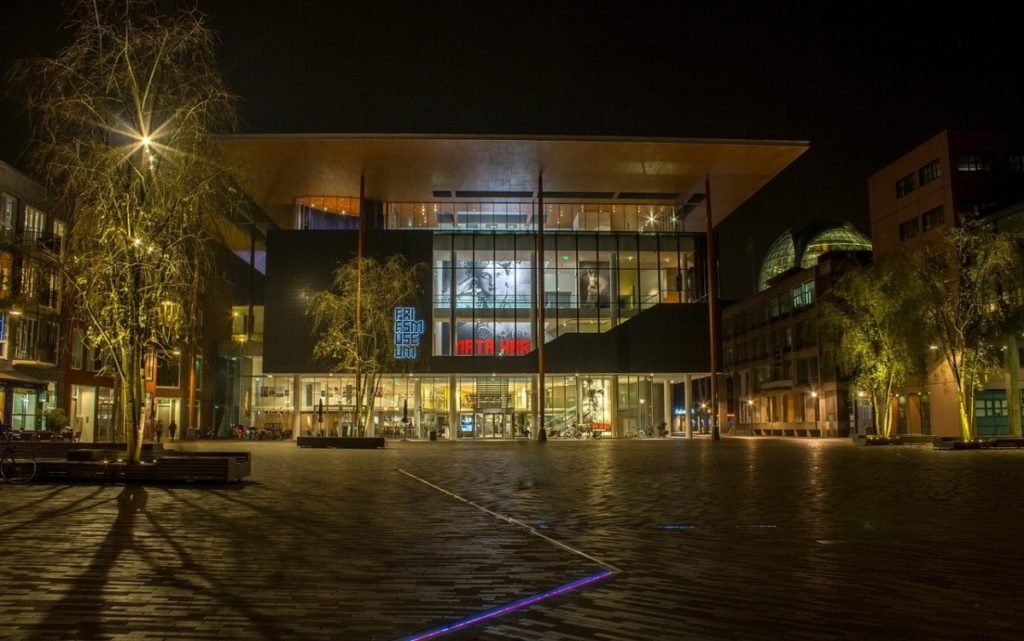
friesmuseum-leeuwarden-at-night
Fries as in ‘frees’ not ‘fries’ – sadly not about hot chips, but still a great place to visit in Leeuwarden. Image: Larissa Bakker/Pixabay

If you’re looking to dive into the story of Friesland, you need to head to the Fries Museum, which sits on Wilhelminaplein, just three minutes from the train station.


Although the museum itself is almost 200 years old, it sits in a newly built building, and it’s full of amazing exhibitions that will tell you all you need to know about the north of the Netherlands from way back in the 17th Century up to now. You can grab yourself a guided tour (in English, too!) or spend some time taking it all in at your own pace.


It’s not all just about Friesland though. The Fries Museum hosts other exhibits throughout the year, and there’s plenty for kids to see and do – it’s incredibly interactive and can keep you busy for a few hours, especially if the weather isn’t on your side.


De Blokhuispoort


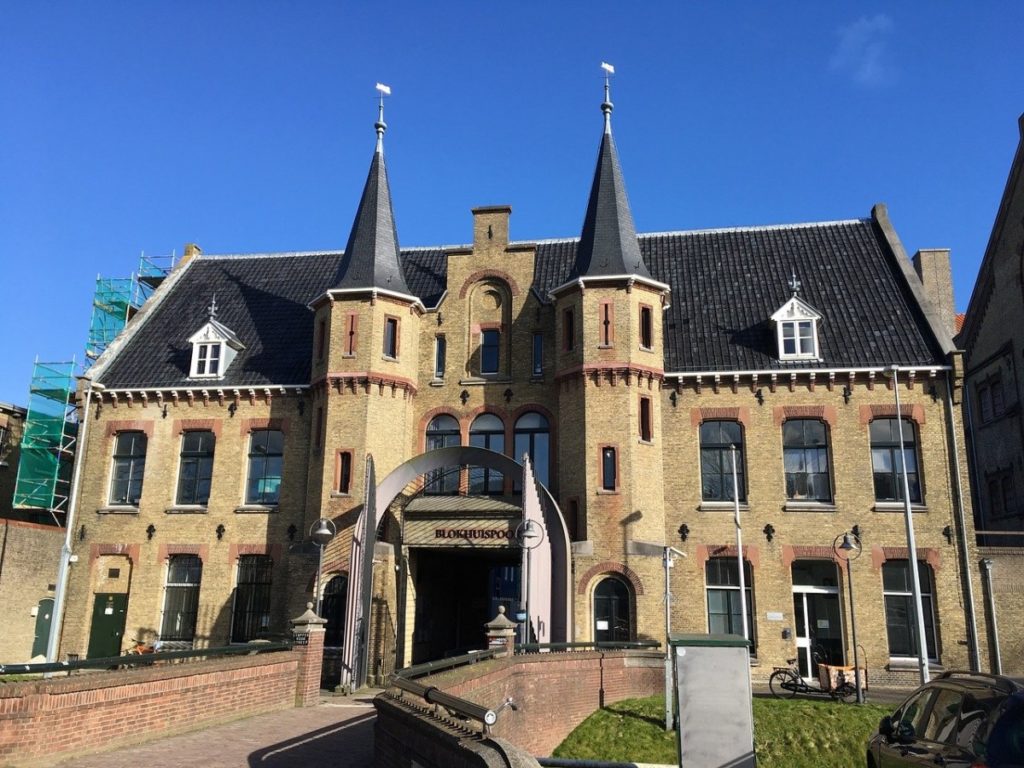
view-of-blokhuispoort-exterior-in-leeuwarden
A visit to Leeuwarden isn’t complete without checking out De Blokhuispoort. Image: Frits de Jong/Pixabay

Another incredible place to visit is De Blokhuispoort, an old prison building which is now home to entrepreneurs, shops, restaurants and even a library.


Wander through the prison gates and catch a glimpse of the surroundings for Frisian criminals back in the 18th and 19th centuries. It’s open seven days a week and you can even take a guided tour of the old prison each day at 2:00 pm or 4:00 pm, so you can find out all you need to know about prison life back in the olden days.


If you fancy seeing what life was like for criminals who had to spend their nights locked up in a cell, you can even stay overnight in Hostel Alibi. This fantastic hostel offers shared or private dorm rooms for single or group travellers and is an amazing experience that you don’t see every day.


Not sure you’re quite ready to spend the night locked in the same room as former criminals (what if ghosts do exist!)? Maybe you’d like to eat your lunch at Proefverlof, where you can dine on locally sourced food within the (revamped) prison walls, or out on the terrace and right on the waterfront. It’s a gorgeous spot to unwind for a moment and take in the laid back attitude of the city.


Fancy a bird’s eye view of the city, so you can really capture its beauty? For those of you who aren’t afraid of heights, there are two ways you can do this in Leeuwarden.


Take in the views at Achmeatoren…


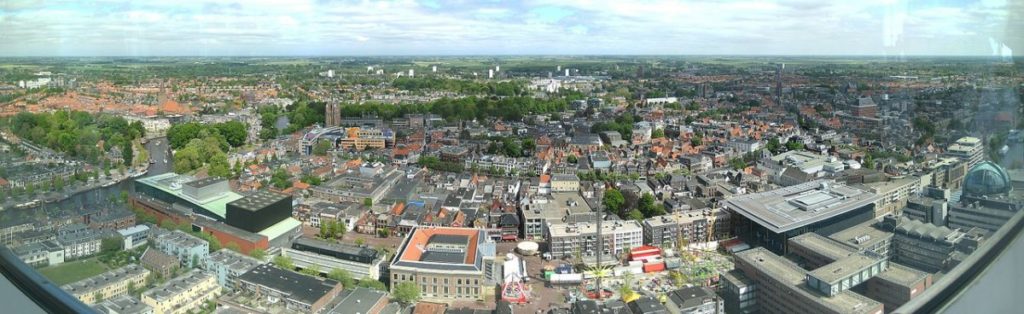
view-from-Achmeatoren-tower-in-Leeuwarden
Whew! You can see all of Leeuwarden from here! Image: Wutsje/Wikimedia Commons

For the highest highs and the most panoramic views of Leeuwarden, head to the Achmeatoren. But beware: this tower isn’t open often. You have to check their website for the open days, and they’re few and far between. Lucky you if you land an open date though, because the view from 115 metres up is stunning, and on a clear day you can even see the Wadden Islands.


…or, at Oldehove


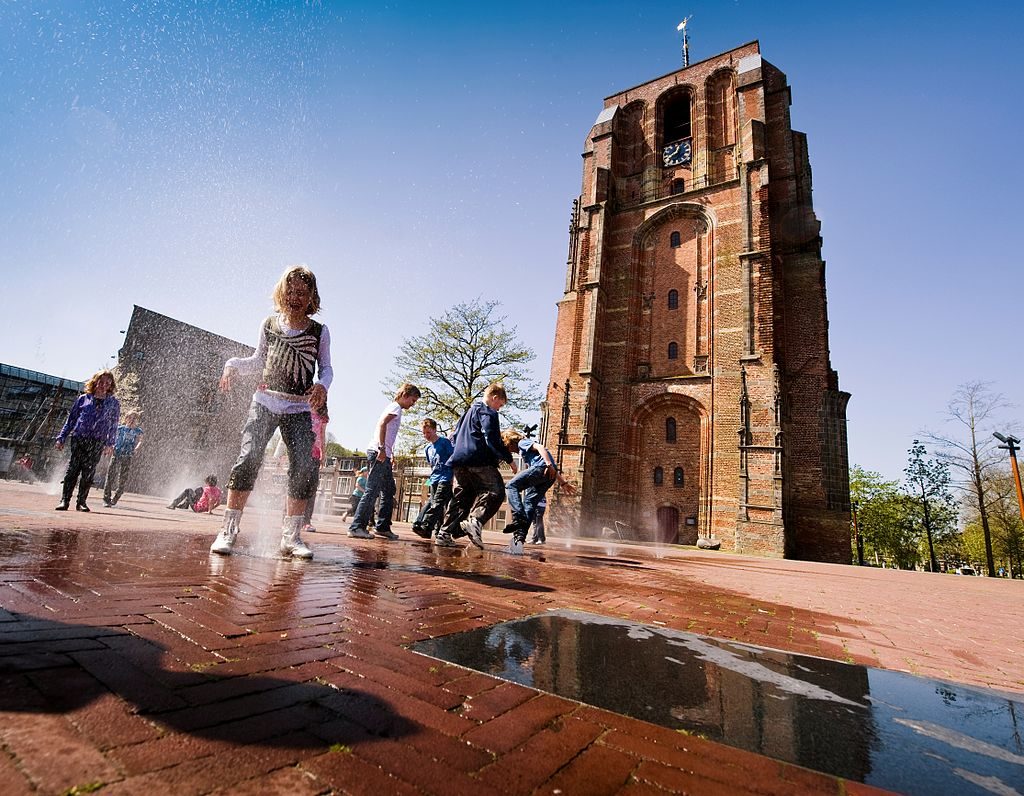
children-play-in-water-with-oldehove-leeuwarden-in-the-distance
Grand and old, the Oldehove is the Pearl of Leeuwarden. Image: Anniek93/Wikimedia

So there’s a second option if you just manage to miss the opening dates for the Achmeatoren. Head to the Oldehove, known as the Pearl of Leeuwarden. It’s a wonky tower that watches over the city and was built simply because the people of Leeuwarden wanted a tower higher than the Martinitoren in Groningen.


Spoiler alert, the Oldehove is not bigger than the Martinitoren. The unmissable leaning power of this tower meant that all building work had to be ceased in 1532 (just three years after building work actually began), for fear of it toppling over altogether.


From its opening in March, the Oldehove is open daily, but only in the afternoons. You can climb to its peak of 39 metres (tiny in comparison to the Achmeatoren!) and gaze over Leeuwarden in all its glory. There’s even a glass panel for those daredevils amongst you who wish to stare death right in the face.[td_smart_list_end]


Once you’ve seen these four incredible sites, you’re more or less inaugurated into Leeuwarden and can spend the rest of the day people watching, canal-side whilst you sip a beer and snack on a portion of bitterballen.


Whilst that’s by no means everything there is to see and do in this charming city, these starter activities are enough to get you into the swing of things. Wander the side roads, see where they take you. I promise there’s something great to see or do around every corner.


Have you had a chance to visit Leeuwarden? What did you think? Let us know in the comments below!


Feature Image: M.M.Minderhoud/Wikimedia


The post Leeuwarden: exploring the unmissable Dutch north appeared first on DutchReview.

пятница, 14 февраля 2020 г.

Leeuwarden: exploring the unmissable Dutch north

Let’s be clear: you need to visit Leeuwarden. Amsterdam may be the capital of the Netherlands, Utrecht might be the coolest, and Den Haag might be the second-largest city, but guys, you’re missing out if you think the north doesn’t have anything to offer.

I guarantee the closest you’ve ever probably come to the north of the Netherlands is Giethoorn which becomes so popular with tourists during the summer that it’s almost impossible to wander around those mini canals without at least thirty people coming into dangerous proximity of your personal space every time you turn a corner.

Look, the other cities are great and all, but there are plenty of places up north that will tickle your fancy.

I’m here to fly the flag for Friesland. It gets a bad rap from a lot of people, for various reasons, which we’ll go into another time, but if you think we’ve got nothing to offer up here, you’re highly mistaken.

Leading with Leeuwarden

Leeuwarden is Friesland’s capital. Maybe that name rings a bell? It should, because it was the Cultural Capital of Europe a mere two years ago, bringing a wave of incredible acts and festivals to the city throughout the year.

Leeuwarden is well worth a visit. It offers all the charm of larger-scale cities in a smaller, more intimate setting. Its cobbled side streets have gritty stories to tell, it’s overflowing with culture and street art, and its main shopping street sits canal side, along with stacks of cafes, bars and restaurants which offer you the perfect spot for some riveting people watching.

buildings-and-restaurants-along-a-canal-in-leeuwarden
Summer day in Leeuwarden? What a dream. Image: M.M.Minderhoud/Wikimedia

How to get to Leeuwarden

If that’s tickled your fancy, you’ll need to know how to make it to the north in one piece.

Luckily, it’s super easy. From Amsterdam, you’re a mere two-hour train journey away from Leeuwarden’s centre. Once you’ve made the journey, you can hop straight off the train and be in the hustle and bustle within five minutes. From other Dutch cities it’s just as simple.

Of course, taxi services and buses are widely available too, but these could end up making your journey a heck of a lot longer, which means less time to enjoy Leeuwarden!

What can I do there?

Leeuwarden is brimming with fantastic museums, shops, bars and unique experiences that you can’t turn down. You can easily spend an entire day getting lost down the side streets and stumbling upon new areas that just demand to be explored.

Let’s look at four of the best things you can do if you want a quick peak into Leeuwarden’s history and culture:

Fries Museum

friesmuseum-leeuwarden-at-night
Fries as in ‘frees’ not ‘fries’ – sadly not about hot chips, but still a great place to visit in Leeuwarden. Image: Larissa Bakker/Pixabay

If you’re looking to dive into the story of Friesland, you need to head to the Fries Museum, which sits on Wilhelminaplein, just three minutes from the train station.

Although the museum itself is almost 200 years old, it sits in a newly built building, and it’s full of amazing exhibitions that will tell you all you need to know about the north of the Netherlands from way back in the 17th Century up to now. You can grab yourself a guided tour (in English, too!) or spend some time taking it all in at your own pace.

It’s not all just about Friesland though. The Fries Museum hosts other exhibits throughout the year, and there’s plenty for kids to see and do – it’s incredibly interactive and can keep you busy for a few hours, especially if the weather isn’t on your side.

De Blokhuispoort

view-of-blokhuispoort-exterior-in-leeuwarden
A visit to Leeuwarden isn’t complete without checking out De Blokhuispoort. Image: Frits de Jong/Pixabay

Another incredible place to visit is De Blokhuispoort, an old prison building which is now home to entrepreneurs, shops, restaurants and even a library.

Wander through the prison gates and catch a glimpse of the surroundings for Frisian criminals back in the 18th and 19th centuries. It’s open seven days a week and you can even take a guided tour of the old prison each day at 2:00 pm or 4:00 pm, so you can find out all you need to know about prison life back in the olden days.

If you fancy seeing what life was like for criminals who had to spend their nights locked up in a cell, you can even stay overnight in Hostel Alibi. This fantastic hostel offers shared or private dorm rooms for single or group travellers and is an amazing experience that you don’t see every day.

Not sure you’re quite ready to spend the night locked in the same room as former criminals (what if ghosts do exist!)? Maybe you’d like to eat your lunch at Proefverlof, where you can dine on locally sourced food within the (revamped) prison walls, or out on the terrace and right on the waterfront. It’s a gorgeous spot to unwind for a moment and take in the laid back attitude of the city.

Fancy a bird’s eye view of the city, so you can really capture its beauty? For those of you who aren’t afraid of heights, there are two ways you can do this in Leeuwarden.

Take in the views at Achmeatoren…

view-from-Achmeatoren-tower-in-Leeuwarden
Whew! You can see all of Leeuwarden from here! Image: Wutsje/Wikimedia Commons

For the highest highs and the most panoramic views of Leeuwarden, head to the Achmeatoren. But beware: this tower isn’t open often. You have to check their website for the open days, and they’re few and far between. Lucky you if you land an open date though, because the view from 115 metres up is stunning, and on a clear day you can even see the Wadden Islands.

…or, at Oldehove

children-play-in-water-with-oldehove-leeuwarden-in-the-distance
Grand and old, the Oldehove is the Pearl of Leeuwarden. Image: Anniek93/Wikimedia

So there’s a second option if you just manage to miss the opening dates for the Achmeatoren. Head to the Oldehove, known as the Pearl of Leeuwarden. It’s a wonky tower that watches over the city and was built simply because the people of Leeuwarden wanted a tower higher than the Martinitoren in Groningen.

Spoiler alert, the Oldehove is not bigger than the Martinitoren. The unmissable leaning power of this tower meant that all building work had to be ceased in 1532 (just three years after building work actually began), for fear of it toppling over altogether.

From its opening in March, the Oldehove is open daily, but only in the afternoons. You can climb to its peak of 39 metres (tiny in comparison to the Achmeatoren!) and gaze over Leeuwarden in all its glory. There’s even a glass panel for those daredevils amongst you who wish to stare death right in the face.[td_smart_list_end]

Once you’ve seen these four incredible sites, you’re more or less inaugurated into Leeuwarden and can spend the rest of the day people watching, canal-side whilst you sip a beer and snack on a portion of bitterballen.

Whilst that’s by no means everything there is to see and do in this charming city, these starter activities are enough to get you into the swing of things. Wander the side roads, see where they take you. I promise there’s something great to see or do around every corner.

Have you had a chance to visit Leeuwarden? What did you think? Let us know in the comments below!

Feature Image: M.M.Minderhoud/Wikimedia

The post Leeuwarden: exploring the unmissable Dutch north appeared first on DutchReview.

вторник, 11 февраля 2020 г.

A New Lease On Life For Iconic Geelong Arts Centre

Hassell Studio's rejuvenation of Geelong Arts Centre

For over 35 years, the Geelong Arts Centre has earned its illustrious reputation as the region’s cultural icon. As the only state-owned arts centre in Victoria outside of Melbourne CBD, it has been a long-lasting symbol of the city’s thriving creative and artistic community.


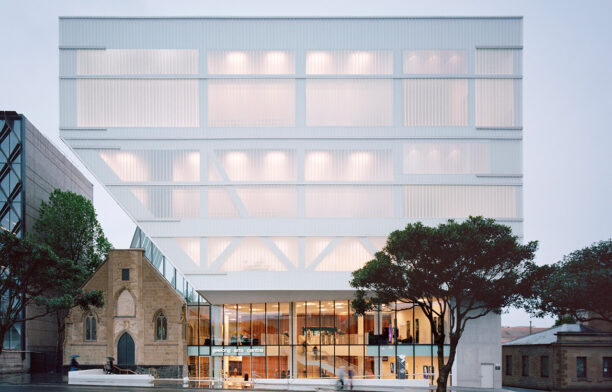
Award-winning multi-disciplinary design studio, Hassell, saw an inimitable opportunity for the UNESCO Creative City – a well-deserved title for Geelong recieved in 2017. Determined to rejuvenate the well-loved community space, the new Geelong Arts Centre redefines its growing reputation as a revolutionary and enriching artistic hub into the new decade.


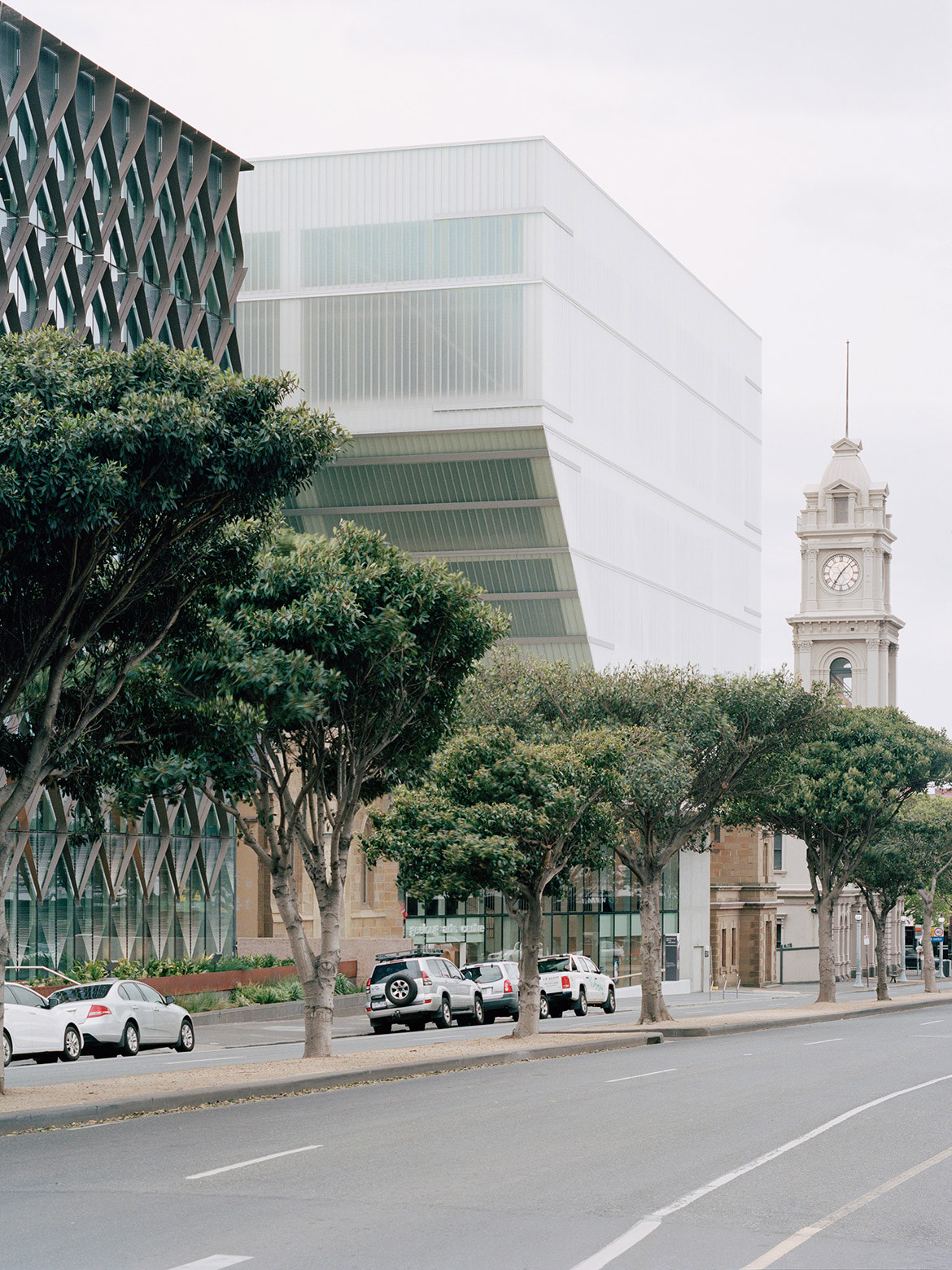
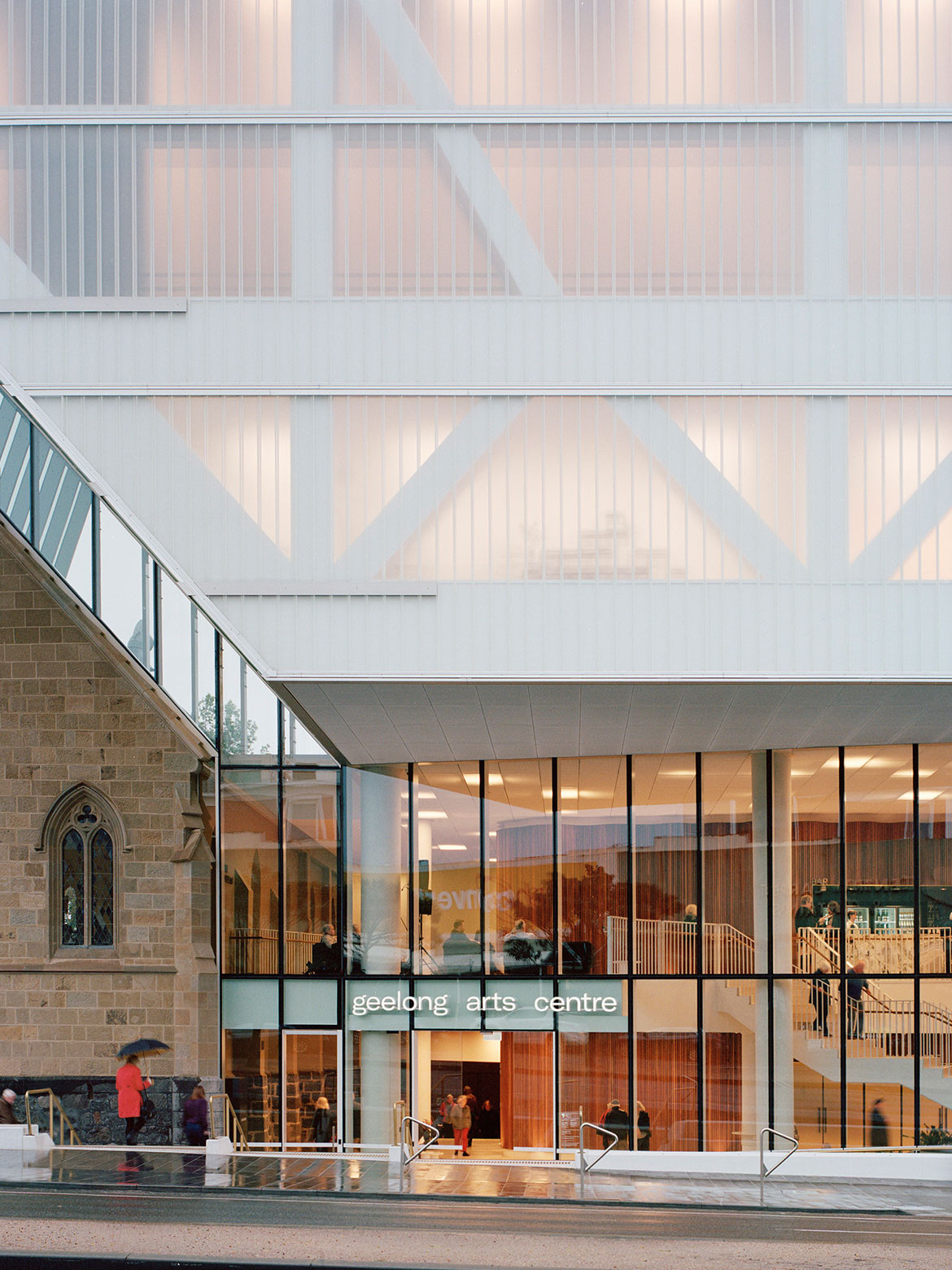
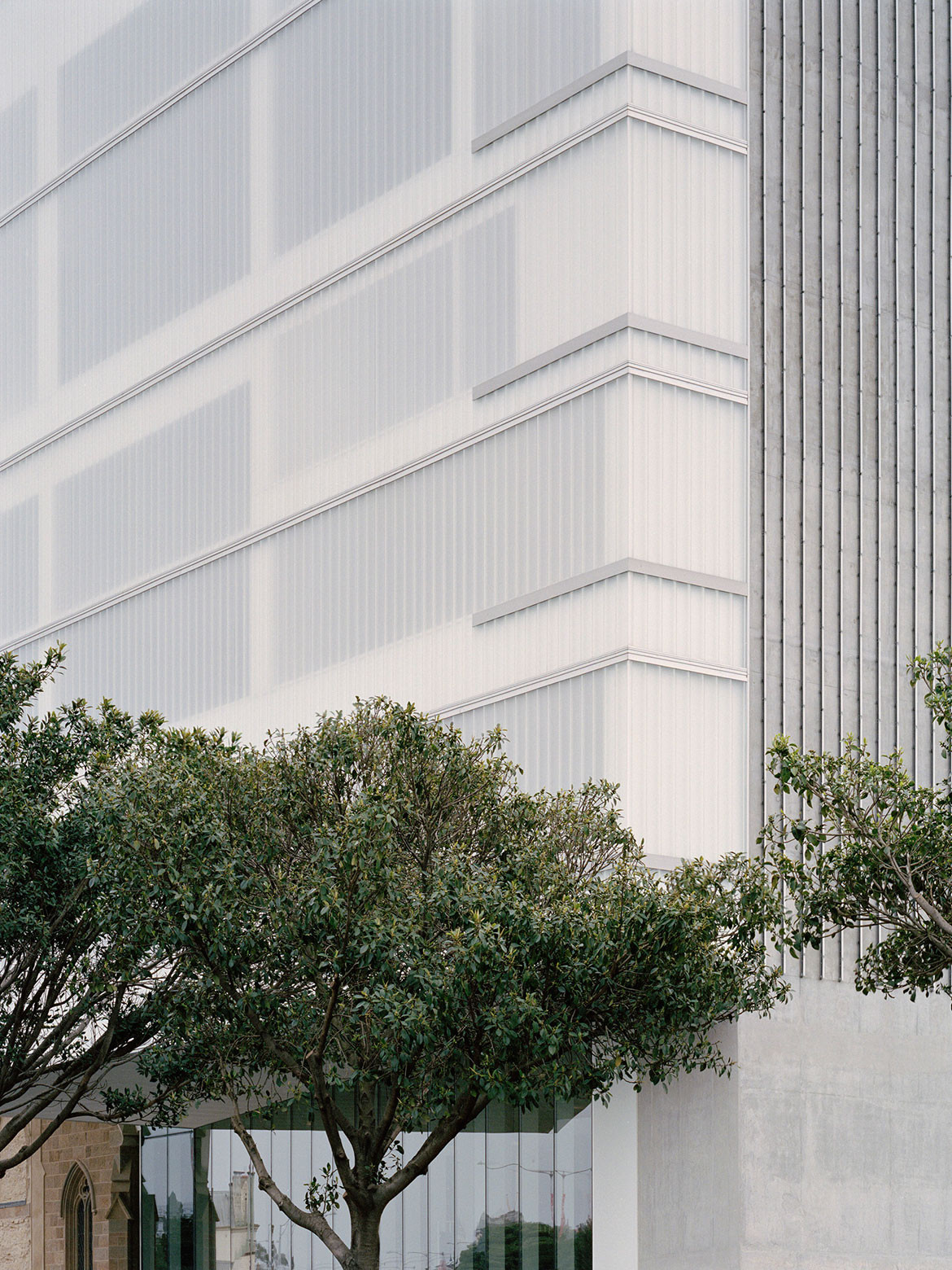
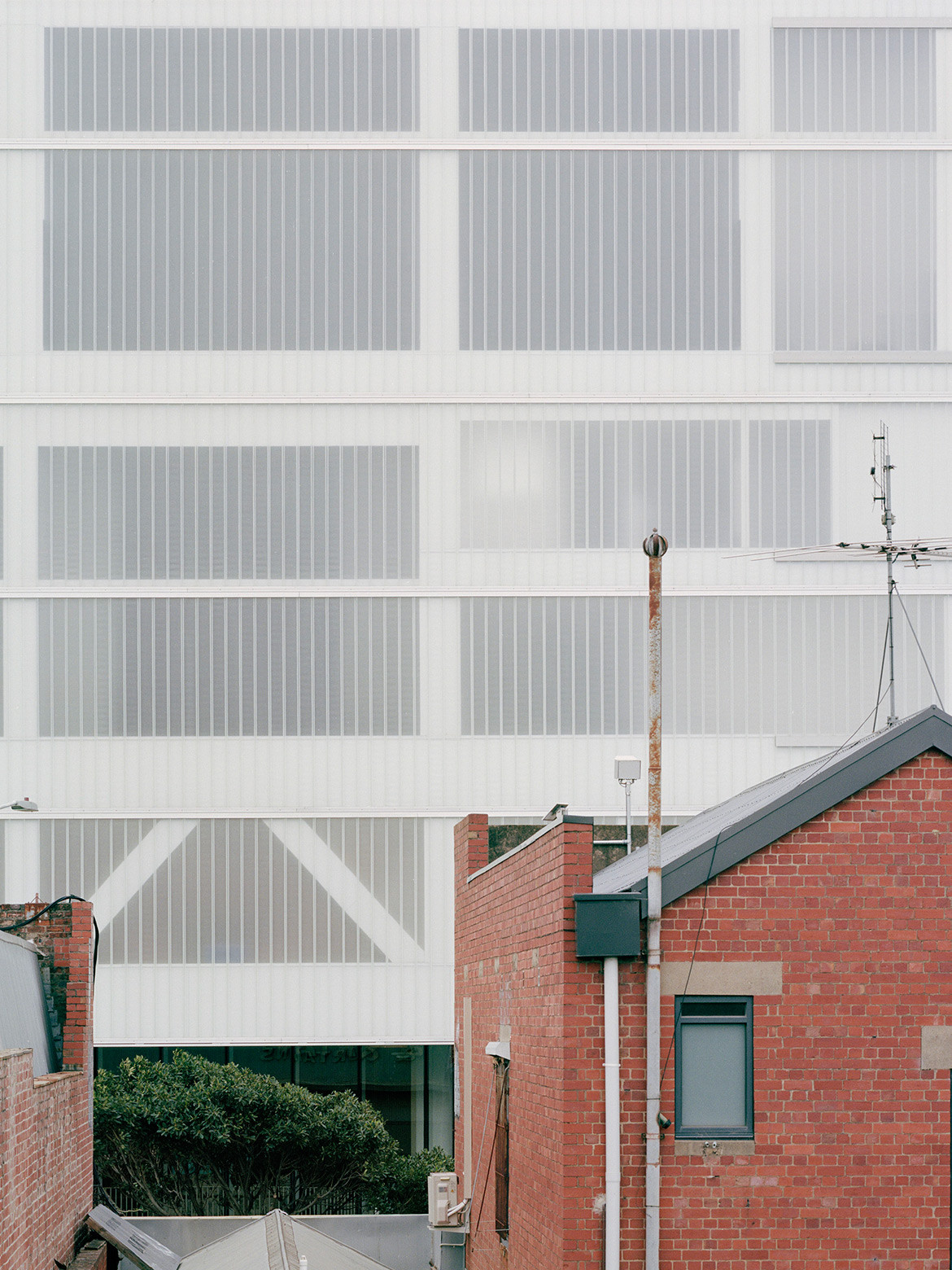
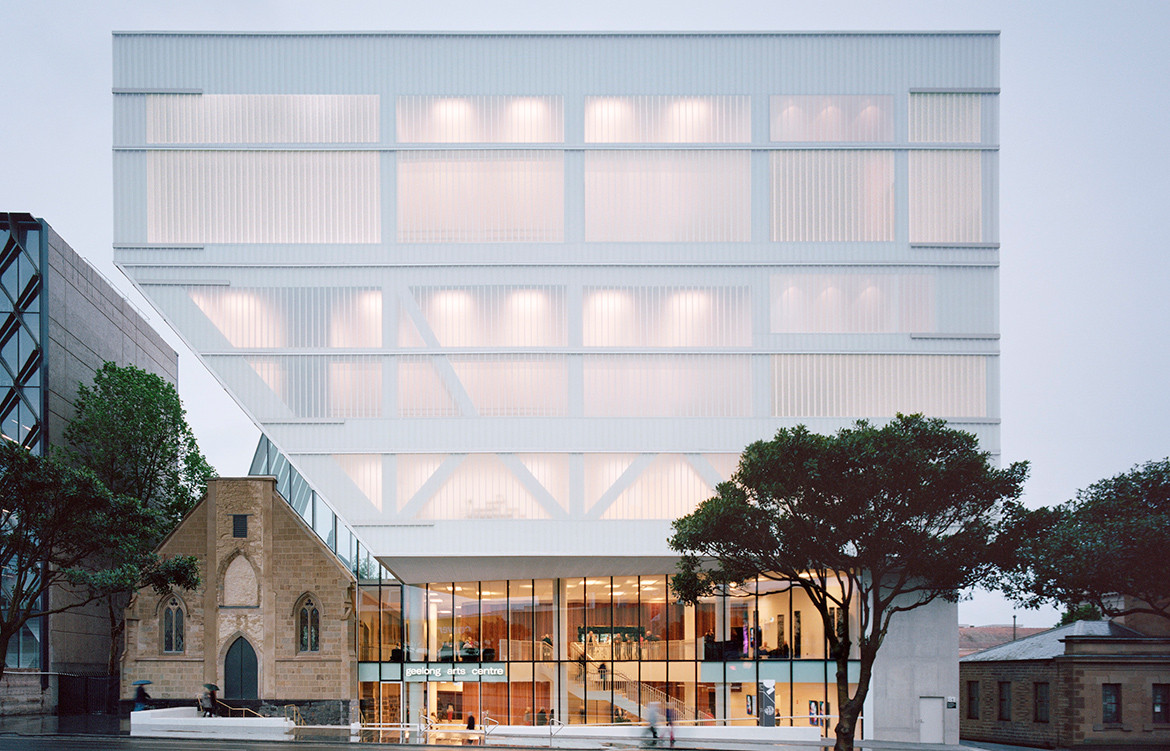
Hassell’s $38.5 million development put the community at its core. Opened to the public at the end of last year, an enticing translucent form crowns over a heritage Church façade. Clean, minimal and elegant – this contemporary design reconnects the old and the new in a confident and vibrant new identity. Colossal in size, the Geelong Arts Centre establishes a strong civic presence as a landmark that wants to be seen across the regional city.


“Geelong Arts Centre will not only be a reinvigorated destination, it will also help service the needs of the growing creative and cultural community,” states Hassell principal Mark Loughnan.


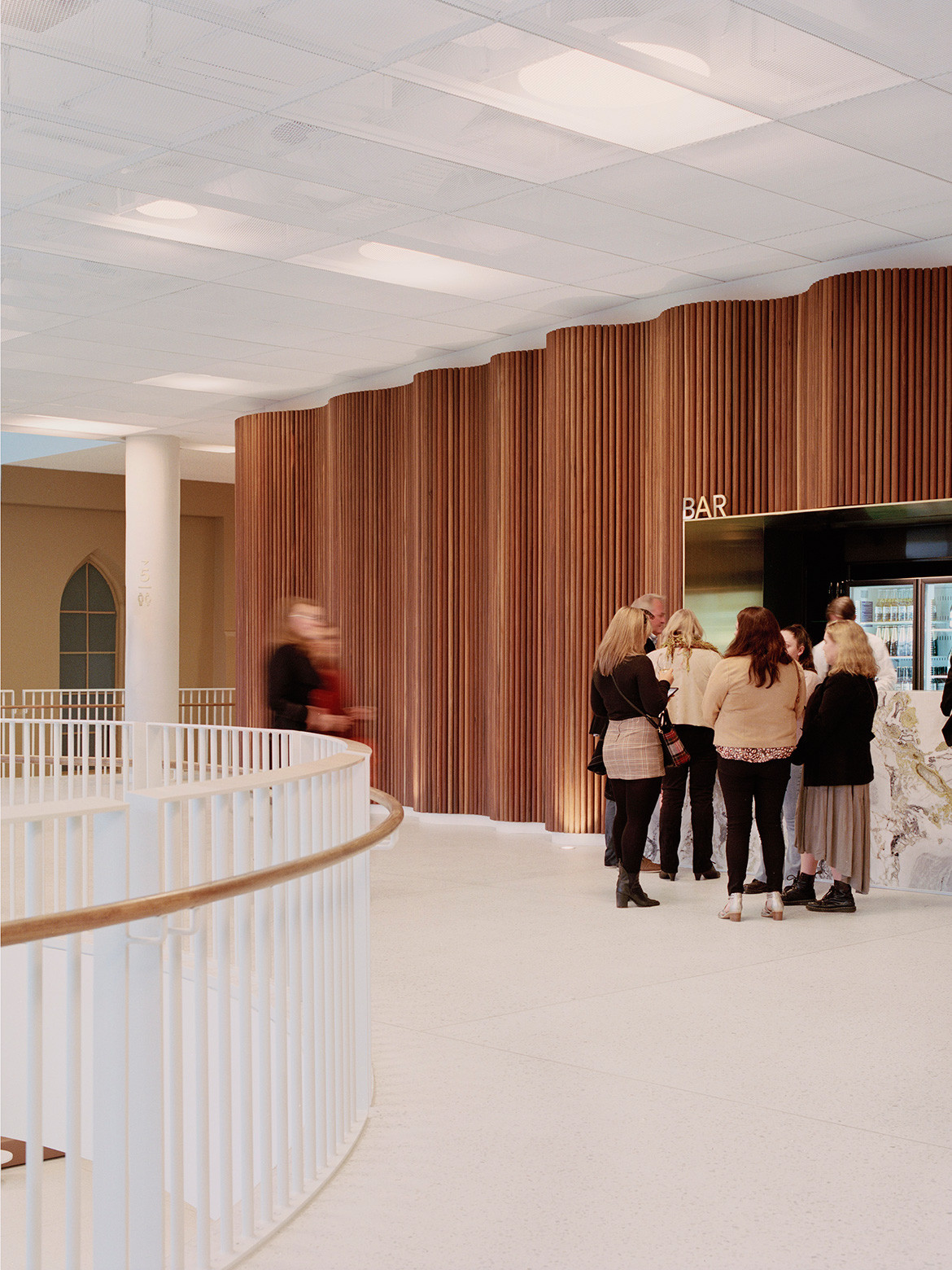
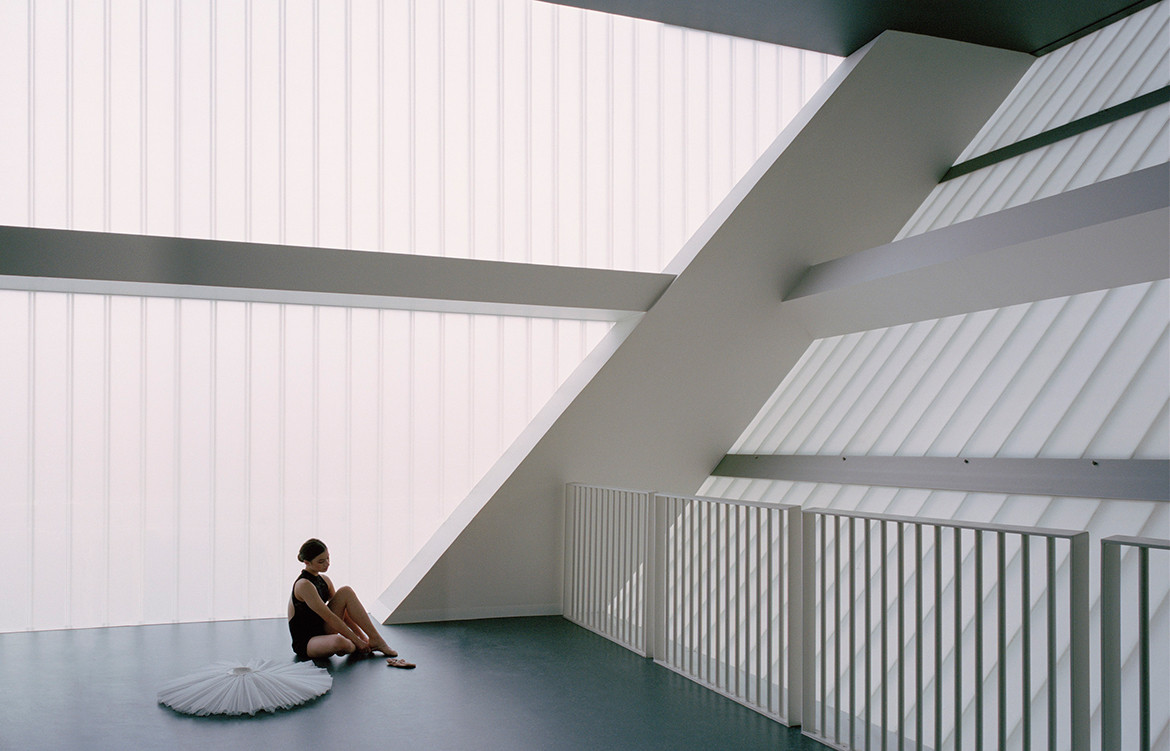
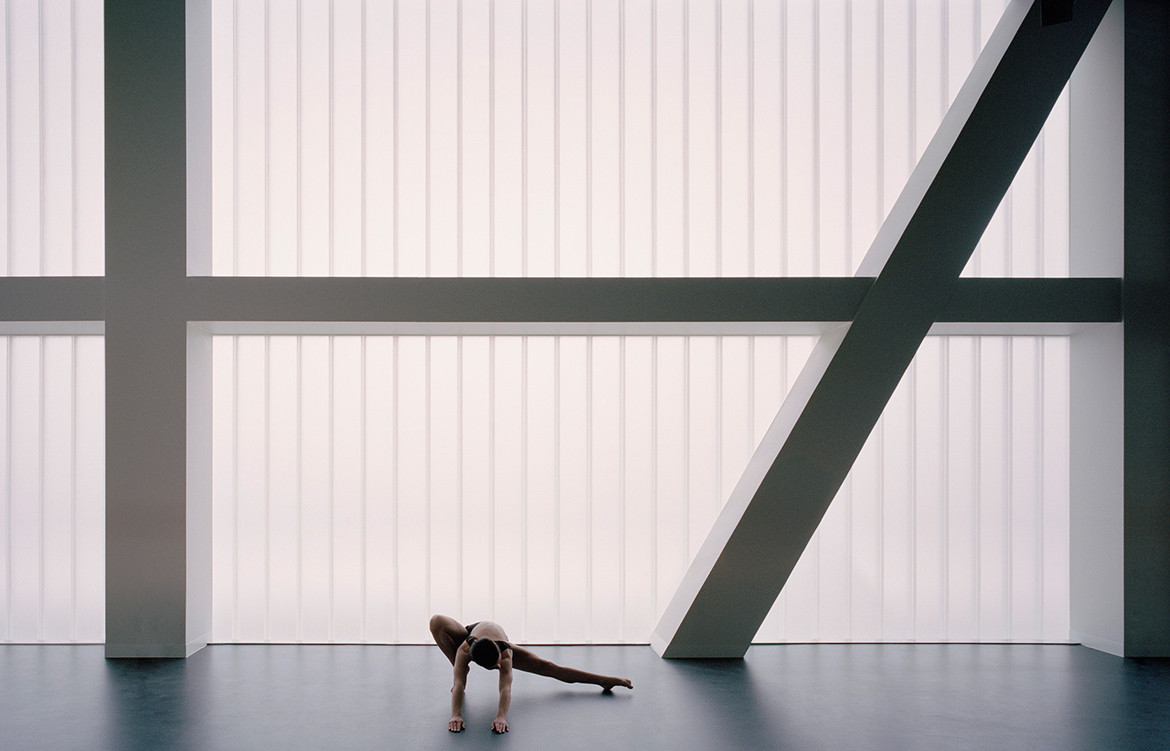
The new structure provides a unique visitor experience of the performing arts through a modernised range of communal and creative spaces. Inside the revitalised soul of the arts hub, the design carves out two new levels of foyer, a dynamic bar area, state-of-the-art rehearsal studios and dynamic co-working spaces for collaborative work across the art community.


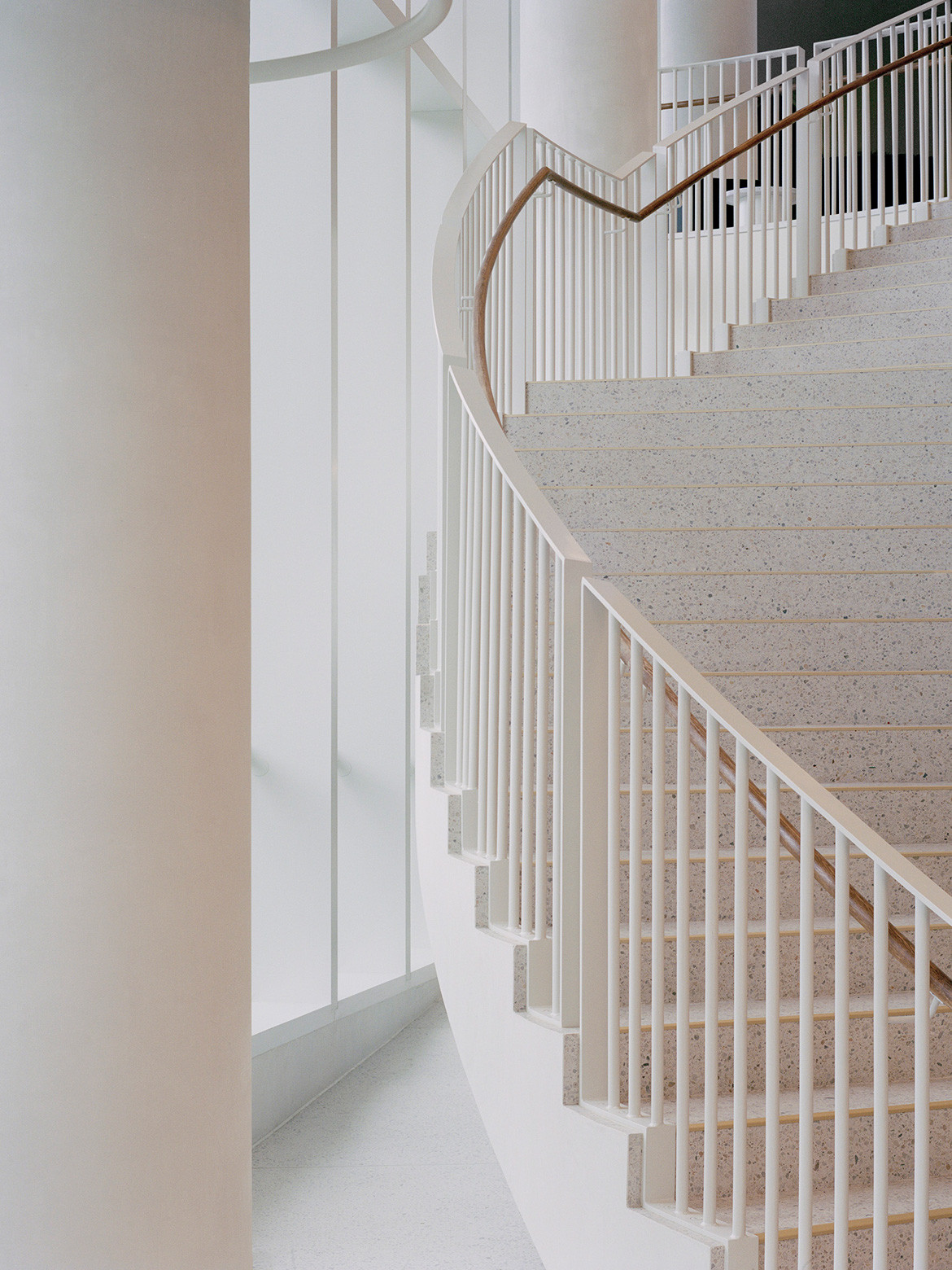
A striking, sculptural staircase connects the renovated ground floor and balcony foyers. A space like no other, this zone services The Playhouse theatre, studios and future Church Theatre – acting as the heart of the arts centre.


“Growing up in Geelong and now seeing Geelong Arts Centre’s Ryrie Street building come to fruition has given me an immense amount of pride,” expresses Mark.


A platform for the local community, Geelong Arts Centre represents the stunning architectural, cultural and arts movement that the city has seen in the last decade. Captivating, immersive and sophisticated – the redevelopment ushers in a new era for the Geelong Arts Centre.


“Geelong Arts Centre has long been at the heart of Geelong’s creative community,” Martin Foley MP, Ministers for Creative Industries adds. “Thirty-eight years later, the community has grown and so has Geelong Arts Centre. We’re proud to have supported this latest chapter and the growth of the region as a creative hub.”


A city that’s well-loved and famously known for its passion for the arts, dedication to its community, and energetic livelihoods, Geelong’s future amongst the creative community has just begun once again.


Hassell Studio
hassellstudio.com


Geelong Arts Centre
geelongartscentre.org.au


Photography by Rory Gardiner


The post A New Lease On Life For Iconic Geelong Arts Centre appeared first on Habitusliving.com.
A New Lease On Life For Iconic Geelong Arts Centre

Hassell Studio's rejuvenation of Geelong Arts Centre

For over 35 years, the Geelong Arts Centre has earned its illustrious reputation as the region’s cultural icon. As the only state-owned arts centre in Victoria outside of Melbourne CBD, it has been a long-lasting symbol of the city’s thriving creative and artistic community.

Award-winning multi-disciplinary design studio, Hassell, saw an inimitable opportunity for the UNESCO Creative City – a well-deserved title for Geelong recieved in 2017. Determined to rejuvenate the well-loved community space, the new Geelong Arts Centre redefines its growing reputation as a revolutionary and enriching artistic hub into the new decade.

Hassell’s $38.5 million development put the community at its core. Opened to the public at the end of last year, an enticing translucent form crowns over a heritage Church façade. Clean, minimal and elegant – this contemporary design reconnects the old and the new in a confident and vibrant new identity. Colossal in size, the Geelong Arts Centre establishes a strong civic presence as a landmark that wants to be seen across the regional city.

“Geelong Arts Centre will not only be a reinvigorated destination, it will also help service the needs of the growing creative and cultural community,” states Hassell principal Mark Loughnan.

The new structure provides a unique visitor experience of the performing arts through a modernised range of communal and creative spaces. Inside the revitalised soul of the arts hub, the design carves out two new levels of foyer, a dynamic bar area, state-of-the-art rehearsal studios and dynamic co-working spaces for collaborative work across the art community.

A striking, sculptural staircase connects the renovated ground floor and balcony foyers. A space like no other, this zone services The Playhouse theatre, studios and future Church Theatre – acting as the heart of the arts centre.

“Growing up in Geelong and now seeing Geelong Arts Centre’s Ryrie Street building come to fruition has given me an immense amount of pride,” expresses Mark.

A platform for the local community, Geelong Arts Centre represents the stunning architectural, cultural and arts movement that the city has seen in the last decade. Captivating, immersive and sophisticated – the redevelopment ushers in a new era for the Geelong Arts Centre.

“Geelong Arts Centre has long been at the heart of Geelong’s creative community,” Martin Foley MP, Ministers for Creative Industries adds. “Thirty-eight years later, the community has grown and so has Geelong Arts Centre. We’re proud to have supported this latest chapter and the growth of the region as a creative hub.”

A city that’s well-loved and famously known for its passion for the arts, dedication to its community, and energetic livelihoods, Geelong’s future amongst the creative community has just begun once again.

Hassell Studio
hassellstudio.com

Geelong Arts Centre
geelongartscentre.org.au

Photography by Rory Gardiner

The post A New Lease On Life For Iconic Geelong Arts Centre appeared first on Habitusliving.com.